
My cat is biting its claws: why and what to do
Continuing the topic of our pets' behavioral peculiarities, we suggest exploring why cats sometimes chew their claws and paws, what problems this symptom may indicate, and what the owner should do.
Content
Features of cat paws
Cats are ideal predators, so nature has endowed them with strong and tenacious claws.
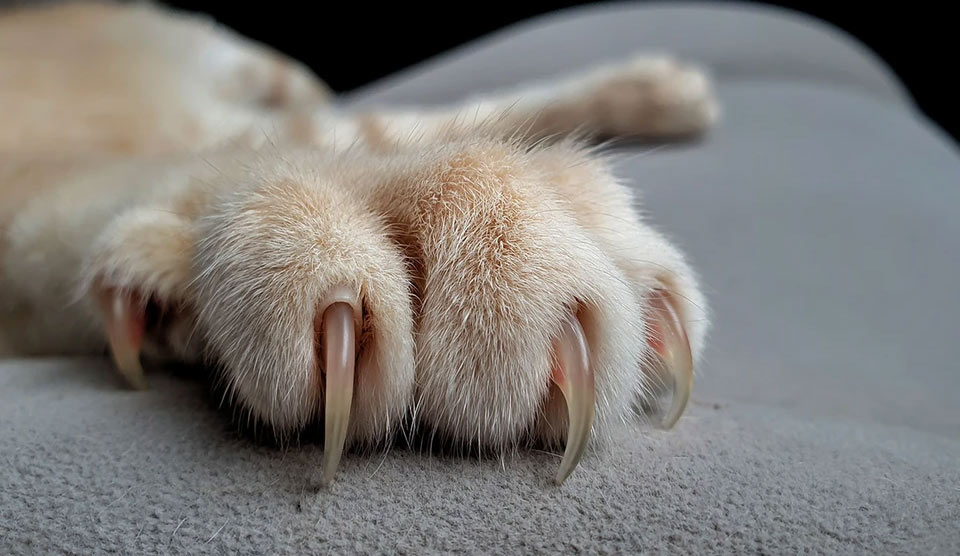
Cats normally have 18 claws—5 on each front paw and 4 on each back paw. However, only 16 are retractable, as each front paw has one vestigial toe (located slightly to the side, higher than the others) that doesn't retract.

For cats, claws are not only an essential tool for hunting and feeding, but also a way to mark their territory. The claws contain glands that secrete a special secretion that the animal leaves on objects as it scratches.
Interesting fact! Scientists link "the delicious smell of a cat"specifically with the secretion of glands located on the cat's paws.
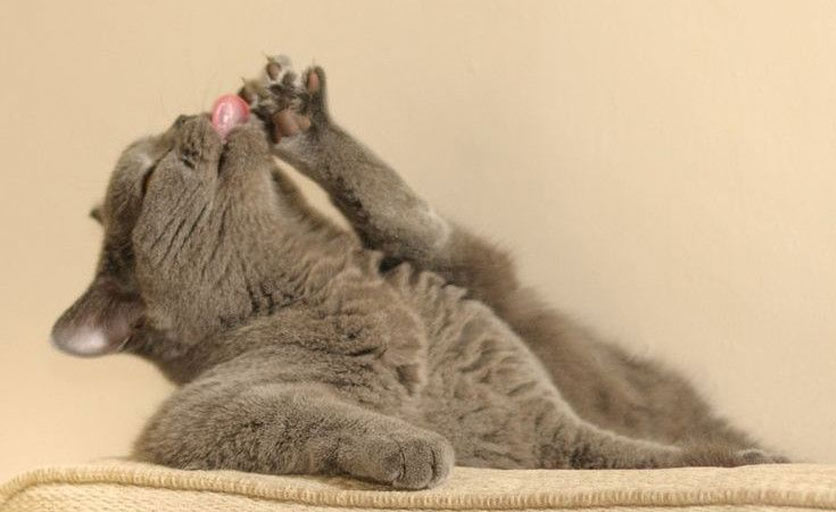
As you can see, cats place special importance on their paws and claws, so they spend a lot of time grooming these parts of their bodies. If you see your cat obsessively licking their paws, there's no need to worry. However, if your cat chews their claws, injuring themselves, or licks their paws excessively, causing skin irritation, you should try to find the cause and help your pet.
Why does a cat bite its claws (main reasons)
The cause of changes in an animal's behavior may be physiological or psychological. Let's try to understand each case in as much detail as possible.
Enhanced grooming
If you notice your cat chewing excessively, it's worth carefully examining the area of particular interest. It's quite possible that your cat is simply trying to speed up the removal of dead nails, remove a piece of dirt stuck to its fur, or remove sticky debris (like bud caps, chewing gum, or something else) that's irritating its toes.
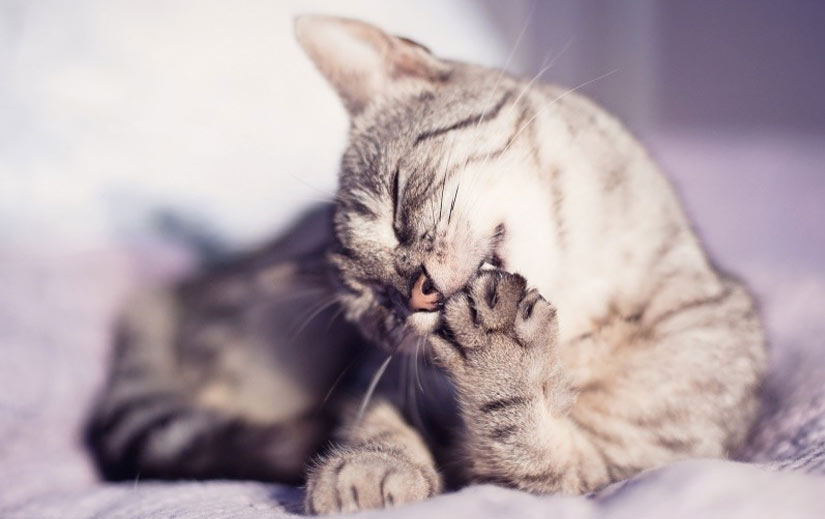
The reason is trivial, but in some cases, it's difficult for a pet to remove the annoying fragment without human assistance, especially in long-haired cats. In some cases, it's easier to trim the fur off the paw than to clean it.
Too long claws
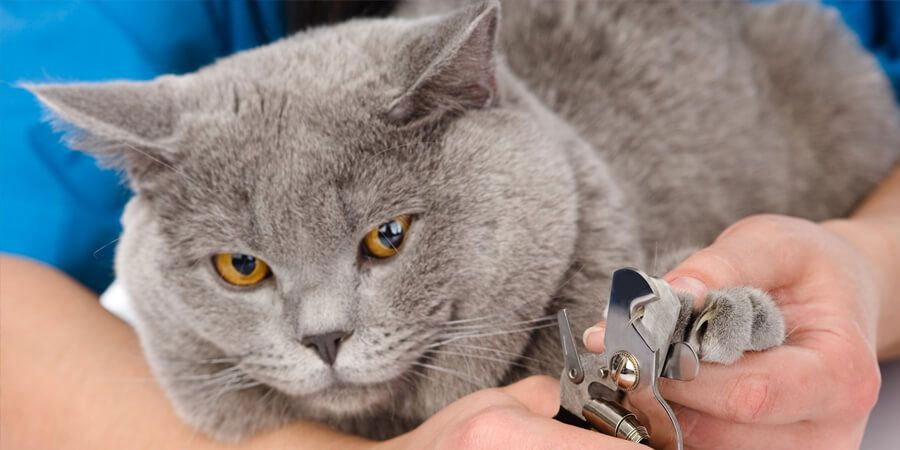
Sometimes a cat bites its nails because they have become too long and cause discomfort.
Cats' paws require proper care. They should have designated scratching and claw-dressing areas in the house. Even with specialized nail sharpeners, some pets still need regular nail trimming.
Injuries
The second reason an owner should consider when figuring out why a cat chews its claws is injury. While running across carpets or clawing at curtains, a hyperactive kitten can snag a claw and injure the nail bed. Claws on rudimentary toes are often injured if they aren't trimmed regularly, as they don't retract like the rest of the claws.
New growths and other injuries to the paws are also possible:
- splinters;
- suppuration;
- insect bites;
- cracks in the pads.
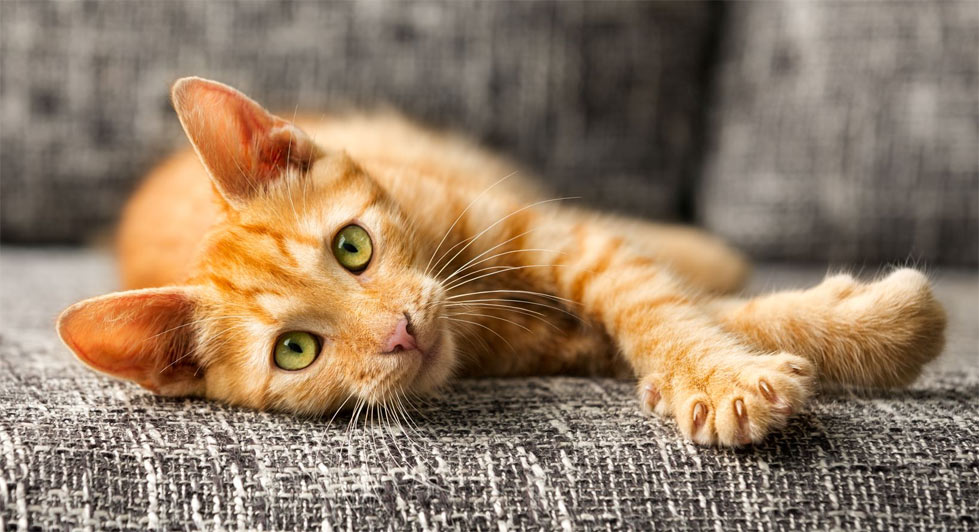
If you notice pain or blood in the nail area during the examination, you should consult a veterinarian as soon as possible to determine the severity of the injury and provide assistance. In some cases, the injured nail may need to be removed, which can only be done in a clinical setting with pain medication.
Fungal infections
Fungus can affect not only toenails in humans, but also the claws or skin of the paws of pets.
- If the fungus affects the claws, they become brittle, flake, and change visually.
- If the infection spreads to the skin, characteristic patchy redness may be visible. The cat will experience intense itching and lick the affected area vigorously, which will only worsen the inflammation.
If you notice these symptoms, be sure to consult a veterinarian to determine the type of pathogen. Treatment typically includes an antifungal vaccine and treatment of the affected area with special ointments.
Allergic reactions and vitamin deficiency
It's impossible to visually distinguish between an allergic reaction, a fungal infection, and an acute vitamin deficiency at home. A clear diagnosis will only be made after a full examination and laboratory testing.
In all cases, redness, peeling skin, and small rashes can be found on the paws in the area where the nail grows. Moreover, allergic reactions are often complicated by bacterial or fungal infections that occur in damaged areas of the skin.
If vitamin deficiency is the cause of your pet's discomfort, it's worth reviewing the amount and quality of food you're feeding. Detailed feeding recommendations for cats of different breeds are available on our website.
If the lack of essential nutrients is due to poor appetite and frequent refusal to eat, it is also worth looking for the reason for the animal's behavior.
An allergic reaction is possible both to food and to contact with various substances:
- household chemicals or disinfectants used for cleaning;
- chemical reagents or salt (relevant for cats walking outside in winter).
Stress (psychological problems)
Yes, cats can also experience intense stress, suffer from various phobias, and even depression. Severe stress can lead to a wide range of behavioral changes, from unjustified aggression to complete apathy and self-harm.
Sometimes, a cat becomes apathetic and chews its hind paws until they bruise, but upon examination, the veterinarian finds no significant health issues. In this case, local therapy will likely be recommended to address the effects of self-injury, as well as specialized antidepressants to help the animal cope with severe stress.
What should the owner do?
If you notice your cat chewing its claws, follow these steps:
- Inspect the area of particular interest for contamination, injury, and inflammation.
- If you haven’t found anything, observe your pet, how often it bites its claws and how it behaves when it does this (whether the animal experiences itching or pain).
- Analyze whether any other changes have appeared in your pet’s behavior or well-being.
- Consult your veterinarian to determine the cause.
Do not wash your cat or treat its paws (claws) with any medications the day before your appointment with the doctor, otherwise the diagnostic results may be false.
Veterinarian's advice
Read also:





Add a comment