
Cats and Witchcraft
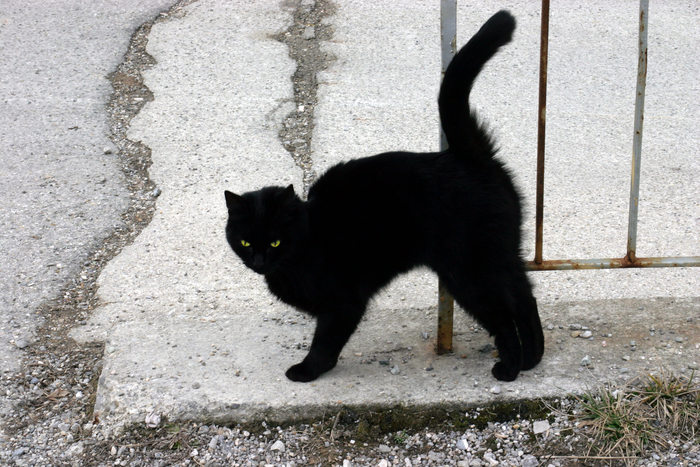
Since ancient times, cats have been ascribed magical powers, and people have associated their mystical nature with gods, witches, and sorcerers. A cat is a mystery, and a black cat is doubly so. Even to this day, the animal retains an aura of mystery. In witchcraft, cats are an integral attribute of witches, sorcerers, and gypsies. According to popular belief, demons could possess a cat's body.
One convicted English witch confessed that her cat, when performing some task, received a drop of blood as a reward. Witches have used cats in all sorts of ways for their dark purposes. Cat eyes are believed to be used to make an ointment that grants the ability to see demons. The same effect is achieved by burning 40 live cats at the stake during a full moon.
During the Middle Ages, it was widely believed in Europe that particularly powerful magicians could transform themselves into cats. This added another problem to the lives of our furry friends. The Church and the Inquisition now hunted not only "unclean" humans but also particularly suspicious cats. But it's worth noting that during these times, not only cats fell under the inquisitors' sway, but also dogs, toads, rats, and lizards.
Content
From history
A few historical facts about the role of cats in witchcraft and beyond…
It was considered bad luck to be born a cat even in the seventeenth century, when black cat soup was used to treat tuberculosis. A whole cat boiled in butter protected a warrior in battle. Perhaps the most reverent of these animals were the ancient Egyptians. Cats held a special place in everyday life, religion, and even the afterlife. Killing a cat was considered a crime. Among the Greeks, the goddess Diana, patroness of nature and hunting, took feline form. The chariot of Freya, the Norse goddess of love, was pulled by cats. The Celts believed that white cats aided the gods in earthly affairs.
In ancient Rome, cats accompanied Libertas, the goddess of freedom. These amazing creatures also play a prominent role in Slavic mythology, where cats appear in various forms.
As the devil's assistant, as a witch's guise, and as a fearless house spirit, capable not only of seeing evil spirits but also of protecting the home from them. In the Scottish Highlands, there's a legend that witches live high in the mountains, disguised as a pack of wild cats. They have bristling black fur, a white spot on their chests, and their tails are always raised. Apparently, this legend has become a stereotype for the Halloween image. Most people associate the word "werewolf" with wolves, but the Japanese have their own opinion on this matter. Nekomatae, or werecats, are capable of transforming into humans and are known for their particularly mischievous nature.
Incidentally, a figurine of a man with the head of a cat, estimated to be 32,000 years old, was discovered during excavations in what is now Germany. Although cats are widely associated with witchcraft and mysticism, in England they are believed to bring good luck, especially to sailors.
Voodoo Cats
Cats play a significant role in Voodoo, where white cats are primarily used in rituals. Spells cast with these animals possess special powers, but are often harmful. Everyone is probably familiar with the healing properties of cats, but it's not just their extraordinary energy—which, it's worth noting, even modern scientists have recognized—but also the ability of cats to take on their owners' illnesses and carry them away when they leave the house.
Have you ever noticed that your pet sometimes behaves strangely, yet possesses an inexplicable independence, considers itself equal to humans, and understands every word? The mysterious nature of these creatures has even led to speculation about their extraterrestrial origins. While most modern animals were evolving, cats simply arrived from a distant galaxy. But are we frightened by the mysticism associated with these amazing creatures? We have lived in harmony with cats for millennia, and we will likely remain undecipherable for a long time.
Read also:
- Where did cats come from and how did they appear?
- What to do if a black cat crosses your path
- Why you shouldn't look a cat in the eyes


Add a comment