
Tailless Cats: What Breed Are They?
Despite the name "tailless cat," the breed doesn't always denote a complete absence of tail vertebrae. While they are often present, the cat does appear tailless or bobtailed. However, these cat breeds are distinguished by their robust build, allowing them to compensate for their mobility, even with a completely or partially missing tail. Some, such as the Japanese Bobtail, have disproportionately long limbs, allowing them to feel comfortable even without a tail.
Content
Classification of tailless cats
Tailless cats are classified primarily by the size of the appendage:
- the complete absence of a tail indicates that it belongs to the “rump” category;
- Animals with a tail consisting of one vertebra (usually hidden by fur) are called "risers";
- Cats with a very short tail are referred to as "stumpies";
- and if the tail is almost half of what is considered normal length, the cat is called a "longie".
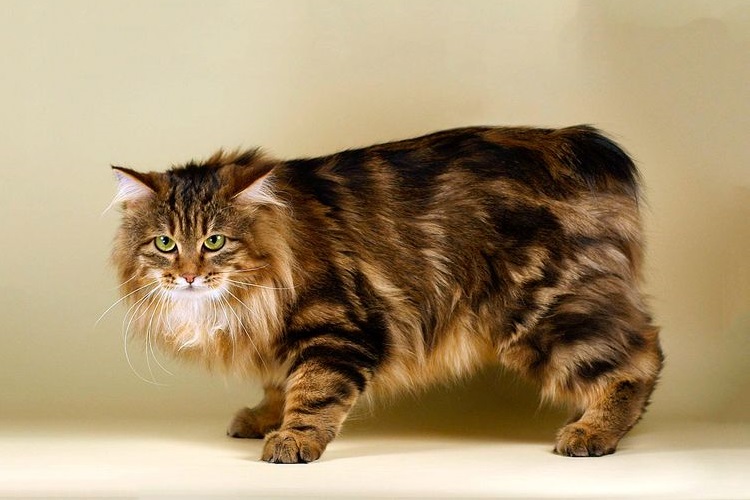
If we consider dividing tailless cats into distinct breeds, we can distinguish two main groups: bobtails (literally "pom-pom tails") and Manx cats. The latter variety is also known as the Isle of Man cats, as it was there that the breed with a partially missing tail was first developed. A third, rather arbitrary group includes hybrids, or "bobs."
Manx cats are tailless cats from the Isle of Man.
This cat breed, which first appeared on an island off the coast of Great Britain as a result of a natural mutation, is distinguished by its almost complete absence of tails—all cats are either Riser or Stumpy. However, this doesn't prevent these cats from being excellent pets, with their own distinct personalities and devotion to their owners.
Genetic restrictions prevent the breed from reproducing without outcrossing with tailed individuals. This means that one parent of a tailless kitten must have a tail, and the other must be tailless. While this complicates the work of professional Manx breeders, it also diversifies the gene pool and allows for the creation of unique color patterns.
Another well-known tailless cat breed is the Cymric, a variety of the Manx cat found not in Manx but in Wales. These cats have a small, vestigial tail, but their thick fur, which makes them appear thicker, conceals it. The fur on their bellies, ears, and hind legs is usually longer than the rest of their body.
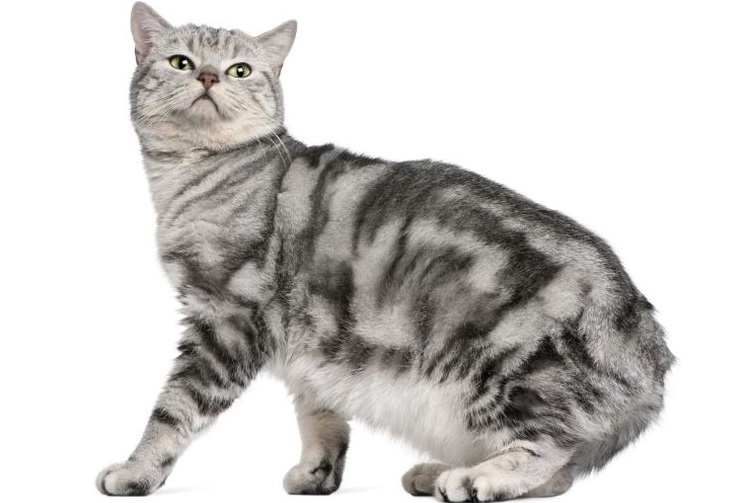
It's worth noting that almost all Rumpy cats (cats with no tail at all) are considered a variety of the Manx cat. They are distinguished not only by the absence of a tail, but also by the depression in its place. Most Rumpy females are sterile, making breeding the breed difficult. Nevertheless, it is in high demand, both due to their devotion to their owners and because of this rare anatomical feature.
Bobtails are bob-tailed cats without a tail.
One of the most popular pom-pom cat breeds in the world is the American Bobtail, distinguished by its muscular body and wide, almost square head. The distinctive shape of its eyes makes these cats seem always ready to hunt. However, their peaceful nature allows them to get along well with any pet, even dogs.
Karelian Bobtails first appeared in Russia. A natural mutation of the cats occurred in the Lake Ladoga region without any human intervention. The breed was created by crossing a common domestic cat with a Norwegian Forest cat.
Find out on our website about What is the significance of a cat's tail?.
Another domestic cat without a tail is the Kurilian Bobtail, which originated from Japanese bobtails brought to the Kuril Islands. The gene responsible for the absence of a tail is dominant, making the likelihood of a long tail virtually nonexistent in any crossbreeding. Kurilian Bobtails are known for their devotion to their owners, friendliness, and curiosity.
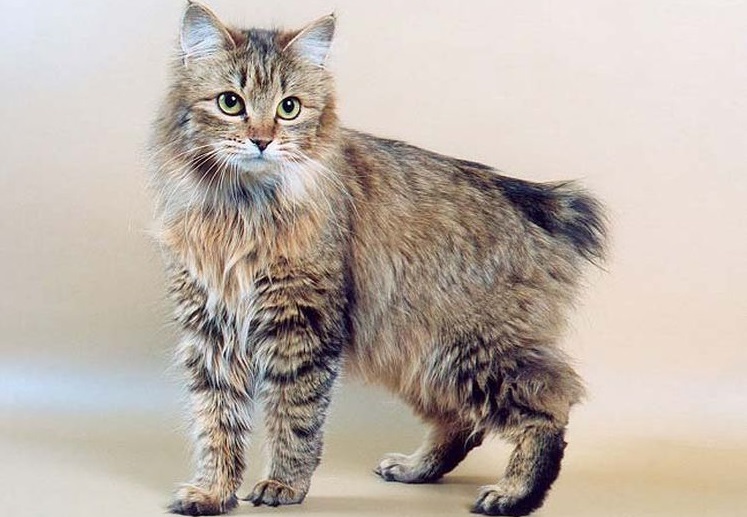
Thai or Mekong bobtails They are a synthetic breed developed by European and Russian breeders. A distinctive feature of these cats is the wide variety of curves in their tails. Their small tails curl intricately, with virtually no repeating patterns among individuals.
Japanese Bobtails first appeared in the Land of the Rising Sun and were prized for their supposed warding off evil spirits. The breed gained popularity after World War II and was established in the Americas in the 1960s.
Tailless hybrid cats
Hybrid short-tailed cats include animals whose breed has not yet been established. Among them are:
- a short-tailed elf, resulting from crossing a wild and domestic cat;
- Manx Rex, which resembles the common cat from the Isle of Man, but has a wavy coat;
- Scythian Toy Bobcat, which is a miniature version of the Manx;
- Oukhi Boba, a breed created by crossing a Manx and a Siamese cat.
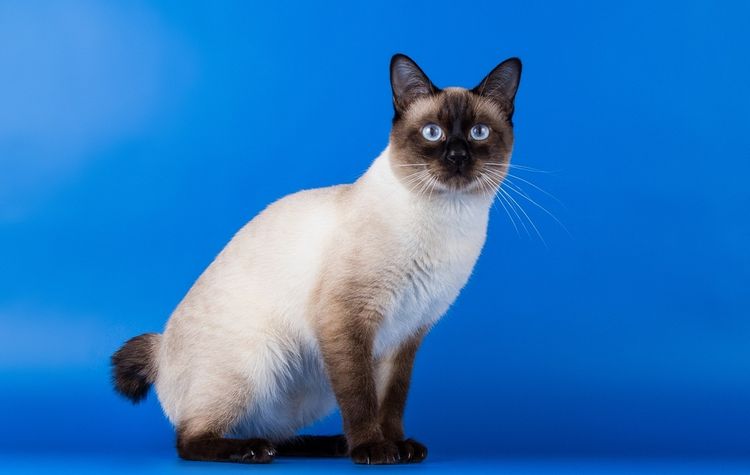
Over time, the list of hybrids expands. But even now, the number of hybrid and established breeds of tailless cats allows you to find a suitable pet. Moreover, their playful and docile nature, easygoing nature, and beauty fully compensate for even the relatively high price.
Read also:


Add a comment