
Albino Cats: How to Distinguish Them from a Regular White Cat
Continuing the topic of the characteristics of rare pet colors, today we'll talk about the characteristics of albino cats and how to distinguish a carrier of the albino gene from a regular white cat.
Content
Albinism in cats
Albinism in animals is a mutation at the gene level, as a result of which the body does not produce melanin (the pigment responsible for the coloring of the skin, fur, and cornea of the eyes).
This is why it's commonly believed that albino cats are white. However, scientists claim that not every perfectly white cat carries the albinism gene.
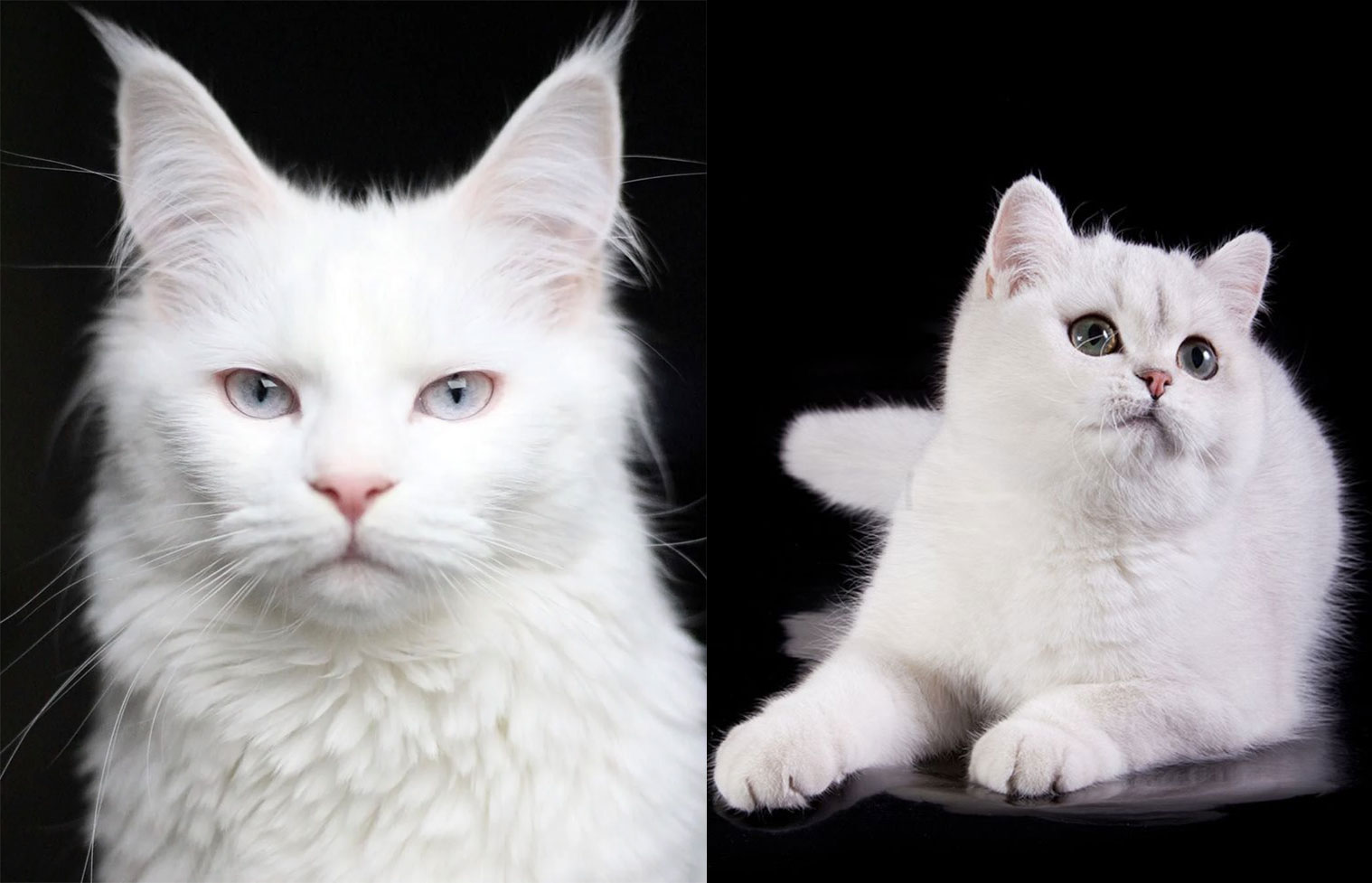
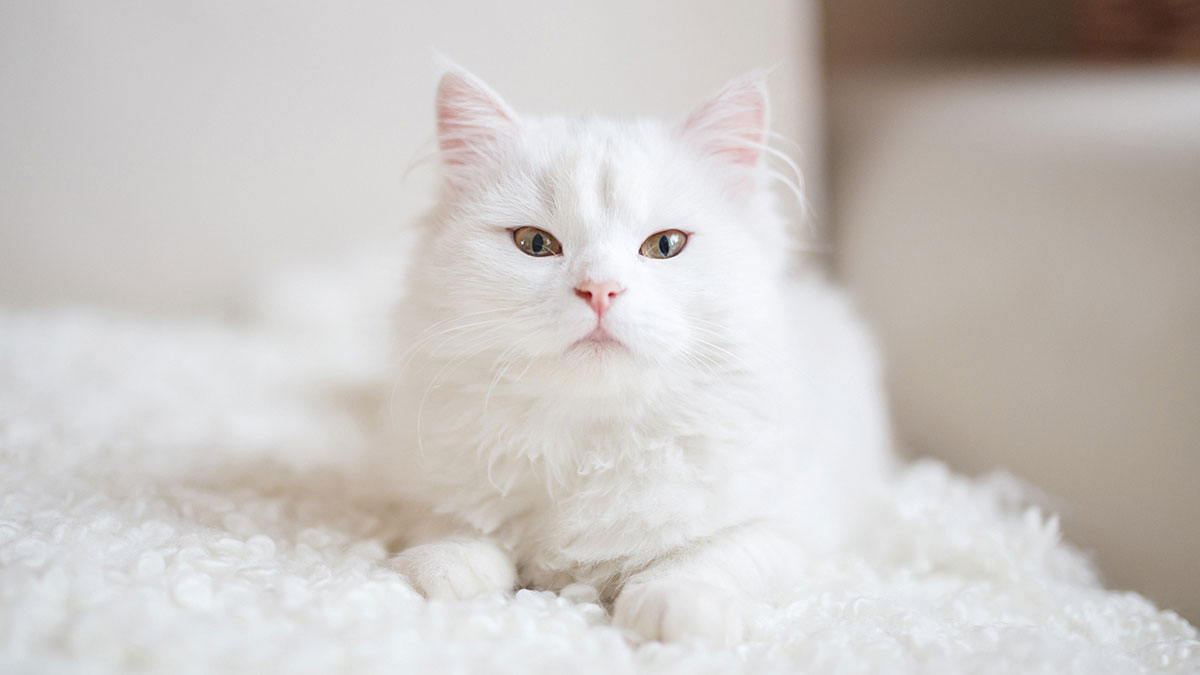
In fact, albino cats (pictured left) are quite rare in nature, but animals with a perfectly white coat (pictured right) are not at all uncommon.
According to statistics, albinos are more common among cats of breeds such as Snow Bengal, Turkish Angora, Oriental breed, as well as among Siamese and Balinese.
People with the albinism gene are distinguished by:
- docile nature;
- eye color (it can vary from almost colorless to pink or red);
- high sensitivity to ultraviolet radiation;
- poor health (albinos are prone to certain congenital pathologies associated with the albinism gene);
- a tendency to various types of allergies;
- low immunity.
The notion that an albino cat will inevitably have serious health problems and that such animals don't live long is erroneous. Only a minority of cats that inherit this particular gene experience associated health issues, but with proper care, indoor living, and high-quality veterinary care, these pets can also live long and happy lives.
Types of albinism
In nature, a unique or albino cat occurs when a mutation in the TYR gene suppresses, to varying degrees, the production of the enzyme tyrosinase, which determines the amount of melanin in tissue. Depending on the degree of tyrosinase suppression, two degrees of albinism are distinguished: complete and partial.
The color inherited by a kitten depends largely on the allele (form of genetic abnormality):
|
Allele |
Inheritance |
Color |
|
WITH |
dominant |
solid |
|
cd |
recessive |
Burmese (Thai) |
|
cs |
recessive |
Siamese (colorpoint) |
|
c |
recessive |
complete albinism |
Complete albinism
This phenomenon is extremely rare, as its genetic development requires both parents to carry the recessive, mutated type C gene. Complete albinism occurs in 1 in 10,000 animals, and is most often seen in female cats. Therefore, geneticists claim that a "white albino cat with red eyes" is a highly unique variant.
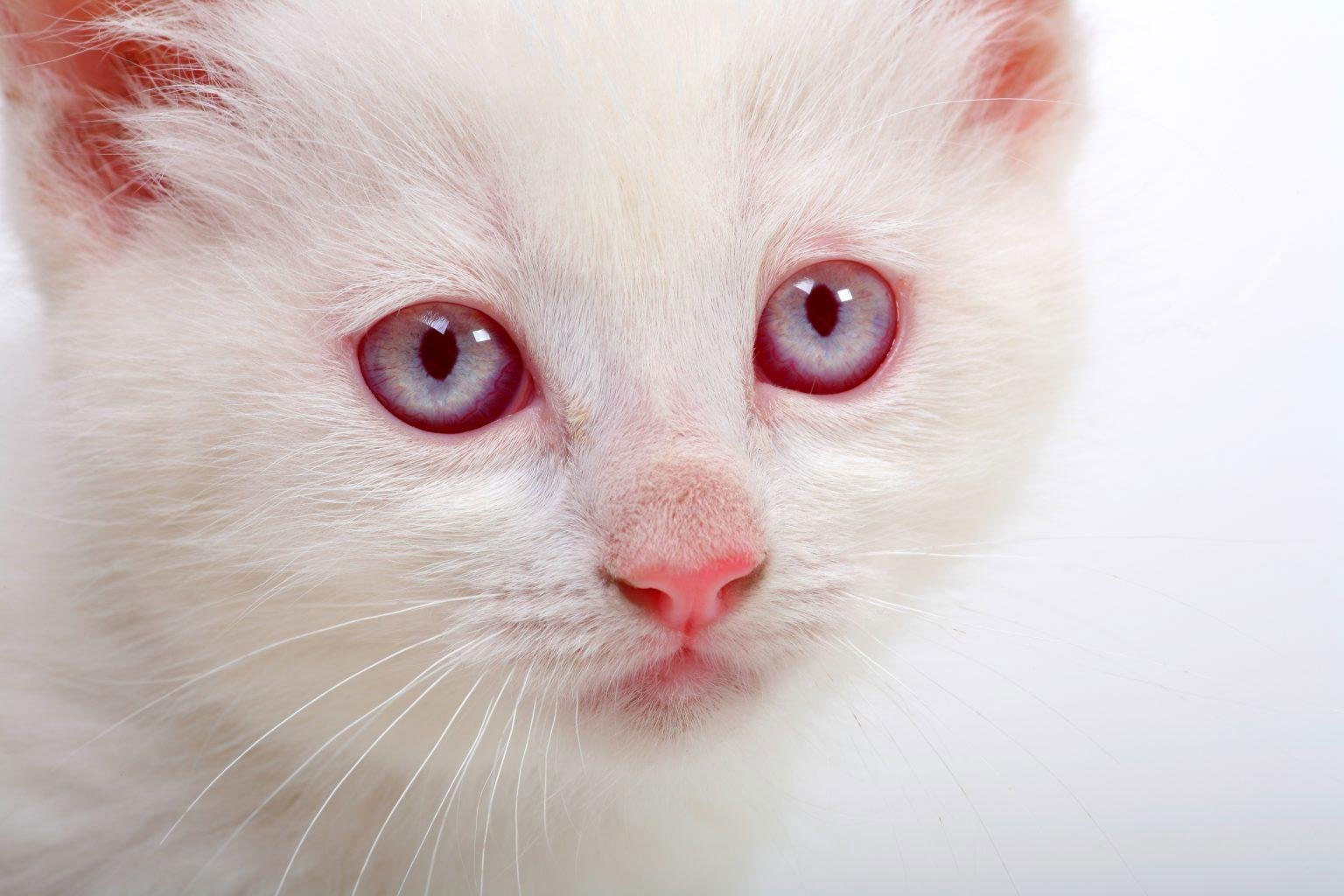
The pink tint of the cornea, characteristic of albinos, is formed due to capillaries showing through the discolored cornea.
It is complete albinos who are most often born with a whole range of pathologies, including:
- blindness;
- deafness (partial or complete);
- strabismus.
Partial albinism
Animals whose tyrosinase production is not completely suppressed have very low melanin levels in their tissues, fur, and corneas. Sometimes the melanin only slightly tints the hairs, and sometimes it's completely invisible to the human eye.
An albino cat of this type can have any eye color, from light gray to green, blue or amber (as in the photo).
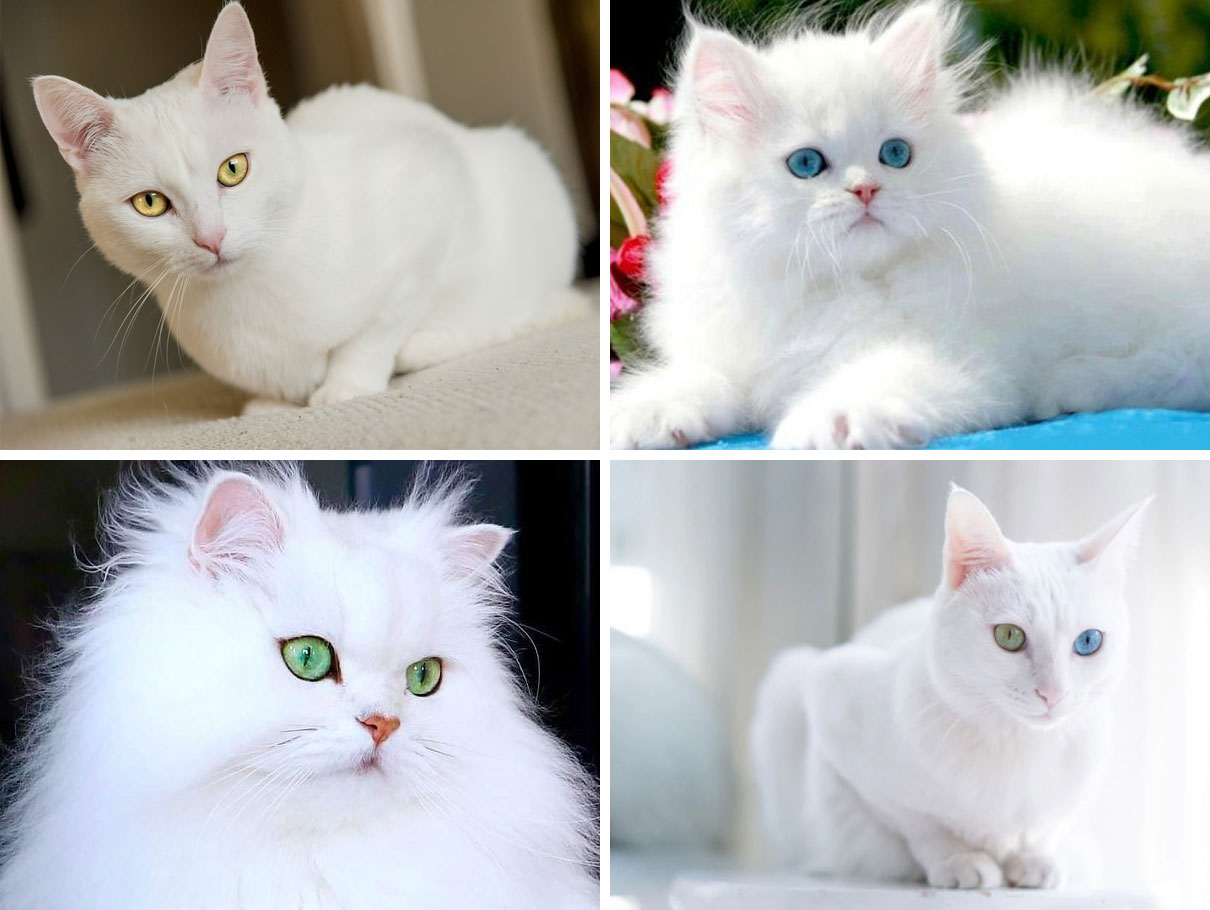
A partially albino cat can have eyes of different shades. We've covered in detail how and why kittens are born with different-colored eyes, and how heterochromia affects a cat's health, in a related article.
Typically, the color of a kitten with partial albinism is formed by a combination of genes from both parents:
|
Type |
Color |
Eye color |
Genetics |
|
Burmese (Thai) |
colored fur is located on the muzzle and paws |
golden |
cb+cb or cb+c |
|
Siamese |
point, paws, muzzle and ears are more intensely colored |
blue |
cs+cs or cs+c |
|
Tonkinese (mink) |
pointy, but without a clear transition |
turquoise |
cb+cs |
Interesting fact! Scientists have discovered that a white albino cat with blue eyes can inherit deafness. Moreover, animals with heterochromia may only be deaf in one ear, the one located on the side with the blue eye.
How to distinguish an albino cat from a normal cat
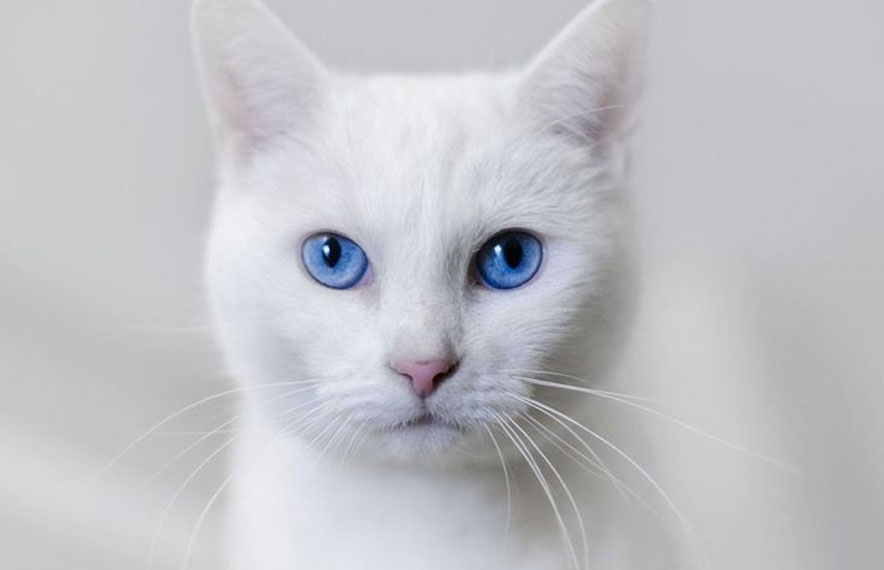
True albinos, those with the c allele, will have eyes that are virtually colorless or varying in intensity of pink.
Now you know that if you meet a cat with golden, blue or turquoise eyes who is introduced as an albino, then he or she is definitely not a carrier of the pure gene.
Characteristic signs that an animal does not have complete albinism will also include:
- a barely noticeable grayish tint to the skin;
- colored eyes;
- pigmentation of the nose, paw pads or any other part of the body;
- any inclusions of color in the coat.
How to choose an albino kitten
If you really liked the description of these unique animals or the photo of an unusual white kitten with red eyes, then consider the following recommendations from breeders:
- Buy a kitten only from a cattery or experienced breeders (as a rule, such babies are sold with a full medical examination).
- Choose a grown baby, as signs of blindness and deafness are difficult to determine at the age of 1-2 months.
- Please remember that a full albino or partial albino Siamese may have hearing problems. If the cat is deaf, the price will be significantly lower, and you should be informed of this.
The price of such a kitten will depend on the breed and health of the kitten. People often consciously adopt these unique animals, despite their deafness and blindness. It's worth noting that owners of these cats note that their congenital condition doesn't prevent them from enjoying life and loving all family members.
Content Features
Given the characteristics inherent in cats with albinism, their care will require the owner to follow a number of recommendations:
- Animals should not be exposed to direct sunlight.
- It is better not to let them roam freely, as there is a high risk of aggression from other cats.
- Blind and deaf animals adapt well to apartment conditions, but will not be able to navigate outside of it.
- The diet of albinos must take into account the high probability of food allergies.
- White wool can be easily dyed, so it will also require special care.
- These cats' low immunity leads to frequent infectious diseases, so vaccinations and regular veterinary checkups are a must.
Otherwise, caring for albinos is no different from caring for cats of other colors of the corresponding breed.
Breeders' Advice
Read also:


Add a comment