
My cat is afraid of everything and hides: what to do?
We'll explore why cats are afraid of people and try to disappear from sight as quickly as possible. Often, cats are most afraid of strangers, hiding in secluded places every time they visit. Owners should figure out the cause of their fear of strangers and do everything possible to alleviate this fear. If left unchecked, cohabitation will become uncomfortable—the animal will become stressed, and the owner will be forced to limit contact to accommodate the pet.
Content
Causes of fear
Stray cats are wary of people. This behavior is natural—for a feral cat, humans are a source of danger. But sometimes, a domestic cat develops an intense fear of strangers.
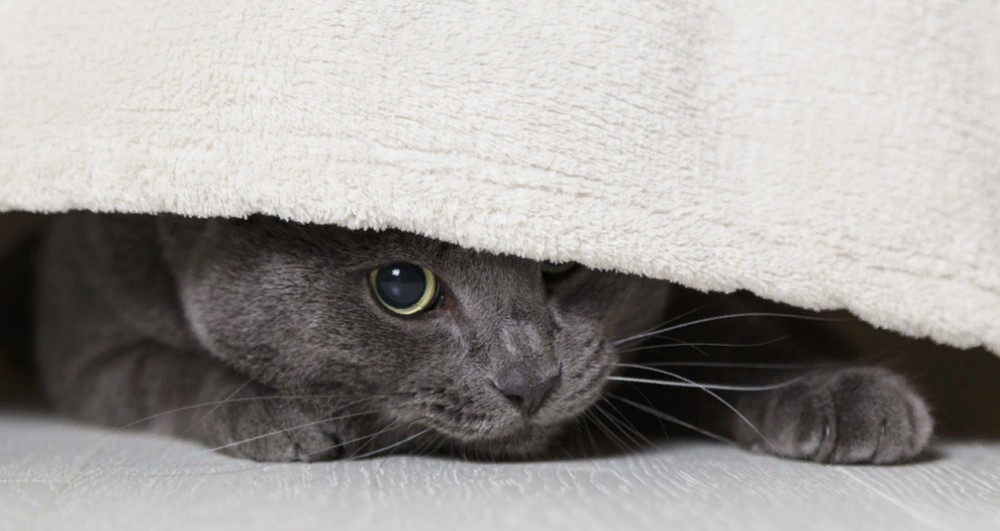
A sweet cat, who has lived indoors and been surrounded by affection since childhood, suddenly becomes frightened at the sight of visitors, unwilling to interact, or even panics. Sometimes the fear is so severe that the animal behaves aggressively. In such a situation, the owner should determine the cause and try to resolve the problem.
Cruelty
The animal had previously experienced aggression from humans. Typically, strangers are feared by pets who previously lived on the street or in a shelter, and who have been beaten. Once brought home, the cat gradually became accustomed to its owners and began to trust them. But even in a comfortable home environment, the sight of visitors triggers a panic attack, forcing it to hide in secluded places. In this case, after the stranger leaves, the cat behaves appropriately and shows no fear.
Poor socialization
Often, a reluctance to interact with strangers develops in an animal whose owner is also unsociable. The home is constantly calm, and the arrival of guests becomes an unexpected event, disrupting the usual harmony.
Loud conversations and unfamiliar people with unfamiliar scents can trigger nervous stress in cats. If socialization measures aren't taken promptly, the problem may worsen, requiring treatment with sedatives.
A sad experience
It is possible that the guest had previously visited the house and left behind unpleasant memories:
- This could be a veterinarian who has arrived to provide assistance—medical procedures are often accompanied by discomfort and cause a negative attitude, which is remembered for a long time.
- Perhaps a human offended the cat during a previous visit—accidentally stepping on its tail or kicking it when its owners weren't looking. Cats have well-developed memories, and upon encountering them again, they might retaliate by pooping in their shoes or running away to avoid further rudeness.
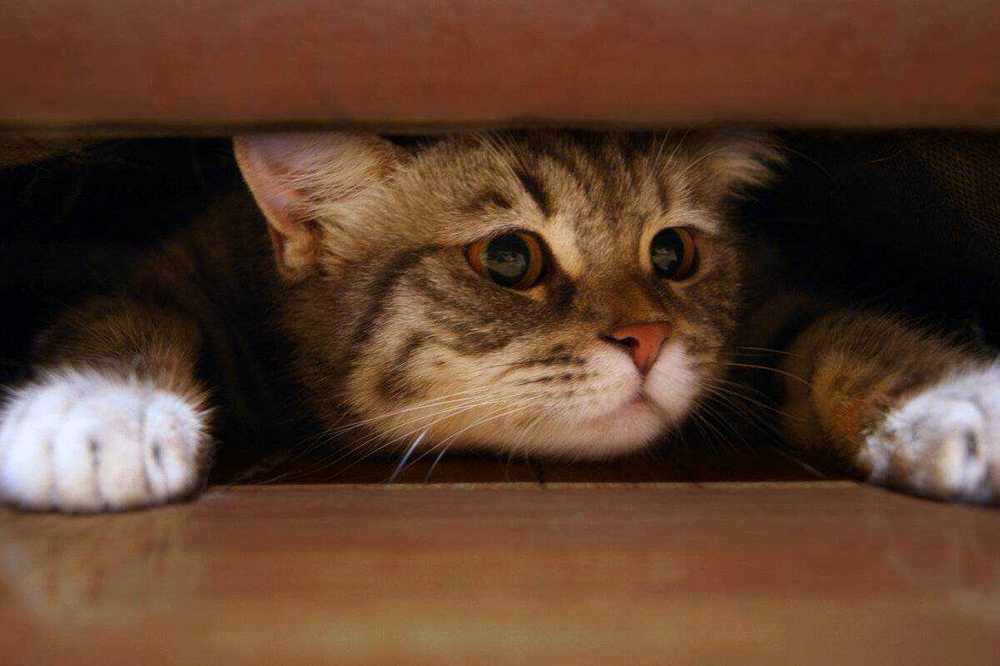
Cats instinctively sense danger. If a cat is wary of a visitor, the owner should also take a closer look. Fear can be triggered by the potential danger posed by the stranger.
Physiology
The reason may lie in physiological differences. It has been observed that cats are more often frightened by unfamiliar men with a low, growling voice. Women are less likely to be feared by cats—their higher-pitched voices often resemble their own purring and have a calming effect.
The culprit behind inappropriate behavior may be a strong, irritating perfume scent. Owners may assume their pet is frightened, but in reality, it simply runs away from the source of discomfort.
Territorial claims
A furry friend perceives the entire apartment as his own territory. An intrusion by a stranger is often an act of violation of personal space. How the animal behaves depends on its personality:
- An active cat will behave quite aggressively, displaying the best qualities of a leader—hissing and loud howls will come into play. If the visitor is slow to retreat, the cat will seek revenge, including on the owners who allowed the stranger onto the territory.
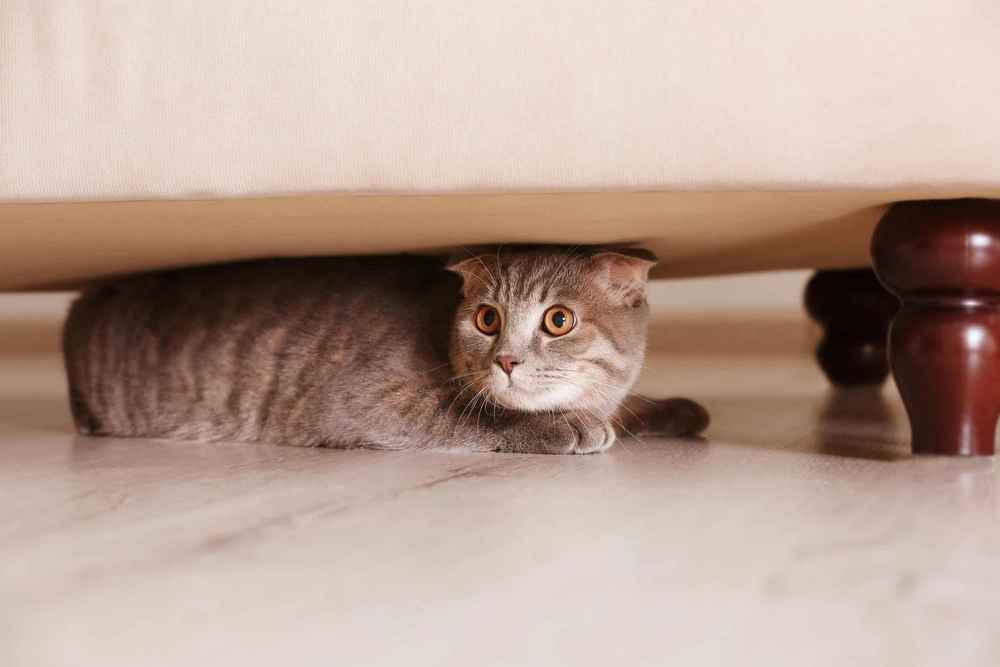
- Cats with poor leadership skills will play hide-and-seek—as soon as an unwanted person appears in the house, they'll prefer to hide under a bed or on a shelf to avoid escalating the relationship.
Territorial claims more often arise in unsterilized animals with a developed instinct for sexual hunting.
The cat is afraid of me
Sometimes fear is triggered by interaction with the owner. The main reasons for this behavior are:
- the use of perfume by a person, the intake of medications with an unpleasant aroma for a cat;
- annoying hugs:
- physical punishment;
- raising the voice;
- painful condition.
It's best not to constantly cuddle your pet. Cats know best when they need affection. Avoid yelling at a cat that has marked your slippers or spanking it on the bottom—such actions will lead to deep resentment, making it difficult to establish contact afterward.
How to eliminate fear
If the fright is caused by a medical condition or nervous stress, you should immediately visit a veterinarian. Otherwise, creating a comfortable environment will help alleviate the fear. To do this, create places in the house where the cat can quickly hide if strangers unexpectedly visit.
Fluffy cats love to perch high up. Therefore, it's a good idea to create a cozy nook near the ceiling in the hallway, where your pet can carefully study your visitor. They might even want to join in, observing the stranger's behavior from the closet. Don't chase your cat away; they need to reassure themselves of the visitor's safety. If you visit frequently, offer treats, and lure your cat with a cat fishing rod, fear will quickly give way to habit, and then to trust.
It's also not a good idea to force a friend to interact with your cat. If a friend wants to interact with your cat, introduce her gradually. It's best to start socializing her from puppyhood—a young kitten is more willing to interact because curiosity outweighs fear.

Once you've determined the cause of your cat's fear, you can use their natural curiosity, love of play, and treats to correct the behavior. Avoid using sedatives on your own, as this can worsen the problem and harm your pet.
Read also:


Add a comment