
What to do if your cat starts eating poorly?
What should you do if your cat has stopped eating? If your pet is healthy, they should have a healthy appetite. Cats, like any other animal, never skip meals, as their genetic memory holds the message "if you don't eat now, there might be no food later." However, there are times when a cat eats poorly, and for no apparent reason. Such behavioral changes should definitely alert the owner—this is not normal, and it's important to take steps to correct the situation.
There may be several reasons why your cat refuses to eat. These include both natural factors and environmental influences. Let's take a closer look at all the possible causes of this behavior, as well as ways to resolve this "food crisis."
Content
Possible reasons
In fact, there are a myriad of reasons why your pet might refuse to eat, ranging from room temperature to their mood. But most of them can be categorized into several groups, which are described below:
- drastic changes in the cat's life;
- natural thermoregulation of the body;
- fasting day;
- sexual instinct;
- pregnancy;
- postpartum period;
- stress;
- disease;
These are the main reasons why a cat isn't eating well. While there may be other factors at play, the majority of food refusals are due to the reasons listed above. Let's take a closer look at each of them and figure out together what to do to get your pet back on track.
Changes in a cat's life
If your cat isn't eating well, the reasons are likely obvious. Cats are extremely conservative and always stick to their usual routine. This means that any sudden change—whether it's moving to a new apartment or the arrival of a new resident—will be stressful for any pet. A simple rearrangement of the room can also be a factor: an unfamiliar furniture arrangement can cause anxiety in the cat, which can easily lead to it refusing to eat.
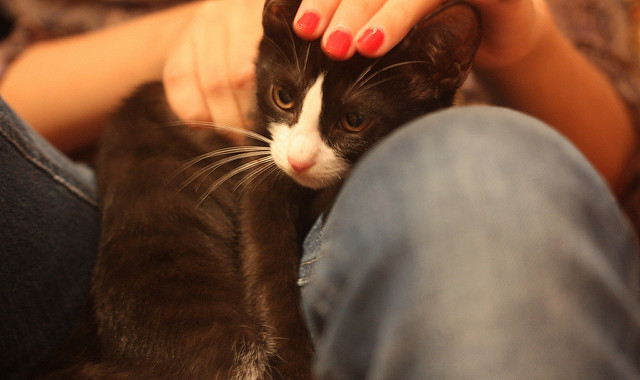
Another example of a change is a change in food. If your pet is accustomed to eating one brand and type of food, a sudden change in food can cause the animal to refuse to eat altogether. This can be due to a change in food type (dry, wet, homemade), or to minor details like the consistency or temperature of the food. To ensure a smooth transition, the new food should be introduced gradually, mixing it with the cat's usual food.
It may seem like a minor issue, but cats can refuse to eat even if their mats are changed or their bowls are new. There's nothing you can do about it: either your cat will eventually return to eating normally, or you'll have to return everything to the way it was—and then they'll likely resume their normal feeding routine.
Animal thermoregulation
All pet owners who spend a lot of time outdoors have noticed that in winter their pets eat more and with greater appetite. But in the summer heat, on the contrary, their food portions are smaller, and their healthy interest in even the most delicious foods disappears. The main reason why cats don't eat in the heat is their body's natural thermoregulation. It's enough to remember the basic principle of digestion: more food = more energy. If it's already unbearably hot outside, extra energy will only make things worse, so your pet has absolutely no reason to eat the usual amount of food.
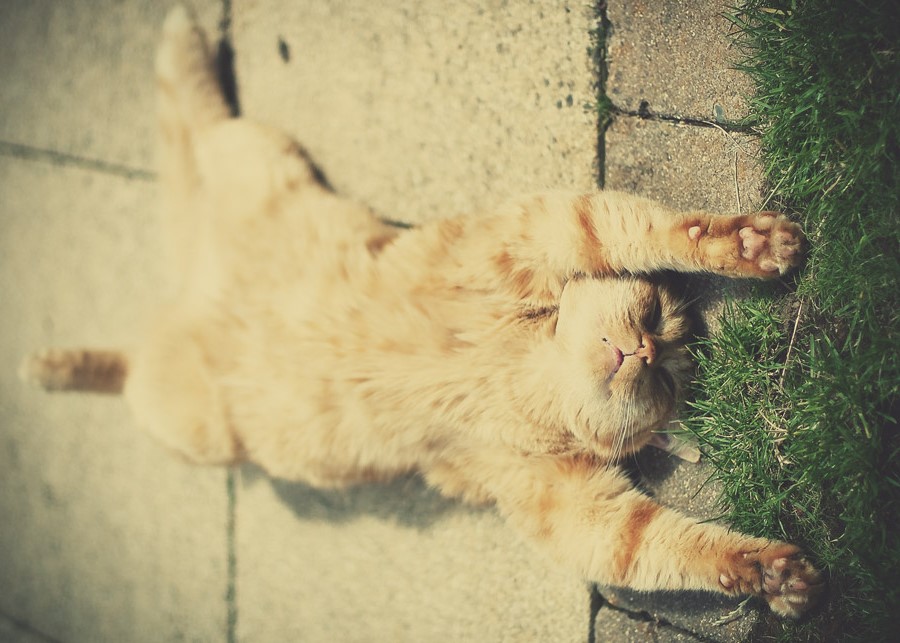
By refusing their usual portion, a cat is simply trying to cool down more effectively, that's all. In this case, unless there are other factors affecting appetite, owners shouldn't worry at all – over time, when the weather changes, your cat will eat as usual.
Fasting day
Sometimes your cat simply goes on a fasting day and completely refuses to eat for no apparent reason. This is usually due to overeating beforehand or vigorous play. It's also possible that your pet ate something difficult to digest and is now experiencing temporary digestive issues. Generally, if a cat doesn't eat for a whole day, yet feels fine and acts as usual, there's no cause for concern. In this case, it's possible that the cat is simply not eating well because it doesn't want to eat and is trying to "unload" its intestines.
Sexual instinct
Sometimes, pet cat owners are horrified: their pet refuses to eat and generally behaves quite strangely. Such owners simply forget about the period in their animals' lives known as estrus in female cats, or the heightened sexual instinct in male cats. During estrus, a cat may refuse food entirely, spending all her time sleeping, interspersed with cries for a mate. Refusing food for a week during estrus is considered completely normal, but this only applies to healthy and well-fed cats. The cat drinks only water and refuses to touch food.
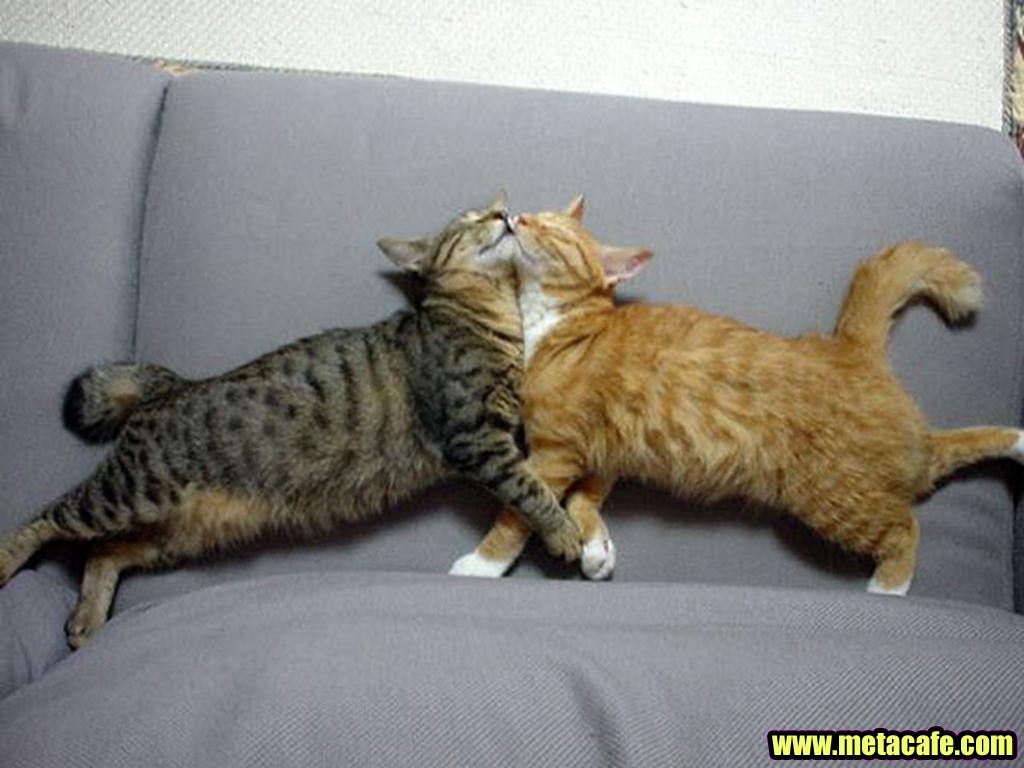
Male cats are much less likely to refuse food due to sexual desire. However, if a male cat senses a female cat in heat in his area, he may also refuse to eat and behave strangely, searching for the female, whom he can't see or hear but can smell. This behavior shouldn't cause concern for owners, as it will subside over time, and your cat's life will return to normal.
Many owners, faced with this unusual behavior in their pets, wonder: "My cat isn't eating well—what should I do?" If the "spring exacerbation" is severe and the animal suffers physically (such as exhaustion and refusal to drink), it's imperative to take the cat to the veterinarian. Such profound changes may signal a hormonal imbalance, and the vet will then recommend castration or sterilization based on testing. Unless your pet is a proven breeder, there's no point in exhausting the animal; it's easier to relieve such hormonal surges.
Pregnancy
It would seem that a pregnant cat should eat much more, as she needs not only energy for herself but also to nourish her kittens. However, there are times when a pregnant cat refuses food entirely for a day or two. The two main reasons why a cat may not eat well during pregnancy are morning sickness and impending labor. During morning sickness, the cat refuses to eat and may vomit. If her temperature is normal at this time, there's no reason to worry—everything will resolve on its own.
Also, a cat usually stops eating a day or two before giving birth, so if the due date is approaching, there's no need to worry about her food being stopped. After giving birth, everything usually returns to normal very quickly. However, it's worth mentioning that this is highly individual—a cat may not experience any morning sickness at all, or may even eat almost during labor—nature itself determines what's normal and what's not.
Postpartum period
Sometimes after giving birth, a cat will completely refuse to eat for several days. Here are some reasons for this unusual behavior:
- Birth stress (usually observed in young, inexperienced cats);
- The cat ate several placentas during the birth process;
- A difficult birth, after which the cat comes to her senses;
- The young mother is simply afraid to leave her offspring;
Watch from 1:30:
If your cat isn't eating well after giving birth, you should pay attention, as during this period your pet's body expends a lot of energy and strength, which needs to be replenished and restored. If she refuses to eat for more than 24 hours, take her to the veterinarian. An experienced vet will easily determine the cause and help you normalize your cat's diet.
During lactation, a cat should not refuse food completely—milk production requires the lion's share of all the nutrients the animal receives from food. This means that if she refuses food, she will quickly become exhausted, and as a result, her milk supply will stop. This is absolutely unacceptable if you want to raise healthy and strong kittens.
Stress
Cats are very sensitive to stressful situations and can easily lose their appetite due to anxiety and stress. If your cat isn't eating well and is losing weight, you should consider changes in your family or home, as well as the environment in your family nest. Cats react very strongly to family arguments or punishments. If you're confident that the cause of your pet's stress has been resolved, you should spend more time actively playing with your cat and interacting with her, and then things will return to normal after a while.
Pet illness
Now we come to the main, and, it must be said, most dangerous, reason for refusing to eat. If you observe an unexplained refusal to eat, as well as lethargy or abnormal behavior, take your cat to the vet immediately. You should also pay attention to your cat's stool and temperature – changes in these parameters most likely indicate health problems.
Loss of appetite during illness is common. The body is already fighting the disease, and expending energy on digestion is an even greater drain on already limited resources. Internal reserves are depleted, and the animal eats virtually nothing.
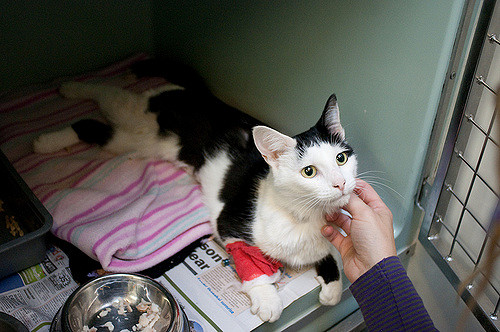
Remember that self-medication of a cat can lead to serious consequences, and in extreme cases, death. If you are unsure of the cause and don't know what's wrong with your cat, trust the advice of a professional veterinarian and avoid self-medication.
These are all the reasons why cats typically refuse food. The maximum period an animal can go without food without harm is about 2-3 days, and that's for a healthy adult cat. For kittens or pregnant cats, the refusal period should not exceed one day.
Anything above these recommended limits is cause for concern and prompts an investigation into the reasons why your pet isn't eating. Wishing your pets good health!
Any questions? You can ask our website's staff veterinarian in the comments below, who will answer them as quickly as possible.
Read also:
- The kitten has diarrhea: what to do?
- The cat abandoned the kitten
- What to do if a cat doesn't eat anything?




41 comment
Elena
Hello, maybe you can give me some advice. They haven't said anything clear for a year, everything is fine with the cat, but she keeps losing weight.
British cat, 9 years old, spayed at 11 months, after spaying, when her weight recovered, she reached 4500 kg and remained at that level until she was 8 years old.
Acana dry food, wet shezir,
chicken breast, turkey breast/thigh, beef tenderloin, sometimes seafood, cottage cheese, beef life, fish not often (sea fish after the oven (sea bass, sea bass, dorado, mackerel, tuna), river fish (rainbow trout, amber trout, char).
At 8 years old, she started losing weight, vomiting up food every 30 minutes or a couple of hours. I took her to the vet. She lost 500 grams, her appetite remained good, and she had daily stools that were not dry or runny, normal in color, and her urine was also unchanged. We had blood tests (general and biochemistry), and a full ultrasound (kidneys, liver, gallbladder, bladder, and spleen). After the examination, tests, and ultrasound, the vet said everything was fine, and she looked like a young cat. She recommended deworming with passionflower, Omez, and Renal Advance for a month.
We had a three-week course, and the vomiting returned. As soon as I stopped the course, it stopped, and my weight stayed the same. In the winter, I started vomiting again, so we decided to repeat the course, but it didn't work. The medication wore off after about 30 minutes. I stopped the course, and my condition stabilized.
In May 2021, her mouth started to stink terribly. She had tartar on her teeth, in places I couldn't reach, on her back teeth. She couldn't stand it anymore. I took her to the vet, who cleaned her under anesthesia. They removed two teeth; the x-rays showed severe tartar damage to the root area. The clinic also did a complete blood count and biochemistry, and by then the total loss had reached 600 grams. And again, according to the vet at a different clinic, everything was fine with the cat.
A week later I dewormed him, repeated it after 10 days, everything is clear, and our weight is already 3300, he eats poorly, almost does not touch the food, eats a little meat and even less wet food, sometimes he vomits (a small amount of clear liquid, sometimes with white foam, strong straining)
I don't know how to help her if all our tests and ultrasound are good, but the cat is losing weight, her skeleton is just thin. I trusted the ones I took her to, the rest are quacks, I get such injuries at the animal clinics while under anesthesia, they recommend euthanizing something that can be cured, or the anesthesia is expired, or they simply can't calculate it and the animal will never wake up. I'm scared she'll be 9 in October, we and our loved ones have already experienced so much from those veterinary clinics.
Daria is a veterinarian
Hello! You first need to see a gastroenterologist, have a gastroscopy (endoscope) done, and examine the stomach lining for ulcers, growths, or anything else. I don't know why no doctor has told you to change your diet. Animals aren't fed either processed or natural food. It's either one or the other! It severely impacts all the organs and glands of the gastrointestinal tract. Second, a thorough oral examination is necessary. Perhaps the tartar is the reason she wasn't eating before. It's possible that the infection from the tartar has spread deeper into the gum tissue, reaching the jawbone. Perhaps she still has stomatitis, which is why she's refusing dry food. Perhaps her teeth are hurting (animals can get cavities, too).
Lena
Hello, please tell me, our Scottish Fold cat hasn't eaten or drunk for 3 days. I took him to the doctor, who is in another city. He prescribed injections of vitamins, immunofan, and eroxil for 7 days. We gave the cat the course of treatment. The cat started eating a little, drinking water, playing, but eats very little. Why?
Daria is a veterinarian
Hello! Well, because no diagnosis was made, and for some reason they gave him Vitam injections, which are basically useless. Read the ingredients and you'll see what I mean. They contain tenths of a milligram (!) of vitamin per liter of injection water. And at the dose you gave your cat, it's practically nothing. It would have been better to give him Vitosal, Katozal, or Huberin injections; they contain butophosphan and vitamin B12 – they speed up metabolism and hematopoiesis quite well and stimulate appetite. It's also unclear why he needed antibiotics if all he's seen is loss of appetite. Or was there a fever, vomiting, loose stools, some kind of discharge, signs of inflammation or infection? How long ago was the deworming done? And has your pet been vaccinated?
Lyudmila
My Persian cat is 11 years old. I've never had any problems with food. Now he eats very little. He prefers dry food. He'll just lick natural food. Even though the dishes are always clean and the food is fresh. He drinks water; he used to really like milk, but now he drinks poorly. This has been going on for about 5 days. What should I do?
Daria is a veterinarian
Hello! You need to take your cat in for a physical examination, to check his gastrointestinal tract for any inflammation. He should be treated for parasites quarterly on a schedule. Regarding feeding: what kind of commercial food is he using, and have you changed the brand or flavor? He's drinking very little, which is very bad. It can lead to cystitis (his urine will be very concentrated, irritating and inflaming the bladder, and sediment can form, which is a direct path to urolithiasis). What natural food are you feeding him, and do you know that you can't mix natural and commercial food? Adult cats shouldn't be given milk, only fermented milk products without additives or flavorings; they're easier to digest. Has his body temperature been measured? How are his stools? Is he vomiting? Has he been able to lick his fur?
Egor
My cat has been living with us for 8 years.
She hasn't eaten for 2 weeks, she gave birth last month and she's throwing up where she shouldn't, please help?
Daria is a veterinarian
Hello! Your cat hasn't eaten for two weeks, and you still haven't taken her to the vet? How did your nursing cat survive for so long without food? She urgently needs to be taken to the vet for a reproductive system examination (including an ultrasound) to rule out any postpartum pathologies. She needs IV fluids, fluid balance, glucose supplements, and energy. How are the kittens?
Vyacheslav
Good afternoon
We have a British shorthair cat with a chinchilla coloring, and we can’t figure out what to feed her with.
We've given her everything - the most expensive holistic food, Purina Pro Plan (now), vitamins and treats, we've switched her to natural food (but not for long), we've only given her wet food along with dry food, she eats dry food out of necessity when she has nowhere else to go.
He has been dewormed and vaccinated, lives only indoors, and has no problems with the toilet.
What's worrying is that she's thin and loses her hair every day, all year round. Of course, she's not very active, but she has no one to play with.
Feels good.
And the friends who were given the daughter of this cat, fed her Whiskas, so she is dense and energetic, her fur does not fall out, no problems.
I don't understand everything anymore.
Daria is a veterinarian
Hello! What about spaying/neutering? What's the animal's age? A blood test would be a good idea. Ideally, a thyroid level check, too. It's important to rule out hormonal imbalances, given the high-quality diet. Also, treat for skin parasites as a preventative measure.
Alexandra
Hello! We have a difficult situation. Our 3.5-year-old neutered cat has been eating very poorly. We went to the vet, and at first they suspected stress and prescribed force-feeding and anti-stress tablets. He started vomiting. We also gave him mirtazopine. After a while, he started eating on his own, but still not enough. Another possible diagnosis was pancreatitis. We started an IV, gave him cerenia injections, painkillers, and antibiotics. He seemed to be eating well. We stopped all the antibiotics and switched to tablets (for urine testing). Testing confirmed that the diagnosis was correct; he doesn't have pancreatitis. We also did an ultrasound, and nothing was found.
Blood tests are normal, with the exception of a couple of indicators. Urine is not very good, we've sent a urine culture, and we're waiting for the results, but it's not related to his diet. We're currently offering up to six different types of dry food, wet food, and regular food. He looks at us with a questioning look, but eats literally a couple of grains and that's it. He drinks water and goes to the bathroom. We bought Felyway, Friends, and just installed it yesterday. We have three cats. There were four, the fourth died on February 27th, but it didn't start immediately after his death, and they weren't on good terms with him. We're currently giving him amoxicillin (a special pill, I don't remember the name)—it's because of the urine.
We dewormed him just today. We haven't started giving him Malt paste yet. He's not eating well again, and we don't know what to do. Our vet says he's just being stupid, but considering we lost one of our beloved pets, we're not happy with that "diagnosis." He was 4.5 years old, died, and they said a blood clot had passed. He ate, and a few minutes passed. We found him in the hallway with his tongue sticking out blue. They couldn't do anything, and the vet just threw up their hands. Please, help!!!
Daria is a veterinarian
Hello! I'm so sorry about the loss of your pet. Let's take things one step at a time. Was an autopsy performed on the deceased cat to determine the cause? How are the other cats doing?
DO NOT FORCE-FEED A CAT! Cats are very delicate creatures; any violence or stress can trigger illnesses due to nervous breakdowns (then they're labeled idiopathic). The most common diagnosis is idiopathic cystitis (that's where the bad urine comes from, for example). The hit-and-run approach to diagnosis is killing me. I don't diagnose remotely because I need to examine, cuddle, and conduct any necessary tests. You could make a mistake remotely. But in person, if possible, conduct an examination... Couldn't they have done a blood test first and then treated for pancreatitis? Why ruin the animal with unnecessary medications? Have you had an ultrasound of the liver, kidneys, or bladder? Is there no other clinic you can go to?
There's no need to feed so many different foods, let alone natural food. This "mixed diet" will only make the condition worse.
Alexandra
Thank you for your reply! We didn't perform an autopsy on the deceased. The others are fine, everything is as usual, no changes. Regarding treatment, we were told, "It definitely won't get any worse." We did an ultrasound, and there was a buildup of bile in the gallbladder, but it went away when he started eating, and there's some sediment in the bladder. Today we're going back for a checkup with the same doctor. Another difficulty is that we live in a small town, there are only two clinics, and we had a bad experience with the second one; we'll have to take him to another city, which is stressful again. The cat hasn't been eating well for two days now. He's a special guy, every trip to the vet is stressful, but what else can we do? And regarding the cystitis, how do they treat it?
Daria is a veterinarian
Hello! We won't make things worse. I think the animal has actually gotten worse. Regarding the bile, it would be a good idea to give choleretic agents before feeding (this will make the bile thinner and help it pass more easily). If there's sediment in the urine, then it's clear you need to start therapy before kidney stones develop or the cystitis becomes chronic. Treatment isn't that difficult: No-Spa (as an antispasmodic), Meloxicam (as a nonsteroidal anti-inflammatory), Ciprofloxacin (as an antibacterial), and a diuretic can be given for the first two days (if urine is poorly passed or in small volumes). Homeopathy can be added. In acute cases, symptoms usually improve by the third day (but a 5-day course is best).
Love
Hello! My cat is 1.5 years old, neutered, weighs 4 kg, and we feed him Hill's. Recently (at 1.5-2 months), he started eating half as much as usual (25-30 grams per day). He's playful, drinks water, and isn't losing weight. Do you think there's any cause for concern?
Daria is a veterinarian
Hello! Has he started sleeping more? Option one: eliminate parasites (if you've been doing that for a while). Another possibility is that it's a reaction to winter. He may not be expending as much energy as he used to. The taste of his food may have changed (maybe he's gotten tired of it, or maybe you changed the flavor and he doesn't like it). If you haven't noticed any other symptoms (runny nose, excessive watery eyes, vomiting, diarrhea/constipation, excessive hair loss, lethargy, fever, etc.), don't panic.
Kate
Hello! My cat (18 months old, spayed, mixed-breed) initially refused dry food (First Choice). We gave her canned food of the same brand, which she ate and vomited twice that night. The next day, we gave her a packet of Gastrointestinal RK, which she ate half of, then left half uneaten, and then vomited again, but she hasn't vomited since. She then also refused this food. Today, we bought the same medicated food from Proplan, which she ate a little, but now she's not eating that either. She's quite cheerful, has no fever, drinks water, and appears hungry. When we give her treats (meat sausages), she eats them. Should I deworm her?
Daria is a veterinarian
Hello! You can give it, but that doesn't mean you have to stop there. In any case, you need to get examined and have your blood tested for biochemistry. Rule out gastritis, pancreatitis, and liver disease. Did you give the malt paste to help remove licked hair? Could the cat have swallowed a foreign body? How does it go to the toilet?
Arkady
Good afternoon! Scottish Fold, 10 years old, spayed. For two weeks now, she's been eating 2-2.5 times less than before—both her usual food (Perfect, Purina) and the trial options. Her drinking has also changed. She's noticeably lost weight. However, her stool is normal, she recently burped up some hairballs, and her behavior seems unchanged—she's still jumping and outgoing. Her nose is cold. Perhaps her coat has also lost its shine and looks a bit "unmarketable." There's no reason for her to be stressed—nothing in her environment has changed. Thank you!
Daria is a veterinarian
Hello! A simple question: when was the deworming done? For hairballs, give Malt paste—it's great (it reduces hair loss, and the hair that's licked off doesn't clump). For now, switch to wet food (it has more moisture, as low water intake will lead to dehydration and constipation). Perhaps you should give her some vitamins to restore her shiny coat. But I'd start with deworming and a review of her diet.
Alya
Hello! I have two cats at home, one is 11 and the other is 8 years old. The older one had a benign tumor, which we took to the doctor, had removed and spayed. The other one is still the same. So, about the second one, after almost a month, she has lost a lot of weight (even though she's always been thin), and taking her to the vet is not an option (she's been scared since she was a puppy (from the street), and is generally afraid of carriers and leaving the house). She still runs and plays well, but eats less than usual. Is there a way out of this situation (do some tests myself, or invite a vet to your home)?
Daria is a veterinarian
Hello! How long have the cats been living together? I suspect the younger one has started losing weight due to stress. Try giving Fospasim as directed and deworming her. If the situation doesn't improve within a week, call a vet. Cats are very susceptible to stress, and this stress can lead to medical conditions (idiopathic cystitis/dermatitis/enteritis, and many others). So, first, calm your pet down.
Svetlana
Hello. My Sphynx had diarrhea for 4-5 months, but she had a ravenous appetite. Then I bought FortiFlora probiotic from Purina Pro Plan Veterinary Diets and sprinkled one packet a day on her food as directed, for a 30-day course. It's flavored, by the way. Her stool returned to normal, but she suddenly lost her appetite while taking the probiotic! We're trying to coax her into feeding, but it doesn't always work. She eats dry food a little better than wet food. She ate dry Acana, but I felt she was getting tired of it. I bought Applaws, but she eats a little, and she'll rummage around in the canned food a bit, so we let her finish it.
Dewormed with Milbemax.
Thin, behavior has not changed, playful.
It's just infuriating! I remember how he used to eat... when he was carrying around, he'd gobble up his own food and take it from the cat! But now he seems to beg for it himself, you give him some, but he won't eat it!
Dasha is a veterinarian
Hello! Have you tried a thorough examination? A complete blood count and biochemistry profile, an abdominal ultrasound (pancreas, liver), and ideally a gastroenteroscopy. Rule out gastrointestinal inflammation and a food allergy to any food component. It's important to identify the cause of the diarrhea, not just treat the symptoms with probiotics. Start with an examination. Choose a hypoallergenic food. Change the food gradually to avoid stressing the body.
Andrey
Good afternoon! My cat has started eating poorly and only eats dry cat food from the store. He used to eat chicken, sausage, meat, and cucumbers. What's the cause? I await your reply with respect!
Dasha is a veterinarian
Hello! Why feed a cat cucumbers and sausage? Do you think that's a diet for a pet? Maybe the cat has decided that dry food is much more balanced than what it was previously fed. I bet you call Whiskas/KitKat/Friskas/Felix/Darling and other cheap alternatives "food"? Buy your pet a good super-premium or holistic food. Deworm him if you haven't done so already. In general, take him to the vet. Get a blood test for biochemistry and a complete blood count. Rule out an inflammatory process in the gastrointestinal tract.
Svetlana
Hello. Our cat is about two years old. We recently spayed her. We live in a calm home, and we often treat her with treats, but she refuses to eat or eats very little. She's generally active and playful. She refuses to take vitamin tablets at all. Please help her solve this problem.
Dasha is a veterinarian
Hello! Let's start with stopping spoiling your cat TOO OFTEN. It works like with a small child: if you give him sweets too often, he'll refuse regular food because he'll be waiting for something tasty (so he'll eat something). Maybe the food is good (super-premium or holistic); they're very nutritious, so very small amounts are enough to fill him up. For my cat, a little bit of Hill's is enough. If you buy high-quality, balanced food, you don't need to add vitamins (just stop feeding them from the table). Alternatively, you can buy liquid vitamins and add them to his water.
Nina
The cat found a groom and now she's eating poorly and runs to him.
Lena
Good evening! We have an 8-year-old male cat, not neutered. He's been eating less lately. He eats, but not much, and has lost weight. We were feeding him Royal Urinary because we had problems before, and the doctor recommended it regularly. I thought maybe he was tired of that food, so I switched to Hills, and nothing changed. The clinic recommended a blood test, but I'm not sure; it's stressful for him (he's a skittish cat). Do you think he needs a blood test? He's acting normal and drinking water. Thanks in advance for your reply.
Dasha is a veterinarian
Hello! A biochemical analysis will help determine whether your pet has kidney problems. Increased urea, creatinine, glucose, chlorides, and phosphorus; decreased total protein, sodium, and calcium; and abnormal potassium levels—any of these indicators may indicate kidney problems. If you know the previous diagnosis, examine your pet as you did when it was diagnosed. An ultrasound may be appropriate, but blood tests are also helpful. If you can also provide a urine sample, this will be ideal for assessing urinary tract function.
Natalia
Hello! We have a fold-eared purebred cat. We spayed her. She lived in our apartment, and when my daughter worked, she took her to her dorm. She started eating poorly. We don't know why.
Dasha is a veterinarian
Hello! How long has it been since her spay/neuter? What are you feeding her? How long ago was she dewormed and vaccinated? Did she stop eating immediately after arriving at the dorm? How long has this been going on? Are there any other symptoms? Could the cause be something as simple as stress from moving and changing owners? Has her food changed since the move?
Marina
My cat is spayed. She eats little and has no appetite, and sleeps most of the day. What's the reason for this behavior?
Dasha is a veterinarian
Well, cats normally sleep about 18 hours, but after spaying, many become lazier. Are there any other symptoms? Has it been a while since you dewormed them? What exactly are you feeding them? Perhaps their diet is unbalanced and they're lacking energy? What does their fur look like? What's their stool like?
Julia
Hello! I've been wondering about this for a while now. My cat is 1.5 years old. I think she's not eating well and that's why she's so thin. We were told everything was fine. But she eats very little and doesn't ask for food. Her behavior is the same—she plays and cuddles.
Dasha is a veterinarian
Hello! Well, it's like with humans—some have ravenous appetites, while others eat like birds, barely pecking. Your pet could be thin because it's very active, has a great metabolism, and is probably not neutered. Deworm regularly (every three months) with a good, strong anthelmintic. That could be why it's thin. If your pet isn't bothered by anything, and you don't notice any suspicious symptoms or strange behavior, there's no need to worry. Every animal is an individual, with its own temperament. Stay healthy.
Nastya
Hello.
Please tell me what to do. My cat hasn't eaten for over a day. We moved to a new apartment, and she hadn't had any food for about 10 hours; she was hungry and begging for it. And since we unpacked her in the new house, she hasn't touched her food. It's been almost two days now. She's acting normal, she's cuddles, but she won't eat. Could she have caught a cold on the road?
Dasha is a veterinarian
Hello! Most likely, your cat is simply stressed out by the new environment. If your cat had a cold, it would sneeze, have runny eyes and nose, develop a fever, and become lethargic. Ten hours isn't that long. A fast for that length of time won't harm a healthy animal. Place your cat's favorite food and water in a secluded corner. Give it time to recover from the move.
Sveta
My cat is 9 years old. He's vomited foam three times. He's not eating, only drinking. He's been doing this for 5 days. He's lethargic, sleeps, and sometimes his mood improves. He might eat, but very little. He might look at his food and lick it, but that's all. What should I do?
Dasha is a veterinarian
Hello! What should I do? Take him to the vet for an examination to determine the cause of his lethargy and refusal to eat. Five days without food is quite a while. He'll soon begin to lose strength completely. He may need IVs to get the necessary salts. When was the last time he was dewormed? Does he have a long hair? Could he have licked his own fur, which is clogging his gastrointestinal tract? Does he have a fever? Loose stools? Any other symptoms?
Add a comment