
The cat abandoned the kitten
The arrival of kittens into the home is always exciting for breeders, especially if it's a cat's first birth. While most kittens go well, it's important to be aware of potential complications so you can help your cat overcome the problem as quickly as possible and save the newborns' lives. Today, we'll discuss what to do if your cat rejects the kitten, refuses to accept it, and we'll also explore the possible causes of this.
Content
When to suspect a problem
For first-time mothers, a lack of interest in her kittens in the first hours after birth is considered normal. The animal is experiencing new and rather painful sensations for the first time, which causes significant stress. Give the mother a little time, and hormones will awaken her maternal instincts.
At this stage, it is worth remembering three main recommendations from veterinarians:
- minimize the number of people nearby;
- Isolate other animals living in the house (especially dogs and cats);
- Do not touch newborns with your hands unless necessary;
- calm and encourage mom with praise (only if your pet loves affection and shows that she needs your participation).
The first signs that things are not going according to plan are:
- complete ignoring of the kittens and refusal to feed them (for more than a day, or if the symptoms appear suddenly, although the cat has previously tried to feed the kittens);
- nervous behavior and a desire to hide the babies (for a wild animal, such behavior would be normal);
- aggression towards newborns;
- causing damage or eating.
Some of the events described may shock an unprepared owner, but they don't always indicate serious psychological or general health issues. Let's examine all the possible reasons for kitten abandonment in more detail.
Reasons for refusal
In fact, there are many reasons why a cat might behave unexpectedly, avoiding babies or even attempting to eat them. The animal's behavior may be driven by instincts, psychological trauma, or illness.
Important! Only a veterinarian can determine the exact cause of the problem after examining the mother and kittens.
Most often, breeders face problems such as:
- stressful state;
- absence or acute shortage of milk;
- refusal to feed as a result of occurrence mastitis;
- endometritis;
- eclampsia;
- lack of maternal instinct;
- cannibalism.
Stress and fear
This problem most often arises after the first litter. The cat may be stressed for a while, or even associate the kittens with the pain she experienced, becoming afraid to approach them.
In such a situation, the best thing to do is to try to calm your pet down, try to introduce her to the kittens (as with any new object), and only then put the first baby to feed (not all at once).
Lack of milk or its shortage
During the first 24 hours, a lack of milk is normal. Initially, cats (like other animals) produce colostrum, which contains components essential for kittens' immune systems. Colostrum is different in appearance from milk and is produced in small quantities. In the first hours of life, this is more than enough for kittens to successfully adapt and maintain vital functions.
However, if the mother doesn't allow the kittens to nurse during the first 24 hours, or the kittens are too weak to suckle normally, milk may not appear. Remember that milk quality depends on many factors:
- nutrition;
- health;
- psychological state (severe stress can cause a lack of milk).
Physically healthy kittens will constantly squeak, demonstrating their hunger. A very weak kitten may not show any signs of not getting enough to eat, simply slowly fading away.
By catching this problem early, you can save the babies by switching them to formula. Of course, this will require considerable effort from the owners.
Mastitis
An inflammatory disease of the mammary gland that can occur as a result of:
- infection entering the breast tissue;
- in case of milk stagnation (if the kittens suck weakly or there are few of them);
- as a result of injury or bruise;
- in case of hypothermia.
The first signs of a problem will be:
- enlargement of the mammary gland (usually one or two, but sometimes the process affects all at once);
- pain when touched (in fact, pain is what makes the cat avoid feeding);
- nipple discharge of various types (cheesy, with admixtures of blood or pus);
- lethargy, depressed state;
- increase in temperature.
Important! Mastitis is a serious condition that requires immediate treatment. In advanced cases, without proper medical treatment, it can even be fatal.
Endometritis
Inflammation of the endometrium (the inner layer lining the uterus) is another serious, life-threatening condition in cats. Typically, the condition occurs when not all of the placenta are expelled. the process of childbirth or an infection entered the birth canal.
The symptoms are clearly expressed:
- high temperature;
- general depression;
- pain in the abdominal area;
- milk may disappear.
In such a situation, nature also pushes the animal to abort its offspring. For the breeder, it's important to take the animal to the veterinarian as soon as possible, as infection can progress very quickly.
Eclampsia
The disease is popularly known as "milk fever." It manifests as a sharp drop in blood calcium levels, which can even lead to the death of the animal.
Eclampsia can be diagnosed both during pregnancy and within one month after birth. The following symptoms should be cause for serious concern about your pet's health:
- unsteady gait, loss of balance;
- trembling of the limbs;
- convulsions (the attack may be short or last up to 10 minutes);
- increased heart rate and rapid breathing;
- difficulty swallowing;
- vomit;
- strong agitation or apathy;
- aggression towards offspring.
Lack of maternal instinct
A cat's behavior during maternity is determined by instincts and hormonal balance. If a cat's hormonal system is disrupted, she may not feel the urge to care for her offspring (feed, groom, and nurture them). This type of behavior is uncommon, but it does occur in breeding practices.
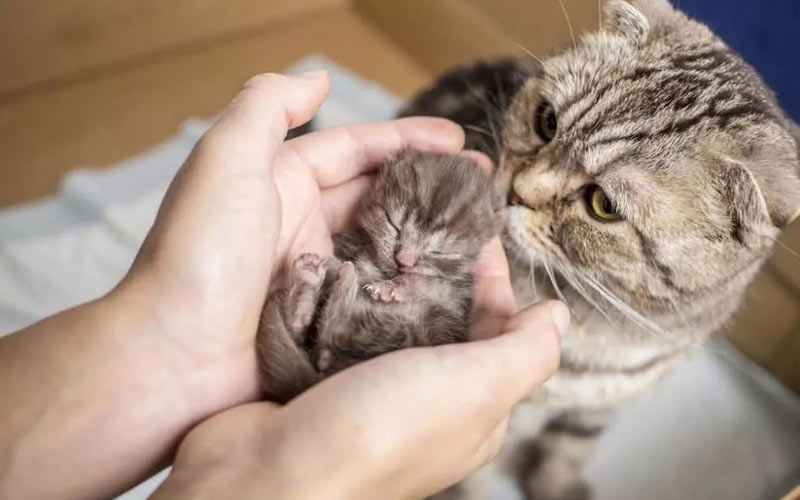
Important! Often, the maternal instinct in cats who become mothers too early appears 3-4 days after giving birth.
If the new mother is healthy but, despite all your efforts and following the veterinarian's recommendations, stubbornly refuses to approach the kittens, you will be unable to influence the situation by forcing the animal to assume parental responsibilities. The only option left for owners if the cat has rejected the kittens due to a lack of maternal instinct is to bottle-feed the kittens.
Cannibalism
Yes, cats sometimes eat their newborn kittens, like most animals classified as carnivores. In particular, driven by instinct, cats eat the placenta and chew off the kittens' umbilical cords. An inexperienced mother can injure the kitten at this point, so some breeders prefer to tie the navels themselves rather than allowing the new mother to chew off the umbilical cord. It's also common for cats in the wild to eat non-viable kittens and those with developmental defects.
Caring for kittens
If a cat has already abandoned her kittens, it's important for breeders to know what to do and act without wasting time, as without care (from the mother or owner), the kittens can simply die in the first hours after birth.
You will need:
- warmer;
- towel (soft, but natural);
- feeding device with a nipple;
- milk replacer (sold in veterinary pharmacies).
Important! Never try to feed newborn kittens with natural cow's milk or store-bought milk. Their composition is far from suitable for a kitten's needs and can cause irreparable harm to the kitten's body.
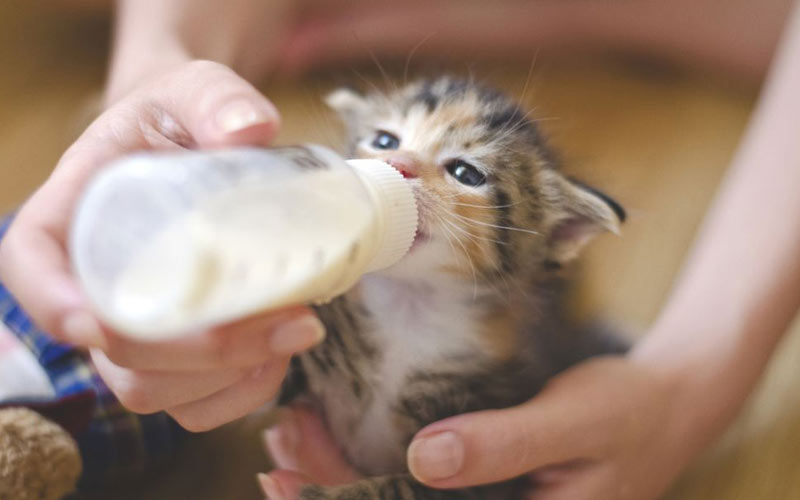
We present to your attention an average feeding chart for newborn kittens, which will be relevant when using a special cat milk replacer.
|
Age |
Volume per feeding |
Frequency of feedings |
|
1-3 days |
2.5 ml
|
every 2 hours |
|
4-7 days |
5 ml |
every 2 hours |
|
6-10 days |
5-7.5 ml |
every 2 hours |
|
11-14 days |
10-12 ml |
every 3 hours |
|
15-21 days |
10-15 ml |
8 times a day |
|
after 21 days |
10-25 ml |
3-4 times a day |
Important! When purchasing special nutrition, be sure to read the manufacturer's recommendations, as the dosage may differ from that listed in the table.
The mixture should be lukewarm, otherwise it can easily burn the baby’s esophagus.
After each feeding, it is important to gently massage the kittens' tummies, as this is how the mother cat stimulates the newborns to empty their bowels.
At 4 weeks, you can gradually introduce solid food into the kittens' diet and accustom them to using a bowl.
Read also:
- My cat has a swollen chest: causes and what to do
- How do cats give birth?
- Do cats have belly buttons?


2 comments
Maria
And nowhere does it say that the transition to artificial feeding should be gradual.... Our kitten died because we had to switch to artificial feeding after the mother refused to feed her kittens, hiding them in a secret place... No one knew how long they were there without food. Then they found them. They saw that the mother wasn't feeding. They started feeding them with a syringe... Within a day, the kittens were gone... Apparently, they overloaded their intestines. (((((() We should have introduced artificial feeding more gradually.)
Zoya
We fed a kitten who had lost his mother with Befar's Lactol milk, feeding every three hours with mandatory tummy massages and a heating pad. We diluted the formula according to the instructions and had no digestive issues at all. We gave him Espumisan a couple of times. The little one ate the formula happily.
Add a comment