
Characteristics of a cat's tongue: why it is rough
Surely every cat lover has experienced at least once the unusual sensation of a pet licking their hand. It feels like sandpaper has been drawn across their skin. So why are cats' tongues so rough? Their structure is truly unique, and there are several explanations for this peculiarity.
Content
Let's watch the cat
Cats are exceptionally clean animals that meticulously groom their fur. Just observe their habits: before curling up into a cozy ball to rest, they will always groom themselves, lick their fur, and wash their face with their paw. Their tongue plays a key role in these procedures, helping their pet maintain a clean and neat appearance.
The filiform and conical papillae we perceive as spines on a cat's tongue are actually present in other animals, including humans. The difference is that in cats, they are significantly larger and more rigid. These structures are not involved in taste perception and serve solely mechanical functions, such as holding food in the mouth.
The papillae owe their hardness and characteristic shape to the horny superficial layer. This layer, composed of the same material as a cat's claws, gives the tongue its rough texture and allows it to perform its functions effectively.
Natural cat brush
Its entire surface is covered with small, hook-like projections. They point toward the throat and are coated with keratin (the same substance our fingernails are made of). This is why, when a cat licks you to show its love and affection, it can cause minor pain and discomfort; the small hooks scratch like sandpaper. This quality of a cat's tongue can be compared to the action of a comb. Just as a person combs and smooths their hair, a cat performs similar actions with its tongue.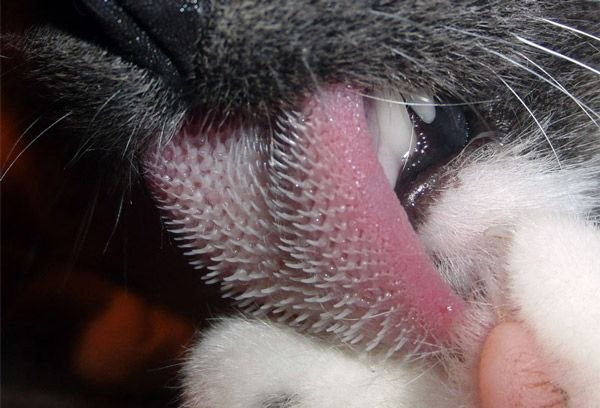
Cats are gifted with the ability to meticulously groom their fur, which can't be said for dogs, who lack the sharp hooks on their tongues and are unable to untangle clumps of fur. It's worth noting that while cats have such an effective grooming tool, they don't always use it. Often, lazy cats, overweight cats, sick animals, or simply spoiled, complacent individuals don't bother licking all areas of their bodies. They often leave this job to their owners.
If you have already taken on the responsibility of being a cat caretaker, then carefully inspect the fur to avoid the formation of matted clumps (mats).
Functions of the cat's tongue
What functions does the rough tongue of a cat perform?
Wool care product
A cat's tongue, while an effective grooming tool, has its pitfalls. Imagine hastily brushing your hair, and some hair ends up on the brush. The same thing happens to cats, except that when hair falls out, it gets caught on their rough tongues. This hair then ends up in the stomach and intestines, which can cause serious problems.
It's good if the cat can vomit the matted fur or pass it in the feces. Otherwise, the matted fur may not come out, requiring laxatives or even surgery. To avoid such problems, carefully groom your pet, especially if their fur is very long. Brushing out any dead hair will make it easier for your cat to groom itself.
The most important organ of taste
The amazing properties of a cat's tongue are truly impressive. It's not just a grooming tool; it's also a vital taste organ. Many cats are extremely picky eaters, as their super-sense of smell influences their sense of taste. Their sense of taste can be altered by any number of factors: changes in food temperature, texture, smell, and other factors that are incomprehensible to humans.
The hooks on a cat's tongue help to retain food in the mouth, which can be considered a positive quality.
If you notice your cat licking something slippery (like a string or ribbon), be careful not to swallow it, as there's a high risk of it getting caught in its mouth. A cat's tongue is shaped like a spoon, making it easy to lap up liquids.
There are other properties too
Besides all this, a cat's tongue also serves as a heat dissipator. In extreme heat or when overexerted, the animal breathes frequently with its tongue hanging out, which helps cool the body. Through many evolutionary stages, the cat's tongue has become an indispensable tool, so be patient with your pet when they lick your face with their "sandpapery" tongue.
1. Grooming
Cats are notoriously clean creatures, and their tongues play a key role in maintaining hygiene. The papillae on their tongues act like miniature brushes, combing out loose hair, removing dirt, and distributing sebum throughout the entire coat. This not only helps keep the coat clean and shiny but also aids in temperature regulation and stimulates circulation.
2. Eating
A cat's rough tongue helps it effectively separate meat from bones in prey. Papillae grip and hold food, facilitating its passage down the throat. This is especially important for wild cats, but domestic cats also use this function when eating.
3. Drinking water
Cats drink water by creating a column of liquid with a quick flick of their tongue. Papillae on the tongue help capture water and direct it into the mouth, making drinking efficient and minimizing splashing.
4. Thermoregulation
When a cat grooms, it applies saliva to its fur, which evaporates and cools the body. This is especially important in hot weather, when cats use grooming as a way to reduce their body temperature.
5. Social behavior
Licking is not only a form of grooming but also a form of communication. Cats may lick each other or their owners to express affection and strengthen social bonds.
Why does a cat have a rough tongue?
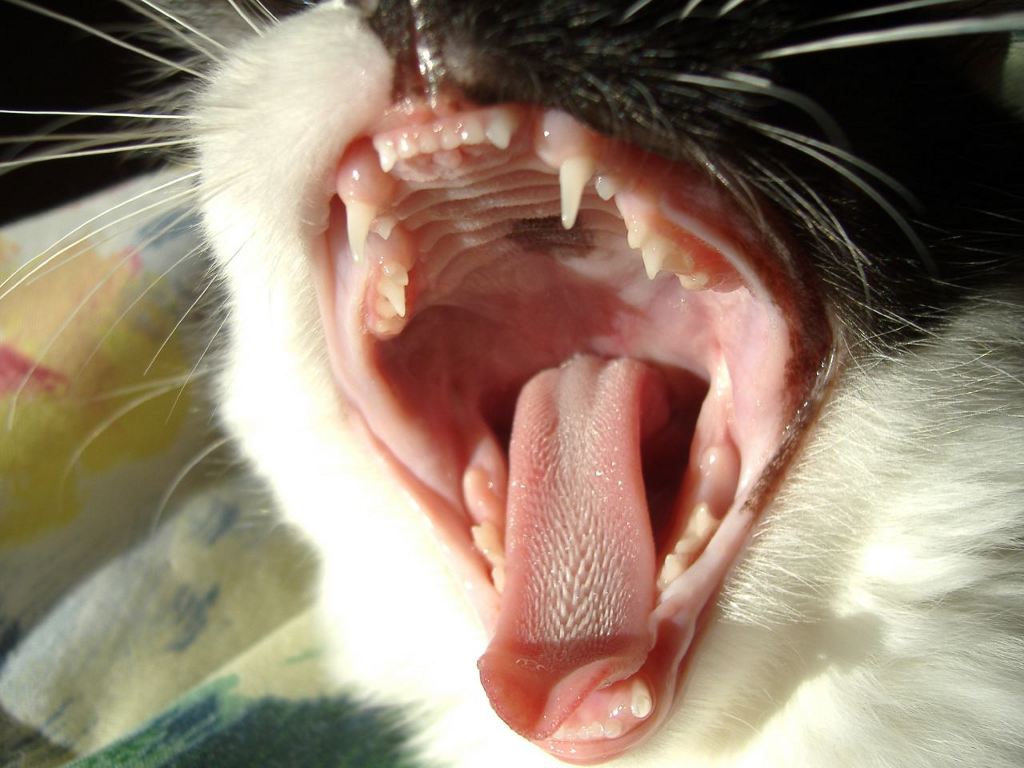
The keratinized projections facing the larynx are essential for predators, including our pets, to help separate food in the mouth. By clinging to the rough surface of the tongue, meat fibers are more easily and quickly separated from bones. This allows cats to more quickly dispatch their prey. The long scales help small predators retain water and food on the tongue's surface.
One of the reasons cats have a rough tongue is because these graceful animals need to regularly groom themselves. After all, thick fur is impossible to brush and style with sharp claws. The tongue, with its sandpaper-like surface acting like a brush, does an excellent job of this. The ridges on the tongue easily straighten the fur and remove excess fluff from the undercoat.
The tongue plays a direct role in the body's thermoregulation. By sticking out the wet tip of its tongue, a cat releases accumulated heat. This helps alleviate discomfort in extreme heat.
Potential problems associated with a rough tongue
Although a rough tongue has many benefits, it can cause some problems:
-
Ingestion of woolDuring grooming, cats may swallow fallen hair, which can accumulate in the stomach and cause vomiting or hairballs.
-
Difficulty removing foreign objects: The backward-facing papillae make it difficult for a cat to remove objects stuck in its mouth, such as threads or small toys.
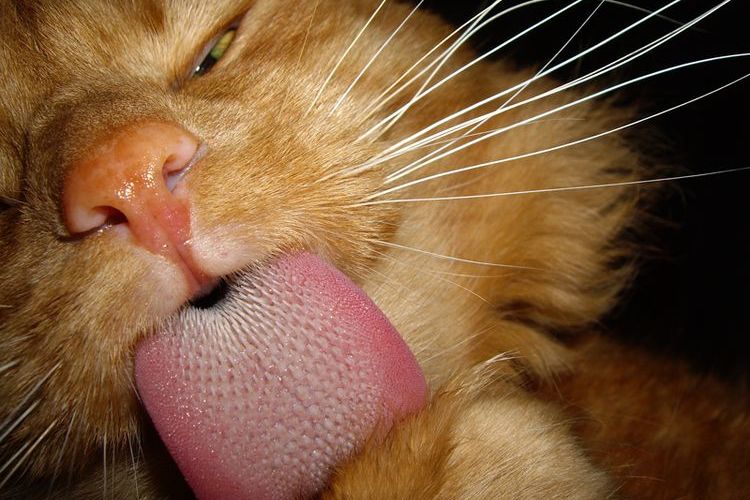
Despite its vital functions, cats' rough tongues sometimes play a nasty trick on them. The position of the capillary papillae, directed toward the larynx, prevents the animal from spitting out debris or hairs caught in the "needles." In such a situation, the animal reflexively tries to swallow the contents. As a result, the debris or hair fibers penetrate deeper into the pharynx and end up in the stomach.
Animals solve this problem by stimulating vomiting. Contractions of the diaphragm allow the stomach contents to be easily expelled. As for wool fibers, they enter the body in colossal quantities, where they become compressed into tangles. Contractions of the diaphragm naturally expel them.
More serious cases occur when cats manage to swallow attractive spools of thread, the sharp needles of which damage the stomach lining. Cats are especially fond of strands of glittery Christmas tinsel, which are not digested but instead cause intestinal obstruction. Therefore, it is crucial to keep dangerous small objects out of reach of your curious pets.
If you notice a piece of string or tinsel sticking out of your pet's mouth, don't rush to pull it out. Instead, carefully trim the visible portion and then feed your pet two tablespoons of Vaseline oil. This will loosen the intestines and speed up the natural digestion process.
How to help your cat groom itself
To minimize potential problems, owners are advised to:
-
Brush your cat regularly, especially during shedding periods, to reduce the amount of hair loss.
-
Provide special foods or pastes, which help remove hair from the stomach.
-
Monitor the cat's behavior and if any signs of discomfort appear, contact your veterinarian.
Read also:


Add a comment