
Scabs on the neck and head of cats
The appearance of scabs on the neck and head in cats is an unpleasant occurrence. The pet loses its attractive appearance and often suffers, as the affected areas are often painful or itchy. The cat tends to scratch the affected area, which leads to secondary injury, often causing bleeding, and hair thinning or complete loss.
To alleviate your pet's condition, it's important to understand the causes and treatments for these conditions. While it's impossible to independently identify them and choose the right treatment without consulting a veterinarian, it's still worth getting a rough idea of what kind of help your cat needs.
Content
Reasons
Cat owners often assume that scabs on the head and neck are caused solely by fungal microorganisms. In fact, the list of problems and triggers is much longer. Scabs can be caused by infectious agents, immune system disorders, injuries, parasites, and more.
Allergy
If the cause of scabs, crusts, or scales on the neck or scalp is an allergy, the primary task is to identify the trigger. Irritants that can cause an allergic reaction include:
- Power componentsThis form of allergy is especially common when changing a kitten's diet or when handing it over to new owners.
- External stimuliThere can be a huge number of them, but the most common include plant pollen, dust and dust mites, mold, certain components of vitamin supplements, enzymes contained in the saliva of blood-sucking parasites, etc.
- MedicinesScabs often form after using strong medications or drugs with severe side effects. In most cases, these reactions are caused by antibiotics or solutions used to combat external parasites.
- Hygiene productsThese can include home care products in the form of solutions or sprays, as well as specialized formulations for treating the cat's surroundings. Sometimes cat shampoos can cause allergies.
The allergen that caused the appearance sores There may be one with crusts, but there are also cases of a combination of irritants. In such cases, identifying the triggering factors is even more difficult.
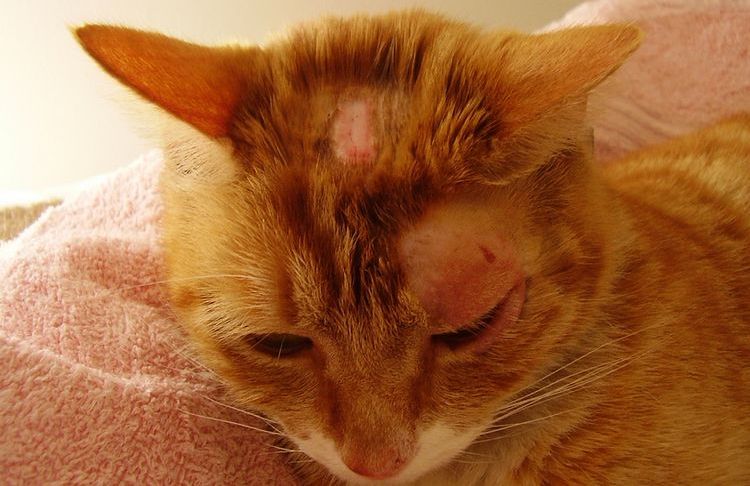
In case of allergies, scabs first form on the head in front of the ears, later moving to the neck, and if treatment is not started in time, they can spread throughout the body.
Folliculitis
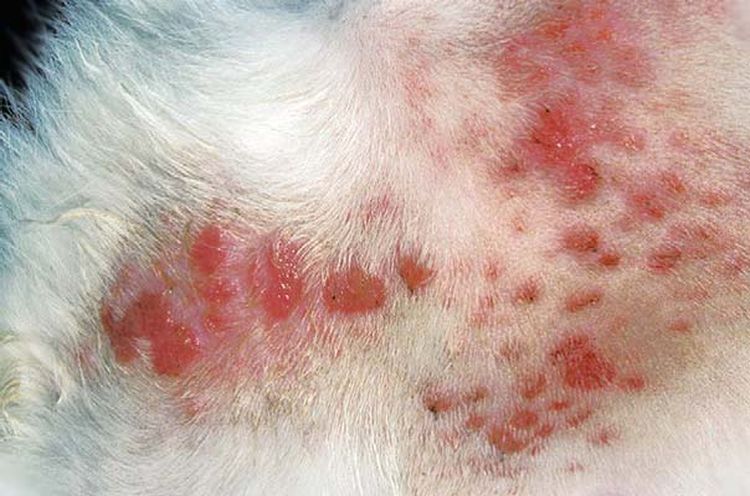
This condition is caused by a staph infection of the skin. The scabs appear hollow, and serous fluid accumulates within them. The scabs become progressively larger in diameter and thickness. They can be located on the muzzle, under the mouth, on the withers, or on the tail. Less commonly, the extremities are affected.
Cats with weak immune systems are most susceptible to this disease; they often suffer after suffering from serious illnesses or due to a lack of normal hygienic care.
Ringworm
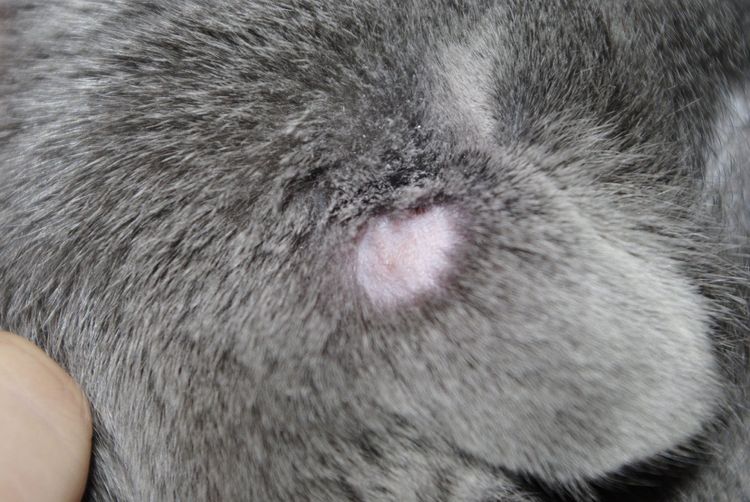
Scabs on the neck, muzzle, head, withers, and other parts of the body are caused by fungal infections that often affect cats of all ages. In the initial stage, redness appears at the site of the infection, which soon develops into scabs, and the redness spreads to the outer edge of the wound, which gradually expands. The animal experiences intense itching at the wound site and may scratch until it bleeds, which sometimes causes secondary infection of the injured skin.
The danger of ringworm is that it is highly contagious, so not only other animals living in the same house, but also people can become infected.
In most cases ringworm It responds quickly to treatment, but in animals with weakened immune systems, therapy may be less effective.
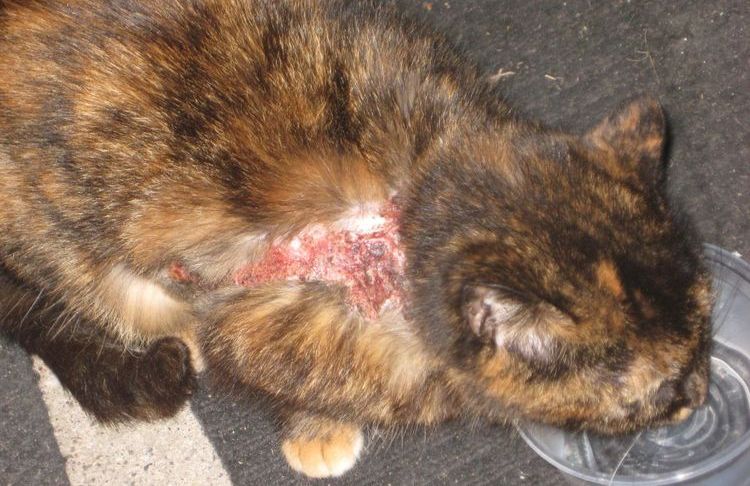
Eczema
Eczema is a skin condition in which crusty lesions appear not only on the head and neck, but also on the sides, back, tail, and belly. Most often, scabs develop on the face, near the mouth or eyes. A characteristic feature is the small size of the lesion.
This condition can develop for several reasons. The first and most common is neurological. Scabs appear due to stress, sometimes triggered by excessive licking. This condition develops after the departure or death of a beloved family member, or after the cat moves to a new home. The arrival of a new pet or a newborn baby can also trigger stress.
Eczema often develops following infectious skin diseases. Sometimes, these crusts accompany chronic internal diseases that require detection and treatment.
Demodicosis
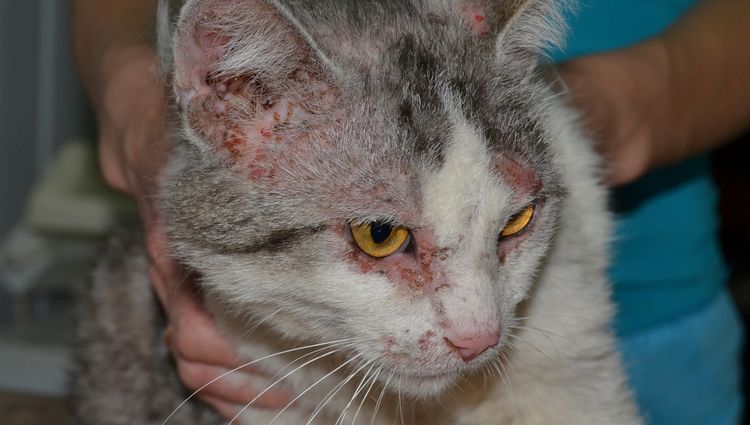
Cats' skin is home to special parasites that are invisible to the naked eye. While the animal is healthy, these organisms don't cause complications, but after a factor significantly weakens the immune system, scabs appear under the fur due to the rapid reproduction of these parasites. Scabs first form near the tail, and then on the withers. In severe cases, scabs cover the entire body. In affected areas, the fur gradually thins.
The main deceit demodicosis The problem is the possibility of relapse. Treatment often takes a long time, sometimes years. Each time the immune system is weakened, the problem can return with renewed vigor, rapidly spreading throughout the body.
Treatment for demodicosis always involves a whole range of procedures, the accuracy of which determines the cat's recovery.
Diagnostics
The veterinarian examines the cat's head and neck, paying particular attention to the scabs and the areas around them. A survey of the owner is mandatory, during which they determine how long ago the symptoms first appeared, the cat's living conditions, its diet, and any recent illnesses.
Based on the clinical picture, the following diagnostic examinations are carried out:
- examination of the skin under ultraviolet light;
- biopsy of samples taken from scabs;
- general blood tests;
- bacteriological examination of smears or scrapings from scabs;
- Allergy tests using special test strips.
Until a diagnosis is made, it is advisable to isolate the animal or minimize contact with household members.
Treatment
Treatment depends on the underlying cause of the scabs on the neck and head. If it's an allergen, it's essential to immediately stop the cat's exposure to it. It's often necessary to review the diet and eliminate offending foods, replacing them with others. Sometimes it's necessary to change the pet's grooming products. Antihistamines are also used.
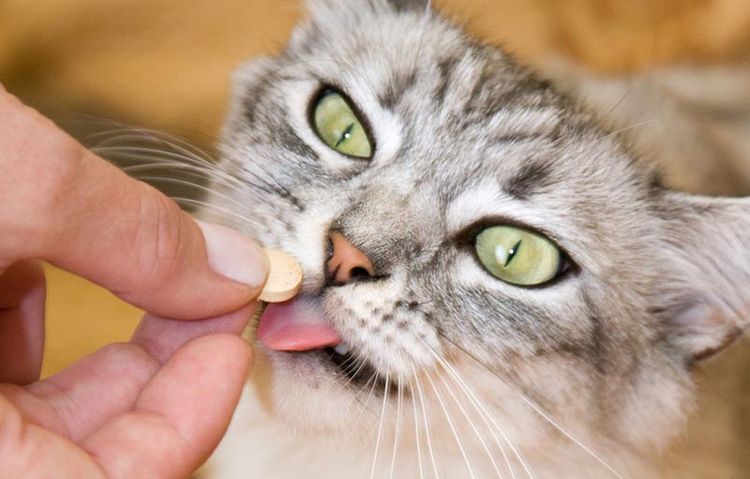
If the disease is caused by an infection, antibiotics are prescribed to treat the scabs. Along with these, immunomodulators and multivitamin supplements are prescribed to help restore the animal's immune system.
Topical treatments applied to the withers are most often used to combat parasites. It's crucial to prevent your pet from licking these products, as they are highly toxic and can cause severe poisoning.
For any such condition, topical medications are prescribed, applied directly to the scabs. These help reduce itching in the affected area and accelerate the healing of existing wounds. During treatment, a keratomatic (powder) shampoo is used for pet care. This shampoo is intended for dry use to prevent spreading the pathogen to healthy areas.
Disinfection of the cat's habitat is especially important during treatment. It's important to disinfect the cat's sleeping area and all food and water dishes. If treatment begins to yield results, the cause has been correctly identified. The duration of treatment is determined by the veterinarian. Stopping treatment just because the scabs on the head and neck have disappeared is not recommended, as this could cause a relapse, which will be even more difficult to treat.
Read also:
- Flea allergy dermatitis in cats: symptoms and treatment
- Subcutaneous mites in cats
- Acaromectin for cats


Add a comment