
Cornish Rex - cat breed
Cornish Rexes The Cornish Rex is one of the few cat breeds with curly fur, so soft to the touch that it's often compared to karakul or velvet. These unusual cats originate from England and are a relatively recent addition. Today, we'll share a description of the Cornish Rex breed, including photos, their personality, and nutrition and care recommendations.
Content
History of origin
The history of the Cornish Rex begins on a farm in Cornwall, England. The farm's owner, Nina Enismore, was breeding rabbits—paradoxically, the Astrix breed, which is distinguished by its wavy fur.
In 1950, Nina's ordinary domestic cat gave birth, and one kitten was very different from the others. He was slender, with long legs, a pointed muzzle, and soft, wavy fur. Nina kept him and named him Callibunker. This cat was destined to become the founder of a new breed. Nina showed her unusual cat to breeders, who advised crossbreeding him—that is, mating the grown Callibunker with his mother. The experiment was a success, and through further trial and error, the unusual appearance was consolidated and the number of curly-coated cats increased. In 1957, a pair of cats of the new breed were brought to the United States. Due to a lack of genetic material, they began to be crossed with other breeds. This affected the appearance but played a positive role in popularizing curly-coated cats worldwide. In 1979, the Cornish Rex breed was officially recognized by feline associations.
Besides the Cornish Rex, there are several other recognized cat breeds with curly fur: the German Rex, the Devon Rex, and the very new Selkirk and Ural Rex. These breeds differ not only in appearance but also in coat characteristics, and each has its own unique gene responsible for curly hair.
Video review of the Cornish Rex cat breed:
Breed description and standards
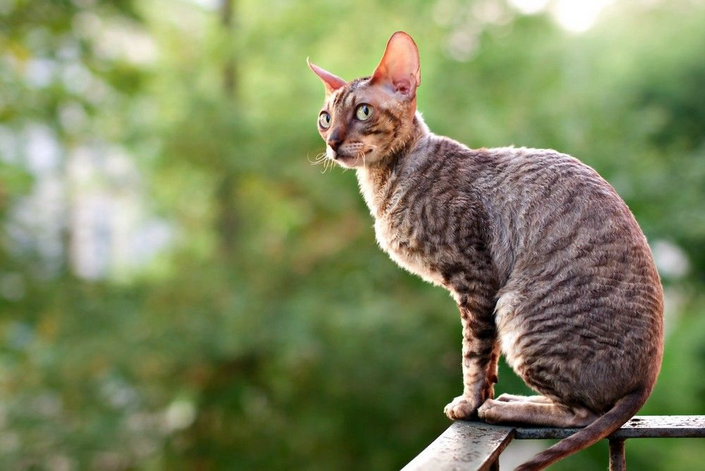
Cornish Rexes are medium-sized cats with wavy fur, slender and elegant, with long legs that are slightly elongated and very flexible. Males are significantly larger than females.
Head and muzzle
The head is wedge-shaped, with a low forehead. The chin is well defined, forming a vertical line with the tip of the nose. The ears are large with rounded tips, very wide at the base, and set high. The almond-shaped eyes are set slightly obliquely. The cheekbones are well defined. The nose is long, accounting for one-third of the total head length, with a distinct indentation at the whisker area.
Body, paws, tail
The Cornish Rex is small to medium-sized. The torso is slender and elongated. The thighs are quite powerful and muscular, yet proportionate to the rest of the body. The back forms an arch, a gentle curve noticeable when the cat stands in a natural position. The shoulders are strong. The legs are long and slender. The paws are slightly oval. The tail is thin and long.
Coat and colors
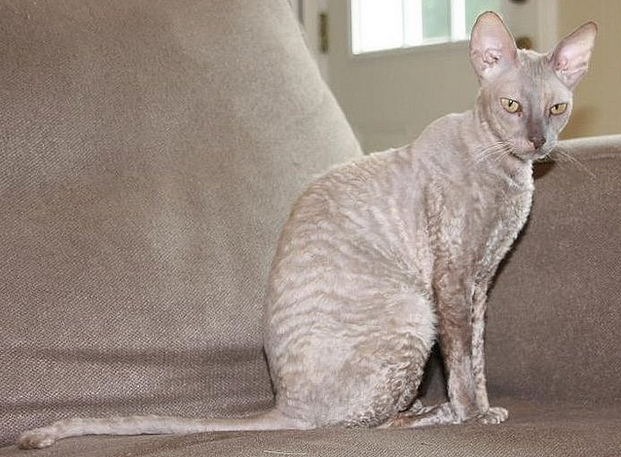
The Cornish Rex's coat is fully formed by the age of one year and should lie in even waves over the body. A notable feature is the absence of guard hairs. All colors are recognized for the breed, including colorpoint.
Character
The Cornish Rexes' personality is most often expressed in the fact that even as adults, they remain as active and spontaneous as kittens. They are inventive and curious, demonstrating incredible intelligence and dexterity in figuring out how to reach inaccessible places or achieve what they desire. Cornish Rexes do not tolerate loneliness or neglect.
They become very attached to their owners, but often put their own habits and desires first, and naturally, humans must take these into account. It's difficult to predict how cohabitation with other pets will be. Everything depends on the cat's age, its disposition, and the personality of its new neighbor.
Maintenance and care
Cornish Rexes, despite their farm ancestry, seem perfectly suited for apartment living. They are true homebodies, rarely wanting to go outside and disliking changes of scenery. When kittens or adult cats move to a new home, the adaptation period can last up to three weeks. During this time, the animal will be restless, meowing, and require special attention, care, and provision with everything it needs, including a cozy home and plenty of toys.
Care
Caring for a Cornish Rex is quite labor-intensive and requires following important rules. First, remember that these cats absolutely cannot tolerate dampness, cold, or drafts.
The wavy, short coat requires regular brushing, but very gently, trying to preserve the curl. Use only brushes with natural bristles. Brushing should be done no more than 1-2 times a week; the rest of the time, loose hairs are best collected with damp hands. The Curnish Rex should be bathed regularly; a customized schedule can be established, with an average frequency of 1-2 times a month. Special shampoos are essential, rinsed strictly in the direction of hair growth. After bathing, the coat should be blotted dry with a bath towel, but do not blow-dry or allow the pet to lick itself. Try to distract it with play until the coat dries naturally.
Eye, ear and oral hygiene
Cats' eyes are washed and ears are cleaned as needed. Special veterinary medications or a decoction of chamomile, calendula, or St. John's wort are used for this purpose. It's also a good idea to accustom your kitten to having their teeth brushed. This procedure should be performed at least once a month. Special pet toothpastes are used that don't require rinsing. Healthy cats don't need to have their claws trimmed; this is done to protect people and animals from accidental scratches and to give their paws a neater, more well-groomed appearance. Claws are trimmed approximately once a month.
Diet
Most Cornish Rexes are true gourmets who constantly change their taste preferences and rarely refuse to try something new, have an excellent appetite and are never averse to eating from their owner's plate.
Feed your pet on a schedule, not on demand. Cats don't always beg for food because they're hungry. They need to understand that the food bowl is filled by the owner's invitation, not by persistent meowing.
The number of feedings depends on age; adult cats can be fed 2-3 times a day. Your pet can be fed a diet of natural ingredients or commercially prepared foods. In the latter case, dry food should account for 1/6 of the total food volume, with the remainder being wet canned food. A mixed diet is less common. When it comes to commercial foods, it's best to choose complete, premium-quality diets, such as:
- Eukanuba Top Condition 1+ is a classic product for daily feeding;
- Hills Feline Adult – Complete food for adult cats, available in different flavors;
- Eagle Pack Adult Cat – this food is holistic and contains bacteria and microorganisms to improve digestion and intestinal microflora;
Orijen Cat 6 Fresh Fish – grain-free food for all breeds of cats; - Royal Canin Indoor or Sensible – food for adult cats living indoors and for those who are picky eaters.
It's worth noting that Cornish Rexes are prone to overeating, and it's important for owners to distinguish between when extra energy is truly needed due to their high activity level, and when an extra portion will be the first step toward rounding out their figure.
Health and life expectancy
Cornish Rexes enjoy good health and immunity. With proper care and maintenance, they rarely suffer from colds, and timely vaccinations protect them from various infectious diseases. With proper care and feeding, Cornish Rexes live a fairly long lifespan, reaching 16 years or more. Average life expectancy is 13 years.
Choosing a kitten and price
The Cornish Rex is not the most common breed, but finding kittens won't be difficult if you don't have any special requirements for them: you're getting them for yourself, not for breeding or a show career.
Cornish Rex kitten prices vary widely. Many are the result of accidental or amateur matings, so they sell for much less, ranging from 3,000 to 7,000 rubles.

If you're specifically interested in a Corny Rex, a purebred kitten, and not one that looks like one, you should choose carefully. Be sure to examine the parents' appearance and behavior, and ensure all documentation is in order. Only then can you move on to the next step—choosing a kitten. The kitten should be affectionate, playful, and not shy, with an excellent appetite. It should have a healthy appearance, with clear eyes and a healthy coat.
It's worth noting that kittens' fur is straighter and doesn't form distinct waves. These waves will only begin to appear after the shedding period, between 6 and 9 months. Kittens with a pedigree from reputable breeders born in a cattery cost an average of 25,000 rubles.

Photos
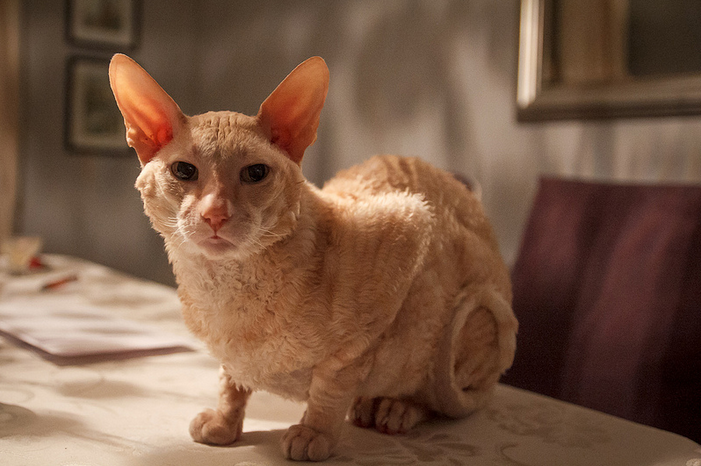
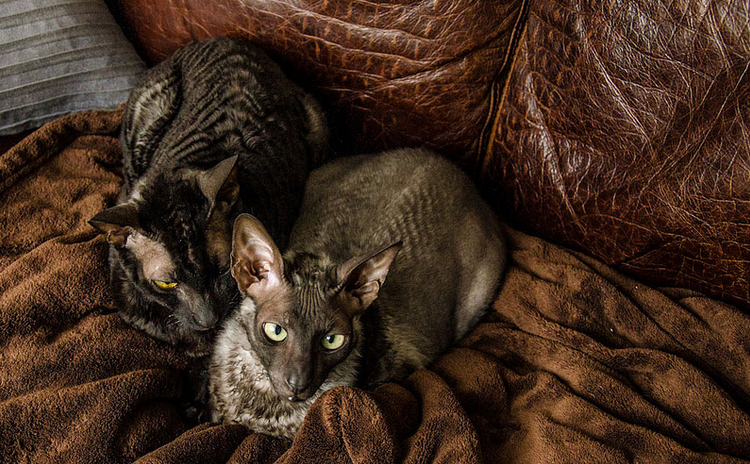
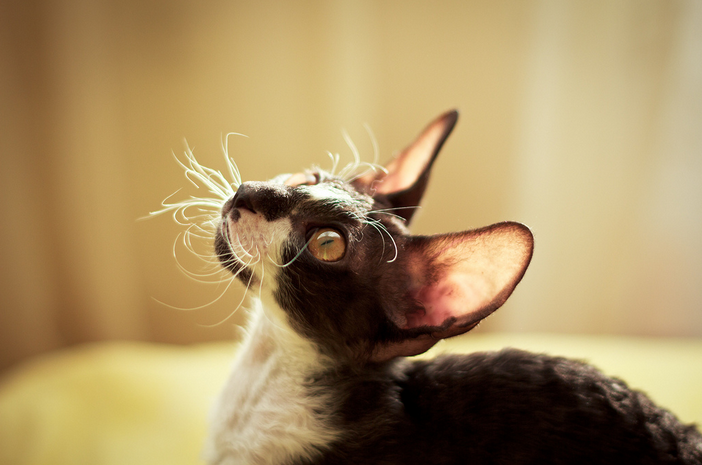
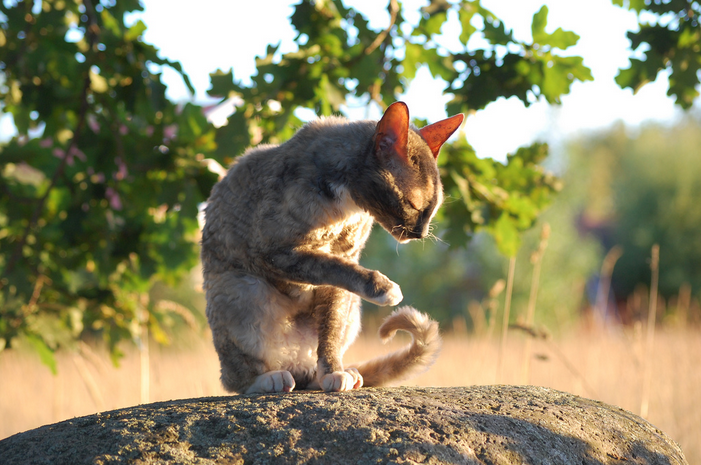
Photos of Cornish Rex cats:

Read also:


Add a comment