
Economy class dog food
Economy-class dog food is the best-selling option in Russia. Let's explore the reasons for their success, whether they pose any risks, and discuss their ingredients, types, and manufacturers in detail.
Content
Dog's diet
Every dog owner, especially if it's their first pet, faces a very important question: how to choose the right diet for their pet or what food is best?
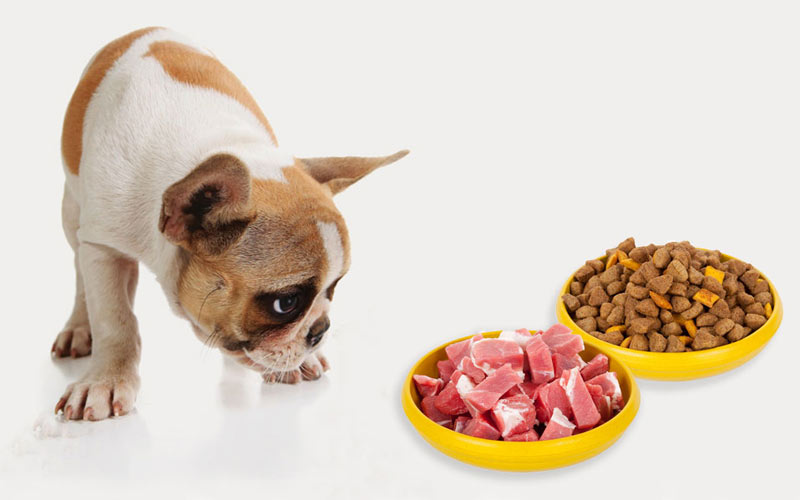
The following options are possible:
- dry food only;
- only natural food;
- mixed diet (one food is dry food, the second is natural food).
Compelling arguments in favor of dry food are:
- balanced diet;
- saving time on preparation;
- no problems with storage and freshness of food.
Even a child can easily pour out the required amount of "crackers" for a pet, whereas natural food must be prepared, stored in the refrigerator, and heated before serving.
Indeed, all ingredients in specialized pet foods are selected in specific proportions and quantities to fully meet the animal's needs. They also contain vitamins and minerals in the right ratios to keep the dog healthy and energetic. Homemade meat porridge is unlikely to compete with foods developed by professionals in this field and subjected to various laboratory tests. After all, no matter how hard an owner tries, they will never be able to create a diet with a balance of vitamins, minerals, nutrients, and proteins identical to dry food.
Differences in economy-class dry dog food
The pet market offers a wide variety of dog food. It can be difficult to navigate the vast array of varieties, manufacturers, and prices and choose the right one. All dog food is generally divided into four groups:
- economy class;
- premium class;
- super premium class;
- holistic (with natural composition).
Ingredients
A noticeable difference between economy class feeds is that their cost is significantly lower - two or even three times lower than feeds from other categories.
Naturally, this factor appeals to dog owners. However, it's important to remember that the low price of budget-class pet foods is due to the low quality of their ingredients. Inexpensive pet foods typically contain:
- cereals (bulk);
- animal products;
- vegetable proteins;
- mineral supplements and vitamins;
- flavorings;
- preservatives;
- flavor enhancers.
Often, in order to reduce production costs and the final price of their products, manufacturers lower the percentage of animal protein in their feed, which negatively impacts nutritional value and, if used regularly during periods of significant exercise or growth, can cause a number of health problems for pets.
When deciding to base their dog's diet on an economy-class food, owners wonder whether their pet will receive the necessary vitamins, microelements, and nutrients. It's clear that the quality of ingredients in this category differs from that of premium alternatives. But is it really that bad, or is the perception of cheap food greatly exaggerated?
A detailed examination of the ingredients used to make economy-class dog food will help answer this question.
(2).png)
Animal products
The line that raises the most questions in the list of ingredients of inexpensive foods is “animal products".
Please note, we're not talking about meat per se. For frankly cheap pet food, the law mandates the use of "animal products" of Category 4, namely:
- culling from slaughterhouses (animals that, for one reason or another, are unfit for human consumption);
- meat production waste (internal organs, bones, sinews, etc.);
- carcasses of old or sick (naturally, not with contagious diseases) farm animals;
- fruits of euthanasia (in some countries).
Obviously, such products in a dog's diet are not beneficial, as it is the proteins found in muscle fibers (meat) that are beneficial, not ground meat or bone meal. Not to mention, animals whose meat contains excessive levels of antibiotics, hormonal medications, and other drugs that are no less dangerous for both humans and dogs are most often culled.
Fats
Normally, dog food should contain both animal and vegetable fats.
However, in the cheapest pet foods, the balance is lacking, with vegetable fats (sunflower, coconut, palm, soybean, etc.) almost entirely replacing animal fats. On the one hand, a dog's gastrointestinal tract is adapted to digest both types of fatty acids. However, carnivores absorb fatty acids from animal foods better than from plant foods. It's worth noting that sunflower and soybean oils contain 30-60% unsaturated fatty acids, while the popular and inexpensive palm oil contains only 10%.

The percentage of fat in a pet's food is selected based on the age, activity level, and health of the animal.
A deficiency in fatty acids can cause a variety of health problems in dogs:
- violation of water exchange in tissues;
- problems with skin and hair (weeping dermatitis);
- severe disorders and death of newborn puppies.
Analogy with human nutrition
Let's try a simple analogy with human nutrition. Many of us eat fast food, mayonnaise, cola, and so on. We understand that all of this is harmful to our bodies, but we eat it anyway, knowing there won't be any immediate effect. The consequences are likely to occur long afterward. And what happens "later" is of little concern to anyone in our fast-paced lives.
The same goes for dog food. Modern commercial dog foods won't cause any immediate negative effects on your pet, but certain "questionable" ingredients used may lead us to believe that they could have an impact on your pet over time.
Economy class food for puppies
A young puppy's body has special nutritional needs. After all, it's at this age that the foundations of health are laid, and proper muscle and skeletal development is established. For example, a puppy requires much more protein than an adult dog. Some manufacturers offer a specialized puppy food within their budget-friendly dog food line, such as Pedigree for puppies of all breeds.
There are also breed-specific classifications: for large, medium, and small breed puppies. Puppy food often has age-specific gradations, as deficiencies in various nutrients can occur at different stages of a puppy's growth. As early as 3-4 months, puppies begin to try feeding on something other than their mother's milk, but their digestive system struggles to quickly adapt to a new type of food.
The best way to feed a baby is to combine dry food with wet food (canned food for puppies).
That's why even cheap puppy food is produced in two forms: dry and wet.
Economy-class dog food ratings
As we mentioned above, it's difficult to rank budget-friendly dog foods, especially since we're unlikely to be able to recommend them at all. However, for those with limited funds or other compelling reasons for buying budget-friendly dog food, we'll try to provide recommendations on which budget-friendly dog food is best.
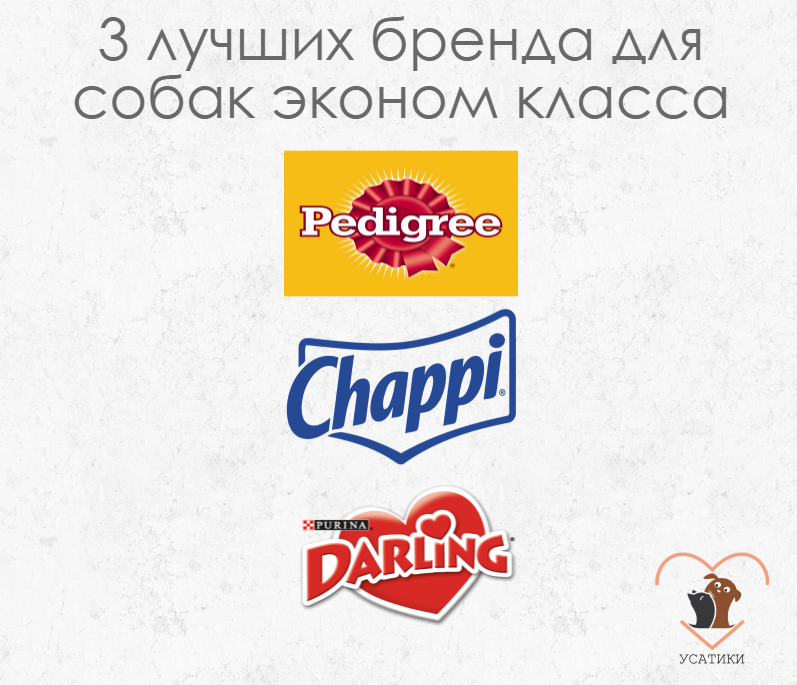
There are high-quality and worthy options in this category of food. Here are the top 3 brands we recommend:
- Pedigree
- Chappi
- Darling
Dry dog food also falls into the economy class category:
- Club 4 paws;
- Cesar (Caesar);
- Friskies;
- Darsi;
- Dr. Clauder`s;
- Dax;
- FUNDog.
Inexpensive Russian-made pet food
When comparing the ingredients of imported economy-class pet foods with comparable-priced domestic diets, it becomes clear that it is better to buy good-quality Russian dog food than imported budget food.
We present to you the top Russian brands that produce good dry dog food containing high-quality ingredients, but at the same price as budget imported products:
- Purina One;
- Sirius;
- Karmy;
- Acary Ciar;
- Secret for Pets;
- Impenaturial;
- BISKO;
- Naughty boy;
- GrandDog;
- Besar Naturally;
- Living force;
- Zoomenu-organic;
- Winner;
- Four-legged Gourmet;
- Our Brand;
- Native feeds;
- CLAN CLASSIC;
- Perfect Fit;
- Kennel yard;
- ProTail;
- Puffins (Puffins);
- For a friend;
- All Dogs;
- Stout;
- Oscar;
- Meal;
- Dilly;
- Favorite.
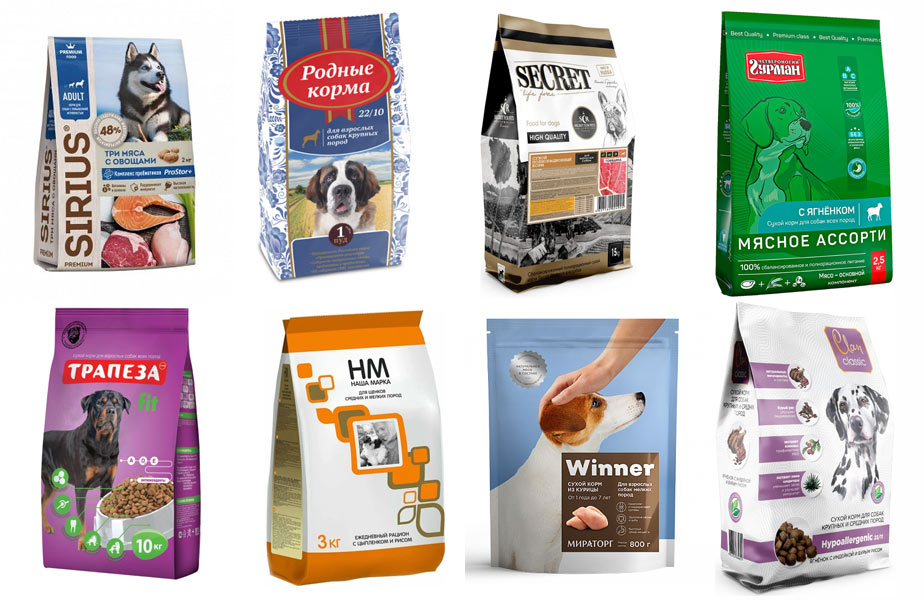
As you can see, finding a good, affordable dry food from a domestic manufacturer is easy today – we have options for dogs of all sizes, as well as many interesting flavors for your favorite foodies.
The right choice of inexpensive food
A pet owner might ask, "Which budget-friendly dog food is best for my pet?" If you decide to feed your pet inexpensive dry food, pay close attention to the following factors:
- Compound (there should be no flavor enhancers, preservatives, colorings or other components of unknown origin)
- BrandLarge corporations value their reputations very highly and won't ruin it with ostensible savings. I've personally visited the Pedigree and Chappie production plant—everything is sterile, they don't let a hair fall.
- Best before date (too long an expiration date should be a warning sign).
- Quality and integrity of packaging (Never buy food in torn packaging, even if the discount looks like a very good offer).
The main criteria by which you can evaluate whether a specific food is suitable for your pet are its gastrointestinal tract function, condition and physical fitness, the pet's overall health and activity level, and the condition of its skin and coat.
Most veterinarians and professional breeders don't rate economy-class dog foods highly. Many don't recommend using these foods as regular food. This is due to the low nutritional value and poor digestibility of these foods. However, many dog enthusiasts hold a different opinion, which is why many dogs in cities are fed almost entirely on inexpensive "crumbles."
Reviews
Elena, veterinarian:
"For quite a long time, breeders believed that good food meant imported food, but today, domestic producers are truly ready to offer high-quality diets that rival the best European brands in terms of composition. I'd only give one piece of advice when choosing: read the ingredients and try what's right for your pet, taking into account their age, weight, and health."
Olga, Spitz breeder:
"I have about 10 dogs in my kennel, and naturally, food is a significant expense. We've never skimped on our pets' food, but after our favorite breeders went out of business, we were forced to look for alternatives. At first, I was very concerned, as a Spitz's appearance depends on the quality of the food, but I was pleasantly surprised that after switching to Sirius, the quality of my dogs' coats and their activity level remained unchanged."
Andrey, Mastino owner:
"Our Butch is a very picky companion, and when we needed to find an alternative to imported food, we were afraid there would be difficulties. We tried various options, from expensive to budget-friendly, but he liked "Nasha Marka" (chicken and rice) the best. We're glad that the price remains quite affordable despite the balanced ingredients."
Read also:


1 comment
aleksandrova_klarochka
It's good that Pedigree has such a varied diet. Our dog has a hard time eating dry food, so we mix it with wet food. It's good that we can do this with the same brand of food, because if we mix it, the dog might just eat it. And here, everything goes well together.
Add a comment