
Vetlife cat food
If your pet is healthy and has a great appetite, then you are lucky: it can be fed any type of food - dry commercial rations, wet feed, or natural food prepared at home. But what if your cat has illnesses that require special nutrition? In this case, veterinary diets, developed to address all the medical indications associated with a particular ailment, come to the rescue.
One of the global market leaders in such diets is the Vetlife brand, which produces food for cats with chronic illnesses and for animals with special needs. This article describes the ingredients used in its production, the animals it is suitable for, and whether the food meets its stated veterinary indications.
Manufacturer
This series of veterinary diets for cats is produced Italian Farmina Pet Foods, and rightly so—FARMINA VET LIFE FELINE. The company, located in Italy, traces its history back to 1965, when a man named Francesco Russo began producing farm food. Half a century later, Russo's heirs continue his tradition, producing pet food that meets the highest standards and is made exclusively from the highest-quality ingredients.
Since 1999, the company has focused on producing pet food. To improve quality and refine its recipes, Russo partnered with the British company Farmina, which boasts a robust research and development base. As a result, Farmina diets are now among the market leaders in ready-to-eat pet food.
The company's factories operate in Serbia and Brazil in addition to Italy. Despite these geographical differences, the recipes for all food products are strictly adhered to at each of the concern's factories.
Assortment
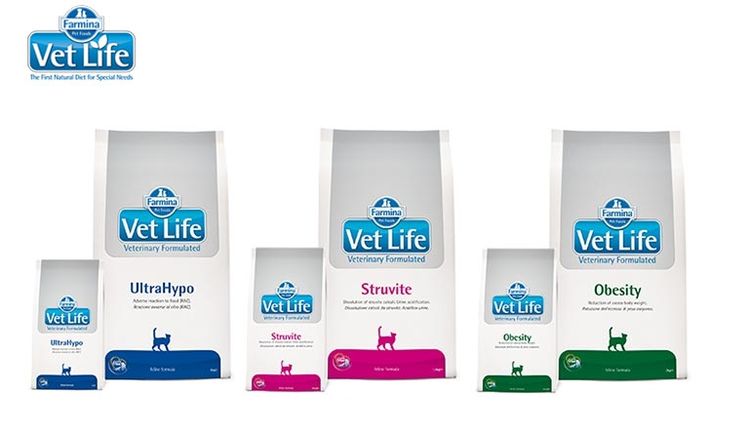
Thanks to the company's strong scientific expertise, the VetLife cat food line offers 12 diets, each tailored to specific health conditions. Below are reviews of each product, highlighting its features and differences from regular dry food:
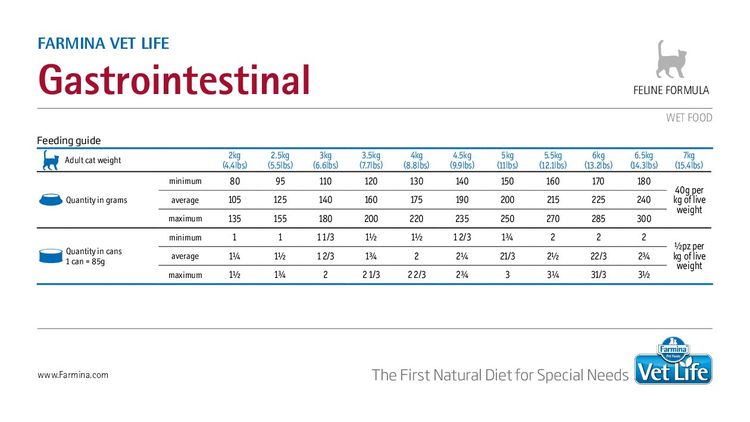
- GASTROINTESTINAL is a special diet for pets with digestive and intestinal absorption issues. Electrolytes help improve digestion, and a specially selected combination of ingredients makes this task easier for weakened bodies.
- HEPATIC is a food for pets with liver problems. Recommended for cats with chronic liver failure. Thanks to its low protein content and high fatty acid content, this veterinary diet relieves stress on the liver, facilitating its regeneration. The low copper content reduces the toxic effect on damaged liver cells.
- STRUVITE is a nutritional supplement that promotes the dissolution of uroliths (stones in the urinary tract). It is effective against struvite-type deposits. Its therapeutic effect is achieved by acidifying urine with DL-methionine, which helps dissolve existing stones and prevents the formation of new ones. In addition to normalizing pH, this food contains a small percentage of protein, calcium, magnesium, and phosphorus, which helps prevent the formation of struvite stones in the urine.
- STRUVITE MANAGEMENT is a food for cats with chronic urolithiasis. It is indicated for the treatment of idiopathic cystitis. Its composition and mechanism of action are similar to STRUVITE, but it also contains ammonium chloride, which effectively prevents the formation of sludge in cats' urinary tracts. It also has a powerful antioxidant effect.
- RENAL is a food for animals with renal failure (acute and chronic). It is also used as a supportive nutrition for congestive heart failure. This food has a reduced protein content and a minimal phosphorus content to reduce the burden on the kidneys.
- CARDIAC is a diet designed for cats with heart failure. Its optimally balanced potassium, sodium, and phosphorus content reduces stress on the heart muscle and restores electrolyte balance in the blood. Taurine and L-carnitine support the absorption and transport of nutrients important for the heart. It also contains high-quality, easily digestible protein, promoting rapid satiety.
- OBESITY is a special diet for animals with various forms of obesity. For therapeutic benefits, the diet has a reduced fat content and an increased percentage of complex carbohydrates, which are slowly broken down, providing a feeling of satiety over a long period of time. Overall calorie content is reduced.
- DIABETIC is a food for animals suffering from diabetes. Specific sources of sugars and starches in the diet's nutrient list help maintain proper blood glucose levels, preventing them from rising.
- ULTRAHYPO – hypoallergenic food For individuals with food intolerances and allergies. Its mechanism of action is based on fish hydrolysate as the sole protein source. As a result, the body digests the protein without realizing it was animal protein. Rice starch, the carbohydrate source, is the safest product in terms of allergens. Fish oil, a source of lipids, is also easily digestible and does not cause allergic reactions.
- NEUTERED MALE is a diet for sterilized male cats. It's formulated with these animals' needs in mind: its reduced nutritional value prevents obesity, and it also contains L-carnitine and light protein to help maintain muscle mass and burn fat. Reduced magnesium and phosphorus levels, along with calcium sulfate, help prevent the development of urolithiasis.
- NEUTERED FEMALE – virtually identical in composition to cat food, but designed for neutered cats. The differences lie in the nutrient percentages, which take into account the nutritional needs of animals of different sexes.
- VETLIFE HAIRBALL is a cat food that helps eliminate hairballs from the digestive tract. Thanks to its fiber content, this formula promotes bowel movements. Probiotics also normalize nutrient absorption.
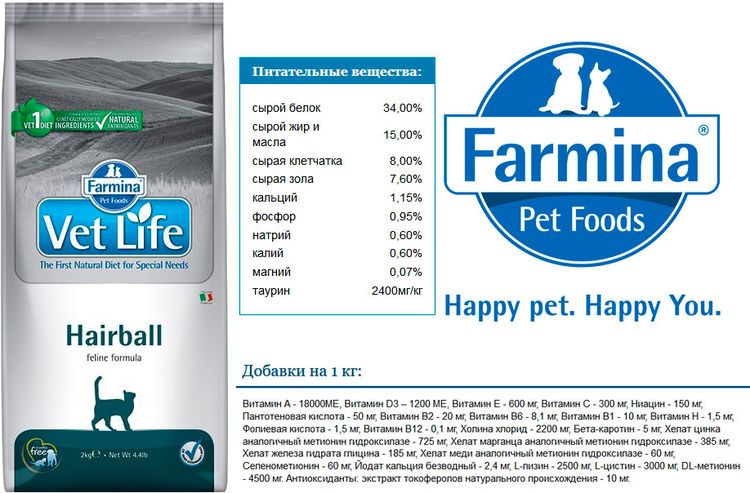
In principle, this list of diets allows you to choose the right food for absolutely any animal. But is it as healthy as the manufacturer claims? To find out, it's necessary to conduct a detailed analysis of the ingredients of each product and find out what it's actually made of. For example, it would be interesting to know the exact ingredients of Gastrointestinal, one of the most popular veterinary foods.
Feed composition
As practice shows, the first 5-7 ingredients on the list form the basis of the recipe, while the rest are merely auxiliary substances. So, the list of ingredients is as follows:
- Dried chicken;
- Rice;
- Fat (animal);
- Corn gluten;
- Flax seeds;
- Spelt;
- Protein hydrolysates.
These ingredients are followed by dehydrated fish, beet pulp, and fish oil. The ingredients also include dried whole eggs, pea fiber, vegetable fat, psyllium seed, and potassium chloride. Then comes the content of dry yeast, inulin, and FOS, monosodium phosphate, calcium sulfate dihydrate, and calendula extract. A separate list of vitamins and minerals is provided.
It's worth noting that the composition of VetLife cat food is quite good: it contains good sources of protein (chicken, fish, and eggs), healthy fats (vegetable oil and fish oil), and additional nutrients that help provide the body with essential nutrients. There are concerns about the animal fats—they're often used to describe low-quality lipids derived from deboning waste. Protein hydrolysates are also questionable—they're often a highly processed meat product and offer no nutritional benefits other than the protein content.
Rice and corn gluten are controversial ingredients that offer little benefit to small carnivores. However, they are not harmful—the protein from these foods is simply not digestible, and only a small portion of the carbohydrates is absorbed. The additional ingredients listed in the ingredients are beneficial and necessary for cats—especially psyllium seeds, pea fiber, FOS, and inulin, which together support normal digestion.
Prices
Another important consideration is the price of VetLife cat food. Obviously, therapeutic food can't be cheap—high-quality ingredients and scientific research require investment. As for FARMINA's diets, the company's pricing policy is as follows:
FARMINA VetLife Hairball:
- from 320 RUR per 400g package;
- from 920 RUR per 2 kg pack;
- from 4350 RUR per 10 kg.
FARMINA VetLife Renal:
- from 410 RUR per 400g;
- from 1610 RUR for 2 kg.;
- from 3760 RUR per 5 kg.;
- from 7100 RUR per 10 kg.
FARMINA VetLife Struvite Management:
- from 380 RUR per 400g;
- from 1160 RUR for 2 kg.;
- from 5210 RUR per 10 kg.
While the prices are indeed high, it's worth considering that this is a high-quality, super-premium food, and that it's not a permanent diet: such diets are often prescribed for the duration of treatment, and once the pet has recovered, it can be returned to its regular diet.
Owner reviews
Leonid, the owner of a Scottish Fold cat:
"My pet is a purebred Scottish Fold, and the doctor warned us that he could develop urolithiasis as he ages—it's common in this breed. So, starting at one year old, we started giving him STRUVITE as a preventative measure." FELINE from the company FARMINA. My cat is already five years old, and so far everything is fine – we get regular tests, and all the indicators are normal. We are happy with the results!
Sveta, breeder of a mixed-breed cat:
“In old age, our Musya started having heart problems – the doctor said that she had developed heart failure and needed heart muscle support, and recommended food CARDIAC. We read reviews online and bought a pack. Well, what can I say – the doctor was right – it's cat food. VetLife is something else! Our beloved one has come back to life and is now active, though not as much as before, but that's understandable—years take their toll. I hope we've extended her life by a couple of years thanks to this miracle!"
Veterinarian Reviews
Alexey, a veterinarian at a state clinic:
"When needed, I always prescribe VetLife by Farmina. Firstly, the composition of these diets is very good, and secondly, they truly have a good therapeutic effect. The manufacturer has a strong scientific base, excellent raw materials for production, and high-quality manufacturing processes. The result is excellent nutrition for weakened and chronically ill cats."
Read also:


Add a comment