
Monge cat food
Monge cat food owes its origin to a unique incident. Fifty years ago in Italy, a small farm producing chicken for restaurants faced the problem of how to dispose of waste. Throwing it away was unprofitable, and finding a buyer for the meat scraps, even if they were organic, was impossible. So in 1963, Baldassare Monge, the owner of the family business, came up with a revolutionary idea: producing pet food. This idea resonated so well with the growing market demand that restaurant meat production soon became a side business, while pet food production became a full-fledged enterprise.
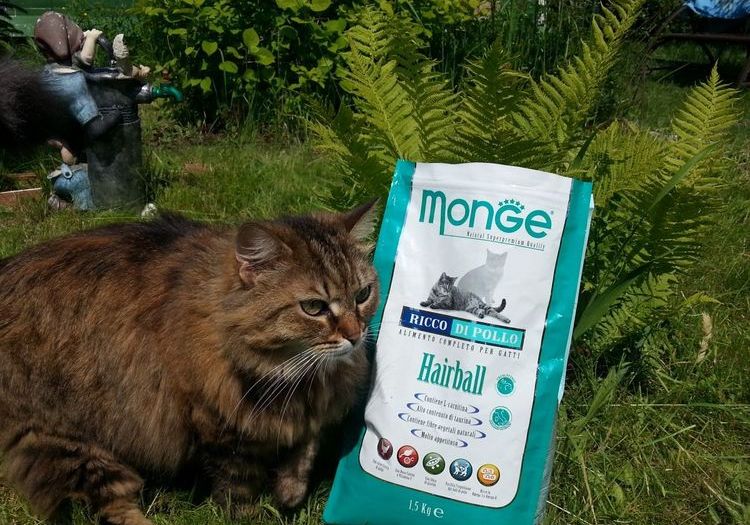
The secret to their success was that in the mid-20th century, pets were fed primarily human food. This had a negative impact on their health and lifespan. The need for specialized food tailored to the needs of cats was long overdue, and so the creators of the Monge brand hit the nail on the head with their idea.
Content
Monge: The perfect cat food
Regardless of where a cat lives—in an apartment, a shelter, or in the wild—its physiological needs remain the same. And these are the needs of a predator. Food should be fresh, contain maximum protein, vitamins, and only a few plant-based ingredients. In fact, the recipe for Monju food was inspired by nature itself. The original composition wet Monge's dry food contained only meat. The formula was additionally enriched with such important components as vitamin E, taurine, and plant-based carbohydrates.
Such an attractive composition quickly made Monge cat food popular among breeders and cattery owners, and after them, owners who truly love their animals and care about their nutrition also became fans of the brand.
Today, the brand's principles remain unchanged, making Monge cat food a super-premium option, characterized by its naturalness, safety, and balanced composition. Our in-house production facility, located in an ecologically clean region of Italy, rigorous production control, a commitment to safety, and the use of raw materials grown without antibiotics or growth hormones make Monge dry cat food the ideal diet for furry pets of all breeds and ages.
The Monge cat food line: thoughtful variety
Five main lines of food allow owners to find the optimal food for their pet.
- Classic dry cat food (Daily Line Cat).
A high-protein food designed for daily feeding of healthy pets. Three options are divided by age: food for kittens, pregnant and lactating females, adult pets, and senior pets over 11 years old.
- Functional feeds (Functional Line Cat).
This group includes diets for sterilized cats, for animals living indoors, as well as food for removing hair from the body and preventing urolithiasis.
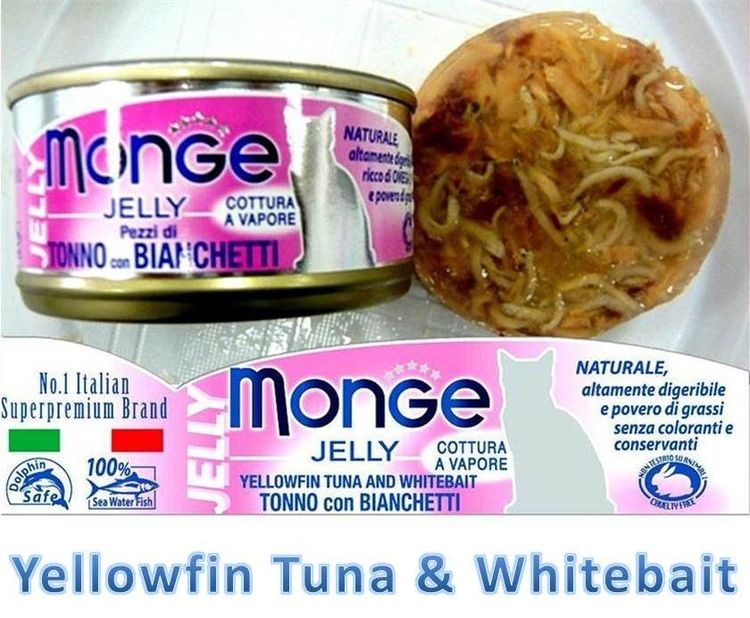
- Natural wet canned food (Monge Natural)
Six canned food options based on meat and fish: tuna and chicken, tuna and salmon, tuna, chicken and beef, chicken and seafood, tuna, chicken and shrimp, and tuna only.
- Food that meets the physiological needs of cats.
For adult predators with well-developed instincts, we offer two dry food options: with anchovies and hare. This diet is high in protein and allows cats to receive the same nutritional profile they would receive if they hunted independently in the wild.
- Grain-Free Veterinary Diets
Animals suffering from any illness become sensitive to food and its composition. Oxidative processes occurring in a sick body inevitably impact digestion, impairing it. Moreover, the quality and speed of digestion are often decisive factors in recovery. Our grain-free veterinary line includes diets for cats with diabetes, excess weight, liver disease, kidney failure, gastrointestinal pathologies, skin diseases, and urinary tract disorders.
Monge cat food: composition and its features
Most popular and advertised cat foods contain substances that are controversial from a veterinary perspective. Primarily, this concerns grains, especially wheat and corn. These are practically indigestible by domesticated animals and serve only to bulk up the food. In effect, owners, thinking they're saving money, are buying a dummy that their pets don't need, but which the manufacturer actually uses to boost their profits. Furthermore, grains can cause allergies in cats. The only exception to this rule is rice—it's safe for cats, although its digestibility is far from perfect.
Popular artificial chemical ingredients, such as flavorings, enhancers, and flavor enhancers, are also extremely dangerous. Cats are completely unable to digest and eliminate them, resulting in toxin accumulation, poisoning, and disruption of the excretory system and liver.
To understand how balanced Monge cat food is, let's take a closer look at the composition of several food options.
Canned tuna and salmon include:
- Tuna flesh – 45%. This is a very good indicator, as the high protein content, as well as Omega-3 and Omega-6 fatty acids, have a positive effect on the cat's health.
- Chicken – 25%. A cheaper but less nutritious source of protein, without which the normal functioning of a cat's body is impossible.
- Salmon 5%. Protein, fish oil, and an additional source of flavor and natural aroma. A wonderful ingredient, especially if your pet loves fish.
- Rice 1%. A minimal amount of plant ingredients is essential for high-quality premium and super-premium foods. In this case, the protein-to-fiber ratio is ideal. Importantly, the grains selected are hypoallergenic rice, which is inherently safe for your pet.
- Vitamin E. An additional supplement that is safe for the animal and enhances its immunity.
Importantly, this composition is completely consistent with what owners will see when opening the can. Reviews of Monge cat food from owners and breeders indicate that the canned food is clearly natural: the tuna and chicken pieces, not fiber, are clearly visible, along with small inclusions of rice grains. Unlike other lines of the brand, the canned food is produced in Thailand, as this allows for the use of the freshest fish possible, not frozen or subjected to long transportation times.
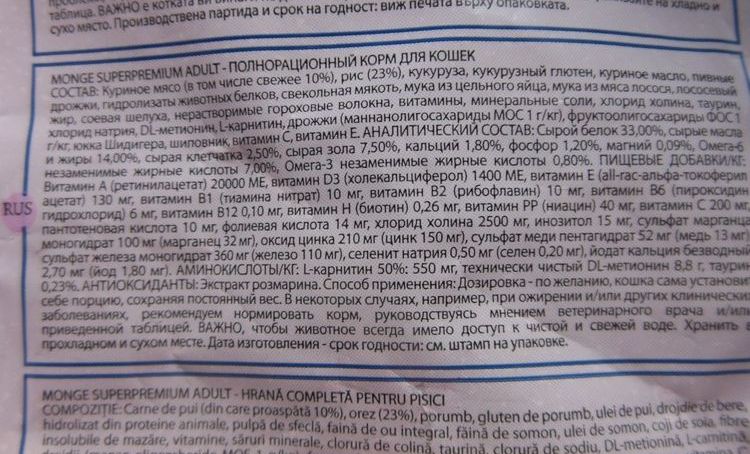
Food for sterilized cats. This diet requires careful handling on the part of the manufacturer: animals deprived of reproductive functions are prone to gaining weight faster, so the food composition must take this into account. The growing popularity of such surgeries makes the production of food for sterilized pets highly sought after. Monge food contains:
- Chicken meat – 36%. Of this, 26% is dehydrated and 10% is fresh. A good source of protein that doesn't add excessively to the cost of the feed.
- Wheat and corn gluten flour. These ingredients are not ideal and can trigger allergic reactions. They are included to add volume to the pillows.
- Hydrolyzed animal protein. A good component that increases the overall protein content of the feed.
- Chicken fat. The manufacturer chose the optimal ingredient for furry pets: pork and beef fat are harmful to their livers, while chicken fat is a classic, safe source of calories.
- Insoluble pea fiber. The fiber in this case is designed to help digested food pass through the intestinal loops and leave the body as quickly as possible.
- Taurine is an essential nutrient that cats can only obtain from food sources. In the wild, this occurs through eating raw prey; in an apartment, its availability depends entirely on the care and diligence of the pet food manufacturer.
- Fish and fish oil. A vital source of fatty acids, which are essential for brain function and immune health.
Overall, the ingredients are more than good and fully meet the expectations of a super premium product. The presence of corn flour and wheat is a bit of a concern: if the manufacturer had replaced them with rice and its derivatives, the ingredients would have been perfect.
Reviews from veterinarians and owners
Online reviews of Monge cat food are strikingly different from those of other brands. The lack of negative reviews is particularly impressive – the food is truly suitable for almost all furry pets and helps resolve veterinary issues.
Andrey Lvovich, veterinarian
"I've heard about Monge food for a long time, but I was able to establish supply only relatively recently. I was particularly impressed by the Grain Free line: I've tried it on sick animals several times, and their condition has improved dramatically, when combined with proper treatment. I recommend it for animals after surgery, when it's important to improve the function of their internal organs, and I've never heard any complaints or grievances from owners."
Irina, a Siberian cat named Ray
"Our main problem is always hair. It's incredibly difficult to remove it from the body after endless licking. Sometimes the cat suffered so much, it was scary to watch. I found Hairball by Monge based on reviews. The price was certainly impressive, but the results exceeded all expectations: the cat no longer convulses in agony, trying to get rid of the accumulated "riches."
Cost: Is the expense worth it?
Monge cat food isn't exactly budget-friendly: a can of it will set you back at least 150 rubles. A pack of regular (non-medicated) dry food is even more expensive: 400 grams costs 250-300 rubles. Larger packages (1,500 grams) will set you back at least 800 rubles.
Buying a large package at once will help you save money: 10 kg costs around 3,200-3,400 rubles. A simple calculation shows that in this case, 400 grams of food will cost not 250, but only 140-150 rubles.
Prices for high-protein and veterinary feeds are much higher than regular dry food: from 900 rubles per kilogram and a half.
Overall, the cost of Monge feed is completely justified given its composition and exceptional environmental friendliness: the company, which supplies poultry to the tables of the best Italian restaurants, does not use additives, antibiotics, or stimulants in meat production.
Are there any disadvantages?
Even the most discerning owner or veterinarian won't find any significant drawbacks to Monge cat food. The composition, properties, naturalness, and safety are truly top-notch.
The disadvantages include the high, albeit entirely justifiable, cost and relative unavailability. It's often very difficult to find this food even in major online stores.
Read also:


Add a comment