
Hills i/d cat food
Hill's Pet Nutrition, an American company, has been producing Hill's cat and dog food for over 60 years. The company's research and development center employs hundreds of professional specialists in veterinary science, nutrition, and physiology. The quality of its food is guaranteed by numerous European and international certifications.
Types of Hills food
Hill's cat food comes in two types: everyday and dietary. Science Plan everyday food is designed for healthy cats of all ages, breeds, and weights. The line includes dry and canned foods made with fish, chicken, beef, and vegetables. They may also contain carbohydrates such as corn or rice flour, hydrolyzed vegetable or animal protein, animal or vegetable fat, and CaCl.2 or CaSO4, which serve as a source of calcium and a flavor additive.
Hills Prescription Diet i/d specialized dietary foods are formulated for cats with musculoskeletal, gastrointestinal, liver, kidney, and cardiovascular conditions. There are also foods for obese cats, those prone to allergies, and special diets for animals recovering from surgery. The Prescription Diet range includes over three dozen varieties, allowing for a customized diet to be tailored to each individual case.
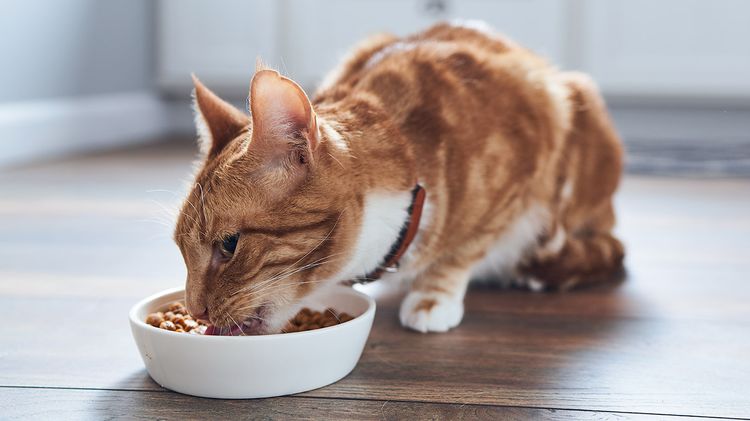
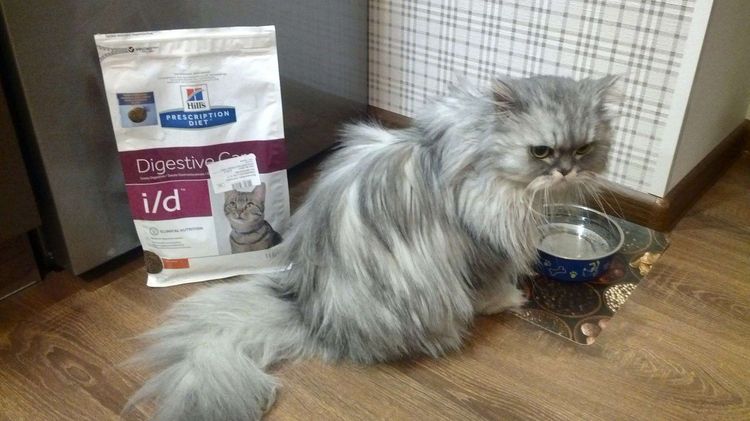
Hills i/d dry food
Prescription Diet i/d Digestive pressed dry kibble contains only the nutrients approved for a particular condition in quantities that meet the animal's nutritional needs:
- 13-15% proteins;
- about 0.5% fat;
- no more than 1% fiber;
- 2% minerals.
Hill's pet food does not contain chemical preservatives or flavorings. Depending on the intended use of the food, its ingredients may include:
- corn, flaxseed, maize, soy or rice flour;
- animal fat;
- vegetable oil;
- egg powder;
- potassium chloride;
- calcium carbonate;
- sodium, potassium, iron, zinc;
- L-carnitine;
- L-arginine;
- L-tryptophan;
- amino acids taurine and methionine.
When feeding cats such foods, there is no need to introduce additional products into the diet.
The most popular Hills dietary dry foods:
- Prescription Diet Feline Intestinal. A dietary supplement for cats with gastrointestinal disorders. Contains easily digestible proteins, carbohydrates, and fats, helping to restore natural intestinal flora and reduce inflammation.
- Hill's Prescription Diet For treatment ICD. Special additives help dissolve struvite crystals that form in urine.
- Hill's Feline Metabolic ― Designed for weight management and improved metabolism in older cats. Contains substances that speed up metabolism.
- j/d Joint Care ― A specialized diet for the treatment and prevention of joint diseases. Contains Omega-3 fatty acids.
- Prescription Z/D Feline. Hypoallergenic food for cats with allergies, the source of protein in which is hydrolyzed protein of animal origin.
- Prescription Diet Feline «Treatment liver". The diet formula contains antioxidants that neutralize the effects of free radicals and help reduce the load on the liver.
Price
The daily norm of Hills i/d dry food depends on the cat’s weight and for adults is:
- for weight up to 3 kg - 25-35 g;
- for weight 3-5 kg - 50 g;
- for weight over 5 kg - 12 g per 1 kg.
Hill's dry food is sold in vacuum-sealed bags of 1.5, 2, 3, and 7.5 kg. The price depends on the type of food and the weight of the package; a 1.5 kg bag costs between 1,200 and 1,900 rubles.
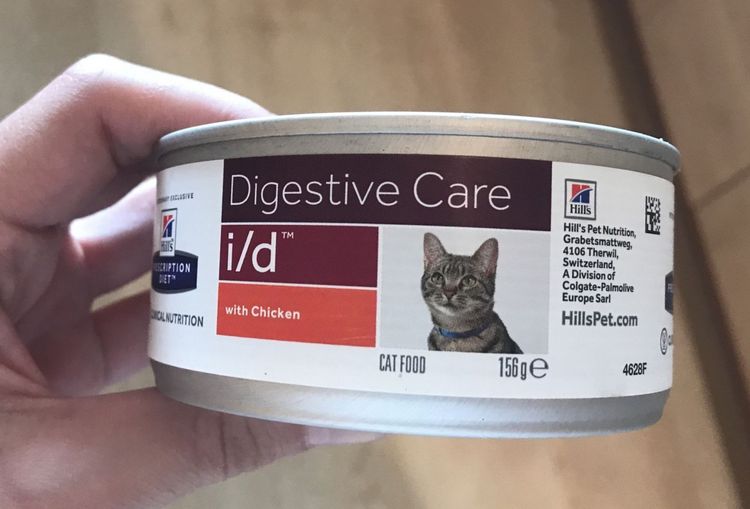
Hills i/d Canned Cat Food
Hills i/d wet food is designed for dietary therapy for conditions of the digestive, genitourinary, cardiovascular, and other systems. It consists of pieces of meat or liver in broth with added grains, vegetables, fruits, or pastes (pâtés) made from these same ingredients. The taste and appearance of these canned foods are similar to homemade dishes.
In addition to the main products, wet food usually contains:
- wheat flour, rice or potato starch;
- animal or vegetable fat;
- hydrolyzed protein;
- calcium phosphate and/or carbonate;
- potassium chloride;
- amino acids taurine and methionine;
- vitamins A, E, C;
- microelements calcium, phosphorus, sodium, potassium, magnesium;
- table salt.
The energy value of medicinal cat food depends on its composition and averages from 75 to 150 kcal/100 g. The daily norm of wet food is determined based on 5% of the animal's weight.
Wet food is packaged in metal jars or sealed film pouches. These packages are small in size—50 to 200 grams—since their shelf life after opening is no more than 24 hours. The price of a 150-gram jar of wet food, depending on its contents, ranges from 50 to 150 rubles, while a 65-gram pouch costs approximately 100 rubles.
The most popular products in the Hills line of dietary canned food are:
- Hill's i/d Feline «Treatment Gastrointestinal tract". A diet for cats with digestive issues and during recovery from surgery. Its delicate texture accelerates digestion and improves nutrient absorption, while its increased electrolyte content helps restore salts lost through vomiting or diarrhea.
- Hill's Prescription Diet c/d Multicare Urinary CareA dietetic food for cats with urinary tract pathology. Special additives and a reduced salt content promote the dissolution of uroliths and reduce the risk of their recurrence.
- Pate Hill's Prescription diet K/D Feline. Wet food for cats with kidney disease. The presence of omega-3 fatty acids, high-quality proteins, and limited amounts of sodium and phosphorus reduces kidney strain and clinical signs of the disease.
- Hill's PD Feline Z/D. A dietary food for cats prone to food allergies. Contains hydrolyzed animal protein.
- Hill's PD Feline W/DA low-calorie wet food recommended for preventing obesity in cats. High fiber content promotes satiety and improves gastrointestinal motility, while L-carnitine accelerates fat burning.
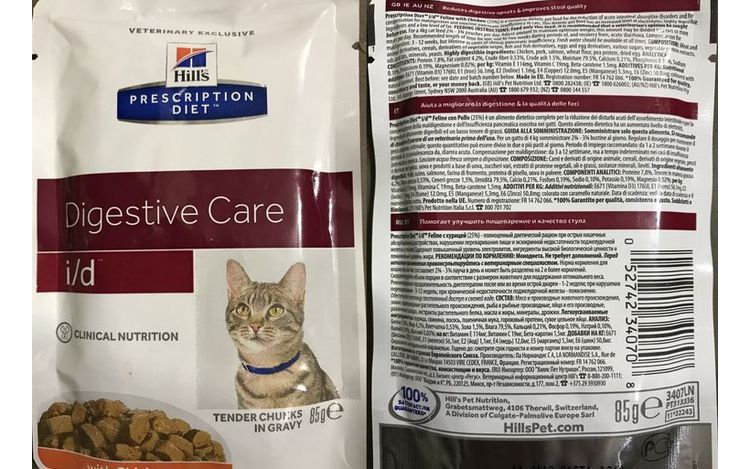
Please note! It is not recommended to feed Hill's dietary foods concurrently with foods from other brands. Mixing these foods can disrupt the precise nutrient balance of Hill's i/d diets and cause health problems or excess weight gain in cats.
Reviews
Roman, Krasnodar
"My Angora, Bart, is very picky about his food, and even if he likes it, it often causes allergies. I tried different dry and wet foods, and Hills Science Plan turned out to be the best. It's affordable, hypoallergenic, and my cat loves it, although I personally don't really like the smell."
Elena, Tomsk
"We've had Linda, a charming Scottish Fold, for seven years now. Recently, she's become less active and started gaining weight, and she's also been having occasional stomach issues. The vet recommended switching her to a therapeutic food—dry Hill's Feline Metabolic and wet Hill's PD Feline W/D. They can be used simultaneously, which is also nice. It turned out to be the right choice—Linda has stopped gaining weight, and her stomach is working better."
Mikhail Grigorievich Efremov, veterinarian
"Veterinarians recommend Hill's i/d specialized foods to cat owners more often than any other brand because they are perfectly balanced, contain over 50 essential nutrients, and have superior taste. However, it's not entirely accurate to call these foods therapeutic; they're more accurately called dietary foods. They aid in treatment, speed recovery, and, thanks to their special formula, serve as an excellent preventative measure. For recommendations on choosing a dietary food, it's best to consult your veterinarian."
Read also:



Add a comment