
Hills cat food
The history of Hill's is quite interesting and unusual. Its founding wasn't motivated by the desire to make money from pet food—it all happened by chance. In 1939, American veterinarian Mark Morris saw an unusual patient. It was a German Shepherd, a guide dog, who had been diagnosed with chronic kidney failure. This condition was incurable, meaning the animal was doomed.
However, the doctor didn't give up and decided to take an innovative approach – he created a special diet designed to help the body fight the disease. The result surprised everyone – the dog lived significantly longer than expected. This was the first use of specialized nutrition for the treatment of veterinary "special conditions." Years of meticulous research followed, and in 1948, the Hills company was founded, producing food for clinical treatment of animals (veterinary diets).
Today, the company operates a comprehensive research and development center in Topeka, Kansas, USA. It houses the world's leading animal nutrition experts, as well as renowned nutritionists and veterinarians, all working to develop the unique formulas for Hill's pet foods.
Content
Variety of Hill's cat foods
Any Hill's cat food can be classified into one of 4 large groups:
- Prescription Diet – special food developed to support the animal’s body in special conditions (chronic diseases);
- Science Plan is a line that includes food for daily feeding, taking into account the age, sensitivity and size of the cat;
- Natures Best – food made exclusively from natural ingredients;
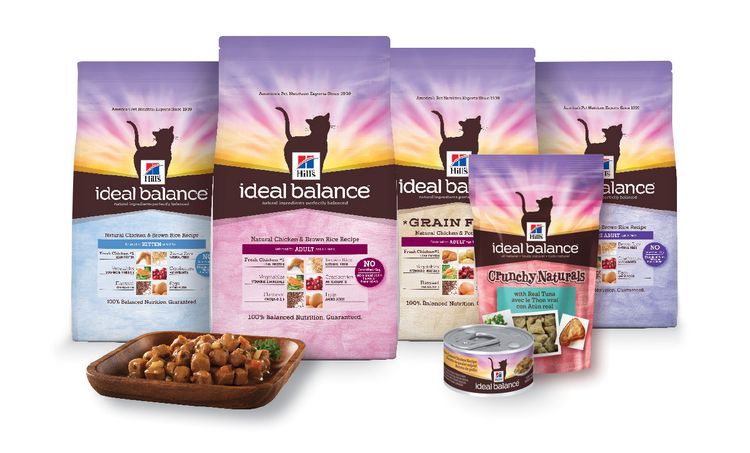
- Ideal Balance – a perfectly balanced food, made taking into account all the needs and lifestyle of the animal;
Despite this deeply scientific approach, this company's food isn't considered either holistic or super-premium. It ranks highly among premium foods and is one of the best options in this segment. This is confirmed by the numerous online reviews of Hills cat food. Owners are often overjoyed by their pet's activity and excellent health, especially if they switched their pet to Hills from a cheaper, budget-friendly option.
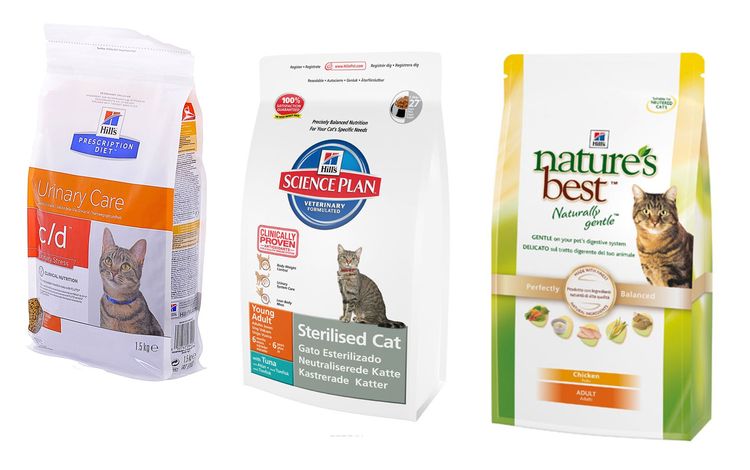
Prescription Diet includes diets for overweight (Feline Metabolic, m/d, r/d, w/d), food for animals with kidney disease (k/d), food for recovery after treatment (i/d), diet for arthritis (j/d), food for urinary tract support (c/d, k/d, s/d, w/d), food for liver disease (l/d), and diets for heart disease (k/d, l/d).
An attentive reader might ask: why are the diets duplicated? It's simple: the same food contains substances that support the functioning of different animal systems.
Hill's Science Plan cat food is divided into four age-specific groups, based on the pet's age. These include:
- Kitten – for cats aged 3 weeks to 1 year. A complete complex of essential nutrients will ensure your pet's healthy and stable development.
- Adult – for pets aged 1 to 6 years. This food is ideal for daily feeding on a consistent basis.
- Mature is a food specially formulated for cats over 7 years old. It contains nutrients necessary to maintain all organs and body systems in good condition.
- Senior is a food for senior pets over 11 years of age. Its unique formula supports the kidneys, liver, and brain, ensuring your cat remains healthy and in excellent health. A unique feature of this food is that it is available exclusively in pouches: older pets often develop gum and dental problems, making dry food unsuitable for them.
All Science Plan foods (except Senior) are available in three formats: dry, canned, and pouches. This ensures that every pet receives the nutrition they are accustomed to.
The next line is Nature's Best, a Hills cat food that veterinarians have rated as "excellent!" According to the manufacturer, this food contains only natural ingredients, ensuring your pet receives only high-quality nutrition. Like the previous line, Nature's Best is available in kitten, adult, and senior cat food.
Last on our list is the Ideal Balance line of food. The manufacturer claims it's practically the perfect nutrition for any cat, and cites several arguments for this. Firstly, it uses only natural ingredients; secondly, all the proportions of ingredients are carefully selected to ensure your kitty always feels great; and thirdly, the line includes grain-free food. This seems like the perfect diet, since cats are carnivores and love meat. But there's a small catch: the grains in this food are replaced with potatoes, so the meat content doesn't increase. However, this food, labeled "No Grain," is an excellent option for animals with gluten allergies.
Composition of Hill's cat food
For a detailed examination of the food's ingredients, we chose one of the most popular foods on the market—Hills Science Plan Feline Adult Indoor Cat Chicken (with chicken for adult indoor cats). According to the company, it's one of the best diets for these animals. Well, let's take a look!
The label lists the following ingredients: chicken meal (36%) + turkey meal (total poultry content 54%), corn, milled rice, corn gluten meal, cellulose, minerals, protein hydrolysates, animal fats, vegetable oil, L-carnitine, DL-methionine, taurine, vitamins and microelements, beta-carotene, and salt. Contains natural preservatives – mixed tocopherols and citric acid.
Poultry meal is the source of animal protein, and it's supposedly 54%. However, it's worth remembering that, according to international standards, poultry meal can contain both meat (at least 50% of the weight) and by-products (including bones). Essentially, this means the percentages listed can be divided in half to get the approximate pure meat content. These figures aren't all that impressive—Hills cat food, which received such rave reviews, turned out to have less than impressive meat content.
Next comes a whole series of grains—corn, rice, cornmeal—all sources of carbohydrates. However, it's important to know that the grain component of the food is practically indigestible by the cat's body and is excreted undigested. It's simply a filler—to bulk up the food. This is also a huge disadvantage for pets with gluten allergies.
The fat sources listed are vegetable oil (which is quite good) and animal fat. This raises questions: what kind of animal fat is used? If it's chicken fat, it's an excellent ingredient, but if it's pork or beef, it's not very healthy for your cat.
The ingredients also list vitamins and minerals, taurine (an excellent ingredient), carnitine, tocopherols, and other vital ingredients. All in all, they're all good. However, it's worth noting that the ingredients don't list fruits, vegetables, or herbs. For example, in holistic foods, these ingredients are responsible for naturally enriching the diet with beneficial elements.
Claimed nutritional content:
- Protein – 31.6% – below average;
- Fat – 7.9% – low;
- Fiber – 7.6% – above normal;
- Moisture – 9% is a normal value;
- Carbohydrates – 39.4% – above average;
Pros and cons of Hills cat food
Among the obvious advantages it is worth noting:
- Good balance of components;
- Availability of a complete mineral and vitamin complex;
- A wide selection of foods, both according to the age of the animal and its lifestyle;
- Wide availability to consumers (available in every pet store);
- Availability of unique veterinary diets.
There are also some downsides that shouldn't be forgotten:
- The biggest drawback is the price. Hill's cat food is sometimes as expensive as super-premium, and sometimes even as expensive as holistic cat food.
- High grain content (except grain-free Ideal Balance food);
- The package doesn't list the percentage of ingredients. One can only guess at the percentage of, say, corn;
- Not very rich composition (no fruits or vegetables).
Hills Cat Food: Reviews and Opinions
You can easily find hundreds and thousands of reviews about this food online, and they're often quite contradictory. Some are incredibly happy, while others are slamming it. So, let's look at some of the most typical reviews:
Elena Vladimirovna, Scottish Fold cat Rudolf:
"We were feeding him natural food, but over time, it turned out he had urolithiasis. The vet, after reviewing his tests, prescribed Prescription Diet c/d for Rudik. I don't regret switching him to this food at all – the flare-ups have practically disappeared, and he's feeling great. However, I would say it's a bit pricey for regular cat food. But we have no choice but to buy it."
Sergey, a mixed-breed cat named Lucy:
"Our purr-fect little thing is, so to speak, an omnivore. We found her on the street, where she was chasing sparrows and mice, so she's not particularly picky about her food. From the very beginning, on the advice of some cat-loving friends, we started feeding her Hills Indoor—and I can tell you, Lyuska loves it. But there are some issues—she produces a lot of waste, and it smells terrible. The vet recommended changing her food to avoid this issue, but since she's happy and healthy, we'll stick with it for now."
As for expert opinions, veterinarians' reviews of Hills cat food are almost always positive. Note that this applies to the veterinary diet line. The wide selection of specialized foods makes it easier for veterinarians to prescribe therapeutic nutrition for pets with specific illnesses. Other foods don't elicit enthusiastic responses from veterinarians and are often recommended as standard, everyday premium food.
Hill's cat food price
Since the company offers a wide range of specialized diets, we find it quite difficult to provide prices for each one. We examined the prices of their most popular foods and came up with the following:
Science Plan Indoor Chicken:
- 0.3 kg – from 240 RUR.
- 1.5 kg – from 830 RUR
- 4 kg – from 2150 RUR.
Prescription Diet c/d with chicken (for urolithiasis):
- 0.4 kg – from 330 RUR.
- 1.5 kg – from 1000 RUR.
- 5 kg – from 3100 RUR.
- 10 kg – from 5300 RUR.
We hope this article will be helpful when choosing food for your pet!
Read also:


4 comments
Lachty
Be careful, there have been several cases of poisoning from Hills pet food this year! Take care of your pets!!!
Dasha is a veterinarian
Hello! The issue may not be with the manufacturer, but with the transportation and storage conditions. Also, whether it's genuine or counterfeit. You should ask for a certificate when buying food and check whether you're getting the real thing. And always buy from the same, trusted source. Because if all the food was of poor quality, there clearly wouldn't have been a few poisonings this year; almost every animal that ate it would have been poisoned. But in any case, you need to be careful with all food. Even the most expensive food can poison a pet if it's not stored properly.
Valya
My cat also has urolithiasis. They used to suffer constantly, but recently, knock on wood, everything's fine. We switched to Hill's and the problems have been forgotten. Animals are almost like people: many illnesses are caused by poor nutrition, so I've started to monitor this closely. I always check the ingredients first. This food is excellent.
Igor
Read the FEDIAF standards; the statement that "meat flour also contains bones" is complete nonsense!
Add a comment