
ABBA dog food
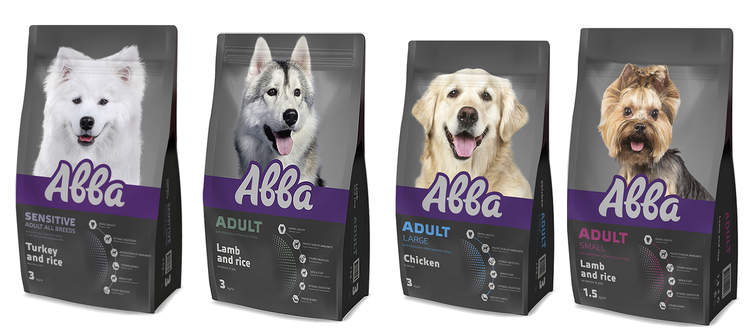
ABBA dog food is considered a premium nutrition and contains 70% real meat. The advantage of this line of food is its versatility. ABBA is suitable for both small Yorkies and large St. Bernards.
Content
Manufacturer
The Netherlands and Germany are considered the countries of origin for this food. ABBA dog treats have been known in Europe for 82 years. Their introduction began with Jonker Petfood dry food. Since then, pet food experts have been refining formulas and modifying recipes, all under a strict control. The production team goes beyond standard veterinarian recommendations and conducts daily research, monitoring dogs' health and behavior after feeding them ABBA.
The food is made exclusively from high-quality ingredients. The line includes not only food, but also treats for training rewards and oral care products. The company employs veterinary nutritionists who understand the specific needs of each breed.
Feed composition
The average energy value of 100 g of ABBA food is approximately 365 kcal. All daily diets are perfectly balanced in protein, fat, and carbohydrates. The formula's key ingredients include:
- Dehydrated (dried) meat. Its content, as stated in the package insert, reaches 60-70%. This is a high figure; in cheap brands of dog food, it does not exceed 4-5%.
- Fish meal;
- Sources of carbohydrates: barley, rice, corn, peas;
- Sources of dietary fiber: dried apples, beet pulp.
According to veterinarians, one of the significant advantages of ABBA pet foods is the inclusion of hypoallergenic grain-free options in the line, which can be used for dogs with gluten intolerance.
Veterinarians and owners give positive reviews of ABBA dog food, which is not inferior to holistic products.
- Fiber is an essential component of ABBA products. It is essential for proper gastrointestinal function. Fiber-rich foods keep your pet feeling full for a long time.
- Omega-3. Helps maintain healthy bones and especially joints.
- Omega-6 for beautiful fur.
- L-carnitine for muscle mass and improved metabolism. This component prevents obesity, which is especially important for large, older dogs.
- Choline is a component essential for normal liver function. It protects the animal's body from dehydration.
- Chondroitin. An essential component of large-breed diets. It supports joint health during physical activity.
- Vitamins A (retinol), B4 (choline), D (calciferol), E (tocopherol), C (ascorbic acid) - participate in the metabolism of fats, proteins and carbohydrates, serve as antioxidants, and improve immunity;
- Minerals Potassium, Calcium, Iron, Iodine, Zinc, Phosphorus, Manganese, Copper are part of various types of tissue, provide acid-base balance in the body, and participate in metabolic processes.
- Chicory is a source of inulin, a prebiotic that stimulates the growth of beneficial bacteria in the gastrointestinal tract.
These are the common ingredients found in every ABBA food, but the nutritional content varies depending on the specific line. Most importantly, the high meat content allows ABBA to be considered premium, effectively placing it slightly ahead of its competitors.
Recommended daily allowances for dogs of different weights and ages, as well as the exact ingredients of each type of ABVA food, are available on the manufacturer's official website, avva-food.ru. The website also includes a list of specialty stores in Moscow where these foods are available.
Advantages
The main advantage is the high content of natural meat, which is a source of protein. Dogs consuming ABBA don't need additional vitamins, as all foods are enriched with essential microelements and minerals. Thanks to its wide range, these Dutch products are popular both as puppies and as adults: the less experimentation with nutrition, the better health your dog will enjoy. Along with the main foods, ABBA also offers treats and canned food.
Unfortunately, ABBA dog food isn't available in all cities, which is a significant drawback. Among the shortcomings, experts point out inaccurate information on the packaging, specifically the content and nature of the antioxidants, which remain unclear.
Assortment
Avva brand dog food is available in three types: dry kibble, canned food, and treats.
Dry food
Avva dry food ranges include everyday foods made with meat products and grains, as well as grain-free foods. The kibble is packaged in vacuum-sealed bags of 0.4 kg, 0.8 kg, 1.5 kg, 2 kg, 3 kg, and 12 kg.
Dry food is available in the following options:
- for small breed dogs - lamb and rice or chicken and rice;
- for large breed dogs - chicken, beef or lamb;
- for dogs of all breeds - lamb and rice, chicken and rice, salmon and rice;
- For puppies - Puppy Large dry food with chicken, separate for small and large breeds.
- For dogs prone to allergies, grain-free foods include lamb and potatoes, chicken and potatoes, and salmon and potatoes (there are separate diets for small and large breed dogs and puppies).
Canned goods
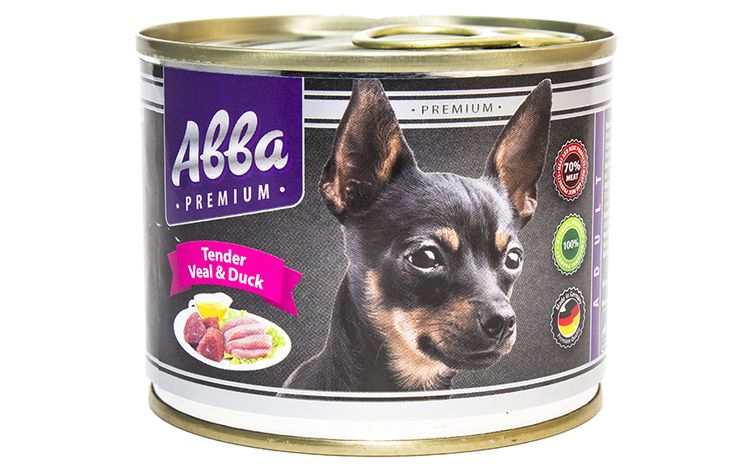
The Avva and Avva Premium wet foods are made from natural meat or selected meat by-products, grains, and vegetables in meat or vegetable broths. They also include minerals, vitamins, vegetable fats, and other ingredients selected by veterinary nutritionists to support your dog's health. ABVA foods do not contain any synthetic additives such as flavors, flavor enhancers, or colorings.
Canned food options are designed for dogs of various weights and ages, and there are wet foods designed for overweight animals, those with sensitive digestion, or those prone to allergies. Avva's canned food selection includes approximately 20 varieties, making it easy to find a suitable option for dogs with any taste preference.
ABBA wet food contains all the nutrients and bioactive components a dog needs. Canned meat goulash or meat in jelly can be fed to dogs as a standalone meal, or combined with dry food or homemade food.
Types of canned food:
- turkey with apple;
- turkey with rice;
- turkey, duck and apple;
- chicken and turkey;
- chicken with pumpkin;
- chicken with cheese;
- rabbit with rice;
- rabbit with vegetables;
- beef with carrots;
- beef and heart;
- beef and tripe;
- beef and lamb;
- assorted giblets (heart, liver, tripe);
- lamb with rice;
- Assorted meat in jelly for small breed dogs and puppies;
- Lamb with blueberries (for dogs with sensitive digestion).
AVVA canned food is produced in easy-to-use metal cans with a key, in volumes of 800, 750, 400, 200 and 100 g.
Treats
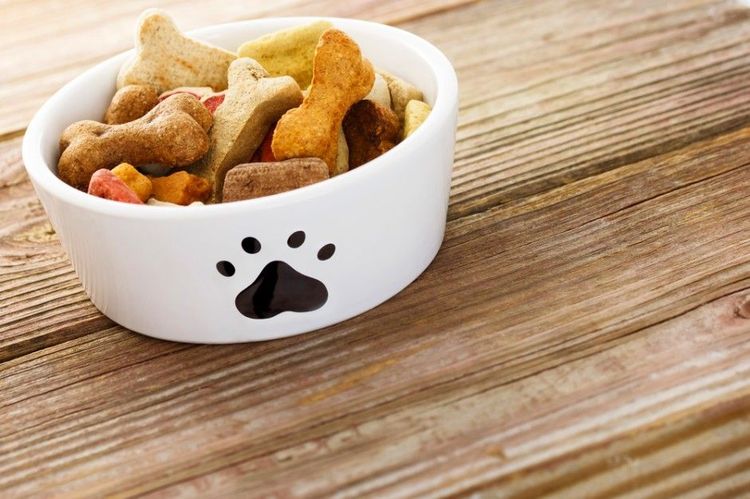
A variety of grain-free dry dog treats include chew sticks, bars, sausages, and bone-shaped biscuits. They are attractive in appearance, have a wonderful aroma and taste, and can be used as supplementary nutrition or as a reward during training. Standard packaging for this "specialty food" is a blister pack or box.
Abba's most popular treats:
- beef sausages;
- meat slices with beef, lamb, chicken;
- mini bones with salmon, beef, turkey, lamb.
A separate line of Avva Dental Sticks—Dental sticks with calcium, meat, and eucalyptus flavors—is designed for dental care. Containing coarse fiber, they effectively massage gums and remove plaque, preventing tartar formation.
Price
The cost of ABBA food depends on its type, composition and packaging volume.
Dry food:
- 0.4 kg ― RUB,
- 0.8 kg ― 270-290 rubles,
- 1.5 kg ― 460-500 rubles,
- 2 kg ― 550-600 rubles,
- 3 kg ― 800-1200 rubles,
- 12 kg― 2500-3900 rub.
Canned goods:
- 800 g - 230-260 rubles,
- 750 g - 180-200 rubles,
- 400 g. ― 150-160 rubles,
- 200 g - 100-110 rubles,
- 100 g - 40-45 rubles.
Treats. A package (it can contain 3 pieces, 5 or 12 pieces) costs from 45 to 145 rubles.
Reviews
Marina V.
"I feed lamb-based dry food. This is my dog's favorite meat. We have a cocker spaniel, so we buy food for all breeds. The kibble is large but easy to break apart, so it's easy to feed even to small dogs. What I like is the natural ingredients; you can even smell it. There are no strong odors. The cubes are oily. We feed dry food almost constantly, but there are no problems with fluid excretion, and the vet confirms that her kidneys are normal."
Anna K.
"My dog is allergic; he won't eat anything other than natural food and a strict diet. We tentatively tried grain-free ABBA, but there was no reaction. Now he can vary his diet, especially since he eats the food with great gusto."
Boris and Inna Vinogradov, Moscow:
"I've been feeding my Spitz ABBA canned food for a while now. It's well-balanced, with lots of meat and no salt, which is contraindicated for my dog's breed. The price is also reasonable; it's significantly lower than other brands in this category. Sometimes I also treat Dezzy to tasty treats from the same manufacturer—bones, sticks, and strips. They clean his teeth and gums well and eliminate bad breath. Kibble hasn't caught on with us; they're too large and difficult for a small dog to chew, and crushing the kibble every time isn't an option either."
Victoria A.
"I feed them canned food and add it to their cereal. My Yorkie is fine, no issues or allergies. A friend fed her puppy canned food for babies. Her dog couldn't eat ABBA and developed stomach problems. The vet switched them to natural food and recommended introducing dry food in the future."
Read also:




1 comment
Heating Film
Awesome topic, I really like it ))))
Add a comment