
Permanent and deciduous teeth in dogs
A dog's teeth, like those of humans, change throughout life, but this process varies from animal to animal and occurs at an accelerated rate. In most cases, owners don't need to intervene in these processes, so there's no need to delve into all the intricacies of dental development. However, it's helpful for dog owners to have a general understanding of the processes of dental growth and renewal so they can provide prompt assistance if any unusual situations arise.
Content
Dairy
Puppies are born completely toothless. Teeth begin to erupt between 20 and 30 days after birth, and by 6 to 8 weeks of age, a full set of 28 baby teeth (14 on each jaw) appears. These teeth have their own names:
- 4 fangs;
- 12 incisors;
- 12 premolars.
In representatives of dwarf and decorative breeds, the first teeth appear closer to 1.5 months.
First, deciduous canines emerge on the lower and upper jaws of dogs, with the lower and upper incisors later appearing between them. The time of emergence is usually a few days apart.
Compared to incisors, deciduous canines are longer. They are saber-shaped but also fragile. As they emerge, puppies are gradually weaned from their mother, as nursing becomes painful. The last to emerge are the premolars, which function as molars in puppies.
The teething process is quite painful, so the puppy needs special attention during this period. It will constantly chew on objects to relieve the discomfort, so it's important to provide it with rubber toys, rye crackers, or cartilage.

The change process
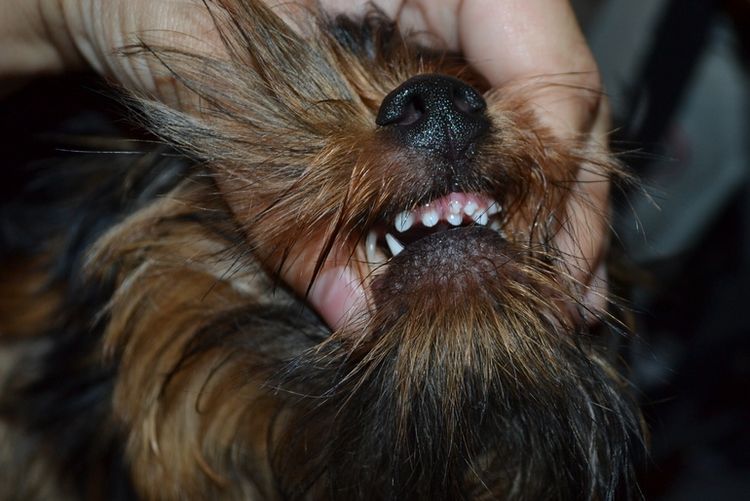
At 3-4 months of age, baby teeth begin to fall out, starting with the incisors. A rudimentary molar develops beneath the root, while the root of the baby teeth eventually dissolves and falls out. Dogs typically don't even notice this process, swallowing or losing their baby teeth.
After the incisors are replaced, the premolars begin to replace the teeth and the molars begin to grow. The canines are the last to replace, first the lower jaw and then the upper jaw. The overall process lasts on average about two months, but can vary depending on the breed, and should be completely completed by 6-8 months.
In large breeds, this process occurs slightly faster than in small, toy breeds. In the latter, permanent teeth often begin to emerge before the baby teeth have fallen out, so regular dental checkups are recommended for small pets to detect any deviations in the dental transition process.
Some dogs may have problems with oral hygiene due to anatomical differences in their jaw structure. This applies to medium- and long-muzzled dogs. Permanent teeth grow according to the principle of least resistance, that is, along the canal left by the deciduous teeth. Therefore, if the deciduous teeth do not fall out for some reason, the permanent teeth may grow in the wrong place or not grow at all. This can be a serious obstacle for the animal if it wishes to participate in shows or breed.
How does tooth change manifest itself?
Normally, the process is asymptomatic and unnoticed by the animal. Occasionally, fever, loss of appetite, lethargy, and mild stomach upset may occur. In this case, it's important to provide your pet with a protein-rich diet and protect them from potential stresses such as overheating, hypothermia, fatigue, and long journeys.
In some cases, veterinary intervention is necessary, so when age-related changes occur in the jaw, the owner needs to monitor the process. The reasons for this can vary, ranging from breed predisposition to individual characteristics of the animal. Even the procedure ear cropping may cause a delay in the renewal of dental composition.
If teeth don't start to change by the fourth month of life, it's best to consult a specialist. But first, you can try helping your dog move his teeth yourself: daily, using your finger wrapped in a piece of bandage or clean cloth.
Important! This method is unlikely to help with canine teeth, as they have deep, strong roots and should only be removed by a veterinarian.
Indigenous
A healthy pet normally has 42 teeth in its mouth: 20 on the upper jaw and 22 on the lower jaw. Each of these teeth contains:
- 6 incisors each
- 2 fangs;
- 8 premolars;
- 4 molars on the upper jaw and 6 on the lower jaw;
In some cases, the absence of one molar on the lower jaw is observed, which is considered normal. Among large breeds (Rottweilers, Great Danes, and Mastiffs), additional incisors are common.
The dental chart of an adult dog looks like this:
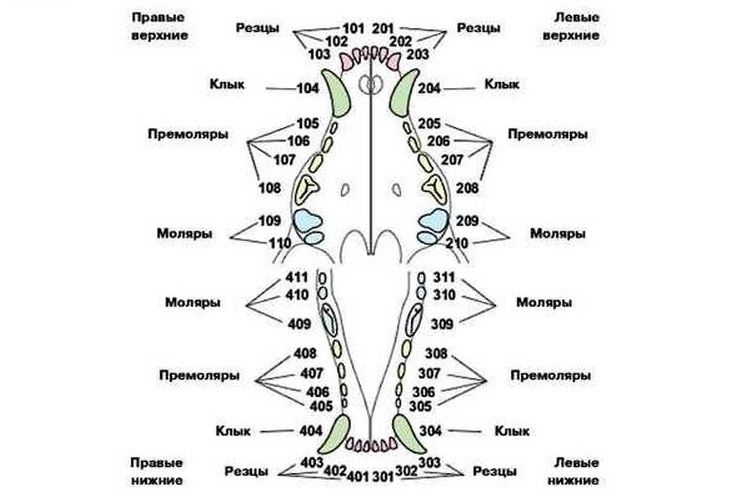
The incisors are located on the front surface of the jaw: the central incisors, the marginal incisors, and the medial incisors between them. The upper incisors are larger than the lower incisors. They are used the least by the animal, only for biting off small pieces of meat, combing fur, or plucking prey. Four canine teeth are used to hold prey and tear meat into pieces. They are located immediately behind the incisors, with a small gap between them, allowing the jaw to close and form a "lock" for a strong and secure grip. Behind them are the largest molars—the sharper premolars and the knobby molars—which are essential for crushing hard food. Among these, the most massive chewing organs—the fourth in the upper jaw and the fifth in the lower jaw—are called carnivorous teeth, followed by the true molars.
Helpful tips for teething and teething
The ease and proper growth of an animal's chewing organs depends on many factors, including diet. To ensure strong teeth, a pet needs calcium, fluoride, and phosphorus in their daily diet during the period of active growth. These can be found in cottage cheese, cheese, kefir, vegetables, or special vitamin and mineral supplements.
An improper diet can cause underdeveloped jaw muscles. This affects not only the balance of the diet but also the structure of the food. Animals whose diet consists primarily of soft and semi-liquid foods (such as canned meat) experience little or no jaw stimulation, which can lead to teething problems. Dogs should be given solid food, bones, and toys to stimulate the jaw and dental development, including for proper and timely eruption.

As for games, it is better to avoid those in which the puppy has to tug a rope or a toy when the owner tries to take it away, since this can result in damage to baby teeth or immature permanent teeth.
The change process significantly weakens the pet's immune system, so preventative vaccinations are not administered during this time: it is better to do them before the start of the change or after its completion.
Baby teeth that don't fall out on time need to be removed to make room for permanent teeth. Otherwise, permanent teeth may grow in deformed and crooked, protruding in a second row from any point on the gum line. Naturally, such a defect is unacceptable for a show-class pet. Furthermore, an abnormally formed bite causes discomfort and pain to any animal in everyday life, for example, while chewing, which can lead to pain and a deterioration in overall well-being.
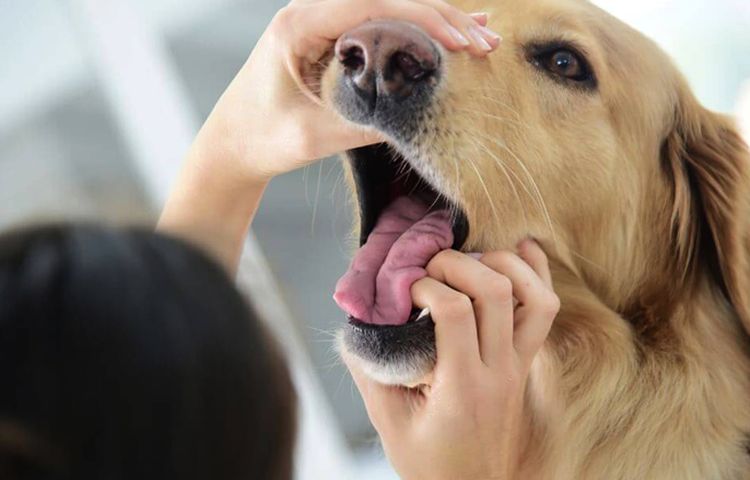
To rule out potential dental problems, regular oral examinations are essential. It's important to accustom your puppy to this procedure from puppyhood so it doesn't become fearful. Early detection of problems allows for correcting the bite, avoiding potential dental defects and associated discomfort.
Read also:


Add a comment