
Korean Jindo (Chindo)
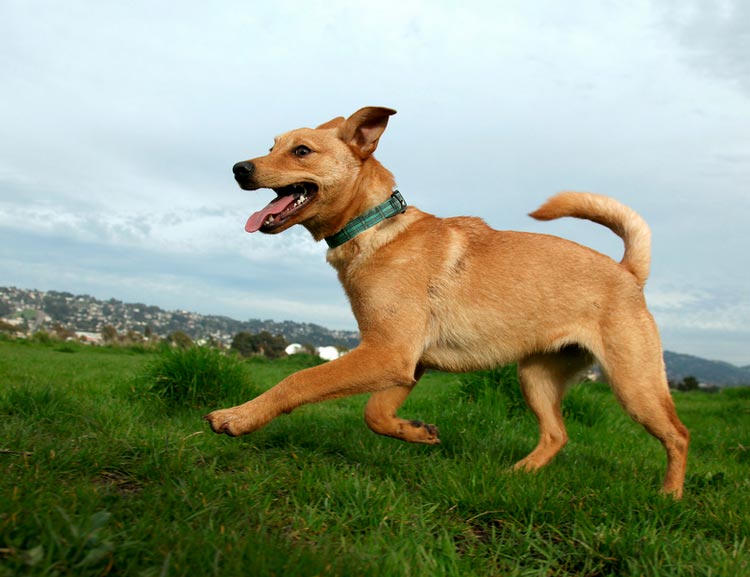
Once a year, the sea near Jindo Island in South Korea "parts," revealing a 2.3-kilometer-long land passage to neighboring Modo Island. But there's another wonder there: the Korean Jindo. This ancient, medium-sized hunting dog breed is renowned for its loyalty, courage, and working abilities. Recognized as a national treasure, they participated in the opening ceremony of the 1988 Olympic Games in Seoul. The breed is not particularly rare, but is virtually unheard of outside of South Korea. Its name can be translated as the Korean Jindo Dog or the Jindo Dog.
Content
History of origin
Cynologists agree that the Jindo's direct ancestors have inhabited the territory of South Korea for several millennia. It is likely that some of the Japanese breeds, for example, Japanese Shiba Inu. Due to the relative isolation of Jindo Province, local residents have managed to preserve the ancient type and unique characteristics of their dogs.
In 1962, the government designated the Jindo dog as a national treasure.
The Korean Kennel Federation was founded in 1917. Since then, the Jindo remains the only recognized national breed. Its value is further demonstrated by the establishment of a Research Center dedicated to preserving and studying the breed. The Korean Jindo was recognized by the International Cynological Federation in 2005.
Usage
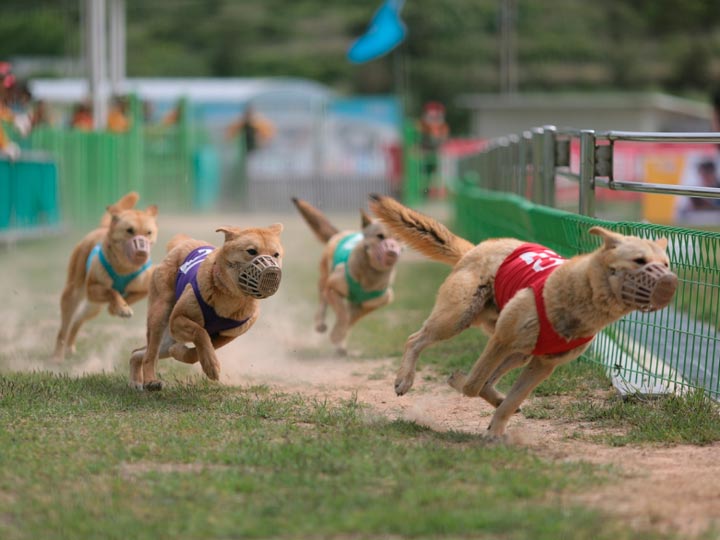
The Korean Jindo is an excellent hunting dog with a keen sense of smell and a strong pursuit instinct. It works on medium- and large-sized game, primarily deer and wild boar. Its hunting instinct emerges early, at 3-4 months of age, often in pursuit of small game such as mice, moles, and snakes.
In Korea, dogs that knew how to work in a pack have always been highly valued; they were used for unarmed hunting. Several trained and loyal Jindos would find and kill the prey on their own. Then, one dog would return for its master, while the others remained to guard the kill.
Korean hunters often tell stories of dogs leading them in the morning to the carcass of an animal they had killed alone at night.
Jindos are also excellent watchdogs and guard dogs. In Korea, they are used to patrol large markets. In America, owners report that Jindos easily kill coyotes and other dogs that enter their territory. When threatened, they selflessly defend their owners. One Korean story tells of a three-year-old dog who refused to allow paramedics to approach his deceased owner, and when the body was finally removed, he lay on his owner's bed for several days, refusing food and water.
Appearance
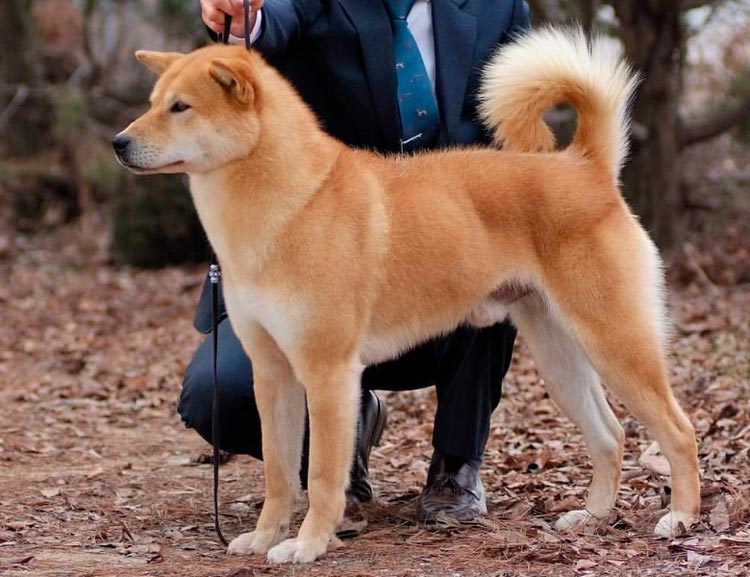
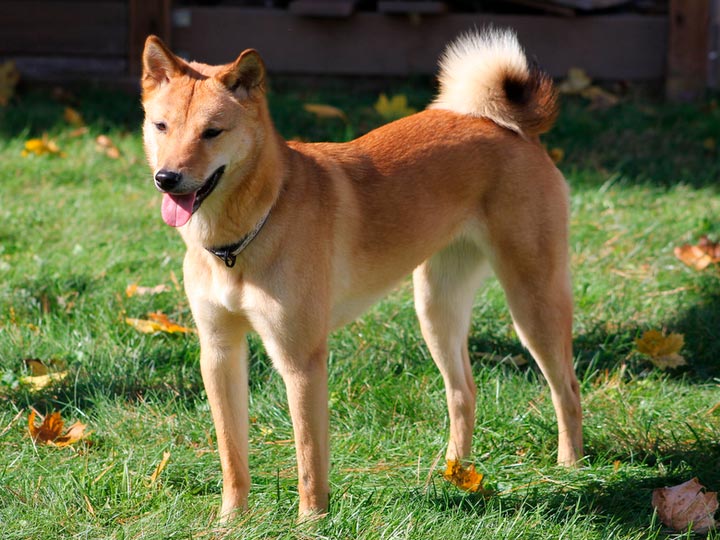
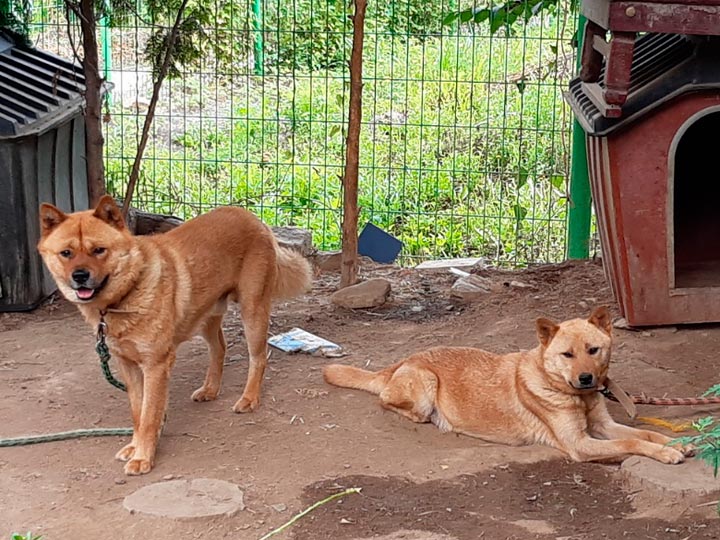
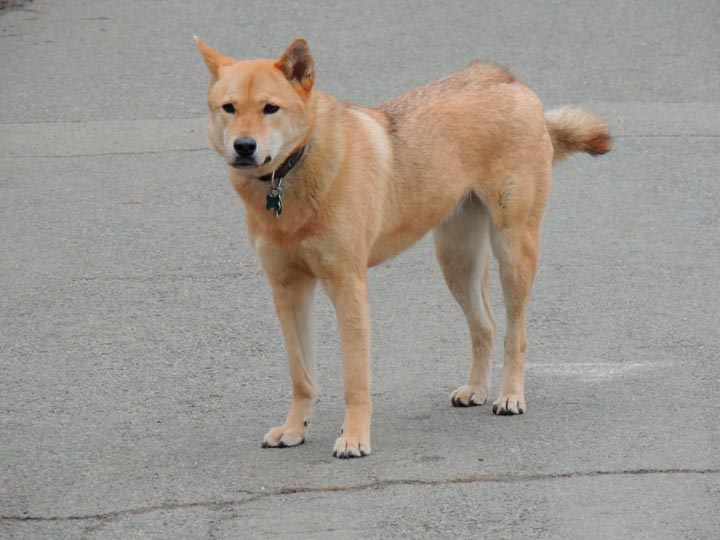
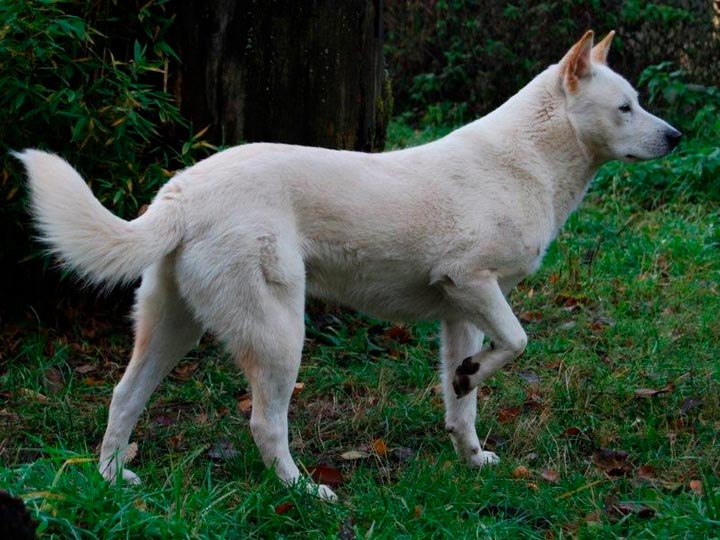
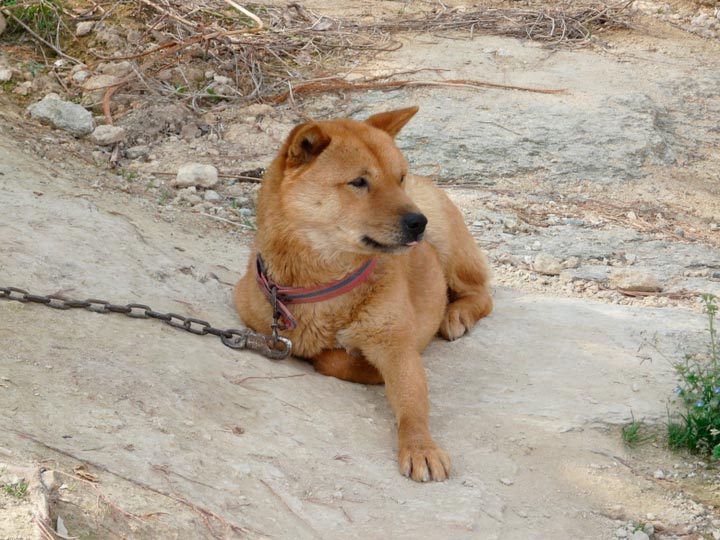
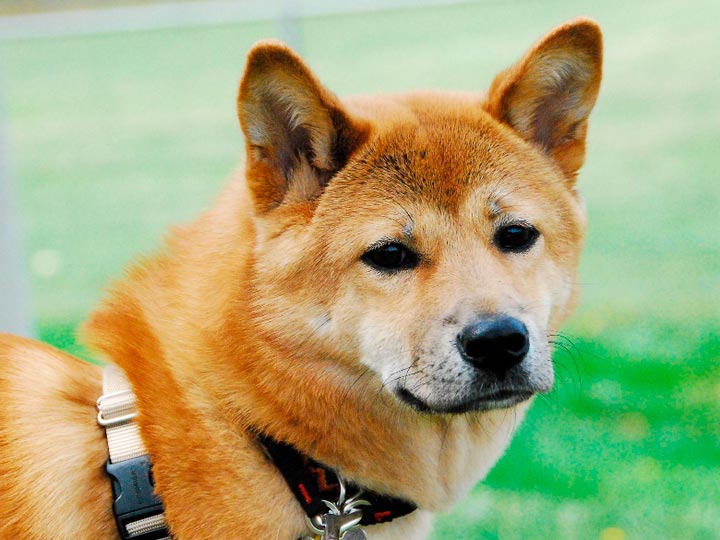
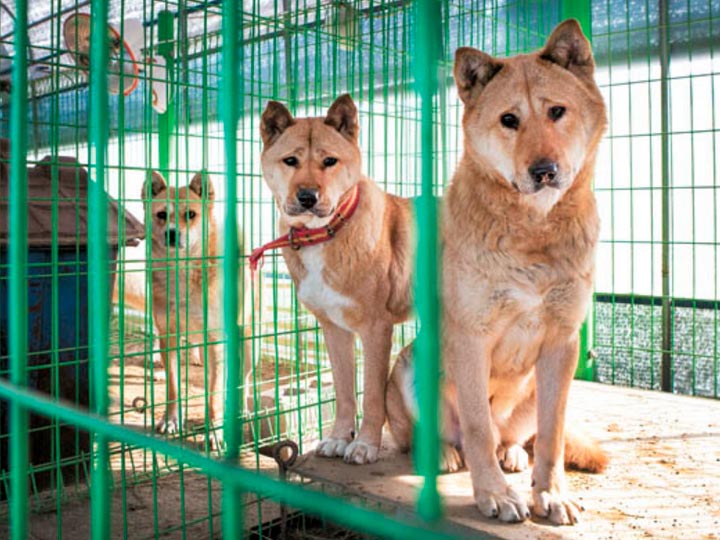
The Korean Jindo is a medium-sized, Spitz-type dog characterized by a well-proportioned build, a thick double coat, erect ears, and a sickle-shaped tail. Sexual dimorphism is pronounced.
- Height at withers 45-53 cm.;
- Weight: 16-27 kg.
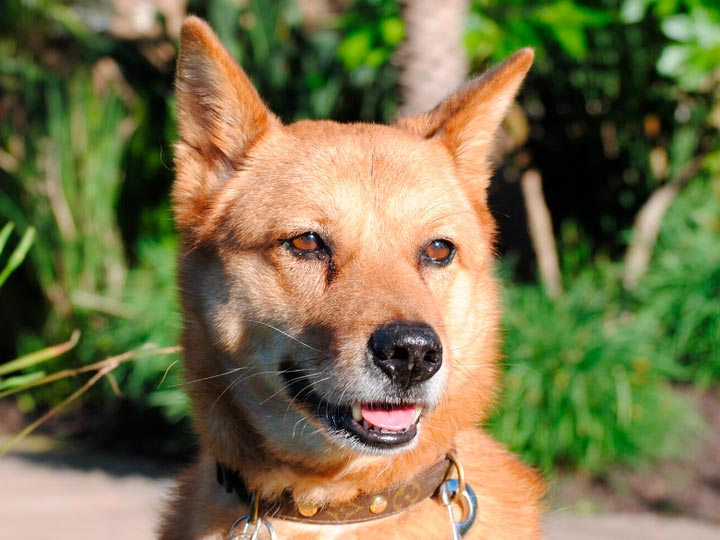
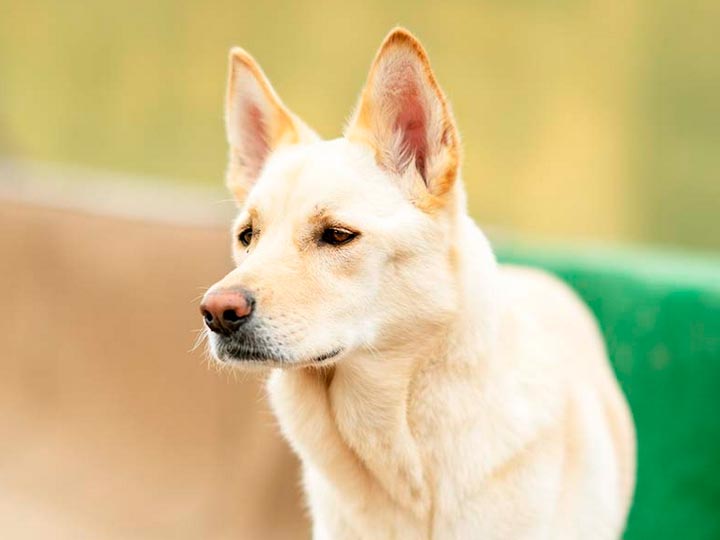
The head is shaped like a blunt wedge. The skull gradually tapers toward the eyes. The nose is black; in white dogs, it may be flesh-colored. The lips are black, with the upper lips slightly overlapping the lower lips. The bite is scissor-like. The eyes are relatively small and dark brown. The ears are set high and triangular. The pinna is thick, with the insides covered with fine hair. The neck is thick and well-balanced.
The back is straight and strong. The loin is narrower than the ribcage. The chest is moderately deep, not too wide, with the lowest point just above or level with the elbows. The belly is tucked up. The tail is set high, sickle-shaped or curled. The limbs are strong and of medium length. The forelegs are straight and parallel. The hind legs are moderately angulated. The paws are cat-like, rounded, and compact. The nails are strong, preferably black.
The coat is double, consisting of a thick, straight guard hair and a softer, dense undercoat. Colors:
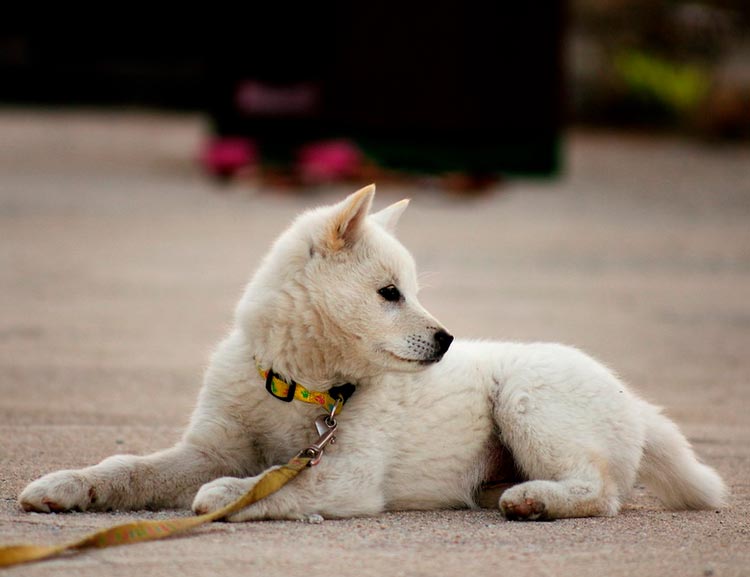
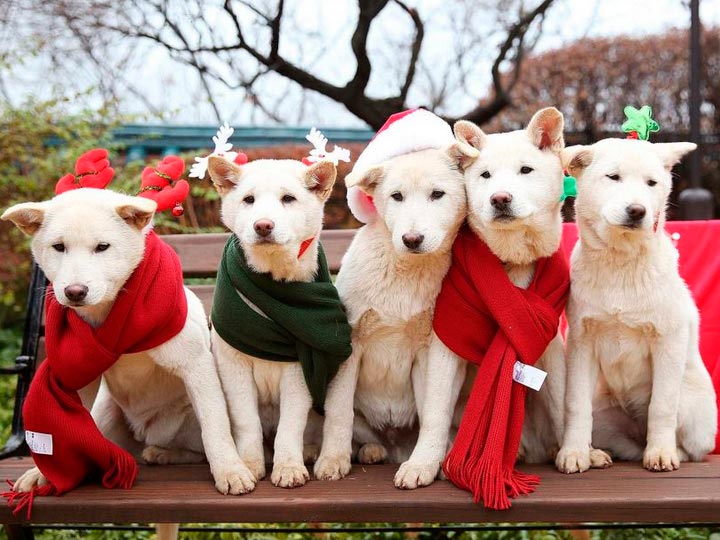
- White - off-white or ivory, often with a light red tint around the ears, on the back of the legs, belly and tail;
- Pale yellow;
- Gray - consists of white, black and red hairs;
- Black-brown - the head and upper part of the body are black, the rest is brown, there may be two symmetrical spots above the eyes;
- Brindle - black stripes on a yellowish-brown background.
·In Korea, preference is given to white and red dogs.
Character and behavior
The Korean Jindo is even-tempered, bold, loyal, and courageous. It is intelligent, quick-witted, and quite independent. It is energetic and resilient, but not always playful. It can be an excellent companion if it receives the necessary physical and mental stimulation. By nature, the Jindo is a solitary dog. It does not get along well with other animals and prefers to be the sole object of its owner's attention. It is often aggressive toward unfamiliar dogs, neighbor cats, and other animals. It is very devoted to its first owner and strives to please them in every way. Many dogs, even without special training, will not accept food from anyone other than their owner.
In 2004, a monument to a Jindo dog named Bekgu was erected on Jindo Island. His owner, an 83-year-old woman, sold the dog to a man living 300 km away. Seven months later, he was returned to the woman.
In normal circumstances, Jindos are silent, so their barking always indicates a real threat. Despite their small size, they display unprecedented courage and bravery when it comes to protecting their owner or territory.
Jindos learn commands quickly, but training them to obey requires considerable time and effort. Being a part of their owner's life is crucial for these dogs. They require regular socialization and training. Without this, this independent and intelligent dog will seek entertainment elsewhere. In a confined space, they can damage walls, doors, and furniture.
Korean Jindo dogs have an excellent sense of smell, but they are not suitable for search and rescue operations because they are easily distracted from their main work by another scent. This has been discussed many times by Korean dog handlers, and trainers from Los Angeles, who tried to recruit four Jindos to serve in the K9 unit, have seen this first-hand.
Content Features
Jindos are not suitable for apartment or house living. The ideal environment is a private yard, either on a long leash or free-roaming. In the latter case, the fence should be at least 1.8 meters high, with no possibility of digging a hole underneath. Jindos are extremely clean and even fastidious. They instinctively keep themselves clean and will not defecate in areas that are already dirty.
Interestingly, many Korean dogs hate water. They refuse to go outside in rainy weather, much less into a body of water. For this same reason, bathing them can be quite problematic.
They don't require any special grooming. They shed heavily seasonally and moderately the rest of the year. The owner should brush the dog occasionally, cleaning its ears and trimming its nails if necessary. They rarely need to be bathed.
Health and life expectancy
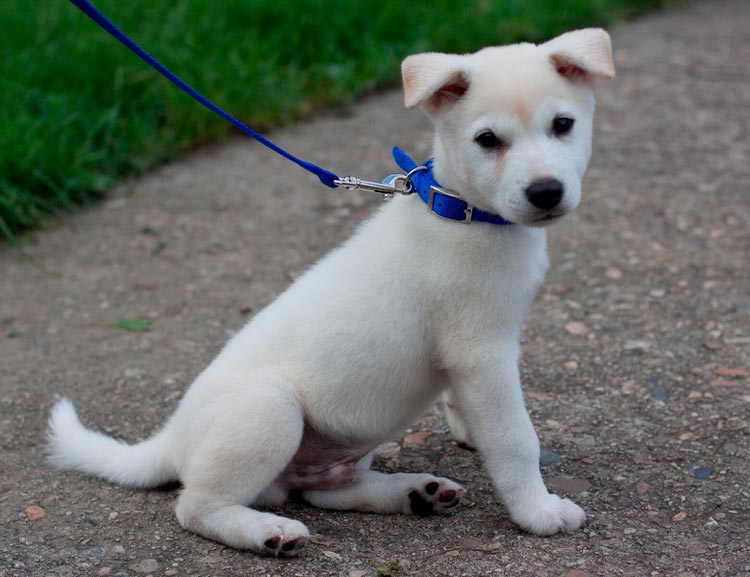
Korean Jindos are healthy and robust dogs with strong immune systems. Overall, the breed is healthy, with only a small number of dogs suffering from hereditary conditions such as hip and elbow dysplasia and eye disease. hypothyroidism. Life expectancy is 11-14 years.
Where to buy a puppy
In Korea, the care and breeding of national treasures is taken very seriously. There are rules and laws that govern the livestock's welfare. For example, a person cannot own a dog unless they work and are unable to afford it. About 180 puppies are registered in the country annually. Special organizations closely monitor the registration, breeding, and movement of dogs within the country.
According to some sources, only 35 Korean Jindo dogs were exported abroad.
Foreign citizens can purchase a puppy after receiving a package of documents permitting export, but not breeding, in another country. A recent agreement was signed with the United States, where several kennels of these dogs are located, to supply frozen semen for artificial insemination of Jindos, maintaining genetic diversity and preserving the health of the breed.
The Jindo Dog Preservation Institute handles dog imports. You can contact them to learn all the details of purchasing and transporting a dog.
Price
The price of a Korean Jindo puppy increases by approximately 50% annually. While in 2007 a puppy could be purchased for 18,000 won (approximately 1,000 rubles), by 2009 the price had already reached 100,000 won (approximately 5,500 rubles). Recent puppy prices range from 300,000 to 50,000,000 won (16,500 to 2,500,000 rubles). In the US, the average price for a rare breed puppy is $2,000, but can reach $4,000.
Photos and videos
More photos of Korean Jindo dogs in the gallery.
Video about the Korean Jindo Dog breed
Read also:


Add a comment