
Complex vaccination for cats
Keeping cats regularly vaccinated is essential not only to protect them from dangerous diseases. According to pet ownership regulations, a veterinary passport with vaccination records is mandatory for traveling with cats on any form of transport. Without such a document, a cat or cat cannot participate in competitions or exhibitions, and problems may arise when crossing the border.
Content
Types of vaccines
Immunobiological vaccines contain inactivated (killed) or modified (live but weakened) viruses. These viruses are incapable of causing disease, but they stimulate the production of antibodies to specific pathogens. This allows the animal to develop immunity to the diseases it was vaccinated against.
The main advantage of inactivated vaccines over modified ones is their greater safety. However, preparations containing live microorganisms induce stronger immunity in animals.
There are monovalent, bivalent, and complex (polyvalent) vaccines. Complex vaccines, which provide protection against multiple diseases, are the most commonly used. These vaccines may include non-viable pathogens:
- Panleukopenia, or feline distemper (Virus panleukopenia feline);
- Rhinotracheitis (Feline alphaherpesvirus);
- Herpesvirus (Herpesviridae);
- Chlamydia (Chlamydia psittaci);
- Calicivirus (Feline calicivirus);
- Rabies (Rabies lyssavirus).
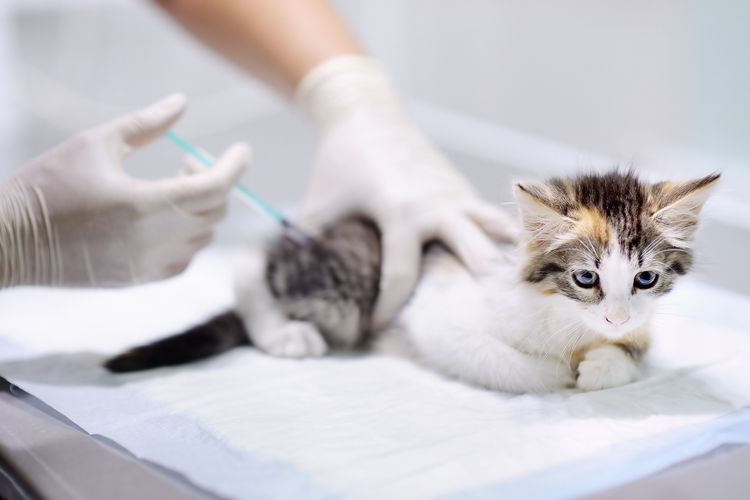
When choosing a vaccine for a cat, the doctor takes into account:
- her age;
- general condition of the body;
- is it planned to obtain offspring from this animal;
- dates of previous vaccinations and their types.
Polyvalent vaccines for cats
The best complex vaccines for cats are:
- Biofel PCH. Manufacturer: Bioveta, Czech Republic. The vaccine contains inactivated strains of feline panleukopenia virus, feline calicivirus, and herpesviridae. The cost per dose is approximately 650 rubles.
- Biofel PCHR. Manufacturer: Bioveta, Czech Republic. This quadrivalent vaccine contains the same inactivated viruses as Biofel PCH plus the killed rabies virus (Rabies lyssavirus). Price: from 750 rubles.
- Multifel-4. Manufacturer: Vetbiokhim, Russia. The four-component vaccine is made from inactivated strains of feline panleukopenia virus, feline calicivirus, feline alphaherpesvirus, and Chlamydia psittaci. The cost per dose is 340 rubles.
- Nobivac Tricat Trio. Manufactured by MSD Animal Health, the Netherlands. This live vaccine contains attenuated calicivirus, rhinotracheitis, and panleukopenia viruses. A single dose of the dry preparation with solvent costs approximately 400 rubles.
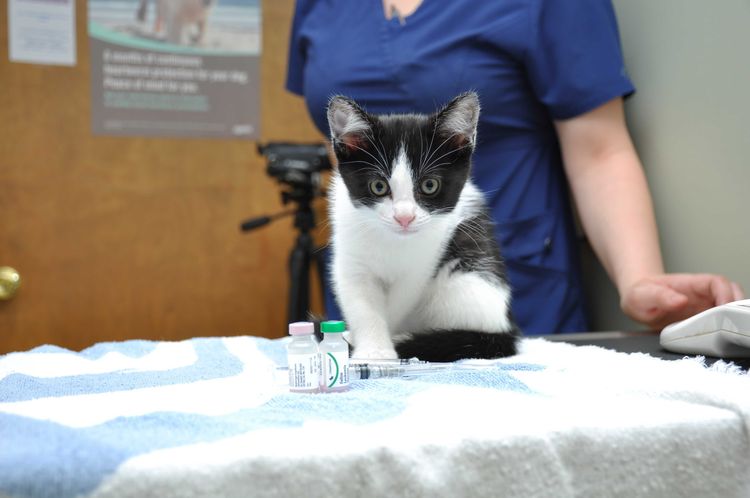
Learn more about the vaccine Nobivac for cats
- Quadriquette. Manufactured by Merial, France. The product contains two vaccines that are mixed during administration. These are the dry component "Rabiffa-Feliniffa" (a mixture of attenuated panleukopenia virus and inactivated rabies virus), and the liquid component "Corypheline" (a mixture of inactivated herpes virus and calicivirus antigen). The cost of the "Quadriquet" kit is 440-460 rubles.
- Felovax. Manufacturer: Fort Dodge, USA. This active immunization product for cats against panleukopenia, calicivirus, viral rhinotracheitis, and chlamydia provides immunity for one year. Price per dose: 150 rubles.
- Eurifel. Manufactured by Merial, France. The product contains two components: a dry component containing attenuated panleukopenia and leukemia viruses, and a liquid component containing inactivated rhinotracheitis and calicivirus viruses.
Vaccination rules
The first vaccination of cats is performed at the age of 8-12 weeks, revaccination is carried out annually.
Ten days before vaccination, your cat should be dewormed. Intestinal parasites significantly weaken an animal's immune system, and their presence will reduce the effectiveness of the vaccination and increase the risk of side effects or complications.
After the vaccine is administered, your cat should be monitored for several days. Slight swelling may occur at the injection site, a slight fever may occur, and the cat may be lethargic and inactive. These symptoms will resolve spontaneously within 1-2 days. If the discomfort persists, consult a veterinarian for an examination.
The comprehensive vaccination is only given to completely healthy cats. Otherwise, the procedure should be postponed—a weakened animal may develop the disease it causes instead of developing immunity to the pathogen.
Owner reviews
Svetlana, Perm:
"Vaska the cat came to us from the street as a small, skinny, and exhausted kitten. We clearly couldn't count on a strong immune system, so it was clear he needed to be vaccinated. The veterinary clinic we went to told us they used the Dutch combination vaccine Tricat Trio. We dewormed him, vaccinated him 10 days later, and then repeated the vaccination a year later. There were no side effects or changes in his health after either the first or second vaccination. We consider Tricat Trio a good product and will continue to vaccinate our pet with it."
Peter and Ivanna, St. Petersburg:
"We've always had cats in our house. Our current cat is 3-year-old Bonya—a mixed-breed, but beautiful calico. We always vaccinate her, as we understand that we can even bring infections into the house ourselves, on shoes or clothing. Before taking her to the clinic for vaccinations, we always give her deworming medication (usually Milprazon) and treat her fur with Inspector or Stronghold flea and tick treatments. Our most recent comprehensive vaccination was with the French vaccine Eurifel. There were no side effects."
Veterinarian Reviews
Tatyana Ivanovna Vasilyeva, veterinarian:
"Owners of large catteries, as well as those with one or two pet cats, prefer to use polyvalent, or multicomponent, vaccines for vaccinations—they provide immunity to several diseases at once. Combination vaccines such as Nobivac Tricat Trio, Multifel, Biofel, Eurifel, and Quadricat enjoy a good reputation. Before vaccination, we always warn that vaccines should only be administered to healthy animals that have undergone prior deworming. Vaccinations are generally not given to weakened, pregnant, or nursing cats. Cats prone to allergies are sometimes given an antihistamine injection before vaccination."
Read also:


1 comment
Andrey
Hello. The article is a good reference, but the drug prices aren't up to date; some aren't even sold in our country today.
Regarding the mandatory document for cats and dogs, that's nonsense—not a single document states that a person is required to have a pet passport! It's everyone's business, whether you want to get one or not. It's the 21st century, and even if you don't have a document for your dog or cat, vaccination records, treatments, and special notes can be made on any other medium; it's not essential at this point.
You can offer to get a passport as a recommendation.
In general, under Russian law, a pet is considered a property. I've never seen anyone constantly carry a passport for their phone, tablet, pen, notebook, book, or tea/coffee mug.
In urban areas, it's best to vaccinate with combination vaccines, as the risk of infection is highest in areas where animals are kept in large numbers (from 50 to 10,000 or more). In villages and remote areas, rabies vaccination alone is sufficient; prophylaxis is usually provided free of charge by the SBBZH.
PS: veterinarian, owner of 4 dogs and 7 cats.
Add a comment