
Komondor (Hungarian Shepherd Dog)
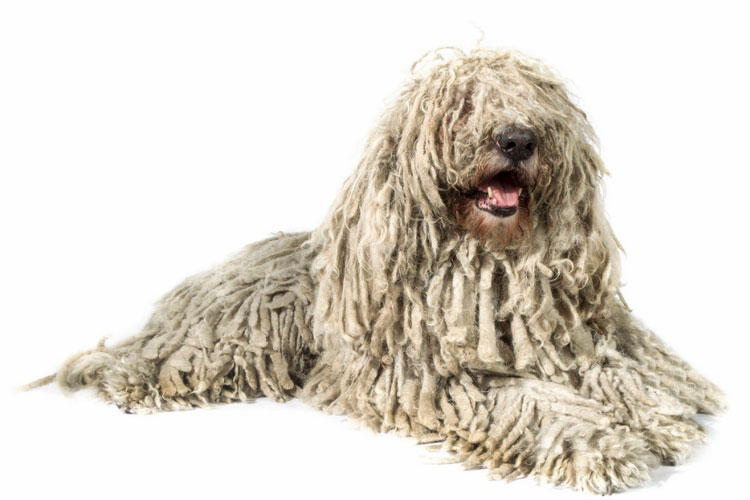
The Komondor, also known as the Hungarian Shepherd, is one of the most ancient dog breeds. Originally a wolfhound, it guarded flocks of sheep, but today it is increasingly kept as a companion, ready to defend family and property when needed. The Komondor has the heaviest coat in the world, weighing up to 7 kg in an adult.
Content
History of origin
The Komondor has existed virtually unchanged for approximately 10,000 years, and as is often the case with ancient breeds, its origins are shrouded in mystery and legend. One legend claims that the Komondor is the son of a wolf and a sheep. This is, of course, a fairy tale; it's more likely that these dogs came with nomadic tribes to Hungary from the east and settled there. It is generally believed that some shepherd dogs and the wolf played a role in the breed's development. In Hungary, these dogs were widely used to herd sheep, protect flocks from wild predators, and guard homes.
For centuries, Hungarians kept the breed pure, breeding them specifically to guard flocks. Komondors were highly valued for their unusual coat, working qualities, rich inner world, and also for their ability to work independently and in a team with shepherd dogs. Like the Arabs, who guarded their horses like the apple of their eye, Hungarian shepherds protected their breed and did not sell puppies to outsiders. In the early 20th century, a yearling piglet or 200 kg of wheat could be exchanged for a fully grown Komondor puppy.
The world wars took a heavy toll on the breed. By the 1940s, only a few surviving dogs remained in Hungary, hiding in bomb shelters and cellars with their owners. Over time, the breed was revived and is now safe, but its numbers worldwide remain very small. The majority of dogs are concentrated in Hungary and the United States. Incidentally, in the United States, Komondors can be found serving as police officers.
Video review of the Komondor dog breed:
What does the Komondor look like according to the standard?
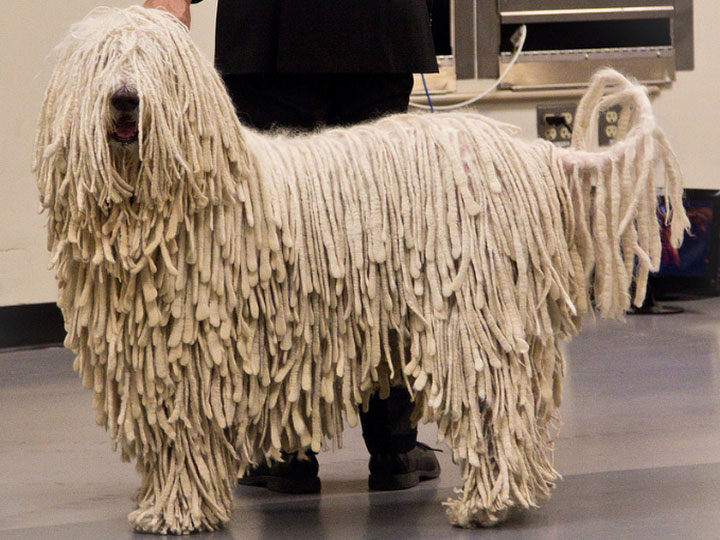
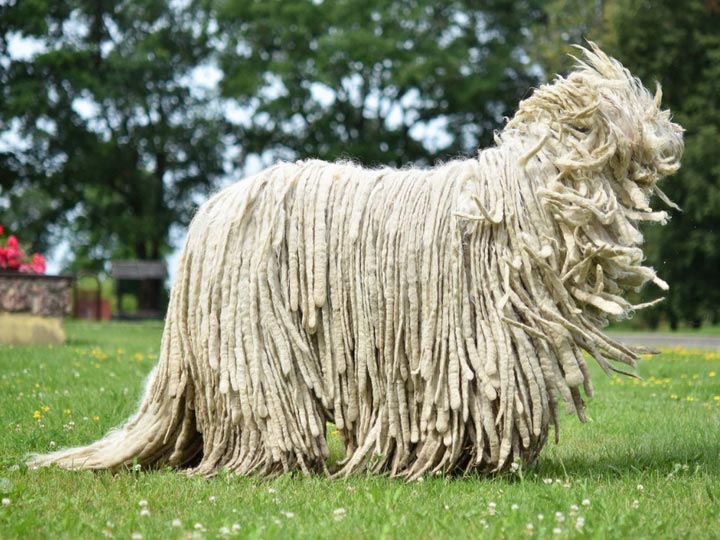
The Komondor is a very large, heavy dog with white fur that intertwines to form cords. Besides the Komondor, only another Hungarian breed can boast such a coat: the Komondor. bullets, a corded poodle, and a Bergamasco Shepherd. Visually, sexual dimorphism is clearly visible: males are larger, stronger, and more powerful. Males weigh 50-60 kg, females 40-50 kg. Height for males is 71-76 cm; females 64-69 cm.
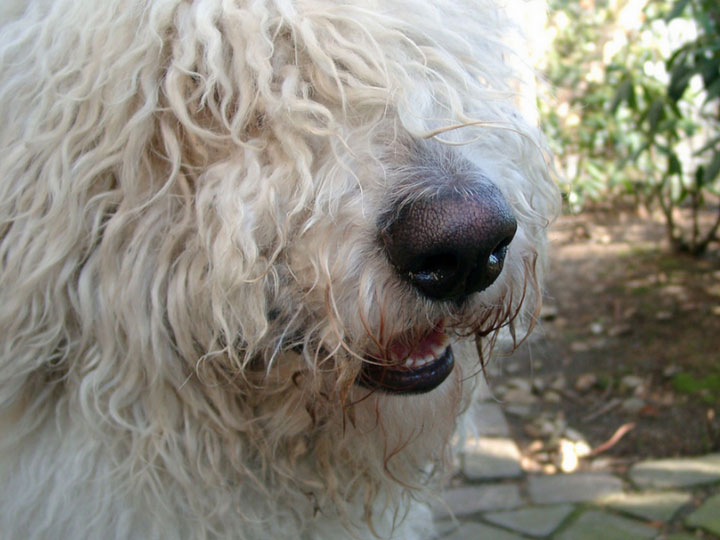
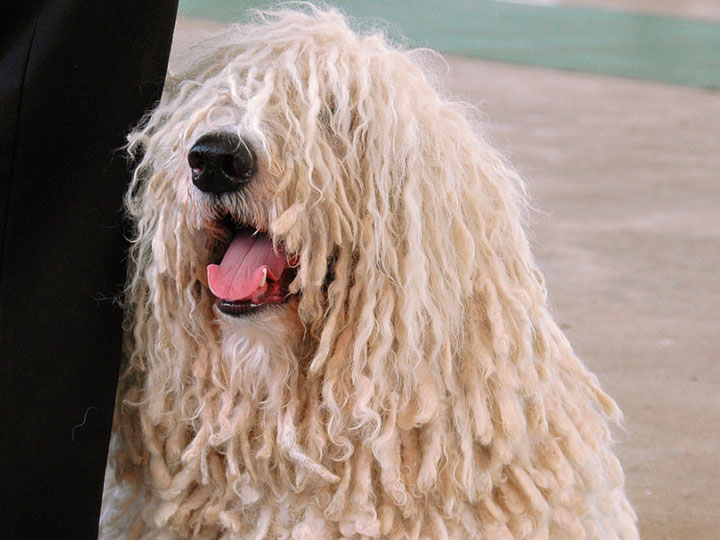
The broad forehead makes the head appear short, measuring approximately 45% of the dog's height. The stop is well defined. The muzzle is of medium length with a straight nasal bridge. The lips, nose, and eyelids are fully pigmented. The eyes are almond-shaped, not too deep-set, and dark brown. The ears hang down from the base, shaped like the letter "U." The nose is large and rounded, with wide-open nostrils.
The Komondor's body is slightly elongated. The neck is medium in length and forms a 35° angle when viewed horizontally. The withers are prominent. The back is short, broad, and straight. The croup is slightly sloping. The chest is full and wide. The belly is moderately tucked up. The tail is set low and reaches the hocks. The tip is always curved upward. The legs are strong and straight, ending in strong, compact paws.
Only one color is allowed - white.
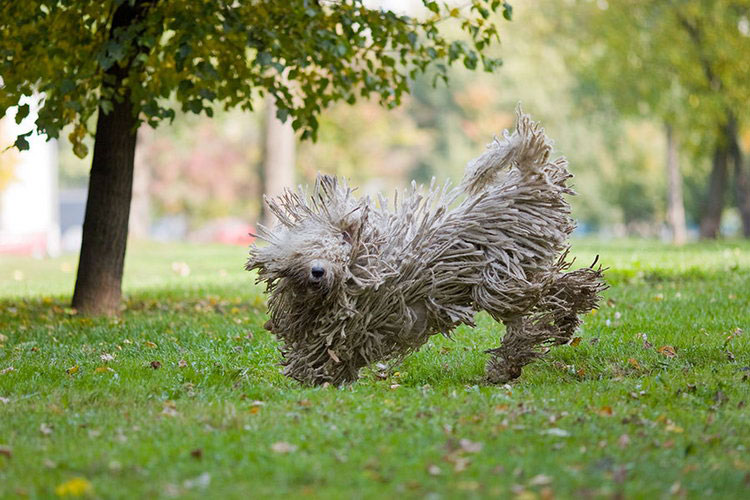
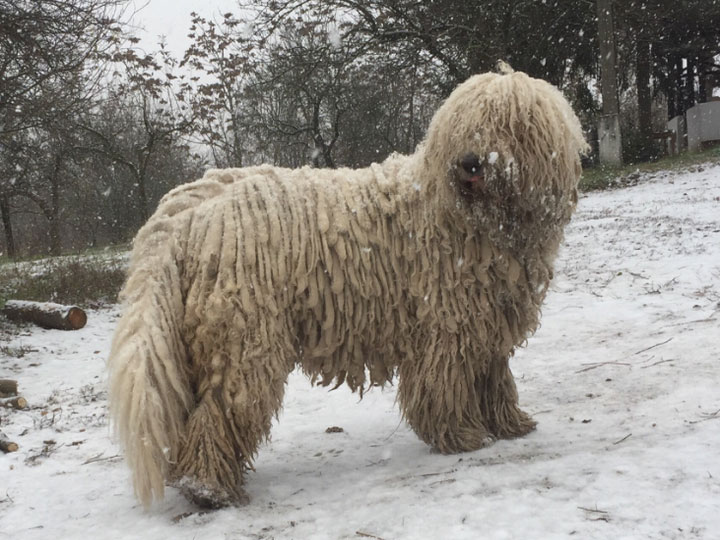
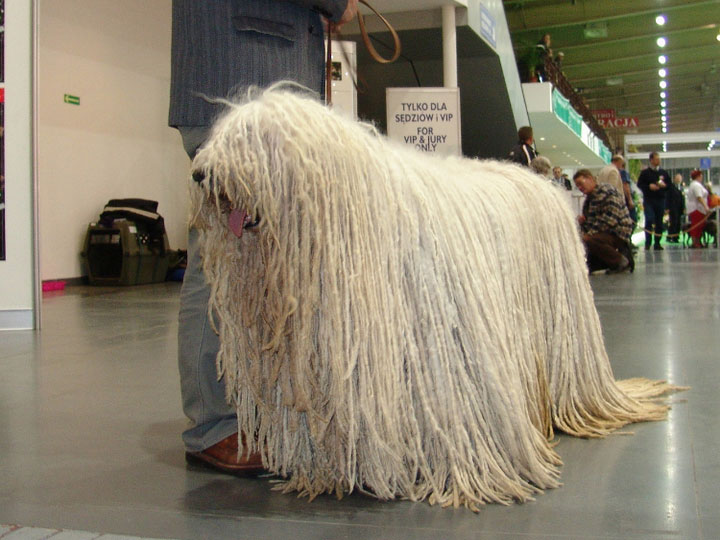
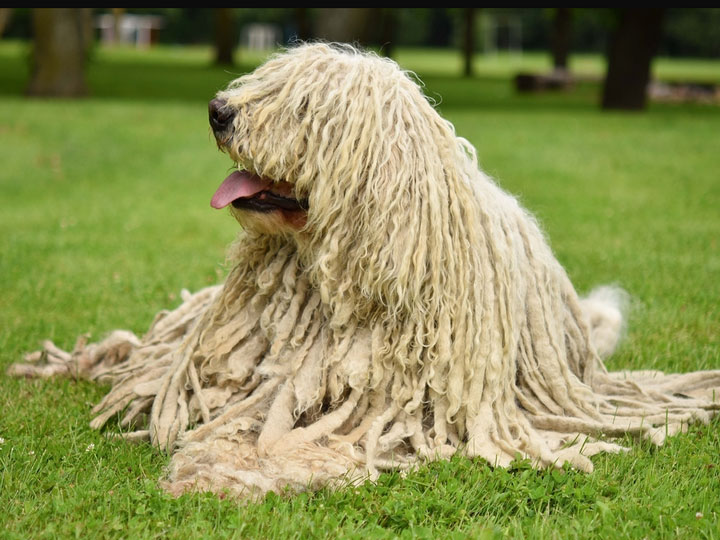
The Komondor's coat is very thick; it protects the dog from any bad weather, from heat in summer and from cold in winter. The coat consists of a soft, dense undercoat and a stiffer guard hair, which catches the undercoat, intertwines and forms cords. They feel like felt to the touch. The length of the cords varies across the body, ranging from 9 to 30 cm. The cords grow slowly throughout life and reach the floor by 5 to 4 years. The longest hair is on the rump, lower back, and tail, and the shortest on the head and limbs.
Character
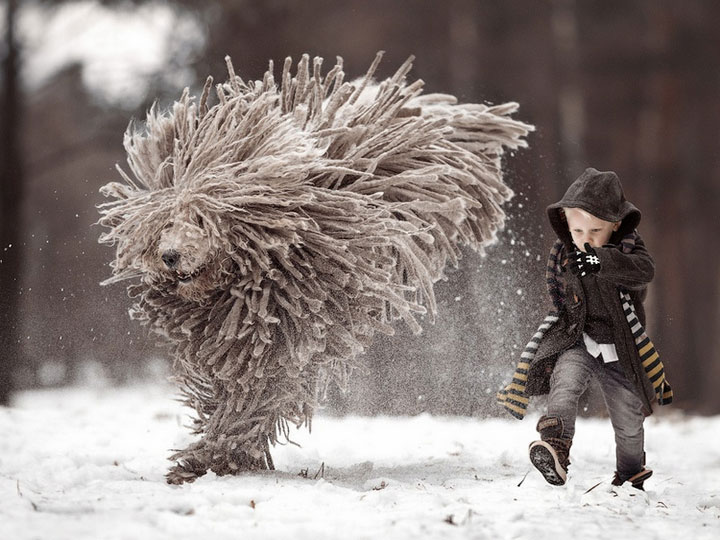
The Komondor has proven itself to be an excellent guard dog; it is bold, fearless, and always vigilant. It will defend family members and property without hesitation, yet in everyday life, it is a sweet, friendly, and sociable dog that does not show aggression toward peaceful dogs or people. However, this requires proper socialization. The Komondor is good with children, but it is not recommended to leave such a large dog alone with a very small child, as it may accidentally push or scratch the child. The Komondor is not prone to flattery or affection; it has a firm, confident character.
The Komondor is a one-owner dog, but he will also selflessly protect other family members and the owner’s household (other dogs, cats, chickens, cattle, etc.).
The Komondor is very wary of strangers. If they are familiar to its owner, it will accept them, but without much enthusiasm. It takes time to warm up to people. During the day, the Komondor prefers to lie down where it can clearly see the entire area, and at night, it makes regular patrols. The Komondor is exceptionally agile. It seems to be dozing in the shade of the trees, but in a split second, the dog springs up and appears at the object of its attention.
Komondors are very independent and willful. This is primarily due to the fact that dogs have worked without human command for centuries. They are accustomed to making decisions independently; guard duty and territorial defense skills are in their DNA and require no special training. Komondors alert to the approach of strangers by barking, which they do to scare off intruders and avoid direct conflict. This quality has been preserved in modern dogs. They bark loudly and with gusto, with a loud, menacing voice.
Although the Komondor is called a shepherd dog, it does not herd livestock; its responsibilities include guarding the flock, which is why it is sometimes called the Hungarian wolfhound.
Education and training
On the one hand, working with a Komondor is very easy: they are loyal and obedient, and their high intelligence allows them to quickly learn. They quickly learn commands and are willing to obey them for treats and praise, but only as long as they are interested. On the other hand, Komondors can be overly independent and stubborn. Even a well-trained adult dog will decide for itself which commands to obey and when, and which ones can be ignored.
The Komandor is suitable for experienced owners who understand why they purchased this particular dog and are prepared for all the difficulties and expenses that arise during the process of training, care, and maintenance of the dog.
In the process of education, it is important to overcome stubbornness and laziness. The Komondor requires a firm hand and strict training. It's best to begin training in early puppyhood, working with an inexperienced and uninitiated puppy, as they can become independent and sometimes even stubborn as they get older. Socialization is crucial. The more interaction a puppy has with people and other animals at an early age, the more they'll warm up to others, which will prevent aggression from developing.
Maintenance and care
Komondors are easy to care for, but a country house with a large plot or a farm is the ideal home for them. The breed dislikes living in small, confined spaces; under no circumstances should a Komondor be kept in a cage or leashed. Thanks to its unique coat, the dog easily tolerates temperatures ranging from +40°C to -40°C. It's worth noting that with regular walks, a Komondor will thrive in an apartment; it doesn't require a lot of space and won't jump or run like a little pony from room to room. At home, a Komondor is unobtrusive and discreet, despite its size.
After one and a half years, when the cords are finally formed, the commander does not shed at all.
A Komondor that doesn't live on a farm or work around the clock requires ample physical and mental stimulation. They are walked several kilometers a day to maintain proper musculoskeletal health. Furthermore, a Komondor needs mental stimulation. Intellectual games, training, and exercise will help the dog maintain mental fitness. A bored dog becomes lethargic, disobedient, and develops bad habits.
Care
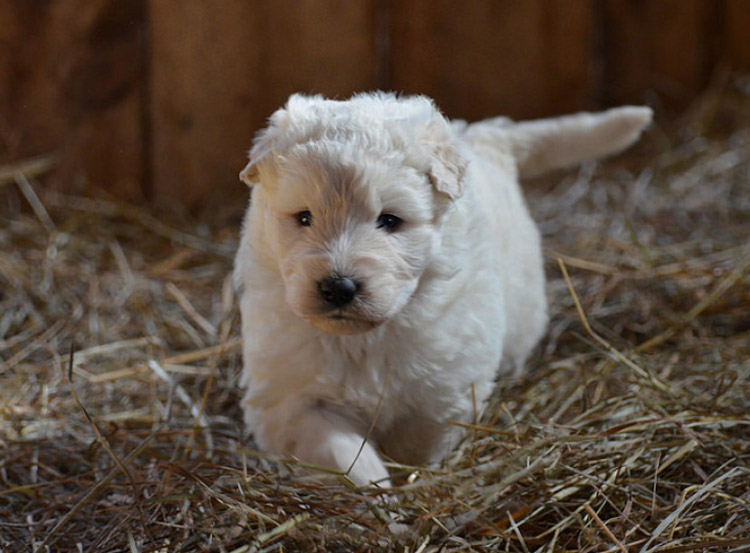
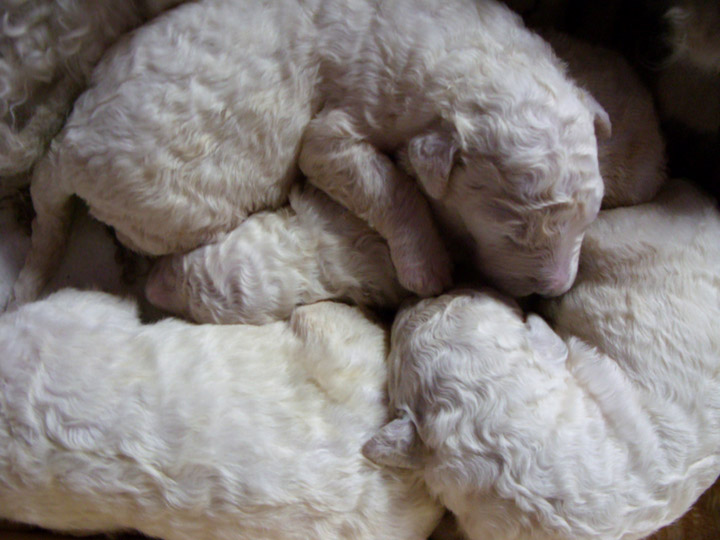
Young puppies have soft, thick, and wavy fur. As they mature, it grows longer and begins to mat into individual strands. The owner's job is to periodically untangle these strands to prevent them from tangling. Otherwise, the dog will become one big mat. Puppies require this procedure more frequently than adult dogs, sometimes daily. Once the strands have formed, they should be tangled once a month; this is usually sufficient to maintain a presentable appearance and prevent skin conditions.
The cords are formed because the undercoat becomes tightly entangled with the topcoat and remains on the dog's body, which prevents Komondors from shedding. They carry all the overripe hair and any hair that falls out after shedding with them throughout their lives. With good care and regular bathing, there is practically no specific smell. The Komondor's wet coat smells like damp sheepskin. This characteristic, along with its white coat and wavy hair, once helped the dogs camouflage themselves among a flock of sheep. The dog is bathed as needed, usually every 3-4 months and no more than once a month. The hair between the paw pads is trimmed as it grows to facilitate movement. The coat should also be checked periodically for parasites, as they are very difficult to remove if present. The eyes and ears should be inspected weekly and cleaned as needed.
When grooming Hungarian Shepherds, it is important to remember that their coat should look natural. Some owners cut the hair of dogs that do not participate in shows short.
Feeding
It's especially important to pay attention to a puppy's diet during its developmental period, up until 18 months. During active growth, supplements are essential for the normal development of bones, joints, and tendons. Owners typically prefer a natural diet. In this case, two-thirds of the diet, approximately 0.5 kg, should be protein products (meat, organ meats, fermented milk products, and seafood). The remainder should be cereals, vegetables, fruits, and greens. The daily diet is supplemented with unrefined vegetable oil, brewer's yeast, and bran. Butter, eggs, and honey are given twice a week.
Due to the risk of gastric torsion, Komondors should not be fed immediately after or immediately before a walk. Furthermore, food should be at a normal temperature and free of any ingredients that promote fermentation.
If desired, you can choose high-quality dry food, at least premium, for large and giant breed dogs. Clean drinking water should always be freely available.
Health and longevity
Overall, these are strong, healthy dogs with strong immune systems. With proper care and nutrition, they rarely get sick. The breed is predisposed to:
- Hip dysplasia;
- Dermatological diseases;
- Bloating and gastric torsion.
Komodoras typically live 12-14 years, but there are some truly long-lived ones, celebrating their 15th or even 17th anniversaries.
Choosing a puppy
The Komondor remains a very rare breed worldwide. In Russia, their breeding began in the 1990s, and today the population numbers approximately 500 dogs. They are united by the National Komondor Breed Club.
It's always best to look for a puppy through a breed club, where all representatives of the breed, planned matings, litters, and puppies are registered.
If you're looking for a top-notch puppy, you'll need to seek the help of an experienced dog trainer or breeder. If you're looking for a dog for your own enjoyment, you can choose a Komondor puppy yourself. First, read the standard and make sure it meets the requirements when choosing a puppy. While a two-month-old puppy may only vaguely resemble the powerful, sturdy dog described in the standard, some characteristics are already apparent to the naked eye. The nose and lips should be black, the bite correct, the eyes almond-shaped and dark, the claws and pads dark gray or black, the tail long and straight, without kinks, the coloring exclusively white, and the coat wavy and soft. Komondor puppies are born weighing approximately 0.5 kg. By two months, they weigh 7-8 kg, and by three months, 10-14 kg.
It's worth noting that the birth order and the dog's size at the time of selection have no bearing on subsequent physical or mental development. The most important thing is that the puppy is healthy, strong, reasonably well-fed, and active. The guard instinct is tested by throwing an unfamiliar object on the floor. An alert, courageous puppy will immediately become interested and run up, possibly even barking. This and other tests are quite conditional, because character is formed not only by innate characteristics, but also by the conditions in which the puppy will grow and develop.
Price of a Komondor puppy
Komondors are expensive, but owners also face significant upkeep costs, including grooming, good nutrition, and veterinary care. A puppy from titled parents costs an average of 45,000-50,000 rubles. Puppies without papers are rare, but even these rarely cost less than 15,000-20,000 rubles.
Photos
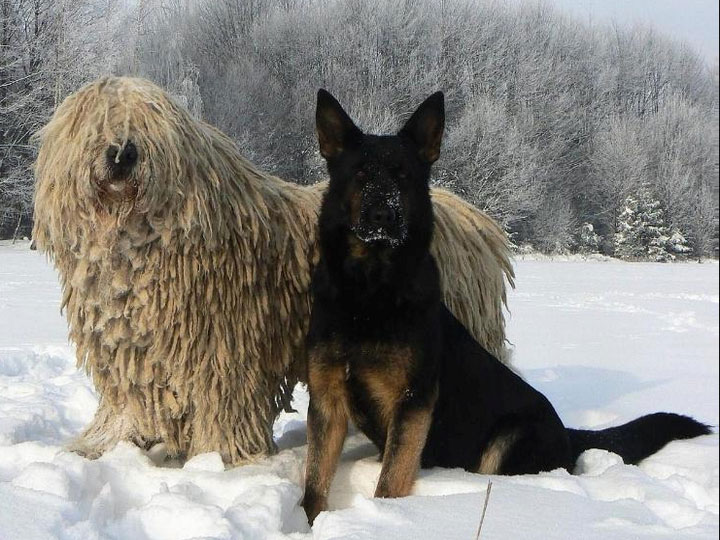
The gallery contains photos of Komondor puppies and adult dogs.
Read also:
- Hungarian Vizsla (Hungarian Shorthaired Pointing Dog)
- Kuvasz (Hungarian Kuvasz)
- Hungarian Greyhound (Magyar agar)


Add a comment