
Teaching a cat the "no" command
In raising children and dogs, there are magic words that they will visualize. Using these words signifies consistency in training, which, when combined with patience, works wonders. Before getting a cat, it's important to discuss with your family what the cat will be allowed to do and what it won't. From the very first day in the new home, it's important to explain to the cat what it's not allowed to do, and to establish a command you'll always use if the cat starts doing something you forbid.
If you and your family have agreed to ban your cat from sleeping in your bed, you should explain this to her from the very beginning.
But it happens that the cat is allowed to stay on the cozy pillows and blankets of the owners during the first nights of its stay, this becomes a habit for it and it is unlikely that it will be happy at the prospect of leaving its cozy bed.
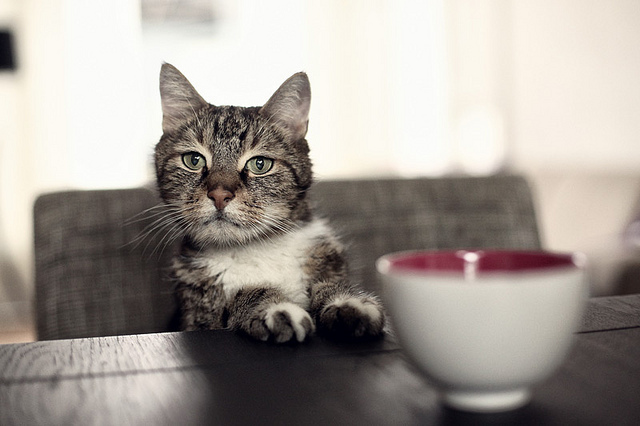
Get off the table! How many times have we each told our furry friend?
Cats are very sensitive to our moods; they observe our behavior and draw conclusions from it. Many cats like to lie on elevated surfaces, which, of course, include tables. Cat hair in coffee is as terrifying as hair itself, even for the most dedicated cat lover. Therefore, the dining table is a no-go zone for cats in many homes. If a cat tries to jump on the table, we immediately stop it with a stern command, "No!" If it stays down, it gets a treat and we play with it a bit.
If the cat ignores the "no" command, we catch the little rascal and take her to a preferred resting place, such as a cat tree, where we praise her and encourage her to play. It's important to always remove your cat from the table when you notice this. Otherwise, she won't perceive it as a no-go area.
We say the command correctly
Some cats respond well to the command "No!" if it's delivered sternly and, if possible, consistently with the same intonation. Other cats respond better to a hissing sound, which they likely recall from their fellow cats.
Auxiliary means
Sometimes it's necessary to do something with a pet that's stubborn due to its youth, constantly doing something out of mischief and ignoring the "No!" command, especially when these actions could cause harm to itself. For example, if a cat is trying to chew through wires, the owner can prevent it with a water-filled spray bottle.
If a cat deliberately ignores the "no" command, we spray it with water from a spray bottle. Almost all cats hate this unexpected shower and retreat from the object of their attack. This method of punishment is beneficial because cats will not resist it. However, it doesn't work on cats that aren't afraid of water. Young cats often become mischievous out of boredom. To avoid this, owners should play with their cats and provide them with toys.
Author: Monica Binder
Translation by O. V. Ryndina
Read also:


Add a comment