
Tracheal Collapse in Dogs: Symptoms and Treatment
Dogs are predisposed to certain diseases by their breed's anatomical features. Dogs with athletic builds and large bones are prone to developing orthopedic conditions, such as hip dysplasia. Miniature dogs often experience a condition called tracheal collapse, a narrowing of the tracheal lumen. Breeds at risk include Pekingese, pugs, Shih Tzus, poodles, Pomeranians, Yorkshire Terriers, Toy Terriers, and Chihuahuas. The clinical picture of tracheal collapse in dogs typically appears in middle age.
Content
The mechanism of tracheal collapse development
The trachea, or windpipe, is a cartilaginous tube connecting the larynx to the bronchi. The cartilaginous semicircles on the spinal side are open; here, soft ligaments called the tracheal membrane serve as part of the trachea. By stretching, it facilitates the passage of food through the adjacent esophagus.
If the cartilaginous portion of the organ (the tracheal rings) loses its rigidity and sags, the lumen of the tube becomes deformed. This can be sufficient to obstruct airflow and disrupt breathing. This phenomenon is called stenosis or stricture, and the condition is commonly referred to as tracheal collapse.
Depending on which part of the windpipe is deformed, the stricture may manifest itself at different stages of respiration. When the lower (thoracic) portion of the trachea collapses, the membrane sags and obstructs the lumen of the windpipe during exhalation. When the upper (cervical) portion collapses, the membrane sags and narrows the lumen of the trachea during inhalation.
Causes of the development of pathology
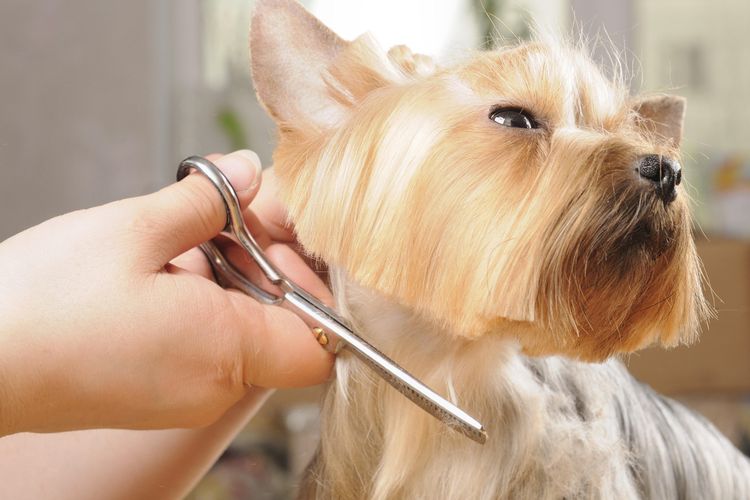
Some toy and brachycephalic breeds are born with slightly narrowed tracheal rings, making them more likely to develop this condition. Many small-breed dogs are highly sensitive and easily panicked, and stress can easily trigger a tracheal collapse. Groomers know that tracheal collapse is a common occurrence in dogs during grooming, so they strive to provide their clients with a calm environment and the presence of their beloved owner.
Tracheal collapse in dogs can also be caused by:
- congenital defect of tracheal cartilage;
- chronic diseases of the upper respiratory tract;
- acute respiratory diseases;
- prolonged stay in smoky, gas-polluted or dusty rooms;
- obesity;
- cardiomegaly (enlargement of the heart).
Symptoms
Since tracheal collapse is the result of reduced airflow due to the collapse of the organ's cartilaginous rings, the symptom complex of the disease mainly includes manifestations associated with the respiratory tract.
The dog becomes restless, begins coughing, and has difficulty breathing—it becomes rapid, hoarse, or wheezy. Shortness of breath and bluish mucous membranes may be observed. Vomiting may occur due to the accumulation of large amounts of mucus in the throat. A persistent, painful cough causes inflammation and swelling of the mucous membranes, and the functions of the trachea—clearing, humidifying, and transporting air—are impaired.
Severe tracheal collapse can cause a dog to choke, sometimes so severe that without immediate assistance the animal may lose consciousness or even die from asphyxiation.
Important to know! Tracheal collapse often remains asymptomatic for a long time, with no clinical manifestations until a triggering factor arises—illness, stress, excess weight gain, etc. This is especially true for dogs with congenital tracheal stricture.
Diagnostics
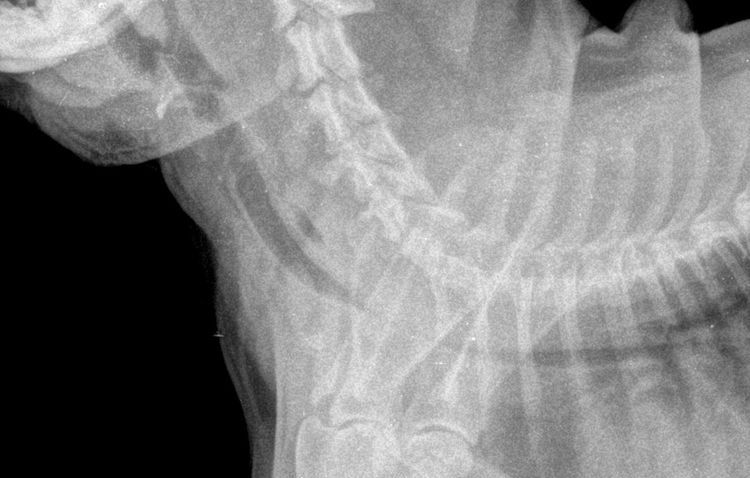
An objective method for diagnosing tracheal collapse in dogs is an X-ray examination. If necessary, a veterinarian may prescribe a tracheoscopy or bronchoscopy. These procedures are performed under anesthesia using a special device - an endoscope, which is equipped with a light source and a photo or video camera, and is inserted into the trachea to examine its internal surface.
The results of instrumental examinations allow us to accurately determine the areas of deformed trachea and the magnitude of the change in its lumen diameter. Depending on the degree of tracheal ring subsidence and lumen narrowing, several stages of stenosis are distinguished:
- Stage 1 - no more than 25% of the lumen is blocked (such stenosis is considered compensated and does not always require treatment);
- Stage 2 - the lumen of the trachea is narrowed by 50%;
- Stage 3 - 75% of the lumen is blocked by a sagging membrane;
- Stage 4 - the trachea is completely closed.
Treatment
If the disease is detected in stages 1-2, conservative treatment aimed at alleviating its clinical signs is usually sufficient. According to domestic and international statistics, a course of medication for the early stages of tracheal collapse in dogs is effective in 70-75% of cases. During treatment, the animal's physical activity is minimized. Veterinarians recommend replacing a hard collar with a soft, thin harness for dogs prone to respiratory spasms to minimize pressure on the throat.
The course of treatment for tracheal stenosis usually includes:
- Corticosteroids (Dexafort(Hydrocortisone, Cortisone, Kela Dexa Kel, Corticosterone). They reduce the production of mucosal secretions (mucus).
- Bronchodilators (atropine sulfate, euphyllin, salbutamol, doxazosin, beclomethasone). Bronchodilators reduce bronchial smooth muscle tone, eliminate bronchial spasms, and thus reduce the clinical manifestations of broncho-obstruction syndrome.
- Tranquilizers (Buspirone, Amitriptyline, Clomipramine, Fluoxetine). Psychotropic medications are used to relieve agitation that causes coughing and breathing difficulties.

In severe cases, when a dog develops acute respiratory distress syndrome (the animal is suffocating, the mucous membranes become bluish), oxygen therapy is prescribed.
In stages 3-4 tracheal collapse, surgical treatment—tracheal stenting—is often necessary. During the surgery, an implant—a self-expanding tube—is inserted into the trachea, acting as an anatomical framework. It ensures normal airflow through the deformed section of the windpipe. Stenting is performed under general anesthesia and endoscopic guidance.
Read also:
- What to do if your dog is choking
- Runny nose in dogs: causes and treatment
- Pneumonia in dogs: symptoms and treatment


Add a comment