
Kooikerhondje (Kooker, Dutch Spaniel)
The Kooikerhondje is a rare dog breed native to the Netherlands. Historically, it was used to drive wild ducks into traps. Today, it has proven itself as a companion for active people, a sporting dog, and a family dog. Its small size makes it suitable for apartment living and requires little grooming. It is friendly, cheerful, energetic, and very intelligent.
Content
History of origin
Kooikerhondjes are also known in the Netherlands as duck-calling dogs. But their hunting prowess is not the only reason they are renowned. One Kooikerhondje is credited with saving William II of Orange in 1591. According to legend, the dog woke the prince during a surprise attack on his camp by the Spanish army. His name is unknown, but his heroic deed left its mark on the country's history. Since then, this courageous little dog has been a national treasure of the Kingdom. Depictions of small, red-and-white dogs with black "earrings" appear in paintings by Dutch masters beginning in the 16th century. The breed may have existed earlier, but no evidence exists to support this claim. The modern Kooikerhondje originates in the province of Friesland in northern Holland.
The name Kooikerhondje comes from the Dutch words "kooiker" and "hond", which literally means "duck hunter's dog".
In the early 20th century, the popularity of driven duck hunting declined, and with it the number of Kooikerhondjes. In 1942, efforts to revive the nearly lost breed began, led by Baroness Van Hardenbroeck Van Ammerstol. At her request, enthusiasts began searching throughout the Netherlands for dogs of the old type. In 1966, a preliminary standard was written, and in 1971, the breed was officially recognized.
Purpose
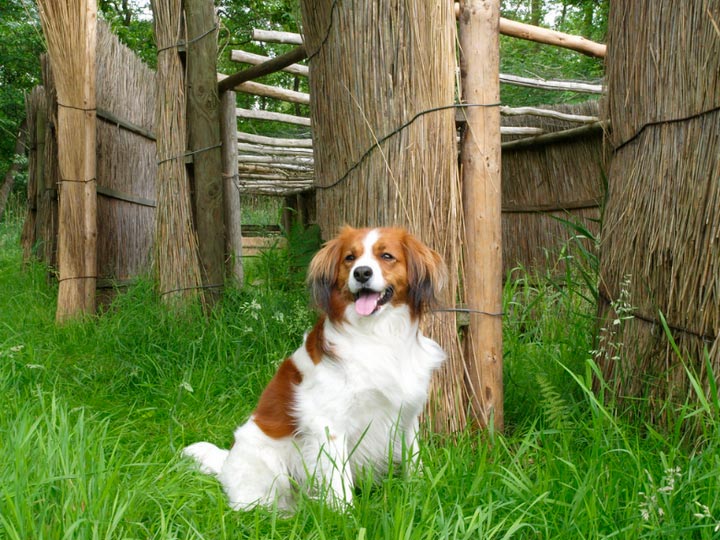
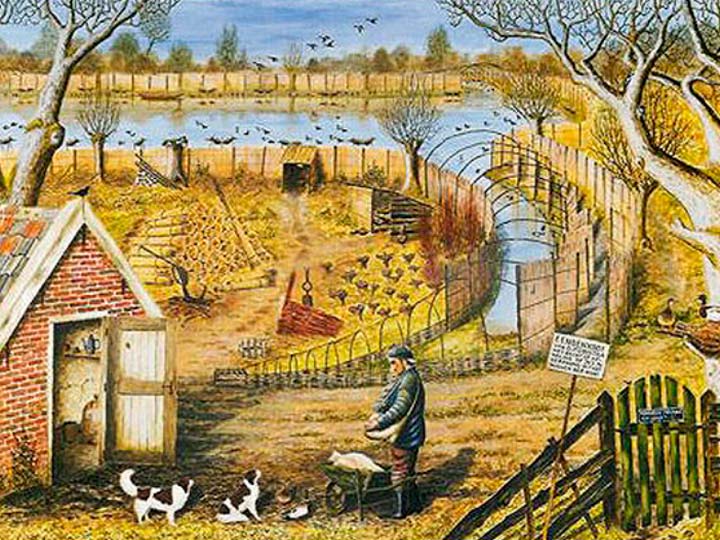
Traditionally, the Kooikerhondje was used in the Netherlands for duck hunting, not traditionally with a gun, but with driven traps. The traps for the birds were called endenkois. They were built along the banks of canals and marshes. They were constructed as a narrowing tunnel, covered with a net at the top and ending in a small cage. You can see what such structures look like in the photo in the gallery. The Kooiker's job is to stroll along the bank and wave its bushy tail, thereby attracting ducks into the trap. It's still unclear why the birds are so attracted to the wagging tail, but the fact remains. This hunting style is called tolling. Interestingly, besides the Kooikerhondje, only one other breed uses this method: the Tolling. Nova Scotia Duck Tolling Retriever (Toller).
Kooikers don't hunt ducks directly; they don't flush them and don't make good retrievers. Their job is to move along the coast and then lead the birds to the trap, their tails waving merrily.
When not chasing ducks, Kooikerhondjes hunted rodents and other predators of the birds, such as foxes and wild cats. They also served as guard dogs, alerting to intruders and chasing them away unless they were significantly stronger or larger. Modern Kooikerhondjes are, first and foremost, excellent companions for active people and athletes. The most suitable disciplines include agility, freestyle, and flyball.
Appearance
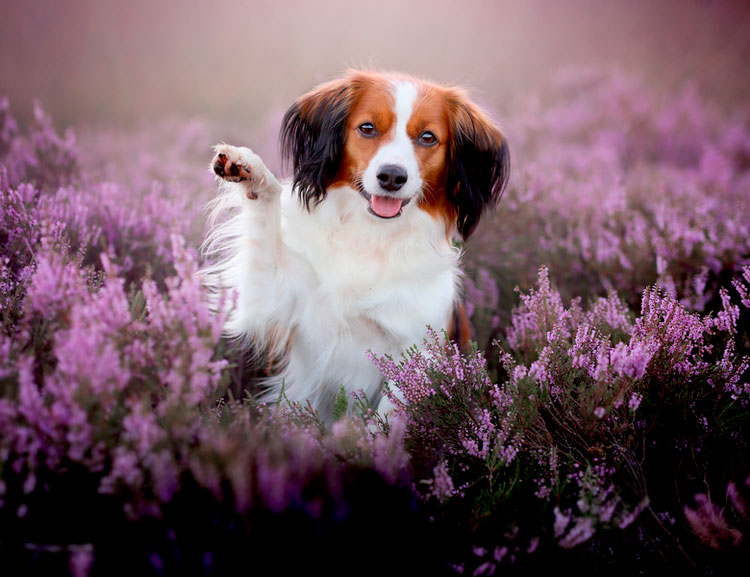
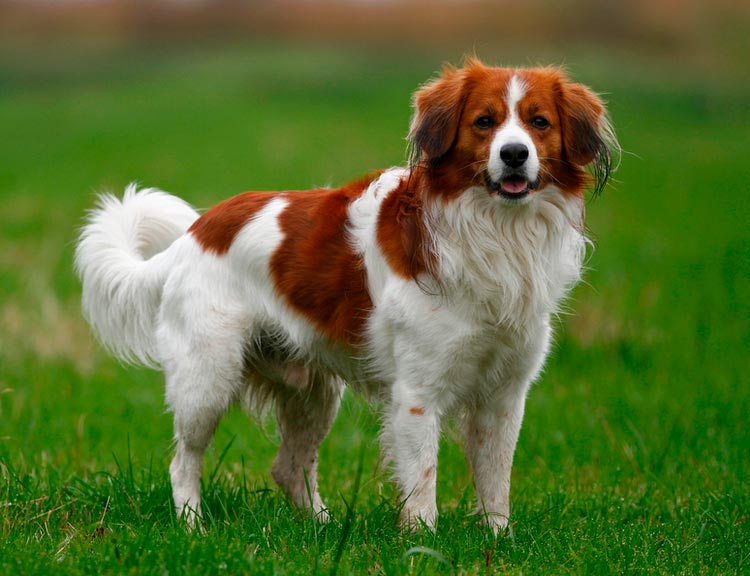
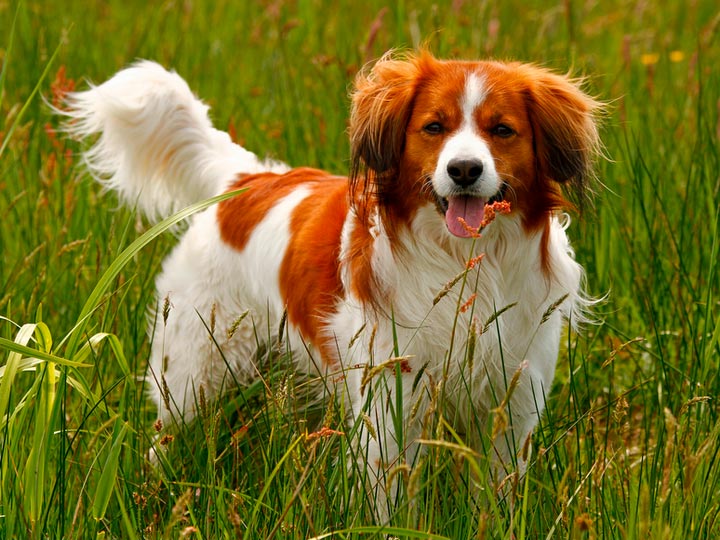
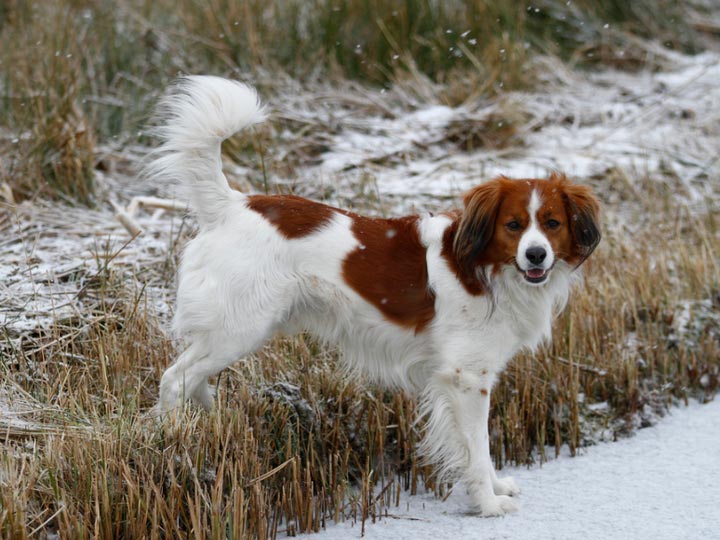
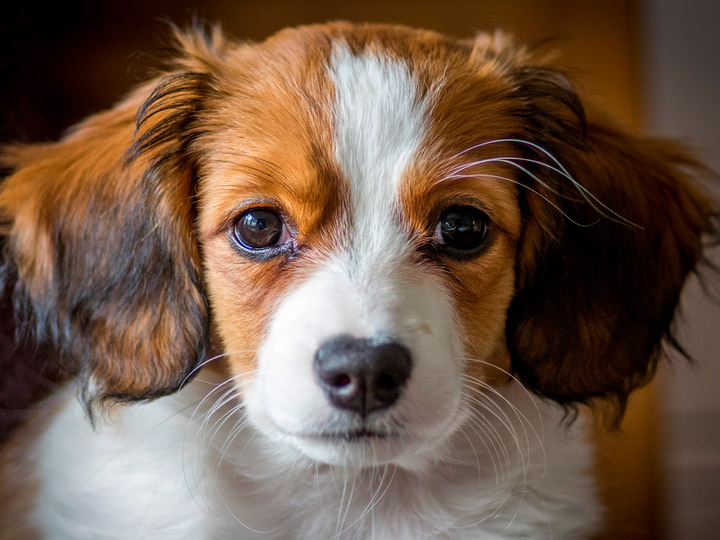
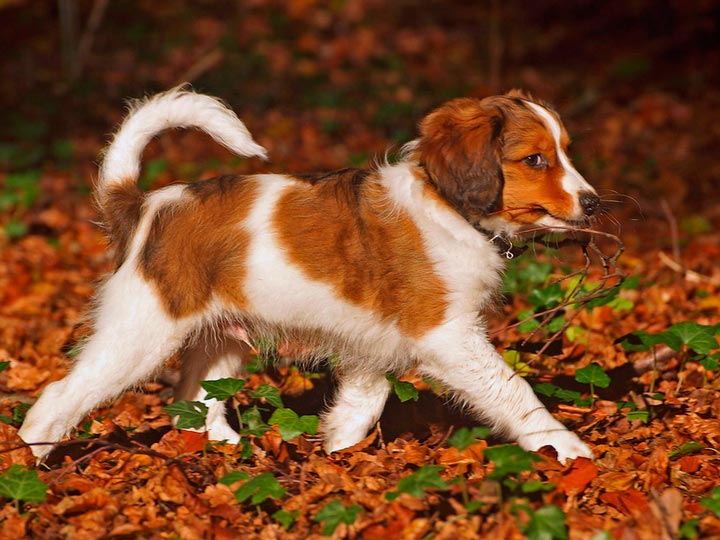
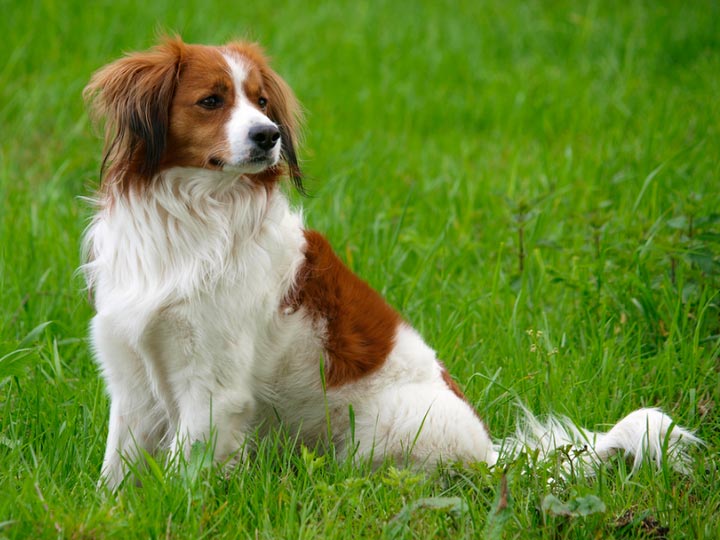
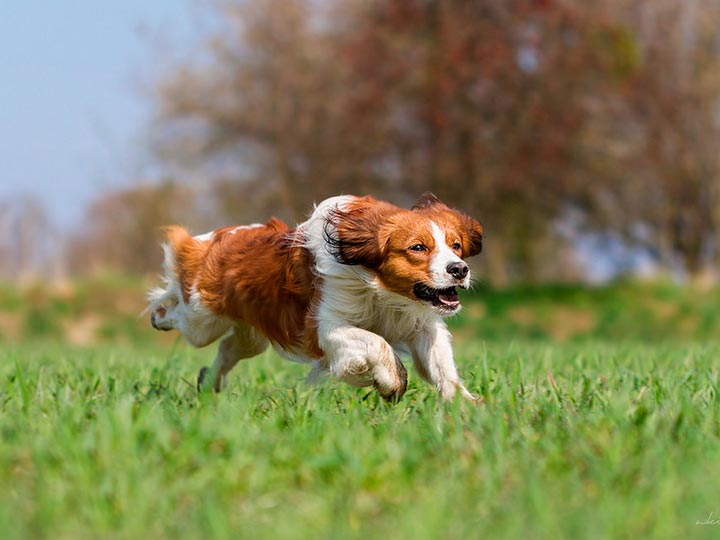
The Kooikerhondje is a compact, well-proportioned dog with a red and white coat. When moving, it holds its head high and swishes its bushy tail cheerfully. The tips of its ears are adorned with black hair, called wattles. Its height at the withers is 36-43 cm (14-17 in). It weighs approximately 10 kg (22 lbs).
The head is of moderate length. The skull is fairly broad and rounded. The stop is well defined. The muzzle is wedge-shaped, well filled under the eyes, tapering not too sharply. The nose is black, with a well-developed, black nose leather. The lips are tight, preferably black. A scissor bite is present, although a pincer bite is also acceptable. The eyes are almond-shaped, dark brown, with an alert, friendly expression. The ears are moderately large, set just above the eye line, with the front edge lying close to the cheeks.
The neck is fairly long and muscular. The topline is straight. The back is strong and short. The loin is long and wide. The croup is slightly sloping and broad. The chest reaches to the elbows and is well developed. The belly is moderately tucked up. The tail is set high, carried level with the back or almost vertically. The last vertebra reaches the hock joint. The legs are strong in bone and of normal length. The forelegs are straight and parallel. The hind legs are correctly angulated. The paws are small, oval, and compact.
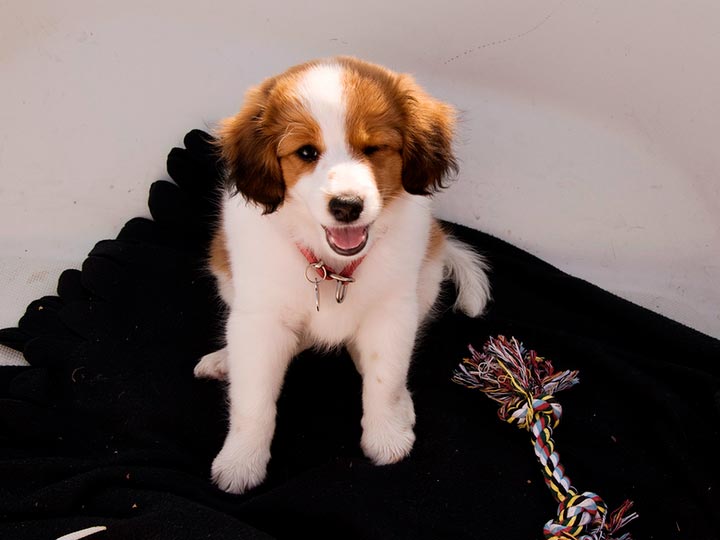
The coat is medium-length, straight or slightly wavy, soft, and has a well-developed undercoat. The backs of the front legs are covered with long feathering reaching to the pasterns, while the hind legs have fairly long "trousers." The front sides of the legs and head are covered with short hair, and the underside of the tail is very long. The hair is also longer on the throat and chest. The coat is bicolor: distinct orange-red spots on a white background. A white blaze appears on the head, and the ears and area around the eyes must be colored. Black hair is desirable on the tips of the ears.
Character and behavior
The Kooikerhondje is a very cheerful, active, and self-assured dog, persistent, resilient, and friendly. It forms strong bonds with its family, but typically sees only one person as its master. With proper upbringing and training, it is highly people-oriented and willing to help in any way.
The small, alert Kooikerhondje bravely defends its territory, not allowing strangers to approach its boundary and warning its owner in advance of any intrusion. It is wary of strangers, but generally not aggressive. It is wary of strangers, dogs, and children. It will not run up to the first person it meets or allow itself to be petted. It is only aggressive toward small rodents and other drivers. It gets along well with pets, but will selflessly chase away neighbors' cats. It is completely free of malice toward birds. It is important to remember that the Kooiker is not a retriever; it does not retrieve downed game, but rather wanders along the shore, luring live ducks into traps, and does so silently. Overall, this dog is calm and not prone to excessive barking.
A Kooiker will thrive physically and mentally if given a job. If a duck pond isn't available, this could include regular walks and training with the owner, training for competitions, retrieval tasks, and the like.
The Kooikerhondje thrives on attention, but is relatively calm and unobtrusive. It makes an excellent companion for adults. It's not well-suited for children and won't become a guardian, but if raised with a child, it will happily participate in playtime.
Education and training
Early socialization is essential for the Kooikerhondje. This intelligent dog requires a protective owner. Training should be consistent and gentle. Any coercion or physical punishment will cause the Kooiker to withdraw and thus avoid conflict. Basic commands are taught early. It is recommended to take the Kooikerhondje to a training facility, where the dog will learn to work with humans and interact with other dogs.
Thanks to its energy, agility and high intelligence, the Kooikerhondje is capable of achieving good results in various sports: agility, freestyle, frisbee.
Maintenance and care
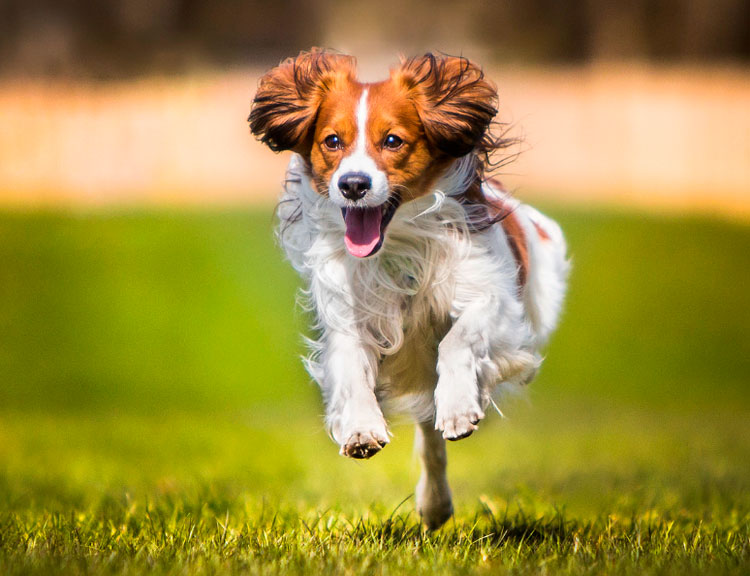
The Kooikerhondje is suitable even for small apartments, but thrives in a home with a large yard. It requires a great deal of exercise. Regular, long walks with games and training will help it burn off pent-up energy. During the first few minutes of a free walk, it will run wild, but once it's had its fill, it calms down and becomes quite manageable and obedient.
Kooikerhondje will not be satisfied with quiet walks around the park's perimeter.
It doesn't require complicated grooming. Regular brushing and bathing are sufficient, along with keeping the dog's ears and eyes clean and its nails trimmed.
When it comes to nutrition, Kooikerhondje breeders and owners disagree. Most today prefer to feed their dogs according to the BARF system, but some prefer dry food. It's up to the owner to decide what to feed their Kooiker. The key is to ensure the food is high-quality and balanced, fully meeting the dog's needs. Some Kooikerhondjes are prone to weight gain, especially in adulthood.
Health and life expectancy
The Kooikerhondje is considered a relatively healthy breed. Most dogs are free of hereditary diseases, have strong immune systems, and have no digestive issues. However, some are less fortunate. The most common health conditions include:
- Von Willebrand disease;
- Necrotizing myelopathy;
- Patellar dislocation;
- Hip dysplasia;
- Eye diseases (cataract, progressive retinal atrophy).
Other breed-specific diseases are relatively rare and cannot be detected by screening:
- Epilepsy;
- Polymyositis;
- Glomerular kidney diseases.
To maintain the health of your Kooikerhondje, annual, lifelong vaccinations and timely parasite treatment are essential. A complete medical examination is recommended annually to detect any underlying medical conditions. Life expectancy is usually 12-14 years.
Choosing a Kooikerhondje Puppy
The majority of this breed is concentrated in the Netherlands. Large breeding grounds also exist in other European countries, as well as in the United States and Canada. In Russia and the CIS, the breed is rare, and only a few breeders are active. Breeding grounds exist in Moscow, St. Petersburg, and several other cities.
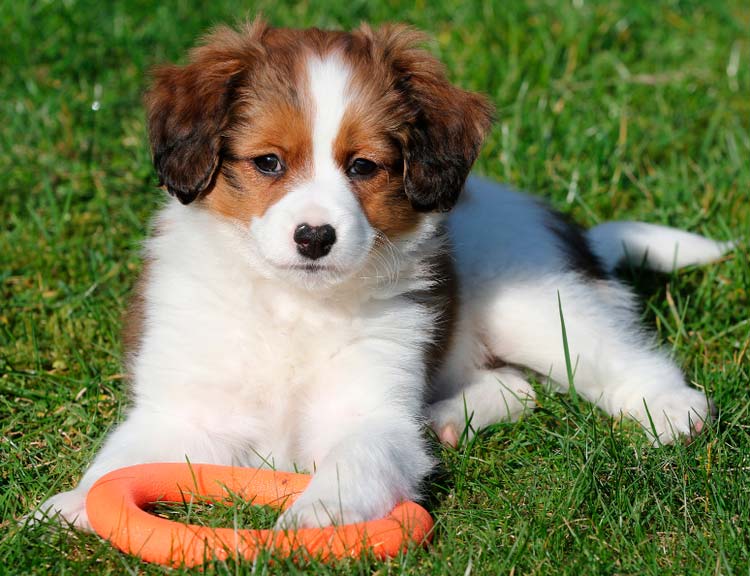
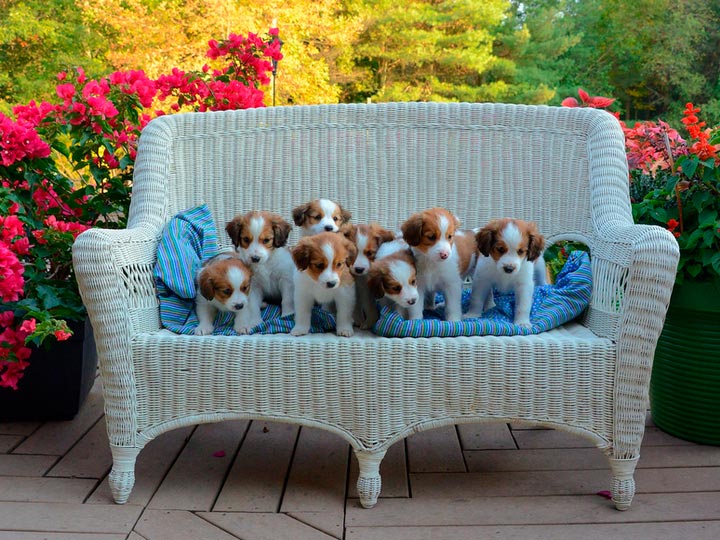
It's best to buy a Kooikerhondje puppy from a professional breeder. It's a good idea to have the litter's parents tested for major genetic diseases. When choosing a puppy, it's important to evaluate the physical and psychological state of the mother and puppies, as well as the living conditions and feeding. Check for proper documentation: a puppy certificate, a veterinary passport with vaccination records and other preventative measures, a tattoo, and a microchip (optional). There are no significant differences in personality between male and female dogs. It's recommended to bring a puppy to a new home no earlier than 2.5 months of age. The puppy should be absolutely healthy, curious, and playful, with no signs of shyness or aggression. The puppy is also assessed for compliance with the breed standard.
A competent breeder will always advise which puppy has the best personality for a particular person and their family.
Price
The average price for a Kooikerhondje puppy is 50,000 rubles. If the puppy has a defect, such as a color issue, the breeder will typically lower the price to 30,000-35,000 rubles. Promising puppies and youngsters for show or breeding can cost 60,000 rubles or more.
Photos and videos
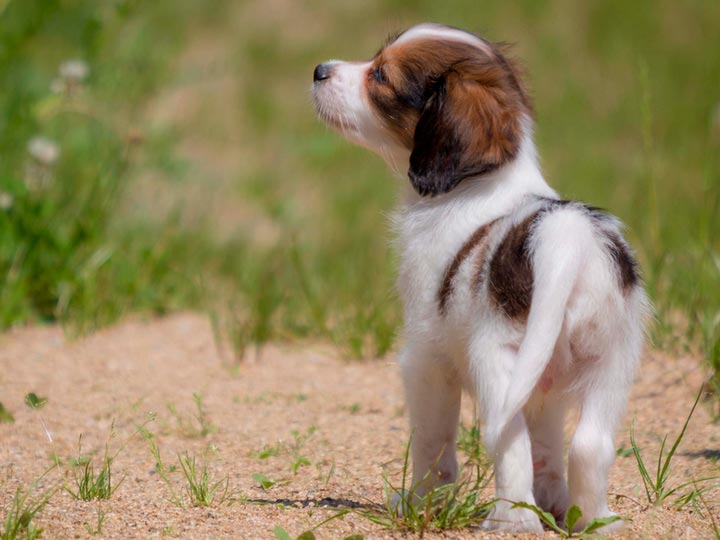
The gallery features photos of typical Kooikerhondjes of different sexes and ages. Even the photos reveal the energetic and cheerful nature of these small dogs. The final image is a painting by a Dutch artist depicting the traditional method of duck hunting and Kooiker hunting at the time.
Video about the Kooikerhondje (Kooker, Dutch Spaniel) dog breed:
Read also:


Add a comment