
When do kittens open their eyes after birth?
Maternal instinct is a gift from nature. However, cat owners try to help their pets care for their offspring. To identify problems with kittens early, it's important to know when and how many days they open their eyes and begin to see light. Newborns' skills are limited to sucking and clinging to their mother's skin with their claws; if anything happens to her, the kittens will die.
Content
Why are baby cats born blind?
These animals have multiple pregnancies. A single birth is rare; typically, there are 4-8. Fetal development in the womb lasts 8-10 weeks, during which time the expectant mother is active, hunting and escaping from predators. Therefore, the amniotic fluid in the womb is not sterile. Nature has provided the young with visual organs, tightly covering them with eyelids.
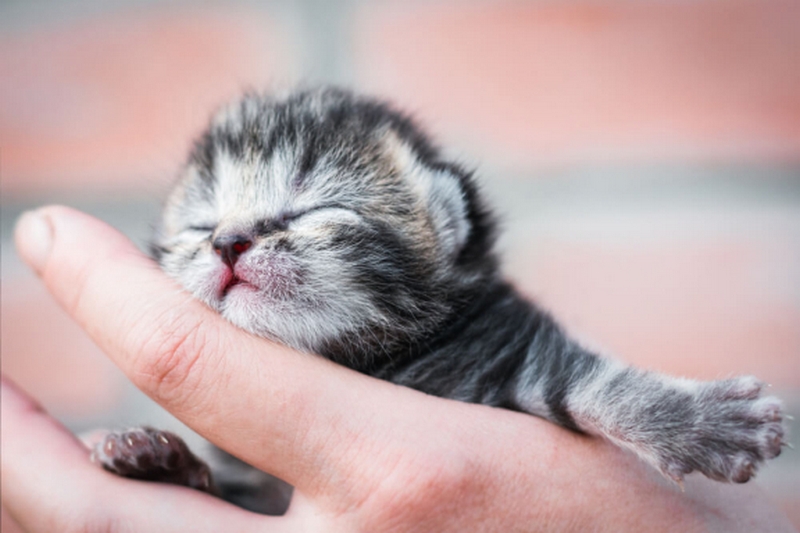
Visual function is restored as soon as the babies' physiological systems—nervous, immune, and auditory—are fully formed.
Even when kittens open their eyes, they are unable to function independently, as they cannot perceive sound and their bodies cannot maintain the required body temperature. Their intestines and urinary organs are not yet fully developed.
Eye opening in kittens
Light sensitivity occurs between 4 and 14 days after birth. However, eyelid raising and visual development depend on the cat's living conditions and the characteristics of its mother:
- The lighting in the room where the mother is placed. The brighter it is, the slower the offspring will develop.
- The cat's health. If the animal is weakened or lactation is disrupted, the eyes open later.
- It depends on the duration of pregnancy. In preterm babies, visual development ends 12-14 days after birth.
- Gender. Females' eyes open faster, and they often develop faster than males. However, males gain weight faster.
- In short-haired animals, the visual system develops at an accelerated rate. It develops first in Sphynx cats—they begin to focus their gaze by the third day.
The table shows the period of time until which kittens can open their eyes, depending on the breed.
|
How many days after birth do kittens open their eyes? |
Breed |
|
3-4 |
Siamese, Thai |
|
2-3 |
|
|
4-6 |
Orientals |
|
16-21 |
|
|
9-10 |
Abyssinians |
|
14-16 |
Maine Coons |
|
12-16 |
Siberian, British Straight and Persian |
|
8-12 |
All fold-eared and Bengals |
|
3-6 |
Postterm pups often have their eyelids already raised. They begin to focus their gaze between 4 and 6 days. All other skills are normal.
When kittens open their eyes after birth depends on the time they were born and their living conditions. Development accelerates if the mother is healthy, active, and protected from stress.
Newborn eye care
Purebred cats are not always able to cope with maternal responsibilities on their own, and even first-time mothers do not develop these skills immediately. Cats with flattened muzzles are the most likely to require assistance after giving birth. Due to the altered shape of the facial bones, even the slightest inflammation of the nasopharynx can quickly spread infection to the tear ducts.
To prevent the development of inflammatory processes in the visual system, it is necessary to regularly carry out preventive measures.
Problematic breeds include Scottish Folds, British Shorthairs, and Persians. Their kittens require special care: their eyelids should be treated with warm herbal infusions, calendula, or chamomile, or a weak pink solution of potassium permanganate.
To prevent the mother from leaving a litter, she should be placed in a box with high sides and placed in a darkened room.
How vision is formed
When kittens open their eyes, their eyelids don't open immediately. First, a small slit appears on the inside, then it gradually widens. The process of visual system development occurs very slowly, taking between 1 and 4 days.
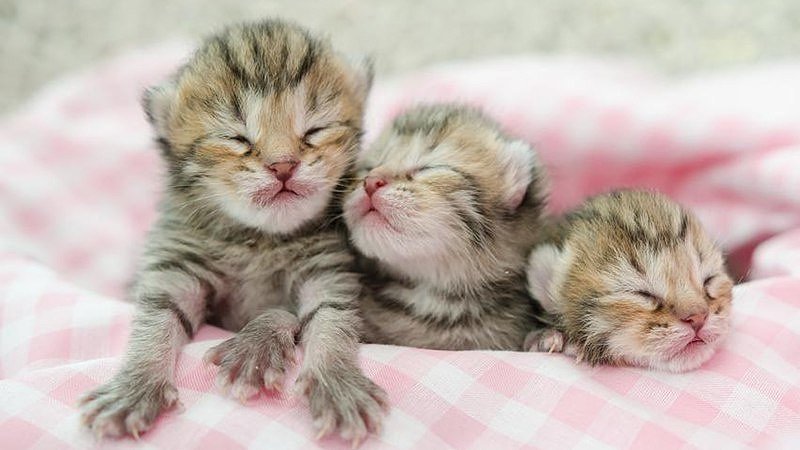
During this period, the animals can only distinguish light and shadow. They still rely solely on scent to navigate, so they bump into each other and the walls of the cage.
The babies will be able to perceive the outlines of objects no sooner than after 5-7 days, and their shape after another 3-5 days. They begin to fully focus their gaze and navigate using their visual system only between 3-5 weeks of age. Before this time, it is not advisable to expose the animals to light. Retinal irritation can trigger the development of pupillary pathology.
Individual pigmentation appears from the third week after birth. Before this time, the eyeball is blue.
How to identify vision problems in cats
Pups in the same litter develop differently. Some are more active, while others try to take their mother's place at the nipple and eat constantly. Excess weight later hinders their curiosity about the world around them.
The age and timing of kittens opening their eyes doesn't depend on their birth order. The first kitten born isn't necessarily the most developed.
However, if, given the breed's characteristics, the eyelids have already opened and are still closed after 48 hours, the puppy should be taken to a veterinarian or contact the breeder. visual system may be asymptomatic.
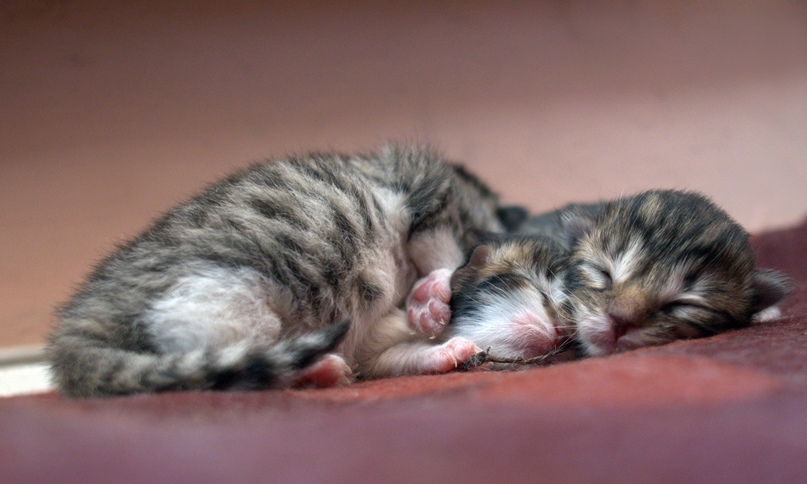
Vision test
A kitten's reaction to its surroundings doesn't depend on the day its eyes opened. Sometimes, even though its eyelids open on time, the kitten still acts unsteadily, bumping into objects, and swaying when walking even 1.5 to 2 months after birth. You can check if it can see by dangling a bright object in front of its nose. A healthy kitten will definitely try to grab the toy, while a blind one won't react.
Another way to detect blindness is by assessing the pupil's response to light. As light intensity increases, the pupils constrict; as light intensity decreases, they dilate. However, opening the eyes reveals nothing about the function of the visual system.
If blindness is suspected, diagnostic procedures may be prescribed:
- Visual inspection.
- Examination of the internal and external structures of the eye using an ophthalmoscope and ultrasound.
- Electroretinography for analysis of the state of the retina.
Such examinations of the visual system and organs are usually performed on purebred animals when surgery is planned to restore eye function. In non-pedigree animals, attempts are made to adapt to blindness by creating comfortable living conditions.
Eye problems
The most common pathologies:
- Congenital – adhesion of the eyelids. Manifestations include an inability to open the eyelids, pus in the corners of the eyes, and swelling of the eyelids. This problem is resolved with surgery.
- Acquired - infection. Recognized by redness, purulent and mucous discharge from the eyes and nose.
Infectious processes in animals have certain unique characteristics, so self-medication is not recommended. To avoid vision problems, a proper diagnosis is essential.
|
Etiology |
The most common diseases |
Symptoms |
|
Viral |
Conjunctivitis, rhinotracheitis |
Discharge is initially mucous, then purulent, eyelids stick together, high temperature |
|
Fungal or bacterial |
Blepharitis |
Severe swelling, itching, thick purulent discharge |
|
Secondary infection due to mechanical damage |
Keratitis or inflammation of the cornea |
Symptoms depend on the type of pathogenic flora. |
Incorrect or untimely treatment can cause not only blindness, but also the death of the animal.
Don't euthanize kittens due to visual impairment. These animals will quickly develop other senses—smell, hearing, and touch. This will allow them to develop as well as healthy kittens. These cats will grow up to be loyal companions, more attached to their owners than sighted cats. These animals will be able to lead full lives.
Read also:


Add a comment