
When do kittens start eating on their own?
It's impossible to say definitively at what age kittens begin to eat independently. Several factors influence complete adaptation, including living conditions, developmental characteristics, and breed. On average, they can learn to lap from a bowl at 1–1.5 months, while still drinking their mother's milk. However, if for some reason a kitten is left without a mother, it must be adapted to solid foods much earlier.
When do kittens start eating on their own?
The chances of survival for newborn cats are very low. Without maternal care, they are unable to eat, or even to urinate or defecate. Therefore, if possible, it's best not to separate them from their mother too early; you should wait at least 2-3 weeks after birth. However, if something happens to the mother, care will be necessary. take matters into one's own hands.
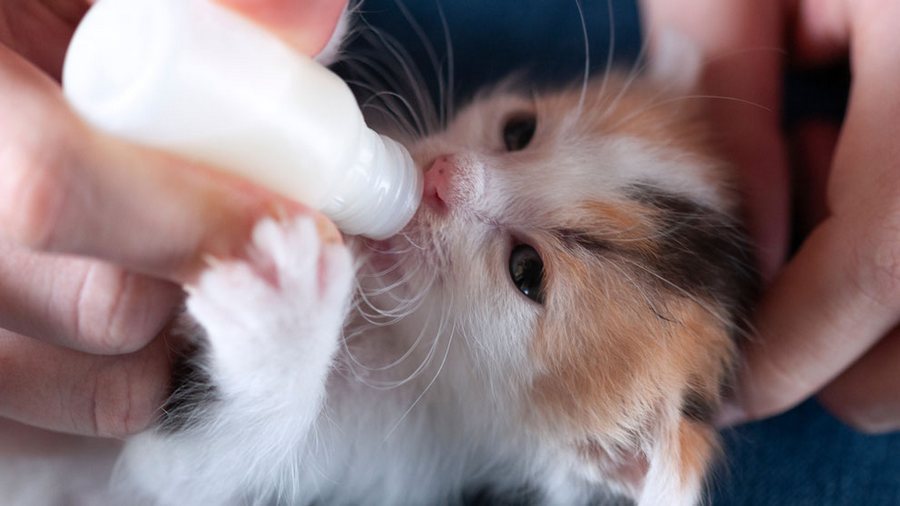
In unfavorable conditions, kittens begin to eat on their own at approximately 3–3.5 weeks. However, they will not yet be able to consume as much food as they need for full development, which will negatively impact their health. Therefore, even if they have already tried to use a bowl, additional feeding is required. For the first feedings, prepare a dropper, a very soft nipple, or a syringe without a needle. Supplementary feeding should be continued for another 1–2 weeks after the kittens begin eating on their own.
A special, ready-made mixture (available at a pet store or veterinary clinic) would be ideal, but it can also be prepared using one of the recipes listed in the table.
|
Milk |
Additional components |
|
Concentrated 0.5 l |
1 yolk and 4 teaspoons of granulated sugar |
|
250 ml regular |
2 yolks, 1/3 teaspoon of sunflower oil and 1–2 drops of vitamins A and E |
|
100 ml regular |
1 yolk and 0.5 tsp honey |
|
50 g whole and 15 g dry |
3 g yeast, 0.5 beaten egg, a few drops of vegetable oil, 4 g glucose solution or 0.25 tsp honey |
How to train a kitten to eat on its own:
- At first, complementary foods are offered from a finger or a spoon, thus teaching the child to lick the food.
- Then, give them a small, flat plate. Tip: Splashes will fly everywhere, so arrange the feeding area so as not to damage furniture or carpets.
- Only after acquiring the skill of "lapping" can you place the bowl deeper, from which you will have to get not only liquid food, but also individual pieces.
Watch this helpful video
The age at which kittens begin eating solid food independently depends on their developmental progress. This most often occurs around 2 months of age, when their baby teeth begin to emerge.
Motherless puppies can be fed formula from birth. Every 3 hours for the first 2 weeks, then every 4–5 hours thereafter. The food should be heated to 37–37.5°C. At the same time, starting at 3 weeks, begin introducing the puppies to a bowl.
Changing the menu by age
Most often, cats nurse their offspring for up to 2.5 months, but sometimes weaning can take up to 4 months. The owner can speed up the transition to independent feeding by expanding the diet:
- From 3 to 6 weeks, you can introduce into the menu: soft puree from boiled yolk, baby puree - meat or vegetable, semolina porridge without sweetener of medium thickness, low-fat cottage cheese.
- From 2 to 3 months, the following are added to the diet: low-fat cheese, boiled fish and meat, porridges - oatmeal, buckwheat, rice, natural yogurts.
- From 3 months – offal, all low-fat dairy products, grated boiled vegetables – carrots, zucchini, cucumbers, cabbage.
Once kittens are able to eat on their own, they should be gradually and consistently introduced to commercial food—both dry and wet. However, if the owners decide to keep them on a natural diet, they should be given a variety of foods (meat, fish, vegetables, grains, dairy products) to replenish their organic vitamin and mineral reserves.
Sometimes an animal refuses to expand its diet and demands only meat or fish. In this case, the owner must prepare purees by blending proteins and carbohydrates, or replenish vitamin and mineral deficiencies with therapeutic supplements (selected with a veterinarian). Without proper nutrition, harmonious development is impossible.
Possible problems
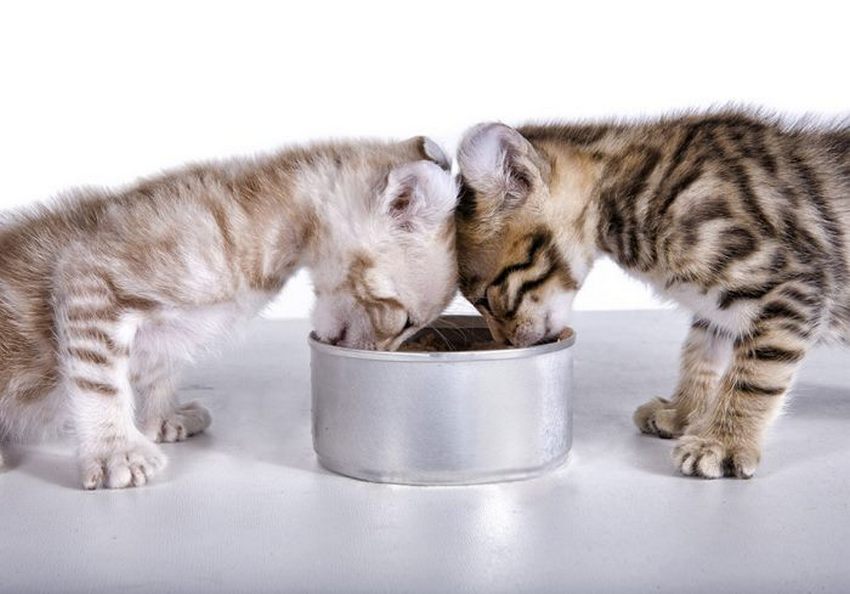
When transitioning kittens to independent feeding, various difficulties can arise. For example, complete or partial refusal of food, as well as stomach upset. The problem lies in the incorrectly defined timeframe for when kittens can begin eating independently. In some cases, independent feeding and the "adult menu" can be transitioned at 1.5 months, while in others, it may be closer to 2 months. If side effects occur, supplemental feeding with a dropper should be continued.
Other causes of problems with independent feeding that lead to refusal to eat or deterioration of health:
- Stress. To calm and normalize your pet's condition, avoid loud noises during feeding, provide a calm environment, and keep other animals and family members away from the bowl.
- Inappropriate foods. If your pet experiences an upset stomach or vomiting after eating, it's recommended to switch to special formulas. Also, consult your veterinarian—parasite infestation or gastrointestinal issues cannot be ruled out.
- The bowl may be incorrectly selected; it may be too deep or have a strong plastic smell. In this case, simply replace the bowl.
- Food temperature (too hot or too cold).
- Allergies. Signs include hair loss, itchy skin, and redness of the mucous membranes. In these cases, it's important to select appropriate foods, temporarily introducing oatmeal porridge with milk diluted 1:6 with water or low-fat meat broth.
Feed small portions, and monitor bowel movements regularly to prevent diarrhea or constipation. If the stomach is too full, gently massage it after each feeding to prevent stagnation. Clean water should be available next to the bowl containing thick or solid food, and the bowl should be washed after each feeding.
The time it takes kittens to start eating independently depends not only on their overall development. Another important factor is the optimal timing and adherence to the basic weaning rules. If done correctly and with patience, kittens can be taught to feed independently by 2.5–3 months.
Read also:


Add a comment