
Ritis coefficient in cats
Pets often need blood tests not only before but also after treatment. They reveal any deviations in their pet's health and allow us to assess the effectiveness of therapy. One important indicator is the Ritis coefficient, which, in cats, allows us to diagnose many cardiac or liver pathologies with subtle symptoms.
Content
What is the Ritis coefficient?
A complete blood count (CBC) measures the ratio of individual blood fractions: red blood cells, white blood cells, platelets, blood protein (hemoglobin), and ESR. When interpreted, it can reveal the presence of inflammation, infections, and blood and bone marrow disorders in the animal's body.
A biochemical analysis determines the content of substances that characterize the functioning of internal organs: total protein, glucose, urea, cholesterol, bilirubin, and the Ritis coefficient - the ratio of the levels of alanine aminotransferase and aspartate aminotransferase enzymes.
Too high or too low a ritis coefficient in a cat almost always indicates diseases of the internal organs.
Intracellular enzymes are complex proteins that are part of the tissues of many internal (visceral) organs and participate in various biochemical (hydrolytic, oxidation-reduction and synthetic) processes.
These specific proteins serve as biocatalysts in the body, facilitating the chemical transformation of certain substances, without the enzymes themselves being consumed, and their action being selective – each enzyme is responsible for its own reaction.
The first laboratory test of transaminase levels in the differential diagnosis of hepatitis was proposed in 1957 by the Italian physician Fernando De Ritis. Today, the dc Ritis coefficient is a highly reliable marker of liver and myocardial cell damage.
ALT and AST transferases belong to a group of endogenous enzymes and are found in the liver, kidneys, cardiac myocardial cells, intestinal wall, and skeletal muscles. Their functions include:
- nutrient processing;
- breakdown of toxic compounds into safe components;
- participation in the production of bile, protein synthesis and metabolic conversion of amino acids.
The enzyme aspartate aminotransferase is synthesized within myocardial cells, and alanine aminotransferase is synthesized in the liver. Small amounts of these enzymes enter the bloodstream. Their levels in healthy animals are correlated. This statistical relationship is disrupted in diseases of these organs, as well as due to muscle damage from trauma and intravascular hemolysis.
Determining the level of transaminases in the blood in many cases helps to differentiate diseases of internal organs that have similar clinical symptoms.
Thus, AST levels (and the ritis coefficient) in cats are elevated in cases of myocardial tissue damage and septic conditions. When an organic defect in cardiac muscle tissue develops, higher than normal levels of aspartate aminotransferase enter the bloodstream, while alanine aminotransferase activity remains virtually stable. ALT levels increase with pathological changes in liver parenchyma cells. However, in this case, AST levels change only slightly, and the ritis coefficient in cats will then be reduced.
In what cases is the analysis prescribed? by the De Ritis coefficient
A biochemical blood test to determine the dc Ritis coefficient is prescribed for cats in the following cases:
- Liver diseases (hepatitis, copper metabolism disorders), inflammation of the bile ducts (cholangitis), bile stasis (cholestasis). Symptoms of such pathologies typically include bloating, jaundice, dark urine, and discolored stool.
- Endocrine diseases (hyperthyroidism). Cats with thyroid disease experience apathy, increased fatigue, and spend more time lying down.
- Inflammation of muscle tissue (myositis).
- Suspected oncology or treatment of malignant tumors of any localization.
- Ischemic heart disease (impaired blood supply to the myocardium), pre-infarction conditions and heart attack.
- Autoimmune pathologies.
Conducting an analysis on the dc Ritis coefficient
Qualitative and quantitative analysis of the proteolytic enzymes AST and ALT, as well as the ritis coefficient, in feline blood serum is performed using spectrophotometry. This kinetic test allows one to determine the type and concentration of the components of the substance being analyzed based on the amount of absorbed or reflected light transmitted through the sample in a biochemical analyzer—a spectrophotometer.
A spectral analyzer is a laboratory instrument designed to determine blood composition, including the amount of proteolytic enzymes in serum and plasma. It consists of a light source (tungsten, ultraviolet, or infrared lamps), a cuvette for the sample being analyzed, prisms for isolating and directing sections of the light beam, and a system for recording the radiation transmitted through the sample.
When conducting spectral analysis, blood serum or plasma is separated from formed elements, centrifuged, and placed together with a control protein preparation in a manual or automatic spectrophotometer.
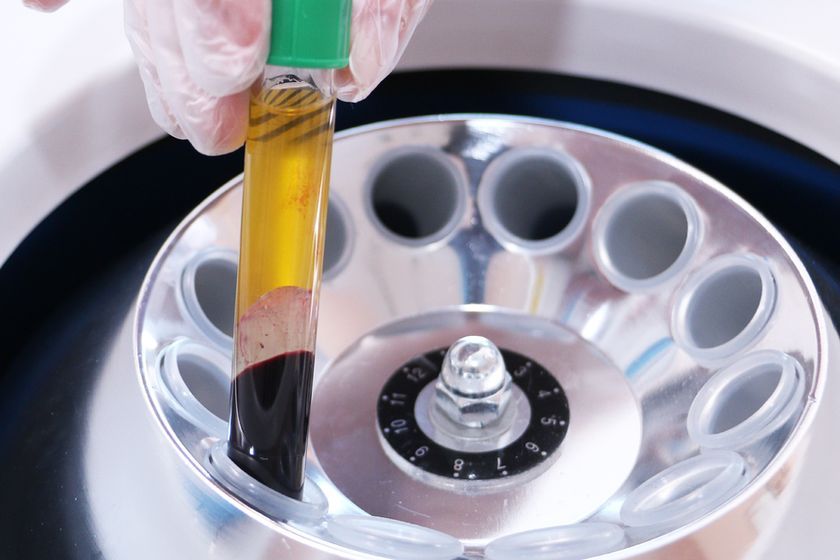
The analyzer records the power of the incident and reflected photoflux as it passes through cuvettes containing the working and control samples. The levels of aspartate aminotransferase and alanine aminotransferase in the blood serum are then calculated using special optical density tables.
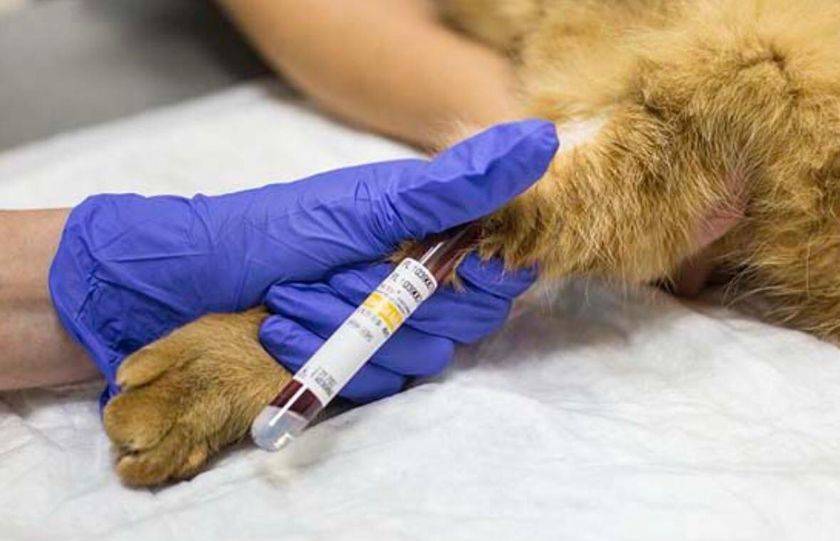
Blood for biochemical analysis in cats is taken from the saphenous vein of the leg, forearm, or external jugular vein. As with humans, animals should have this test done in the morning on an empty stomach.
Analysis transcript
The Ritis coefficient is calculated using the serum proteolytic enzyme activity data obtained through spectral analysis. To calculate it, divide the aspartate aminotransferase level by the alanine aminotransferase level.
In adult cats, the normal AST level is 10-55 U/L, and in kittens, 7-40 U/L. Diseases associated with impaired blood supply to the heart muscle or tissue necrosis increase this level severalfold. Elevated AST levels are also observed in congenital vascular pathologies or poisoning with cardiotoxic toxins.
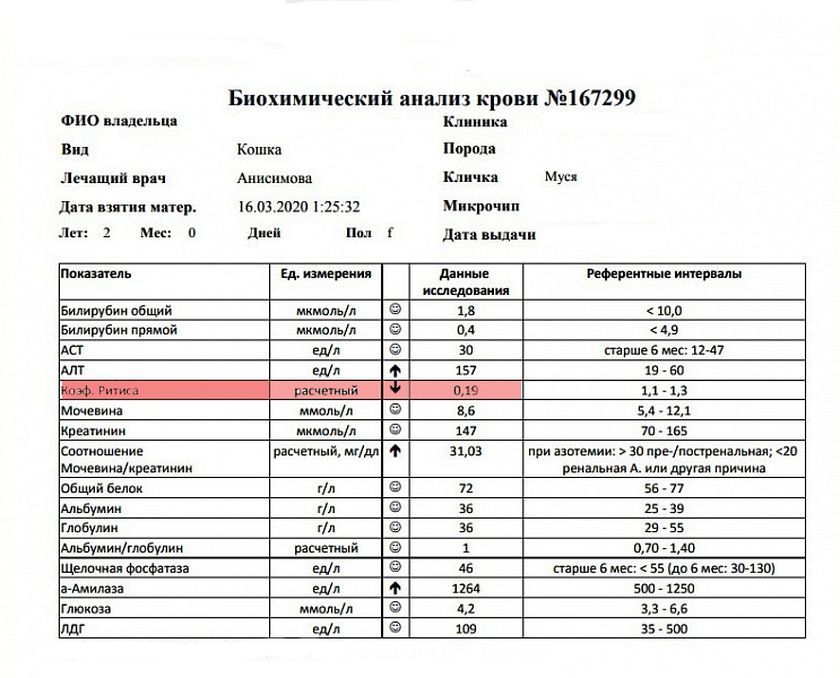
The normal ALT level in adult cats is 10-85 U/L, and in kittens, 10-75 U/L. If a cat has liver problems, ALT levels can increase 8-10 times, and AST levels can increase approximately 2-fold. Liver damage is often caused by constantly feeding a cat fatty meats.
Thus, if the dc Ritis coefficient is between 1.33 and 1.75 U/L, this Ritis coefficient is considered normal for cats. This value will be lower if the animal has liver disease (piroplasmosis, babesiosis, viral hepatitis) or poisoning with substances toxic to the liver (including medications). An elevated de Ritis coefficient indicates coronary heart disease, infarction, or myocarditis, diseases typical for older animals.
Additional examinations
To clarify the diagnosis and determine the reason why the ritis coefficient in cats is low or high, the veterinarian may prescribe the animal:
- a general blood test (it will determine the presence of inflammatory processes that caused a decrease in hemoglobin levels and an increase in the number of leukocytes);
- chest x-ray (this examination will reveal pathological changes in soft tissues and bones);
- ultrasound examination of internal organs (will show the size and shape of the heart, liver, spleen, pancreas, gallbladder, and detect the presence of a tumor or pleural effusion).
Read also:


Add a comment