
Cloning of pets
More and more people are cloning their pets. Few are publicly announcing their decision. But what's driving them: a love of animals or other reasons? Why is pet cloning necessary?
Content
History of commercial cloning
Pilot Adam Gibson's daughter's dog, Oliver, dies. He decides to revive his beloved pet and goes to a veterinary clinic. But after talking to the manager, he abandons the idea. Thus begins the thriller "The 6th Day," starring Arnold Schwarzenegger.
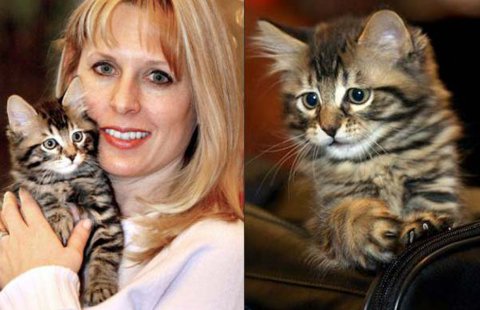
Commercial animal cloning is no longer science fiction. In 2003, Little Nicky, a Maine Coon, was born. The kitten was a clone of Nicky's deceased female cat. Her happy owner paid $50,000 for her beloved cat's second life.
2008 – American company BioArts International began cloning dogs. Scientists created Missy, a border collie-husky cross. Around the same time, Seoul National University announced the birth of five cloned bull terrier puppies.
Their names are Booger Bernann, Booger Ra, Booger Lee, Booger Hong, and Booger Punk. The babies' biological father, Booger, died of cancer in 2006. The industry leader is the South Korean corporation Sooam Biotech Research Foundation (Sooam Biotech).
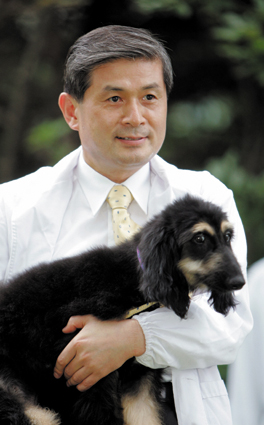
The company's first achievement was a cloned Labrador retriever, Lancelot Encore. This handsome fellow was born in 2009. The industry was also rocked by scandals. In 2004, South Korean biologist Hwang Woo-seok announced the creation of cloned human stem cells.
The information turned out to be false. He was given a two-year suspended sentence. Hwang also has real accomplishments. He bred the first dog on earth conceived in the same way as Dolly the sheep. Snoopy, an Afghan hound, is a terrier.
Expert opinion
Biotech's motto is: "We don't just clone dogs, we also mend broken hearts." It lures customers in. After all, it's not a sales pitch, but a continuation of the relationship between owner and loyal friend, broken by the death of their four-legged companion.
"Female pets bring joy to the whole family. However, there's a sad side to this: they live less than their owners. A dog's lifespan is about 20 years, a cat's 15-20, and a hamster's three years," reflects Mattias Vullich, chief physician at Argentina's leading animal hospital.
For example, a child's guinea pig dies. The parents begin looking for a new pet to protect their child from suffering. According to Vullich, they make a big mistake. Having lost a pet, children understand the fragility of life, which prepares them for greater losses in the future.
Preparing for cloning
The owner wraps the deceased pet in damp cloths. The pet should then be placed in the refrigerator, but not the freezer. Owners have five days to allow doctors to extract the animal's cells. The shelf life of biological material varies. Last year, Korean researchers announced the cloning of Dylan, a boxer who died of cancer. Cell samples were taken twelve days later. Two puppies, Shadow and Chance, were born. The procedure cost the owners $100,000.
The cloning process
Scientists perform a tissue biopsy on a living or dead pet. Cells from the animal to be cloned are then extracted. Eggs are then collected from the donor female and the nucleus, which contains the genetic material, is removed. The cells are then combined with the DNA of the dog to be cloned. The embryo is implanted into the uterus of the surrogate mother. After 60 days, the puppies are born.
"The clone resembles the 'parent.' But while the 'original' had a particular fur structure, the copy is different. The clone's personality"Sometimes it's excellent. Genes certainly play a significant role. But upbringing is also important. Human twins have identical DNA. But if they grow up in different environments, their personalities will differ," explains Sooam's David Kim.
Camel cloning
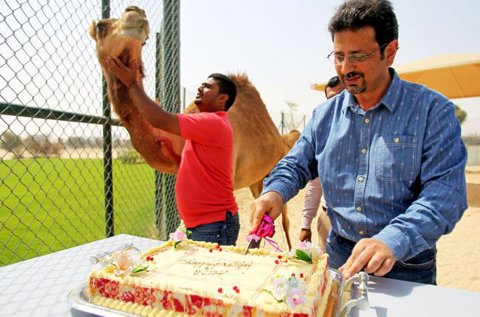
Many animals are cloned. A unique camel reproduction center operates in the United Arab Emirates. The institution was founded by Sheikh Mohammed, Vice President, Prime Minister, and Emir of Dubai. The first cloned camel was Injaz, born in 2009.
The artificial reproduction of ships of the desert is a profitable business. It will attract Arab millionaires and preserve the gene pool of animals participating in camel racing. The competition is popular in the Middle East, Pakistan, Australia, and Mongolia.
The procedure will also be of interest to camel milk producers. Camel milk is nutritious and beneficial for diabetics because it contains insulin. It also contains vitamin C and other valuable nutrients.
Pet cloning in Russia
In our country, some research is underway on animal cloning. So far, it hasn't yielded any results. Last year, a laboratory for studying the DNA of extinct animals was established in Yakutia. Its main goal is to revive the mammoth. Perhaps, in time, the institute will begin cloning pets as well.
What do you think about pet cloning? Leave your comments.
Translation by O. V. Ryndina
Read also:


2 comments
Vladimir
That would be great. But, firstly, it's very expensive, and secondly, the cat will still have a different soul (and I believe they have a soul), meaning it won't be him anymore.
Almira
Help, maybe this time you will succeed, my beloved dog died, maybe you can try to clone her
Add a comment