
Chinese Crested Dog
Chinese Cresteds are active and very cheerful toy dogs that are known for their strong attachment to their owners. There are two varieties of the breed: powderpuff and hairless. Based on their body type, they are roughly divided into two types. Deer-type dogs are distinguished by their light, fine bones, while stocky or pony-type dogs are calmer, more confident, and have a heavier bone structure.
Content
- 1 History of the breed's origin
- 2 Appearance
- 3 Training and exercise
- 4 Character
- 5 Maintenance and care
- 6 How to Groom a Chinese Crested Dog
- 7 Diet and health
- 8 Allergenicity
- 9 Chinese Crested Dog Puppies – Choosing the Right One
- 10 Clothes for Chinese Crested Dogs
- 11 Peculiarities of Chinese Crested Dog Mating
- 12 Photos
History of the breed's origin
China is considered the breed's country of origin. The Chinese Crested is a very ancient breed, with some sources citing its breeding as early as 200 BC. Despite this, there is no reliable data on its origins.
According to one version, these dogs once lived in the wild and were domesticated by humans, and hairless individuals appeared in hot tropical climates.
There is no evidence that they originated in China. The striking similarity between the Chinese and Mexican hairless dogs, as well as some research, has led to the development of another theory of origin—the Mexican theory, according to which crested dogs first appeared in Mexico as a result of crossing the local hairless Xolo with the Chihuahua.
Reliable information about the breed only emerged in 1966, when these unusual dogs were brought to England from the United States. It was here, in Foggy Albion, that a standard was developed for them, and the country became a major breeding center.
Appearance
The Chinese Crested is a slender, active, and elegant dog. Its movements are smooth and energetic. The head is wedge-shaped. The eyes are wide-set and almond-shaped. Depending on the coat color, the eyes and nose may be light or dark. The ears are large, erect, and uncropped.
The bite is straight or scissor-shaped. hairless dogs Incomplete teeth are acceptable, but in Powderpuffs they are considered a fault. The chest is deep, the belly is tucked up, and the loin is arched. The tail is thin and long. The limbs are long, straight, and set parallel. The fingers and nails are slightly elongated.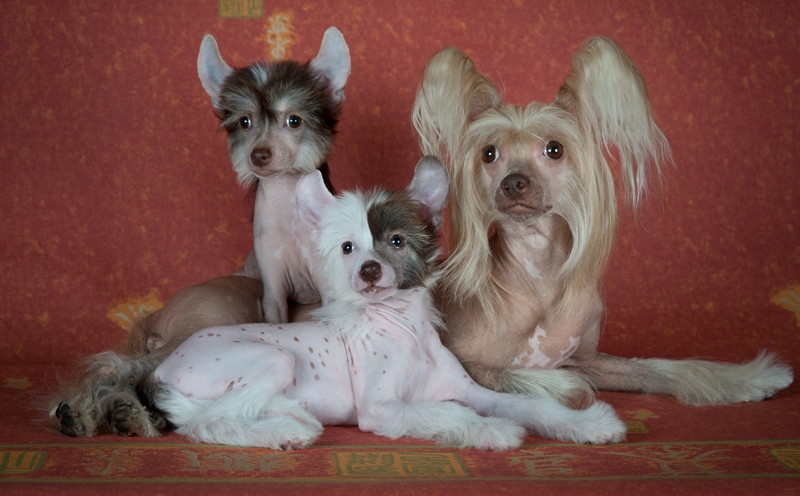
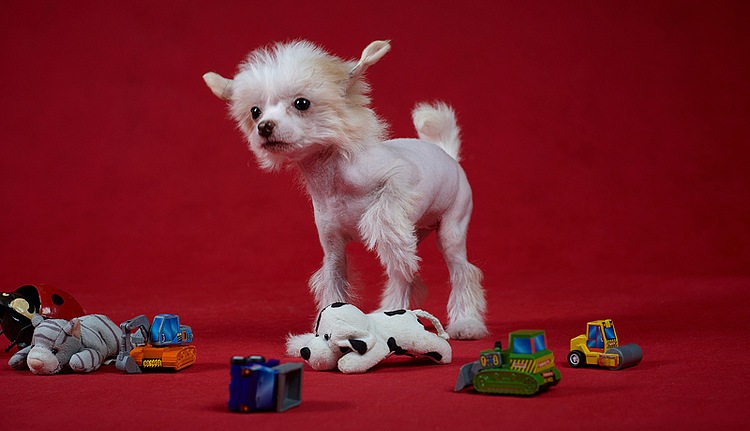
Hairless dogs have patches of hair only on the head, tail, paws, and sometimes the ears. The coat is long and flowing. Powderpuffs are completely covered with moderate-length, not too dense hair with a good undercoat. Excessively curly and heavy hair is considered a fault. The range of colors is very wide, from solid to spotted and marbled in any shade and combination.
Training and exercise
Training a Chinese Crested puppy begins from the moment it arrives home. First and foremost, it's taught obedience and how to behave around other animals and people. It's also important to accustom the dog to personal hygiene from an early age. Owners of private homes with a garden should keep in mind that this breed loves to dig, so it's best to designate a special area for the pet from the start. These dogs aren't particularly trainable. Typically, they're taught only basic commands and a few circus tricks.
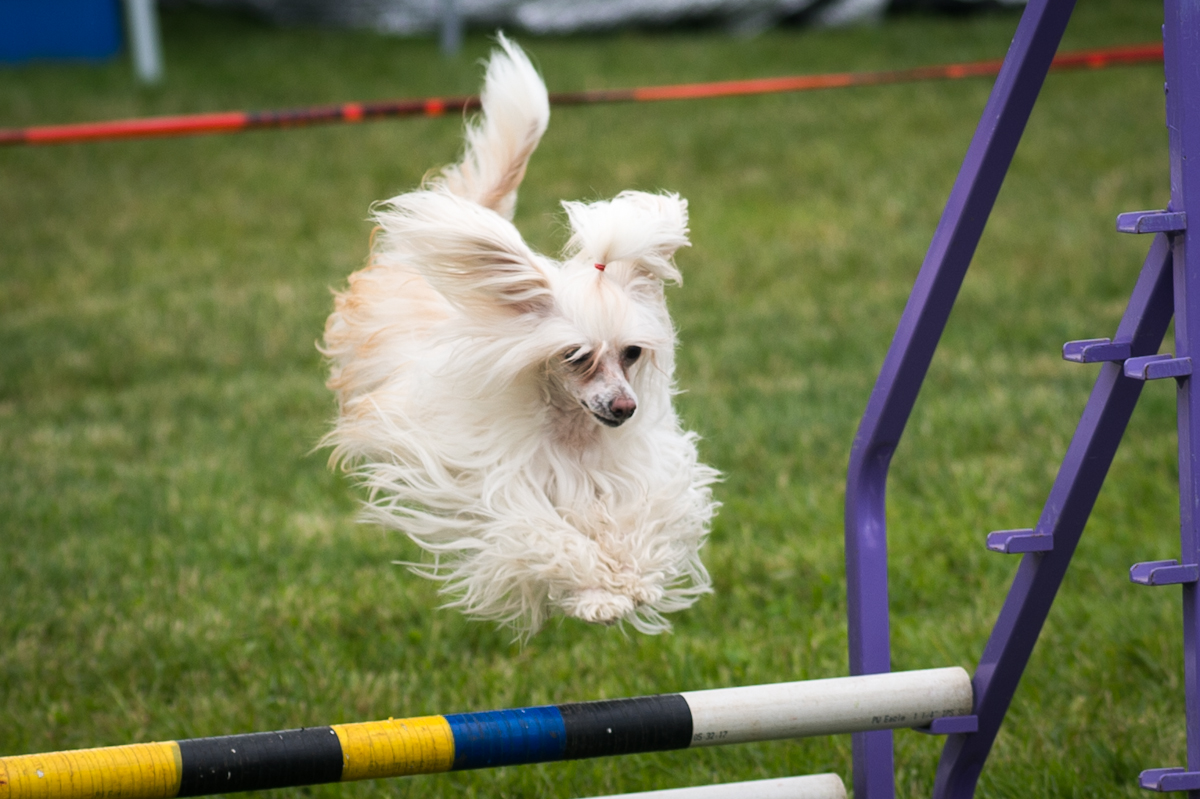
These animals quickly learn to walk on their hind legs, climb stairs, overcome obstacles thanks to their jumping ability, and easily acquire other skills. Eager to please their owners, they will do their utmost to obey any commands just to please them.
It is important to find an individual approach to each dog.
Chinese Cresteds are very lively and active, and to burn off excess energy, they require long, active games and daily walks. They don't require any other exercise, but owners can train their dogs in agility if they wish.
Character
Naked representatives Chinese breed They were never bred for hunting instincts or used as guard dogs. Their ancestors were honored participants in religious ceremonies in ancient times. Even in the modern world, the breed was bred as a decorative animal. All of this served as the foundation for the formation of their character.
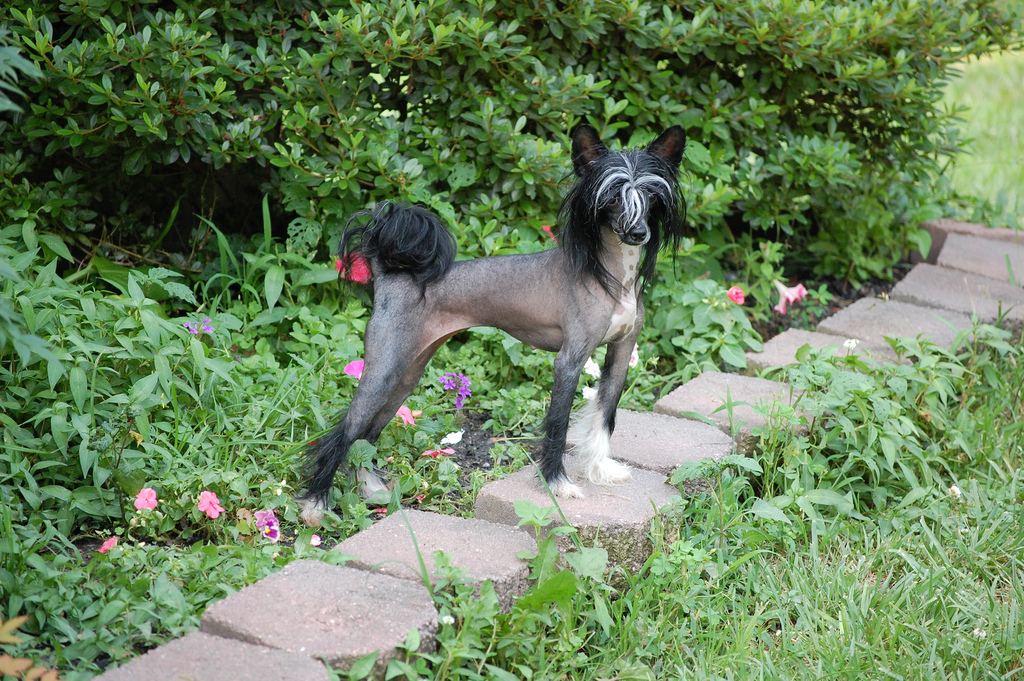
Chinese Cresteds have an affectionate and playful nature, are very devoted to their family, and are always friendly, even with strangers. They are very sociable and seek maximum attention, so they are not suitable for busy people. Chinese Cresteds are quite temperamental, sociable, and friendly. They do not bark unnecessarily. They get along well with other animals, but can sometimes become jealous and nervous if they receive less attention. They become very attached to their family and are very sensitive to separation from their family or a change of owner.
The owners of these dogs say that their pets love to cuddle and cannot live without human contact.
The Chinese Crested Dog is especially affectionate with its owner and sometimes singles out another family member. This incredibly loyal pet deeply misses loved ones who have left home and may wait a long time for their owners to return or try to find them. They require constant human attention, and those left alone for long periods of time often fall into prolonged depression.
This dog requires constant companionship and benefits from meeting new animals and people, as well as traveling to new places. A pet deprived of this will grow up fearful and timid. A Chinese Crested that is bored or frustrated by its "uninteresting" life may begin to bark loudly or whine, which is not typical of this breed.
Excessive chewing is a serious problem this breed can develop if left alone for long periods of time. Constant attention from the owner and the provision of chew toys can help prevent or stop tooth wear.
Maintenance and care
The Chinese Crested is a strictly indoor breed. It is not suited for outdoor living. It gets along well with other animals and loves to play with children of all ages. When walking in cold weather, it should be in warm clothing and special shoes. In extreme cold, it is not allowed outside at all, so it is often litter-box trained.
Grooming for hairless and powderpuff Chinese Cresteds is virtually identical. Chinese Cresteds are brushed daily or every other day. Bathe 2-3 times a month, using a special shower gel on the hairless areas and restorative shampoos for the coat that add volume.
It is important that all cosmetic products are hypoallergenic. Their nails grow slightly faster than those of other breeds and don't wear down quickly, so they need to be trimmed periodically. These dogs, especially the hairless variety, have very poor teeth that require regular brushing. Powder Puffs shed very little on their own, and to prevent the undercoat from matting, it needs to be brushed thoroughly. After bathing, it's recommended to use conditioner with shampoo. The hair on the muzzle is trimmed.
Hairless dogs sometimes develop blackheads or whiteheads on their skin due to dead or damaged hairs remaining in the follicles. These should be removed with tweezers, followed by an antiseptic wipe. To prevent dryness, use a special cream. Sunscreen is essential during the summer months.
Chinese Crested dogs can quickly gain excess weight if they overeat and don't exercise enough. Therefore, this breed needs to be encouraged to move more often, especially since they love to walk and play outdoors. Care should be taken to ensure that the hairless Chinese Crested doesn't accidentally damage its exposed skin during walks.
In extremely cold or hot weather, it is better not to take such a dog outside to go to the toilet, so experienced breeders advise training animals to use a litter box or diapers.
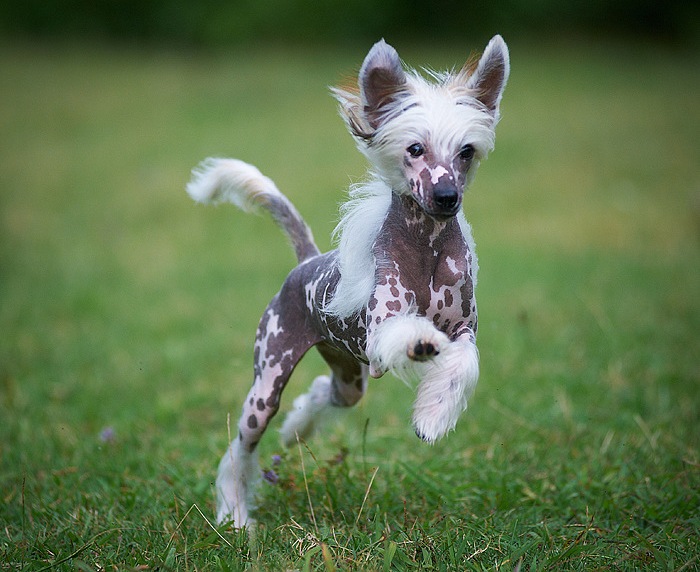
Chinese Crested dogs can quickly gain excess weight if they overeat and don't exercise enough. Therefore, this breed needs to be encouraged to move more often, especially since they love to walk and play outdoors. Care should be taken to ensure that the hairless Chinese Crested doesn't accidentally damage its exposed skin during walks.
In extremely cold or hot weather, it is better not to take such a dog outside to go to the toilet, so experienced breeders advise training animals to use a litter box or diapers.
How to Groom a Chinese Crested Dog
A well-groomed powder puff is a source of pride for its owner. This is not surprising, as achieving a perfect result is not easy. If you plan to trim your Chinese Crested yourself, you'll need the following tools:
- comb with long metal teeth;
- hair clipper (not human);
- hairdressing scissors;
- slicker brush;
- hair dryer.
Before grooming, comb your pet. Brush away from the skin and don't miss any sections. Apply special pressure to problem areas, such as behind the ears and on the paws. If there are any tangles, remove them with your hands and then comb the area with a slicker brush.
If you don't want to constantly fuss with your dog's coat, give it a puppy-style haircut. You can also shave your pet completely, turning it into a hairless crested dog. Naturally, this only applies to dogs that aren't planned for show. If you're unsure, visit a specialized salon. However, if you want to transform a Powder Puff into a hairless crested dog, follow these guidelines.
First, remove most of the hair from the animal's body. Leave the boots, crest, and two-thirds of the tail intact. How much hair to remove is up to you. You can remove everything or leave a few millimeters using a guard. Regardless of the type of haircut, your Chinese Crested will look beautiful and well-groomed, and subsequent grooming will be significantly easier.
Diet and health
Representatives of this breed are generally not picky eaters, loving vegetables and fruits, but are naturally not vegetarians. If your pet has few teeth, it's best to feed it ground or cut into small pieces. Particular attention should be paid to the nutritional balance and adequate levels of vitamins A, D, E, calcium, and phosphorus. A proper feeding schedule is also recommended. You can also feed a special food for toy dogs, supplemented with natural foods. If you prefer to feed your pet prepared food, it's definitely worth choosing high-quality holistic or at least super-premium foods.
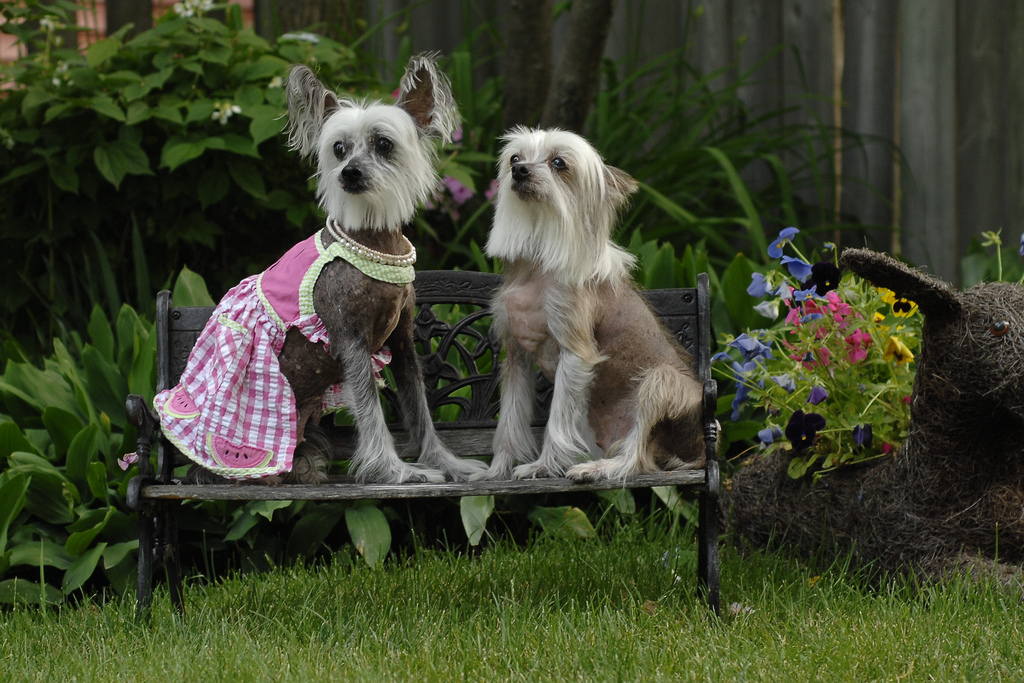
Overall, the breed is known for its hardiness and good health, but some health conditions are considered particularly predisposing. Chinese dogs often suffer from allergies. Females can have difficult births. Joint problems and keratoconjunctivitis are also common. Hairless dogs are prone to acne and sunburn in the summer.
Owners should also be aware that the gene responsible for hairlessness is linked to the gene responsible for dental quality, meaning the less hair a dog has, the worse their teeth. Hairless dogs are often found to have incomplete teeth or tooth loss from an early age. They often suffer from cavities and stomatitis. Chinese Cresteds have a lifespan of up to 12 years.
Allergenicity
Unfortunately, even hairless dogs can trigger allergies. This reaction can be triggered by secretions from the skin glands or particles of animal saliva.
Chinese Crested Dog Puppies – Choosing the Right One
Choosing a puppy is a complex and responsible procedure that requires careful preparation:
- browse catalogues;
- visit exhibitions;
- meet the breeders.
It's a good idea to know an experienced expert. When choosing a Chinese Crested puppy, take the expert with you. When choosing a kennel, read reviews. Visit the kennel before purchasing to see the conditions in which the dogs are kept.
Decide in advance whether you're getting a male or female dog and which breed is best for you: a Konik, a Hairless, or a Powderpuff. If you're not a fan of grooming, it's best to choose a hairless dog. A Powderpuff will require some attention to its coat.
It's important to note that the skin color of Chinese Crested dogs can change with age. Dark-skinned puppies become bluish or bronze in later life. Coat color can also change in all three varieties of the breed. Typically, the final color can be determined by the roots of the hairs when the pet reaches three months of age.
Overall, the Chinese Crested can be considered an unpredictable dog. Even an experienced dog breeder can't predict with 100% certainty the puppy's final skin color, coat color, or height. However, meeting the puppy's parents can at least give you a preliminary prognosis.
Most members of the breed have excellent temperaments, without the slightest hint of aggressive behavior. However, it's still not a good idea to ignore a puppy's personality. Experienced dog breeders recommend choosing energetic, sociable, and confident puppies. If you're planning a show career for your Chinese Crested, consider a larger dog. Size adds a relaxed, confident air to the dog.
A good puppy is a strong, well-built dog with a straight back, well-angled limbs, and a scissor bite. The ears of Powderpuff and Hairless Chinese Cresteds stand up differently and even at different times. This is influenced by various factors, such as ear size and the amount of fur on them.
Clothes for Chinese Crested Dogs
A hairless dog can hardly be called short-haired, so this pet, more than anyone, needs comfortable and warm clothing. In winter, this could be a padded jumpsuit. During the summer heat, a Chinese Crested can wear a T-shirt to protect its skin from sun exposure and insect bites. However, the selection of dog clothing is quite wide, so you're unlikely to limit yourself to just two items. Specialized ateliers also offer custom-made dog clothing:
- overalls for all seasons;
- a raincoat for cloudy days;
- pajamas for cold nights.
In short, there's plenty of choice. Just remember, when buying clothes for your Chinese Crested, don't just focus on looks. Your pet should be comfortable, first and foremost.
Peculiarities of Chinese Crested Dog Mating
Deciding to breed a Chinese Crested is a good idea. The first thing you'll need is to find like-minded people. Typically, this means a specialized club. They'll explain the specifics of breeding Chinese Cresteds and help you choose the right partner for your dog.
So, what does a future breeder need to know:
- If you breed two Powderpuff puppies, every puppy in the litter will be a woolly coat. Exceptions do occur, but these are usually non-viable.
- If you breed a Powder Puff and a Hairless, the litter may vary. For example, out of four puppies, two will be Powder Puffs, one Hairless, and one Pony. Other variations are also possible.
- If you breed a pony and a hairless, you can also expect a wide variety of results. For example, two ponies, one hairless and one powder puff. Much depends on the Chinese Crested's ancestors.
- If you breed two hairless puppies, the litter will likely be all hairless. It's worth noting that experienced dog breeders do not recommend this type of mating, as the puppies may be born with birth defects.
Photos
Chinese Crested Dog Photos:
Read also:
Read also:


Add a comment