
Kishu (Kishu Inu, Kishu Ken, Japanese Laika)
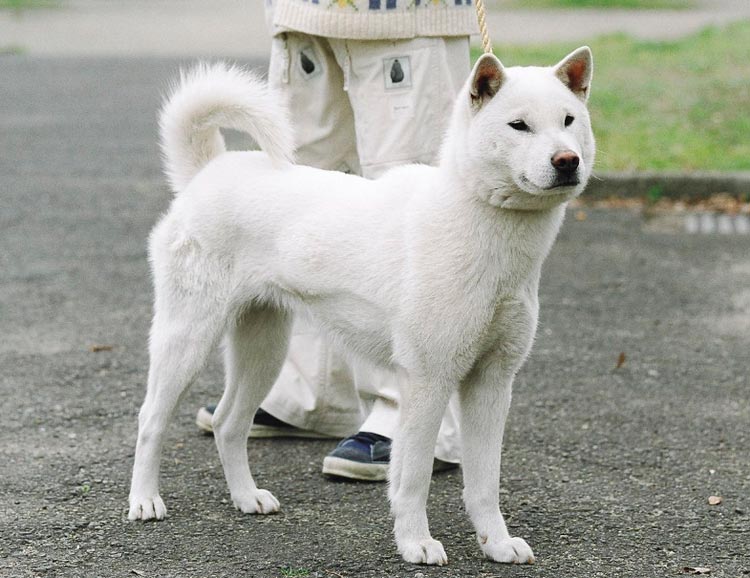
The Kishu (Kishu Inu, Kishu Ken) is an aboriginal Japanese dog breed of primitive type. They are used primarily for hunting large game. It was officially recognized as a national treasure of Japan in 1934. In Russia, the Kishu is sometimes called the Japanese Laika.
Content
History of origin
There's a Japanese legend about the origin of this breed. It says that a hunter was nursing a wounded she-wolf back to health and, in gratitude for her help, asked her for a puppy. The she-wolf granted his request. This wolf cub was raised by humans and became the ancestor of all kishu. He was highly prized by hunters for his fearlessness, endurance, and exceptional intelligence.
Cynologists don't believe the legends; they believe the Kishu descended from native Spitz-type Japanese dogs that appeared on the islands over 3,000 years ago. As a breed, the Kishu developed in the mountainous regions of the Kii Peninsula, part of the Kishu principality, hence its name. Today, these prefectures include Nara, Mie, and Wakayama. Hunting scenes featuring Kishu-like dogs date back to the 13th and 14th centuries.
The Kishu breed has been designated a National Treasure by the Nihonken Hozonkai (Nippo) Association for the Preservation of Japanese Dogs.
For a long time, there were several types of dogs, which were named according to their place of origin: Kumano Inu, Taiji Inu, etc. The breed received the general name Kishu after the official recognition and approval of the Nippo standard in 1934. Many others were also recognized at the same time. Japanese dog breedsThe breed was recognized by the International Cynological Association (FCI) in 1982.
Usage
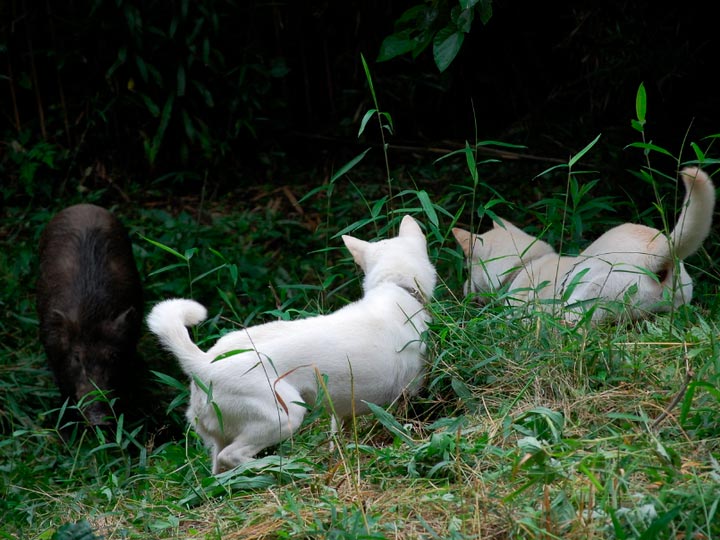
The Kishu is a hunting dog, primarily used to hunt large game such as wild boar, deer, and bear. It is well-suited to working in deciduous forests and mountainous areas. The Kishu's job on a hunt is to find the animal's scent, track it, and hold it until the hunter arrives.
If the animal tries to escape, the kitty often leaps on it from above and sinks its teeth. However, it understands that it must only restrain the animal, not kill it. To do this, the dog must possess sufficient courage, agility, strength, and ferocity. Modern hunters often take a pair or pack of dogs with them.
Unlike many other hunting dogs, the Kishu is capable of restraining an animal with both barking and biting.
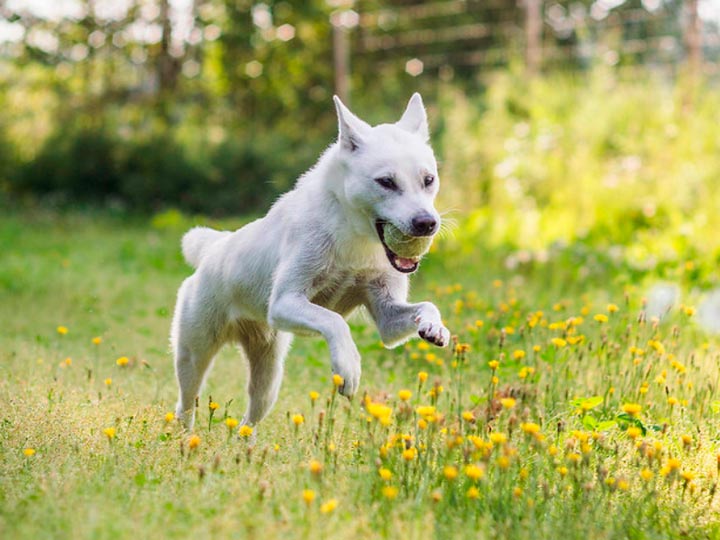
A properly trained Japanese Laika develops a close bond with its owner. It is obedient, hardy, and hard-working, making it not only a wonderful hunting companion but also a companion for various sports, such as agility, coursing, tracking.
In Japan, three distinct breeds are distinguished, depending on the game being hunted. Wild boar are hunted with strongly built, muscular dogs that possess a particular ferocity toward the animal. Deer are hunted with slender, excitable dogs capable of long, fast runs. Less common are smaller Kishu dogs with a strong character and keen sense of smell, making them suitable for hunting small game and birds.
Appearance
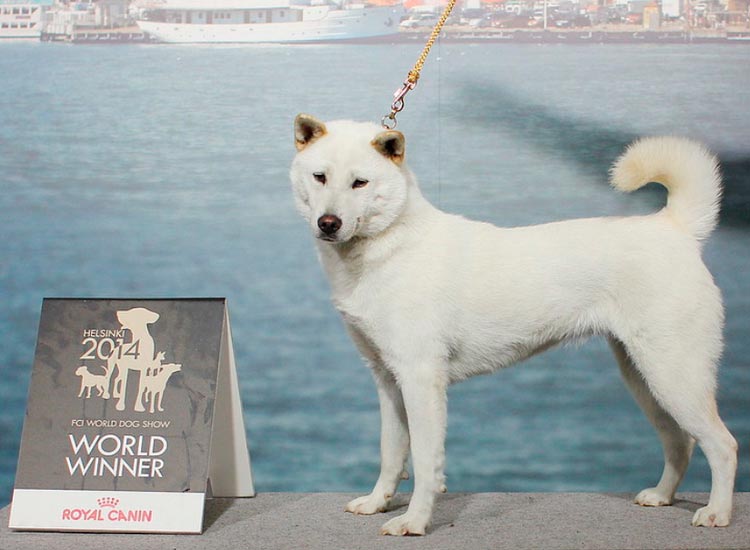
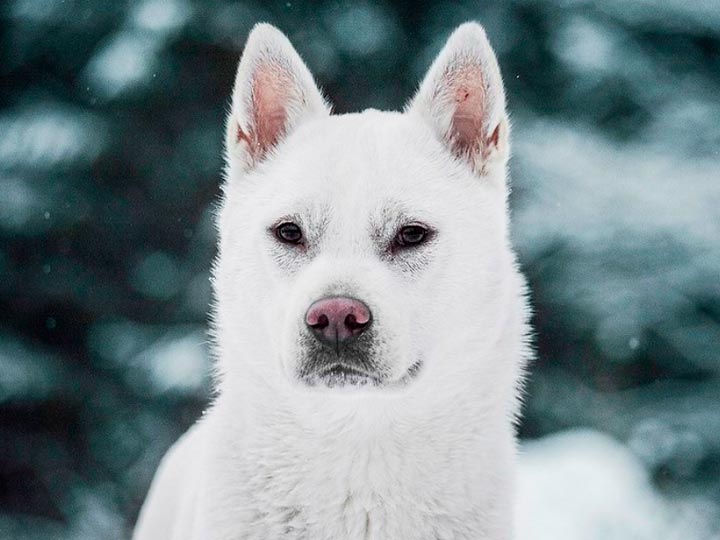
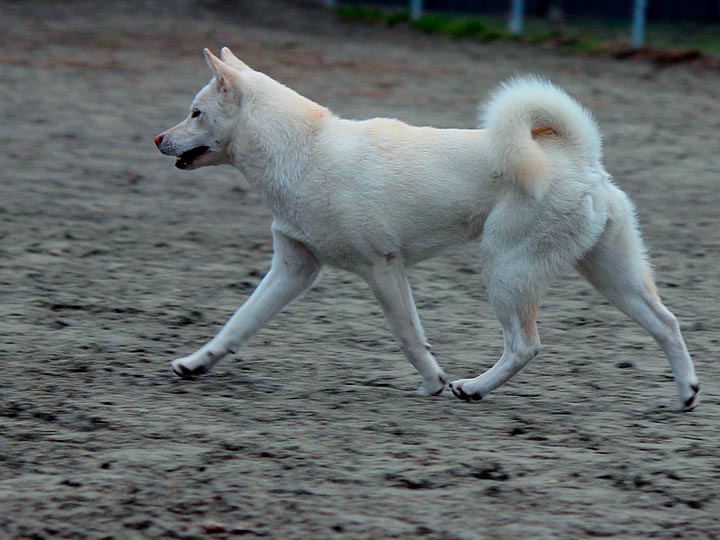
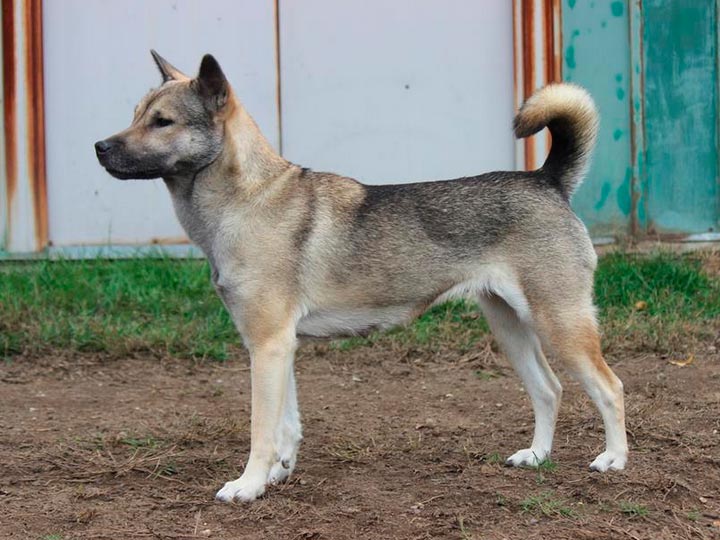
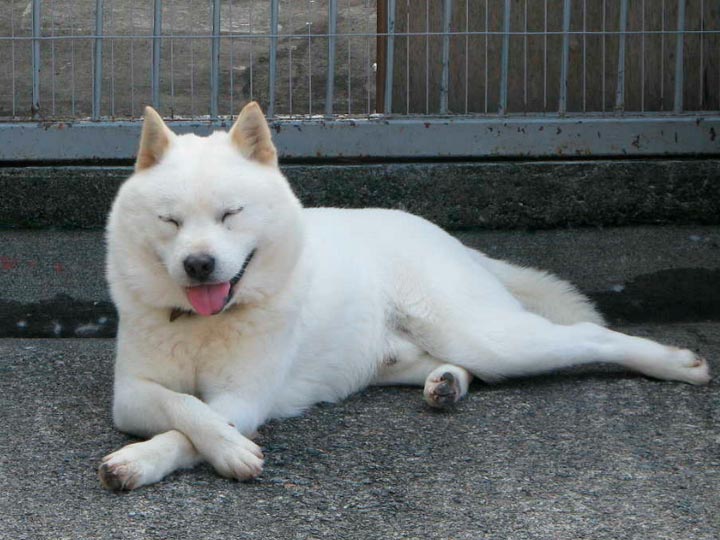
The Kishu is a medium-sized dog, sturdily built, compact, and well-balanced. It has a wedge-shaped head typical of Japanese breeds, erect ears, and a well-furred tail that curls over the back or hangs like a sickle. Sexual dimorphism is pronounced.
- The height at the withers of males is 52 cm, weight is 20-27 kg;
- The height at the withers of bitches is 46 cm, weight is 14-23 kg.
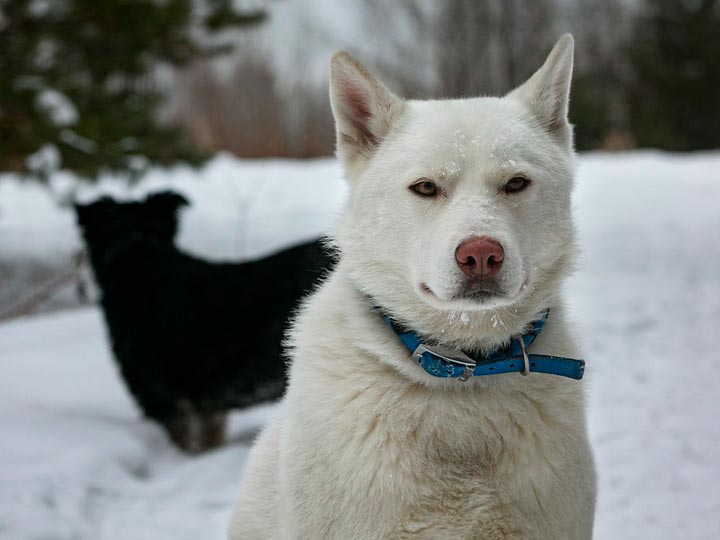
The head is proportionate in size with a broad forehead and a fairly sharp stop. The muzzle is shaped like a tapering wedge. The nose is black, but may be flesh-colored in white dogs. The bridge of the nose is straight. The lips are tightly fitting. The bite is a scissor bite. The eyes are small, triangular, dark brown, and set wide apart. The ears are triangular, small, erect, and tilted slightly forward. The neck is massive and muscular.
The body is strong-boned and well-muscled. The ratio of height to length is 10 to 11. The back is straight and short. The loin is broad. The chest is deep with moderately sprung ribs. The belly is well tucked up. The tail is set high, reaching to the hocks, thick, and carried in a sickle shape or curled over the back. The limbs are straight and strong, with strong bone and joints. The paws have tightly closed toes and thick, elastic pads. The nails are strong, preferably black.
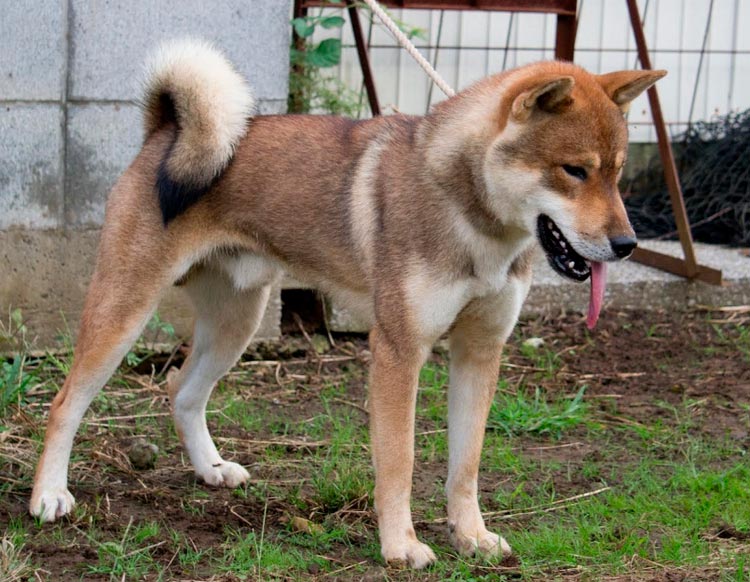
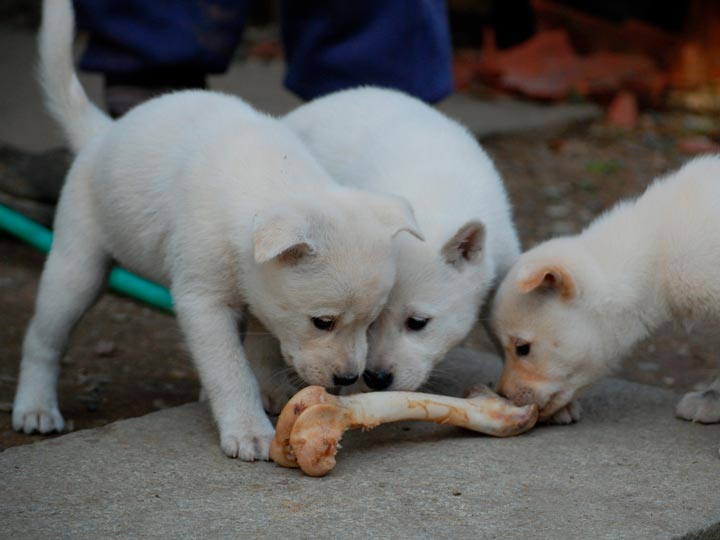
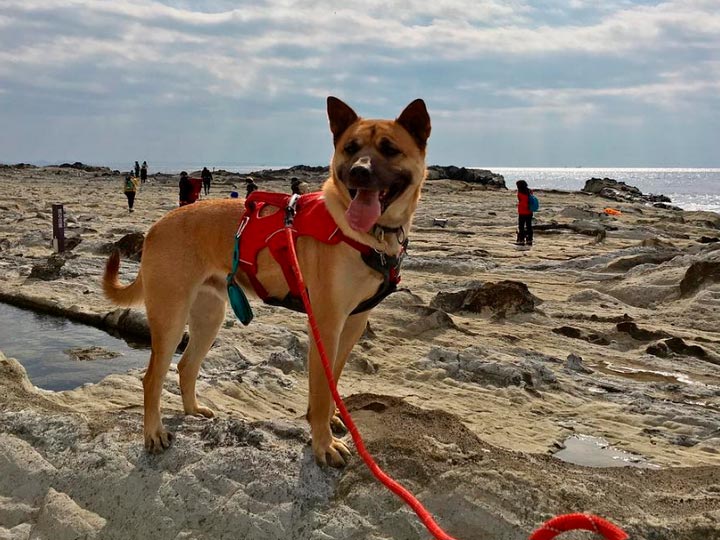
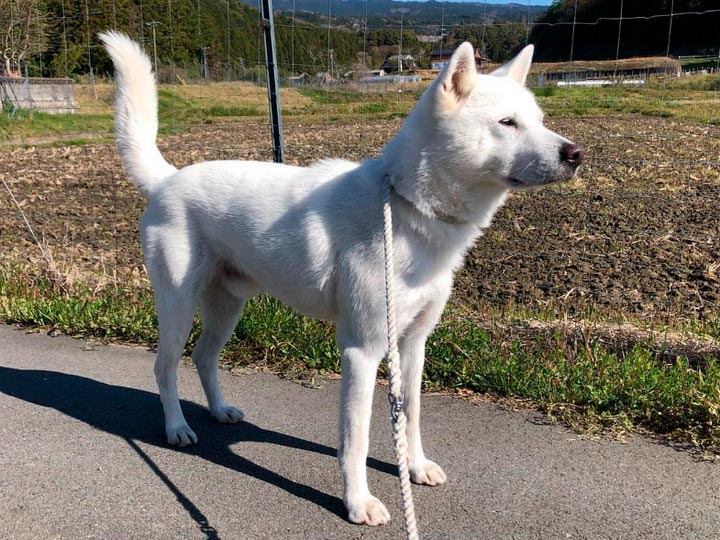
The coat is straight and coarse with a soft, dense undercoat. The hair on the cheeks and tail is longer. Colors:
- white;
- red (rich red);
- Sesame (sesame) - red or fawn wool with black tips on the hairs.
The brindle color has not been seen in the breed since 1945. Its abandonment likely stems from the dogs' use for hunting. White brindles are more visible in the forest and on the backs of dark animals.
Character and behavior
The Kishu, like many other Japanese dogs, has an independent and even-tempered nature. In everyday life, it is calm and composed, but thanks to its flexible nervous system, it is ready to immediately get to work when required. The Japanese Laika requires very good training and early, comprehensive socialization. Ignoring this can lead to behavioral and obedience problems. Kishu perceive any other animals as prey and are often pugnacious. Peaceful coexistence is only possible with animals with which the dog has grown up, provided it has been properly trained.
Their hunting instincts are very well developed. Kishu are courageous and determined, fairly easy to train, and exhibit a passion for the chase and a ferocious demeanor toward prey. They are highly territorial, making them excellent watchdogs. They lack the ability to guard or watch. They are wary of strangers and rarely bark in everyday life.
The Japanese Laika possesses exceptional intelligence, which is particularly evident in its work. When hunting, the dog displays remarkable intelligence and, when necessary, cunning. It can lie in wait for prey for long periods of time or change its working style as circumstances require. It is loyal to its owner. It bonds with all family members, but is rarely exceptionally faithful.
Content Features
Kishu are undemanding in terms of housing and feeding conditions; they are unpretentious, hardy, highly adaptable, and tolerate cold well. They are not suited to city life and will do poorly in an apartment. The ideal environment for this dog is a private home used for its intended purpose.
The Japanese Laika requires adequate living space, good exercise, and the opportunity to hunt to satisfy its natural talents. If this isn't true hunting, an alternative is needed.
The dog doesn't require any special care. Grooming consists of standard grooming procedures:
- the wool is combed 1-2 times a week;
- bathe once every 3-4 months or less often;
- ears are examined weekly and cleaned as needed;
- claws are trimmed as they grow, if they do not wear down on their own;
- monitor the condition of eyes and teeth;
Health and life expectancy
Kishu are generally very healthy, robust dogs, less prone to hip and elbow dysplasia than many other breeds. However, other hereditary conditions do occur:
- autoimmune (allergies, skin problems, Addison's disease, hypothyroidism);
- ophthalmological diseases (entropion, residual pupillary membrane).
Life expectancy is 11-14 years.
Where to buy a puppy
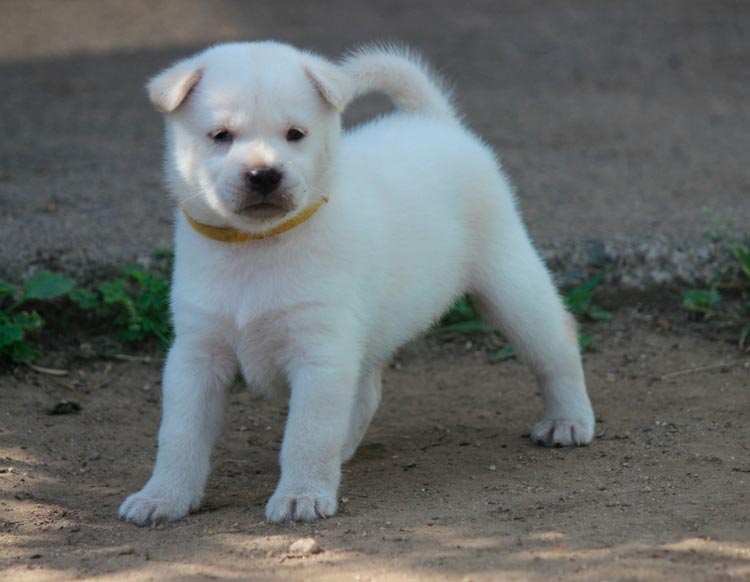
In Japan, the Kishu population numbers between 11,000 and 13,000 individuals. About 300 puppies are born annually. Finding a Japanese Laika outside of Japan is now easy. Many dogs have been exported to Europe and the United States in the last 10-15 years. Given the growing popularity of Japanese breeds, it's not surprising that the number of dogs and breeders is growing every year. Japanese Laikas can be found in Russia, France, Spain, Germany, the Netherlands, Poland, Slovenia, and several other countries.
Price
In Japan, the price of a Kishu puppy varies widely. Ads range from 10,000 to 210,000 yen, with the average being around 160,000 yen (approximately $1,400). In Europe, a rare breed puppy typically costs 1,500 to 3,000 euros. In Russia, the average price for a puppy from a breeder is 100,000 rubles.
Photos and videos
You can see more photos of kishu in the gallery. The photos feature representatives of the breed of different sexes, ages, and colors.
Video about the Kishu (Japanese Laika) dog breed
Read also:


Add a comment