
Kintamani
The Kintamani (Balinese Dog) is a recently recognized breed from the island of Bali. The uniqueness of these dogs lies not so much in their appearance as in their personality. For thousands of years, they lived freely on the island, alongside humans, yet independent and largely isolated.
Content
History of origin
Bali's street dogs represent a large endemic population, which was estimated to be 600,000-800,000 before 2008, but has declined to 150,000-160,000 following the rabies epidemic.
Genetic analysis has shown that the Kintamini is related to ancient Asian breeds and Australian dingoSince the land bridge connecting the islands to the mainland disappeared, the influx of new bloodlines has been insignificant. Since 1926, the government has completely banned the import of other dogs to the island due to the spread of rabies.
Dogs have lived freely in Bali for over 3,000 years. Their lifestyle and behavior are more reminiscent of stray dogs than semi-feral ones.Balinese dogs traditionally lived outdoors, not confined to houses or fenced in. They were welcomed and tolerated, included in daily life, and allowed to roam freely. Even those dogs that belonged to a specific person were welcomed and tolerated. They always lived very close to people, yet remained independent.
In 1985, the Bali Kennel Club, in collaboration with Udayana University, held the first dog show in Bali. In 2019, the FCI recognized the Kintamani breed (Indonesian: Anjing) Kintamani) on a preliminary basis.
Appearance
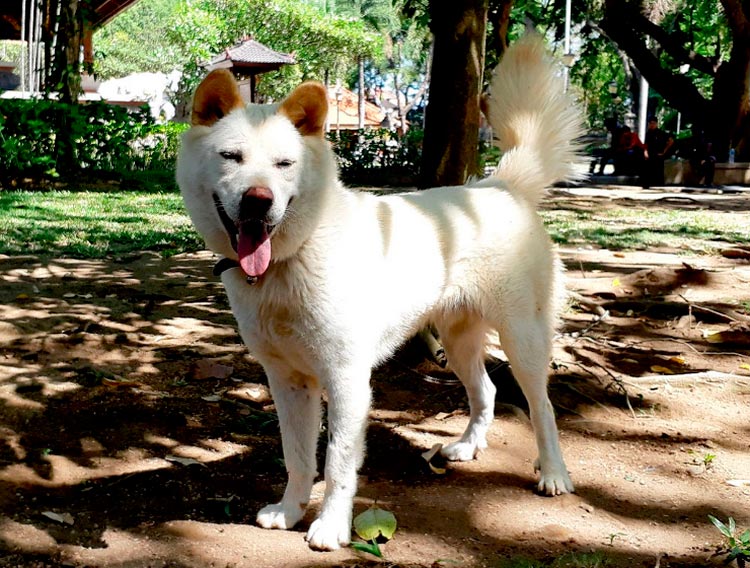
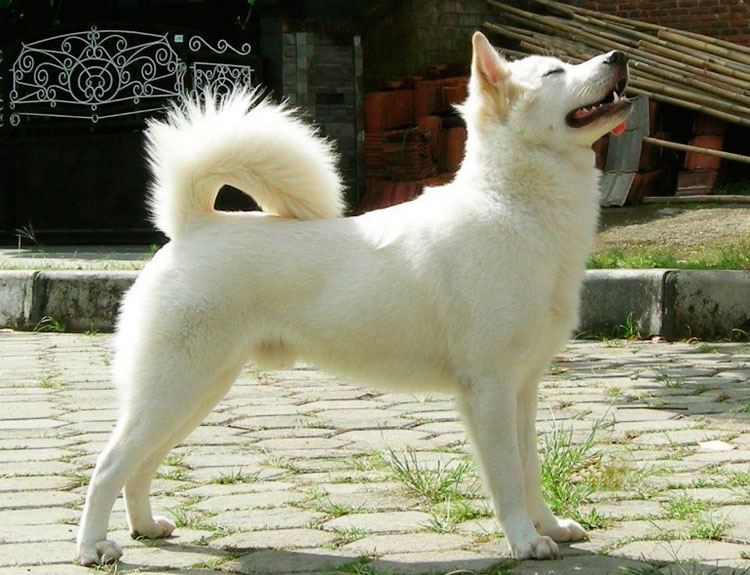
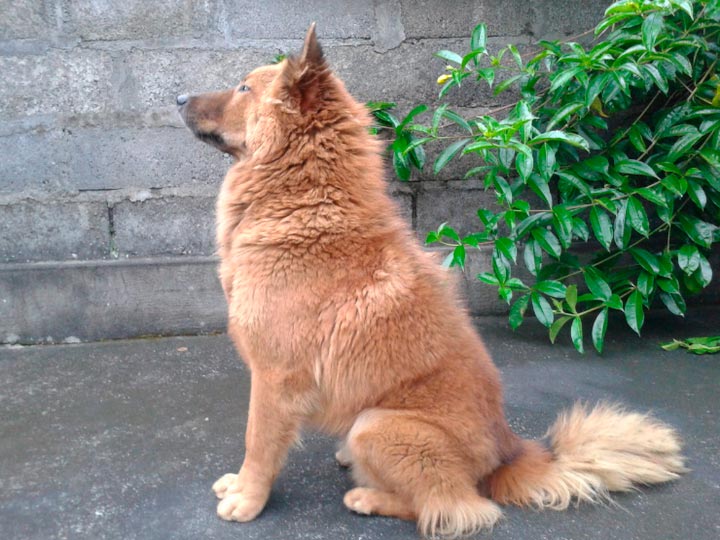
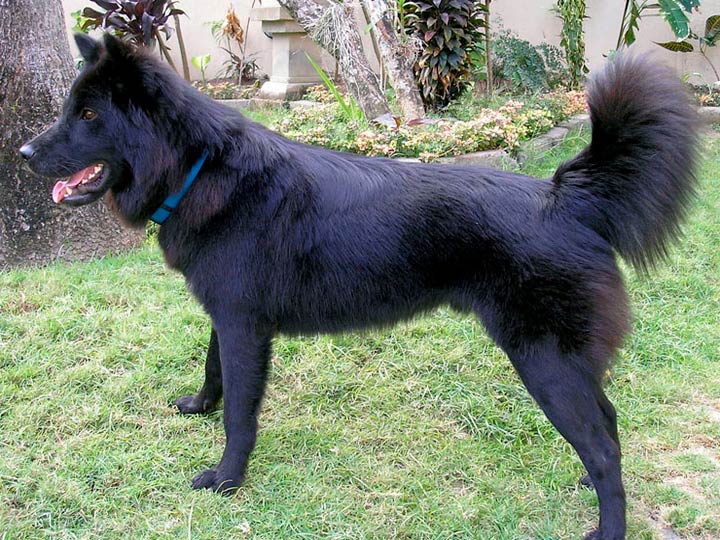
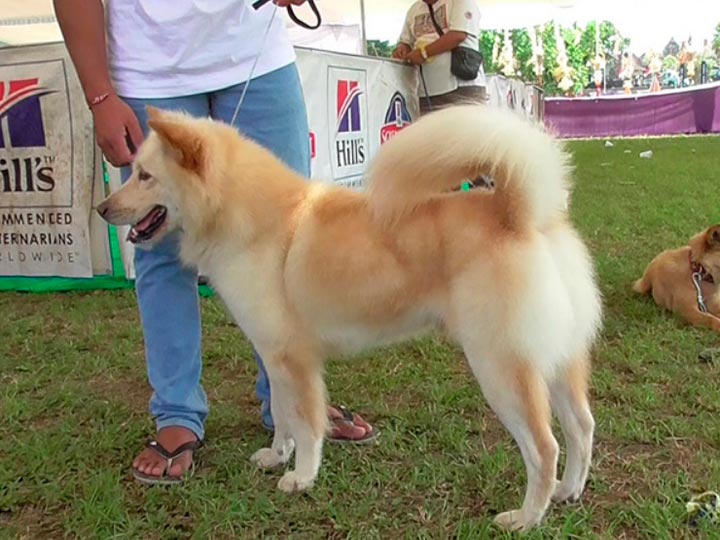
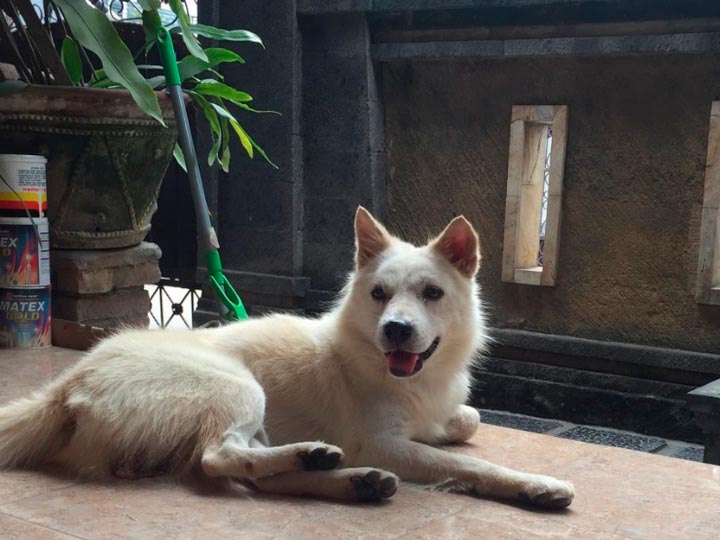
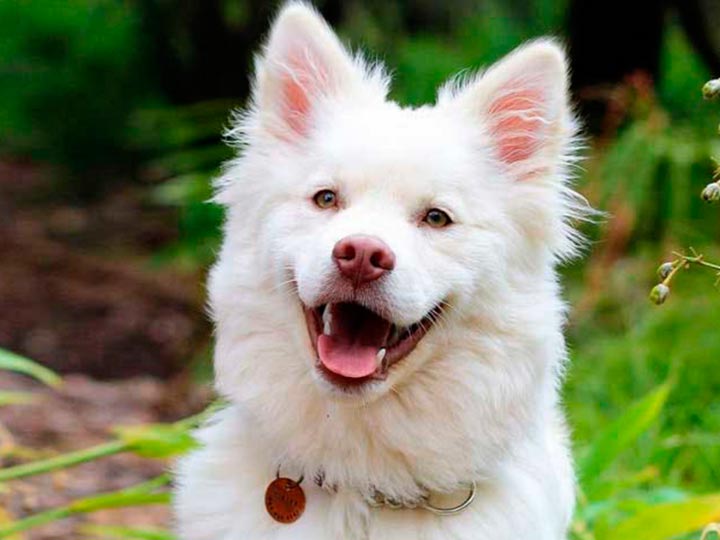
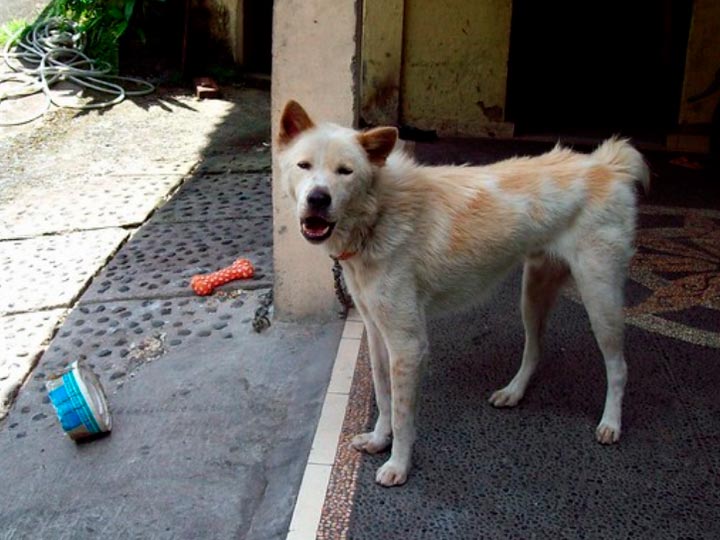
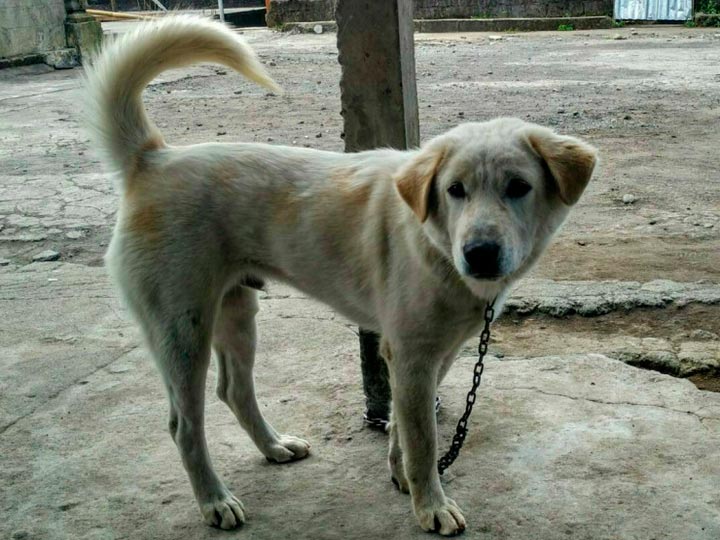
The Kintamani is a well-balanced, medium-sized dog with a wedge-shaped head, rectangular body, erect ears, and a sickle-shaped tail. Sexual dimorphism is well-defined.
- Height at withers: 44-57 cm;
- Weight: 13-18 kg.
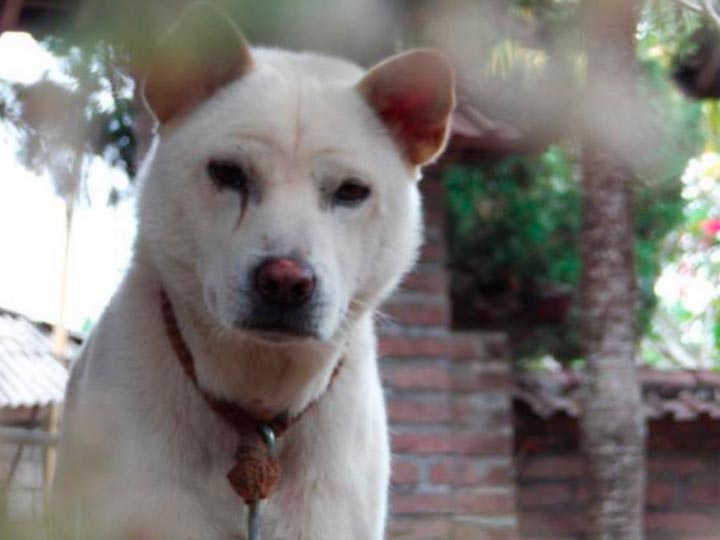
The head is proportionate, with a fairly broad forehead and a wedge-shaped muzzle tapering to a well-developed nose. The lips are tight. The bite is a scissor. The eyes are almond-shaped and brown. The ears are triangular and set forward. The neck is strong and set well on the shoulders.
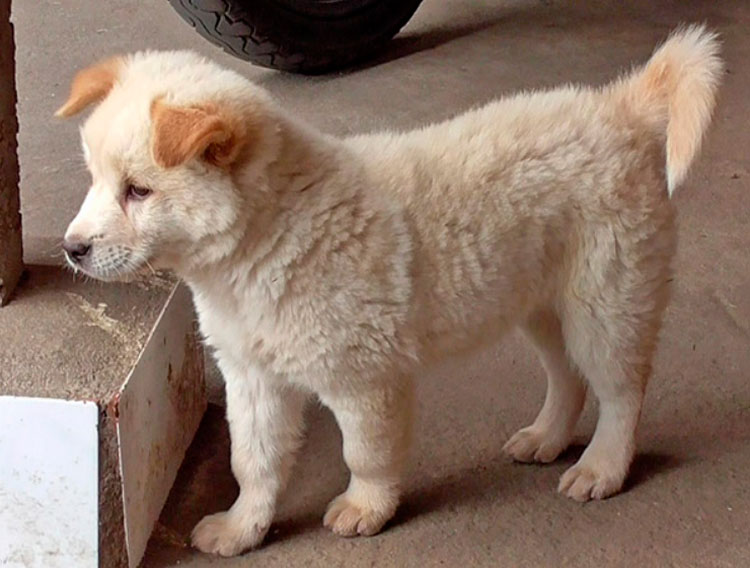
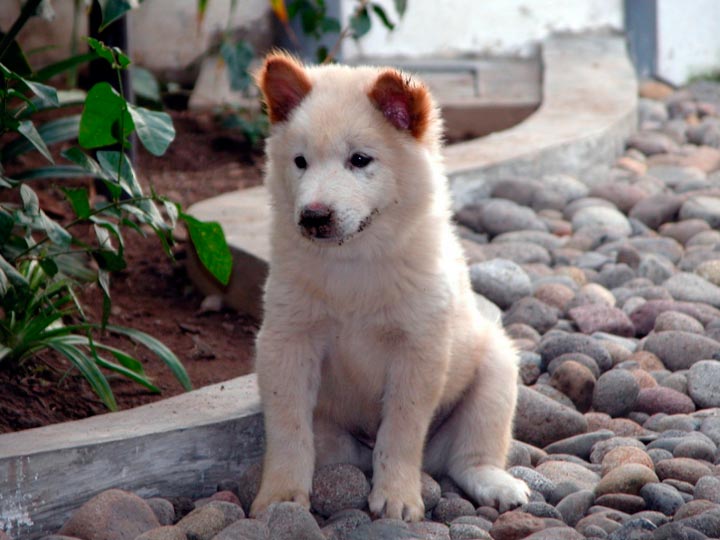
In light-colored dogs, the fur on the ears often has a darker shade.
The body is rectangular with a level topline. The back is strong and straight. The loin is broad. The chest is well developed. The croup is of moderate length. The belly is slightly tucked up. The tail is set slightly below the middle of the croup, curved upward, and often has a generous plume. The legs are medium length, with well-developed muscles and strong bone structure. The paws are compact and rounded.
The coat is dense and double, with a soft undercoat and relatively short, coarse topcoat. The longer hair forms the ruff, feathering on the back of the legs, and the tail feathering. Colors: white, black, fawn, and brindle.
Character and behavior
The standard describes the Kintamani as alert, intelligent, watchful, affectionate and easily trained.
The Balinese consider Kintamani dogs to be excellent companions and guard dogs. They are valued for their loyalty and friendliness, alertness, and exceptional intelligence. They are noted for being good watchdogs and possessing a strong territorial instinct, but are not aggressive. Within the family, they maintain a confident and independent demeanor.
A study of the character and behavior of dogs in Bali showed that free-living individuals are less excitable and aggressive toward other animals and people. Living in a confined environment as a companion makes them less active, more receptive to their surroundings, and territorial.
Kintamani are easily trained and get along with other pets. They are docile and trusting among family members, but remain self-sufficient and prone to wandering. Their free-ranging relatives feed primarily on scraps and ceremonial offerings made by the Balinese at the numerous temples along the streets. Before giving birth, they dig pits in which to raise their young or create small caves. This behavior, or the desire for it, can still be observed in dogs that have been domesticated for several generations.
Features of Kintamani's maintenance
Every year, more and more Balinese are reconsidering their attitudes toward dogs, allowing them to live in their yard on a chain or even inside their homes. They take them for walks on a leash and train them to obey commands. However, most still adhere to the traditional guardianship system. A guardian dog may interact with one person, a household, or several people in the area. They are fed and receive medical care when needed.
Health and life expectancy
There is no data on the breed's diseases and health of the Kintamani. Life expectancy is 10-13 years.
Buying a puppy, price
Several kennels already breed Kintamani dogs in Bali. This is largely due to Western interest in the breed and its recent international recognition. There are no kennels outside Indonesia, and the dogs exported are few and far between.
Price
A price check of online ads showed that a puppy from a Bali kennel costs an average of 3.5 million Indonesian rupiah (approximately $250). Puppies from local dogs similar to the Kintamani and mixed breeds are given away for next to nothing.
Photos and videos
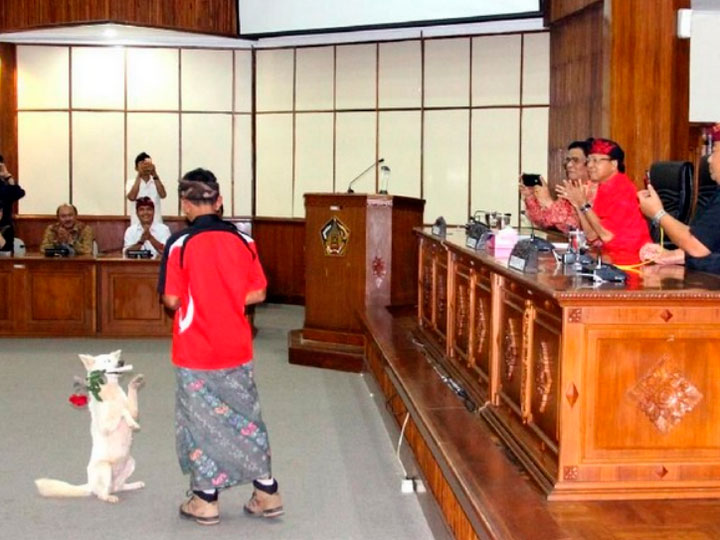
The gallery features more photos of Kintamani. The first photo shows Sumi, a dog presented at the "FCI Recognition of the Kintamani Bali Breed" press conference at the Governor's Office Viswa Sabha in Bali on April 13, 2019.
Video about the Kintamani dog breed
Read also:


Add a comment