
Cymric (Welsh cat)
Cymric or Welsh cat - an original tailless breed that associations refused to recognize for a long time. They were simply called a variety. Manx The only difference is the length of their coat. Through the efforts of breeders, the breed was recognized, but due to its peculiarities, it never became popular. There are only a few breeders in the world who breed them.
Content
History of the breed's origin
It's probably worth starting with the fact that the Cymric and Manx breeds are closely related, sharing a rich history. Tailless cats have been found on the Isle of Man for over 400 years. They've become almost a tourist attraction; a coin is even minted with their image. It's believed that the "flawed" cats were brought to the British Isles from the Far East by sailors in the 16th century. Over time, their population increased significantly, and the cats underwent some modifications, but their distinctive feature—the absence of a tail—remained unchanged. The breed was named Manx. The Cymric, however, is less well-known and popular, having only been officially recognized in the 1960s and 1970s.
In the middle of the last century, the longhaired Manx variety began to be exhibited alongside shorthaired Manx cats. These cats participated in many shows and attracted the attention of Canadian breeders, particularly Leslie Foltzake and Blay Welch. They began to advocate for recognition of the new breed and its granting to it championship status. In 1976, the LovebunnyCatery organization allowed these cats to compete in championships under their own name, the Cymric. By 1990, the breed had been recognized by five more American associations.
The name of the breed, like that of the Manx, reflects its historical homeland: Wales in Welsh "Cymru".
The Cymric descended from the Manx cat, so they are very similar in appearance, personality, and even tail genetics. It could be said that the Cymric breed developed naturally. Despite this, breeding it proved quite difficult due to the lack of targeted selection in the early stages of its development and the genetic anomalies caused by the tailless gene.
Video: Cymric kitten
Breed description and standards
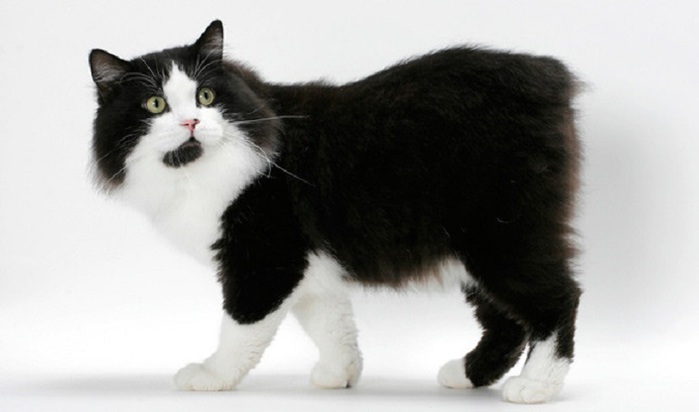
The Cymric is a tailless, longhaired cat breed distinguished by its robust build and rounded head with prominent cheeks. They are strong and active, with beautiful, clear eyes and a magnificent, shiny coat. While they are medium-sized, their compact build makes them much heavier than they appear.
The Cymric develops quite slowly and can only reach its full size, as well as the brightness of its coat and eye color, by the age of 5.
Head and muzzle
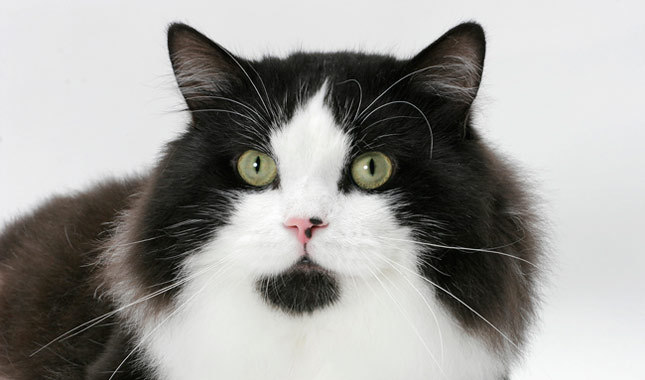
The head is rounded with prominent cheeks, slightly narrower than long. The forehead is rounded. The whisker pads are well defined. In profile, the nose should have a slight indentation. The ears are wide at the base with rounded tips and may have a tuft. They are set well apart and tilted outward. The eyes are large, wide open, and set slightly obliquely. The eye color should match the coat color.
Physique
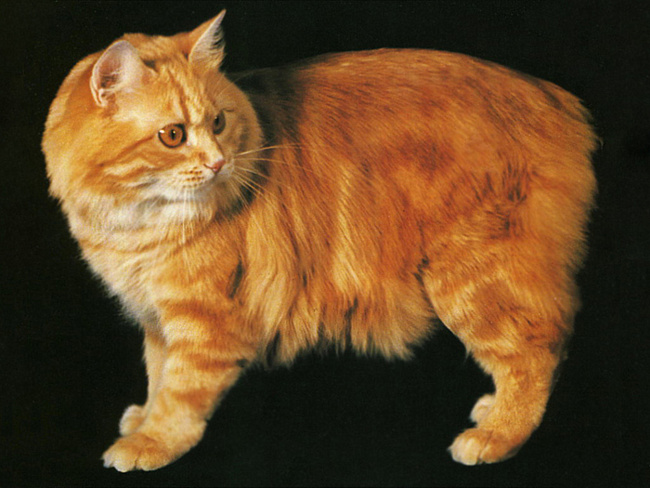
The Cymric has a fairly broad chest and strong forelimbs. The short back is shaped like an arch, extending from the shoulders to the rear. The thighs are muscular and rounded, with a low groin. The Cymric's limbs are heavily built. The forelegs are short and set wide apart, beautifully accentuating the roundness of the chest. The hind legs are longer, with heavy shins. The length of the hind legs raises the croup, giving the appearance of a cat always ready to pounce. When viewed from behind, the hind legs are straight. The paws are strong and rounded.
Cymric tail variations
Just because Cymrics are tailless cats doesn't mean they can't have a tail at all. Some cats have both stubby and full tails. Depending on their length, they are called by different names:
- Dimple rumpy—the tail is completely absent. A depression is noted at the back of the spine, where the tail begins in other breeds. A minimal, barely noticeable protrusion is acceptable;
- Riser— a short tail consisting of several vertebrae, often hidden under the fur;
- Stumpy - short tail (shorter than a normal cat's tail);
- Tailed or longy - a tail of normal length.
Coat
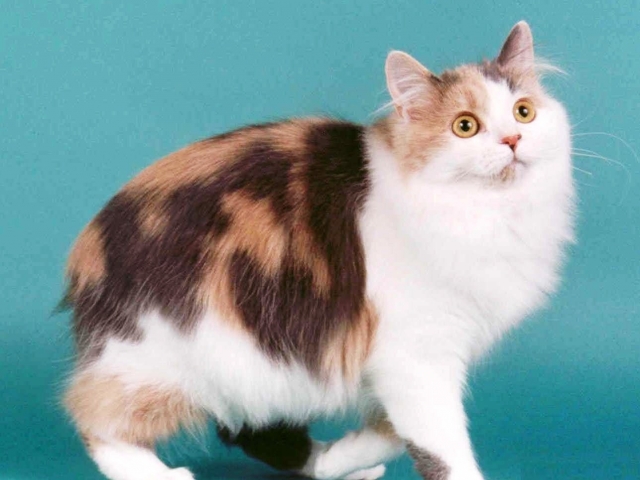
The Cymric's primary difference from the Manx breed is its double, heavy, and shiny coat of medium length. It feels silky and soft to the touch, with a fine texture. The coat should always appear shiny and healthy. These cats have full sideburns, and their frill reaches to the shoulders, creating a beautiful bib on the chest. The coat lengthens toward the rear and falls smoothly. The fur on the belly, breeches, and frill is longer than the fur on the body. Tufts on the ears and small tufts of fur between the toes are desirable.
Color
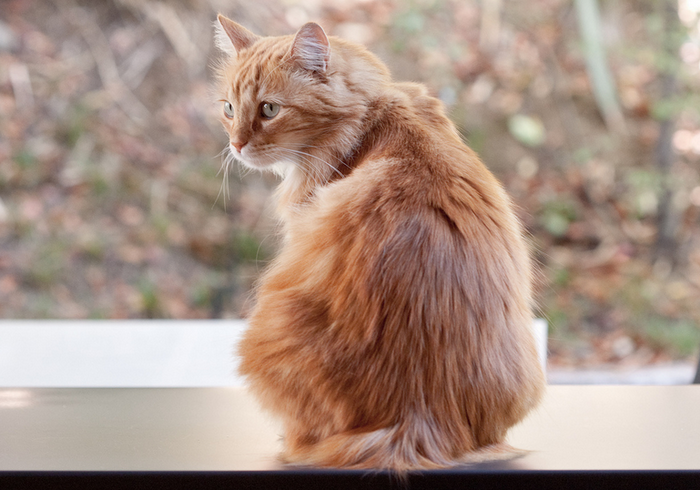
The Cymric standard allows all colors except chocolate, lavender, colorpoint and their combination with white.
Character
The Cymric's ancestors were excellent mousers, and modern cats have retained these skills, along with their independence and adaptability to various conditions. They are self-sufficient and will defend their territory, so at the slightest strange sound, they will react quickly and may even display aggression.
With loved ones, the Cymric is affectionate and gentle. In a familiar environment, it is a balanced and calm cat, moderately playful. Cymrics become very attached to their owners, will follow them around, and show interest in household chores. Cymric kittens adapt easily to new environments and easily cope with relocations or changes in family, if necessary. Cymrics are equally well-suited to large families and single people.
As for intellectual abilities, the Cymric is not lacking. It quickly learns rules of behavior and, if its owner so desires, can even master a few tricks. The Cymric will also use its remarkable intelligence for personal gain, such as learning to open doors or cabinets.
Maintenance and care
The Cymric adapts well to apartment life, but it thrives with frequent outdoor walks and opportunities to hunt in the grass, for example, for insects. During walks, these cats should be protected from jumping from heights. The peculiar development of their hind limbs makes the Cymric a poor climber, and they often struggle with the vaunted feline landing on all fours. Even their gait is distinctive, strongly reminiscent of a rabbit's, with wide leaps.
Cohabitation with other pets
With other pets, the Cymric is more likely to remain neutral. However, it's worth noting that these cats often get along with friendly dog breeds and even play together. Small rodents, birds, or fish in the house are usually observed from a distance, but it's best not to leave a predator and potential prey alone.
Difficulties of breeding
Difficulty in breeding is one of the reasons why the Cymric hasn't achieved the popularity it deserves. A pair of completely tailless cats cannot produce offspring; a genetic mutation results in embryonic death or the birth of non-viable kittens.
Completely tailless cats can only be crossed with tailed ones.
But it doesn't end there. It's very difficult to find a suitable mate for a Cymric cat, one whose kittens meet all breed standards. In addition to interbreeding, crossbreeding with Manx cats is permitted.
Care
At first glance, it might seem that a cat's long fur requires daily brushing. However, with a properly balanced diet, a Cymric's coat will always be neat, and brushing it once or twice a week is sufficient. However, it's important to accustom them to brushing from an early age, as adult cats may protest against this procedure. Cats understand the purpose of a scratching post very well and will never sharpen their claws on any other piece of furniture. However, this is only true if the kitten is accustomed to it from a young age.
Diet
The Cymric isn't picky about food, but given the widespread use of commercial pet food among large breeders, especially international ones, modern representatives of the breed are perfectly adapted to it and don't require natural nutrition. Cymrics need a balanced, nutritious diet to maintain their activity, and to maintain a shiny coat, they need essential vitamins and minerals.
When choosing the optimal food, consider the animal's age category and physiological state (neutering, lactation, pregnancy). It's also important to pay attention to the energy expenditure label, which varies from animal to animal (even within the same breed).
Health and life expectancy
A proper and balanced diet helps maintain their excellent health and beautiful appearance. However, the peculiarities of their spine structure and the absence of a tail have left their mark, and in some cases lead to various genetic abnormalities. Cymrics have inherited some hereditary diseases from other breeds.
- Coccygeal atrophy in cats with partial tails;
- Progressive corneal dystrophy most often develops at the age of 4 months and invariably leads to blindness;
- Manx syndrome is a collection of congenital defects that can include spinal, urinary, and intestinal abnormalities, and, as a result, digestive issues. Unfortunately, this genetic anomaly affects approximately 20% of cats and typically manifests itself at 4-5 months of age.
- This breed is more vulnerable to various types of neurological disorders.
Cymrics have been developed over a long period of time through natural selection, and their immune system is quite strong, but this does not relieve owners from the need to carry out routine veterinary and preventive measures. Life expectancy is 8-14 years.
Choosing a kitten and price
Finding Cymric kittens is quite challenging, as they are rare not only in Russia and neighboring countries but also throughout the rest of the world. In the US, catteries set prices individually for each kitten, with prices averaging between $200 and $400.
When choosing such an unusual and expensive kitten, you should be extremely cautious. It's possible that the taillessness is the result of an injury or amputation, and the seller is simply a scammer. It's also important to understand that a good Cymric shouldn't be sold for nothing, and the pedigree must be documented to at least the fifth generation.
If kittens are born with a long tail, breeders may dock it to help them find new owners more quickly.
Given the possibility of Manx syndrome appearing in kittens as young as 4 months of age, it is not recommended to take kittens home before they are six months old, and also without ensuring that the kitten is healthy and has no developmental pathology.
Photos
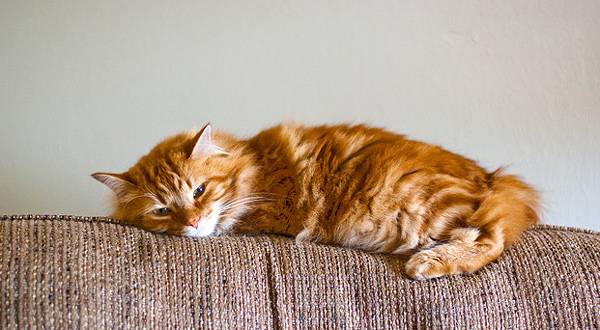
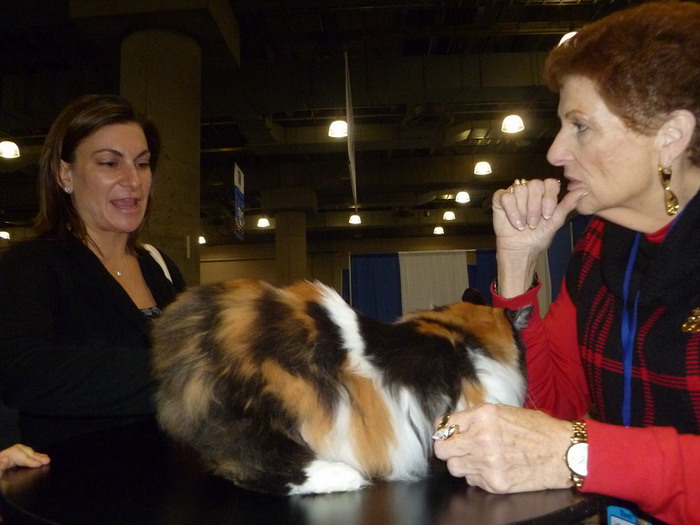
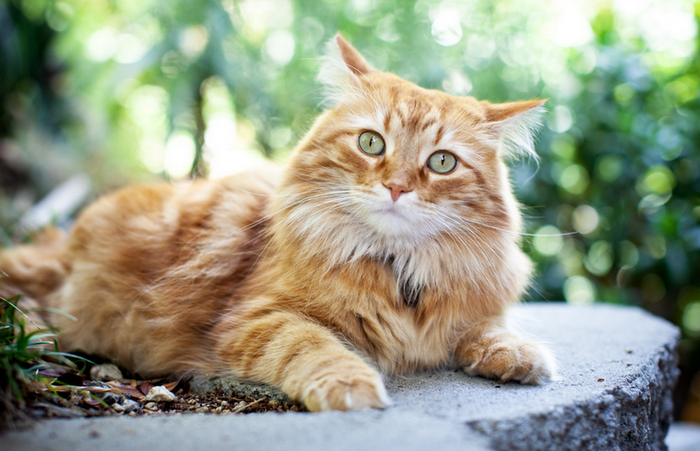
Photos of Cymric cats:
Read also:


Add a comment