
Ketofen for dogs
Ketofen is a non-steroidal medication used for pain relief, inflammation reduction, and antipyretic purposes. It is prescribed for joint conditions, bone and soft tissue injuries, and, less commonly, infectious diseases. Overdosing can lead to serious side effects, so read the instructions before giving Ketofen to your dog.
Content
Composition and release form
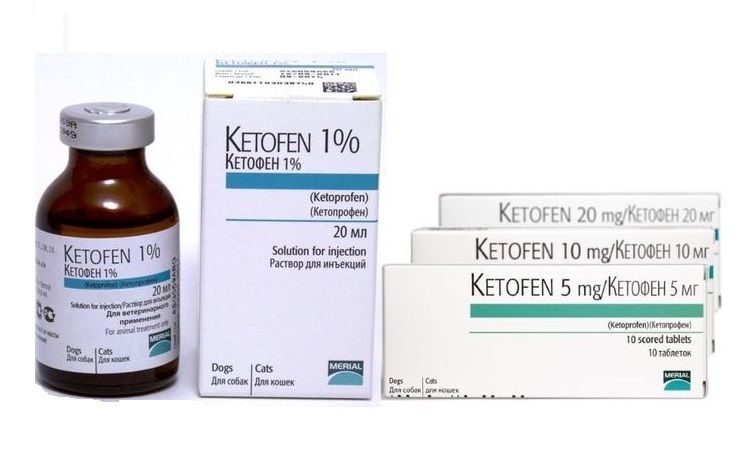
Ketofen was developed by the French company Merial in two forms: tablets with varying concentrations of the active ingredient and a 1% injection solution. The active ingredient in both forms is ketoprofen, and the excipients vary depending on the dosage form.
Injection solution
In addition to ketoprofen, which is present in the solution at a 1% concentration, the composition includes benzyl alcohol, which has an antiseptic effect, and water for injection. The liquid is packaged in dark glass vials, each containing 20 ml. The sterile solution is tightly sealed with rubber stoppers and sealed with foil. The vial is packaged in a cardboard box and comes with instructions for use.
Pills
The active ingredient content in tablets can be 5, 10, and 20 mg. The excipients are:
- magnesium stearate;
- lactose;
- cellulose;
- lactulose.
The white, round tablets are packaged in blisters of 10. Each blister, along with instructions, is placed in a cardboard box.
Indications for use
The drug has the following effects:
- relieves inflammation;
- relieves swelling;
- eliminates body hyperthermia;
- relieves pain.

The effect is achieved by ketoprofen blocking the production of substances involved in inflammatory processes. Therefore, the drug is recommended for use in the following cases:
- for arthrosis and arthritis;
- in case of dislocations;
- for herniated discs and other spinal diseases;
- for fractures, bruises and other injuries;
- for edema of various etiologies.
In addition, the medication is used after surgery. It's important to remember that Ketofen injection solution and tablets only relieve symptoms and therefore cannot be used as primary treatment for dogs.
When administered as tablets or subcutaneously, the drug reaches its peak blood concentration within 30-35 minutes. However, with intramuscular injections, the drug begins to act within 7-10 minutes. Injections are used when rapid relief of acute pain is needed. The drug is excreted in the urine.
Instructions for use
The use of a drug depends on the form it is released in.
Injection solution
It is administered intramuscularly (in the thigh), subcutaneously (in the withers), or intravenously. To withdraw the liquid from the vial, do not open it; simply puncture it with a syringe needle, after wiping the rubber stopper with an antiseptic. After breaking the seal, the medication can be used for 28 days.
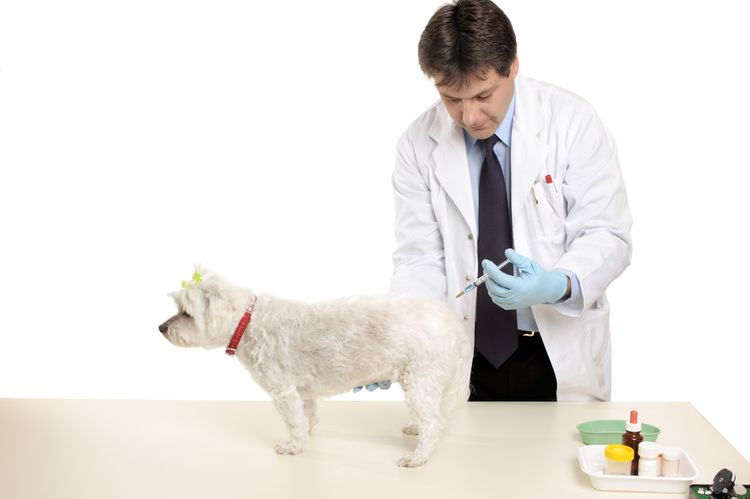
The dosage is calculated based on 0.2 ml of the drug per kilogram of body weight. An insulin syringe with a thin needle can be used to administer the painkiller to small breed dogs.
Injections are given once daily for 1-3 days. Subsequently, tablets are administered as needed. The course of treatment is determined by a veterinarian.
Pills
The dosage is calculated as follows: 1 mg of active ingredient per 1 kg of body weight. It's important to pay attention to the active ingredient content to avoid overdosing. For example, a 5 mg tablet is designed for a 5 kg animal, while one containing 20 mg of ketoprofen is designed for a 20 kg pet. The drug has a negative effect on the digestive system. The medication is taken once daily, and the duration of treatment ranges from 3 to 5 days.
Tablets should be given to the dog during feeding, crushed into powder and mixed with the food. If the dog refuses to eat, place the medicine on the back of the tongue, forcing it to swallow.
Avoid self-medication and giving your pet medication without a doctor's prescription. It is strong and can cause side effects.
Contraindications and side effects
You should stop using the drug if you have the following pathologies and diseases:
- in case of renal failure;
- for gastritis;
- in case of severe renal impairment;
- for gastric ulcer and duodenal ulcer;
- in hemorrhagic syndrome;
- if you have a tendency to bleeding;
- in case of intolerance to ketoprofen, including in the anamnesis.

Ketofen blocks the production of substances involved in inflammatory processes, but they also protect the gastric mucosa from the aggressive effects of hydrochloric acid. For this reason, the medication should not be taken by people with ulcers, gastritis, or other similar gastrointestinal conditions, as it can exacerbate the condition and cause unpleasant symptoms.
For internal organ diseases, the drug should only be administered under veterinary supervision. This also applies to pregnant or lactating female dogs.
If the dose is exceeded, the medicine may cause the following side effects:
- increased production of saliva;
- vomiting;
- internal bleeding;
- ulcer formation;
- apathy and weakness.
If stomach bleeding occurs (this can be identified by dark vomit), seek immediate medical attention. Without prompt medical attention, the animal could be fatal.
If side effects occur, discontinue the medication. Your doctor may prescribe symptomatic treatment, or the side effects may resolve on their own.
Ketofen should not be combined with other nonsteroidal anti-inflammatory drugs. It should also not be used with diuretics or blood thinners.

Precautionary measures
When using Ketofen for dogs, follow the simple rules outlined in the instructions for use:
- After handling the medication, wash your hands with soap and water. If you have any sensitivities or are prone to allergies, it's best to wear rubber gloves.
- If liquid or tablet particles come into contact with mucous membranes, rinse them with plenty of water.
- If an allergic reaction occurs, seek medical attention.
- Keep the product out of reach of children and away from direct UV rays. Keep the temperature below 30 degrees Celsius.
- Storage is permitted only in the original packaging according to the expiration dates indicated on the box.
- It is prohibited to take the drug after the expiration date.
Price
Ketofen injection solution for dogs costs 1,000-1,200 rubles. The price of tablets depends on the active ingredient content:
- 5 mg – 380-450 rub. per packaging;
- 10 mg – 540-600 rubles;
- 20 mg – 770-850 rub.

Owner reviews
Nikolai, the owner of the chow chow:
"I started noticing my dog pulling his paws under himself during walks and refusing to go for long walks. We went to the clinic, and after an examination, the doctor diagnosed a herniated disc. Ketofen was prescribed as a pain reliever. His condition improved significantly, but on the fourth day, blood appeared in his stool, so we had to discontinue the treatment."
Maria, owner of a South Russian Shepherd:
"When our shepherd was diagnosed with arthrosis, the doctor prescribed Ketofen. I was very worried about her, as I'd read online that it could cause internal bleeding. We took it along with Ranitidine. There were no side effects, and she tolerated the medication well. After a five-day course, she felt much better."
Bogdan, the owner of the Alabai:
"My elderly dog suffers from arthritis. It flares up periodically. In these cases, we inject him with Ketofen. The medication doesn't cause any side effects, although we strictly adhere to the doctor's prescribed dosage. After just the first injection, the dog feels much better."
Veterinarian Reviews
Olga, veterinarian:
"This medication belongs to the nonsteroidal anti-inflammatory class. Like other medications in this class, it can cause serious side effects, including gastrointestinal bleeding. It should be used with caution and only as prescribed by a doctor. I once had a case where a dog was limping, and the owners decided to help it by giving it a Ketofen tablet. The animal could not be saved due to the bleeding that followed."
Victoria, a veterinarian with 10 years of experience:
"Although Ketofen is readily available at the pharmacy, it is a strong medication, so it's best not to take it without a doctor's prescription. I prescribe this medication or Rimadyl for joint problems, post-surgery, and swelling. Both medications have serious side effects. To reduce the negative impact on the stomach, intestines, and liver, I prescribe medications to support their function."
Alexander, a veterinarian with 17 years of experience:
"I advocate that all painkillers be sold in pharmacies by prescription. The medication can cause internal bleeding and lead to serious consequences, including death of the pet. It should only be administered as prescribed by a veterinarian."
Read also:


Add a comment