
Kerry Blue Terrier (Irish Blue Terrier)
The Kerry Blue Terrier, or Irish Blue Terrier, is a companion dog with a wealth of potential. Despite its many positive qualities, this breed isn't for everyone. The Kerry Blue requires an energetic owner who can handle its challenging temperament, appreciates its appearance, and is willing to devote considerable time to training and grooming.
Content
History of origin
The Kerry Blue Terrier's ancestors were a variety of farm dogs that performed a wide variety of functions: they bravely guarded the home, caught rodents, helped with hunting, and herded cattle and horses. Farm dogs from southwest Ireland were not particularly remarkable, as evidenced by the lack of descriptions of them in any canine publications until the 19th century.
The first written mention of the Kerry Blue Terrier dates back to 1847. The author describes slate-colored dogs with dark spots and a reddish-brown tint on the legs and around the muzzle. These dogs were primarily found in County Kerry. The Kerry Blue Terrier first appeared at a show in 1913, and by 1920, the Dublin Blue Terrier Club was founded. The breed quickly became popular not only in Ireland and England, but also abroad.
Video review of the Kerry Blue Terrier dog breed:
Appearance
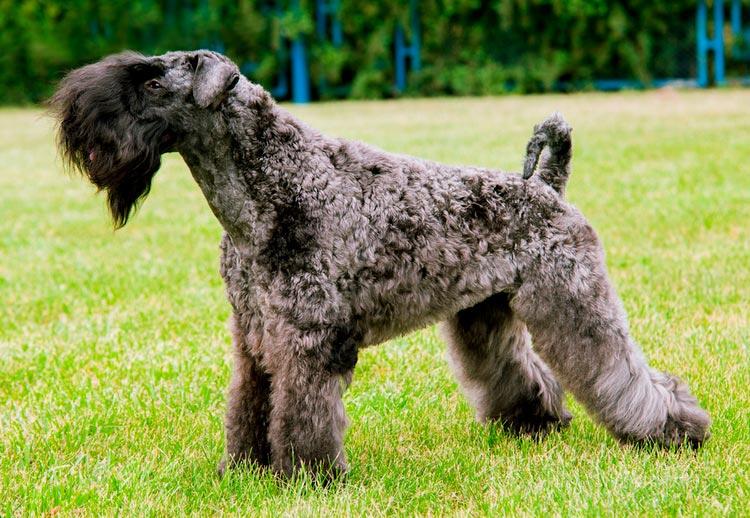
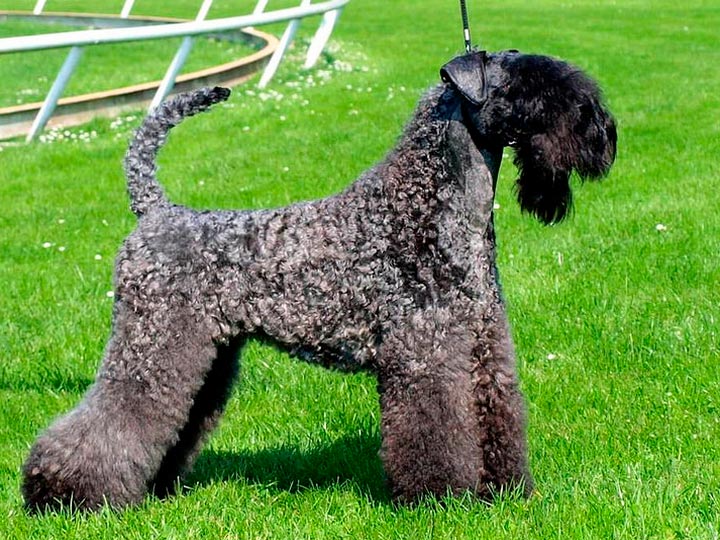
The typical Kerry Blue Terrier has a stately, muscular body with a distinct terrier style, complemented by a breed-specific grooming. In the show ring, the primary consideration is balance of build. Sexual dimorphism is slight. Height at the withers ranges from 44.5 to 49.5 cm, and weight is approximately 15 to 20 kg.
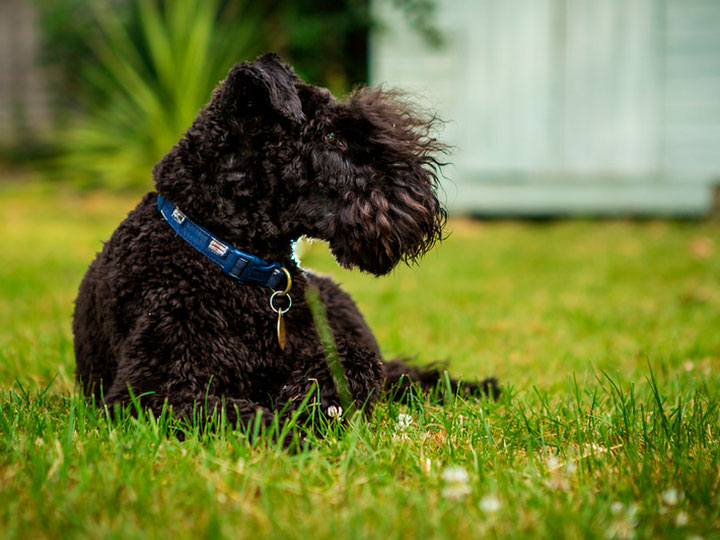
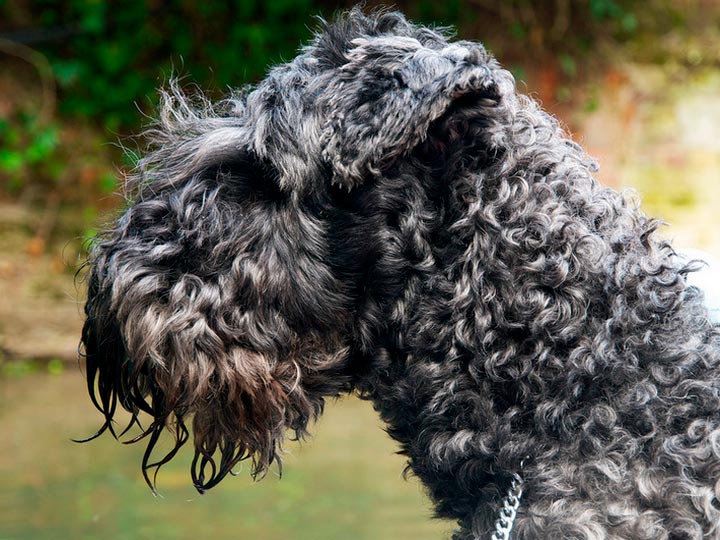
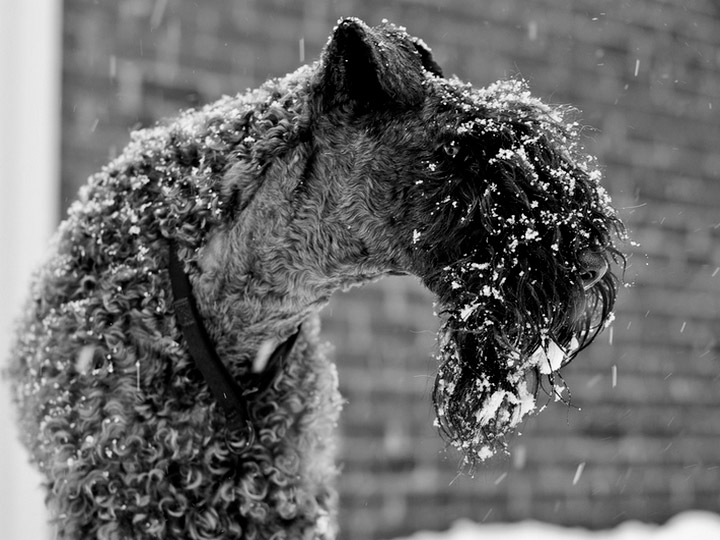
The head is densely covered with hair, more muscular in males. Its length should be approximately 45% of the height. The skull is strong. The stop is slight. The nose is large and black. The muzzle is of medium length, with large, white teeth. A scissor bite is present, although a level bite is also acceptable. The palate and gums should be dark. The eyes are medium in size, well-set, and dark in color. The ears are thin, small, and set close to the sides of the head, falling forward.
The body proportions are correct and of medium length. The format is approximately square. The back is level. The chest is moderately broad and deep. The tail is well set, thin, and carried vertically. While docking was once common in Kerry Blues, today's dogs rarely have their tails trimmed. The forelimbs are straight and well boned. The hindquarters are muscular, with strong hocks and well-placed under-body feet. The paws are compact, with black nails and rounded, hard pads.
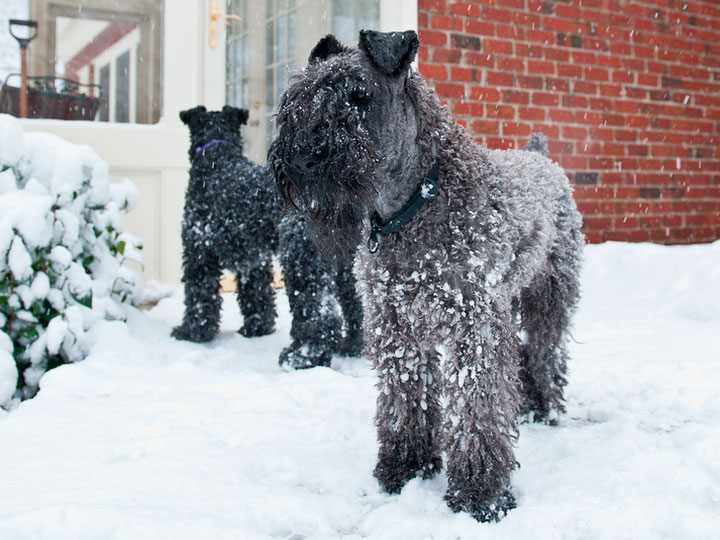
The coat is soft, wavy, and very profuse. Color: blue. Any shade of blue with any black markings. Black is acceptable up to 1.5 years of age, as is reddish-brown.
Character
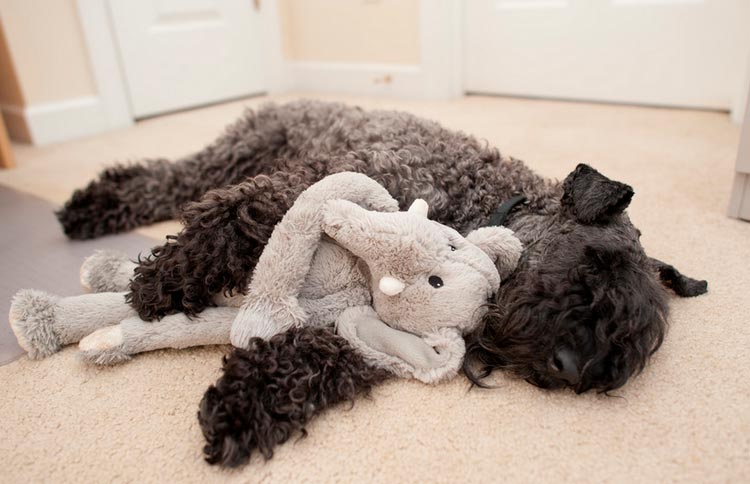
The true Kerry Blue Terrier is an aristocratic, delicate, and intelligent dog with an innate sense of self-worth, reserved in displays of affection, meticulous in everyday life, incredibly resilient and persistent, possessing endless patience and exceptional intelligence. The Kerry Blue is an incorrigible optimist, very sociable yet unobtrusive. He gets along well with children of all ages and is tolerant of their antics. He is very enthusiastic and energetic in any activity, perhaps a little less temperamental than other working terriers. Cheerful and curious, the Kerry does not tolerate loneliness well; he always wants to be the center of attention and greatly appreciates attention.
On the one hand, the carry is very independent, he will be like me shepherd dog, looking into the mouth, awaiting orders. But on the other hand, he is very sensitive and people-oriented, trying to please his owner in everything. With his own people, he is very gentle and affectionate, sincere and forgiving. He is a devoted companion, always and everywhere ready to accompany his loved ones.
Personality can vary greatly depending on the breeding line. Some are calmer, while others are quite spirited.
Its innate guarding and hunting instincts must be taken into account. A Kerry Blue Terrier will always alert strangers with a loud bark, and if necessary, will defend itself without hesitation. However, deliberately training it to be aggressive or training it to be overly protective will damage its character and psyche. The modern Kerry Blue Terrier is first and foremost a companion—a friendly, active, and confident family dog.
One of the characteristic traits of terriers is aggression towards their fellow dogs. A Kerry can be trained to be non-confrontational, but they will never refuse a fight initiated by another dog. Other challenging traits include stubbornness, a desire for independence, and dominance within the family. Kerrys are as stubborn as a flock of sheep and are not averse to testing their owner's patience from time to time. They often achieve their goals through cunning and charisma.
Education and training
Working with a Kerry Blue Terrier is, on the one hand, very easy. They are intelligent dogs with an excellent memory, easily trained, and quickly learn commands. However, due to various circumstances, a Kerry Blue Terrier can display less-than-ideal personality traits: stubbornness, willfulness, and independence. A Kerry Blue Terrier cannot be trained like a shepherd; it can only choose to obey or disobey a command. Therefore, training and raising a Kerry Blue Terrier can be challenging for beginners or those accustomed to working with service breeds. You'll need to work with the dog and assert your leadership position throughout its life, otherwise the dog will become a slob and dangle its paws.
First and foremost, it's important to establish a bond with the puppy and build trust. Then subsequent training will yield the desired results: a bundle of energy will grow into an obedient companion, easily controlled in any circumstances.
When training and raising a puppy, it's best to use positive reinforcement. A dog can do a lot with just approval and praise. Training sessions should be engaging and not too long. Proper and consistent socialization plays a crucial role during puppyhood.
Content Features
The Kerry Blue Terrier is a great choice for a house or apartment. Its coat has no doggy odor and sheds virtually nothing. Theoretically, it could live outdoors in a crate; its thick, soft coat provides excellent protection from the elements. However, keeping it in a crate is strictly not recommended. The Kerry Blue does not tolerate loneliness well and requires constant attention and companionship.
Puppies are generally not destructive, enjoy playing with toys, and rarely damage things. The floor in their room should not be slippery. This increases the risk of injuries, sprains, strains, and bruises. It also can lead to unbalanced development of the musculoskeletal system, which can affect their appearance.
The Kerry Blue Terrier requires good physical and mental stimulation. Leisurely walks in the park aren't enough. They need exercise, games, and running. Kerry Blue Terriers excel in agility, frisbee, and freestyle competitions. Swimming and playing in the water are excellent pastimes in warm weather.
Care
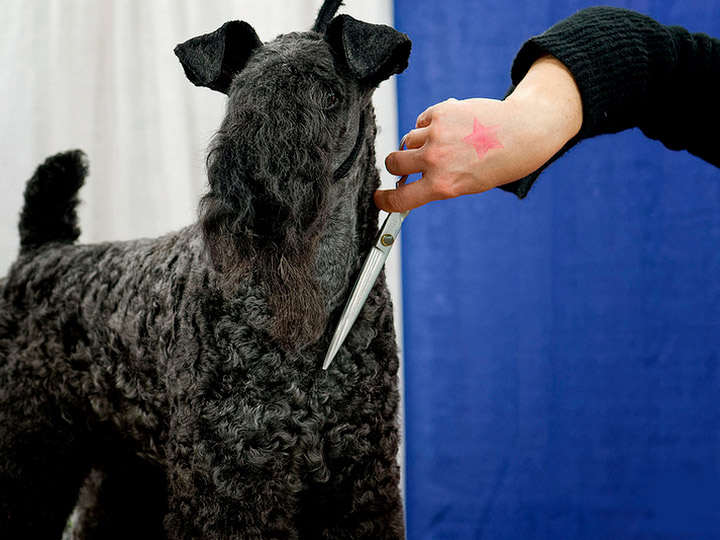
Kerry Blue Terriers are quite demanding to maintain. Their soft coat is brushed once or twice a week to prevent tangling of the soft, wavy hair. Show dogs are trimmed once a month, while pets are trimmed at least three times a year. Eyebrows, beard, and mustache are the breed's most distinctive features. While they can be trimmed short or completely removed, this is not customary. The muzzle is washed after every feeding. This prevents crumbs and food debris from accumulating in the long coat, thereby preventing skin conditions. Bathe the dog with shampoo and conditioner for soft coats every 3-4 weeks. The eyes are cleaned daily to remove accumulated secretions. Puppies sometimes experience increased tear production, which subsides with age. Kerry Blue Terriers have their ears cleaned once a week, and the hairs growing inside the ears are plucked. They promote the accumulation of wax, dirt and fluid, which leads to fungal and bacterial ear infections. The claws are trimmed as needed, if they do not grind down on their own.
Kerry puppies' ears are taped to ensure proper ear placement, which gives them an elegant, athletic appearance and prevents them from kinking. Taping begins at approximately 3 months of age and is completed by 8 months.
Nutrition
There are no specific feeding rules for a Kerry Blue Terrier. The dog's food should be healthy and balanced, fed regularly in regular portions. This can be natural food or prepared foods. Each owner chooses the most convenient option. The most important thing is that the diet suits the dog and provides everything it needs. A home-cooked diet should include sources of protein (meat, organ meats), fats (vegetable oil), carbohydrates (cereals), fiber (vegetables, fruits), and vitamin and mineral supplements, the composition of which depends on the quality and composition of the food, the season, and the dog's age. As for prepared foods, diets for active medium-sized dogs are suitable.
Health and life expectancy
Kerry Blue Terriers are healthy, hardy dogs that remain active into old age. Their average lifespan is 13 years, but some dogs live to 16-18 years. The breed is susceptible to common hereditary health problems, but most are not life-threatening.
- Tendency to dermatological diseases (epidermal and dermal cysts, growths and calluses on the paw pads);
- Eye diseases (juvenile cataract, entropion, keratoconjunctivitis);
- Tendency to inner ear infections;
- Progressive nervous abiotrophy (a rare, incurable, hereditary disease that manifests itself at the age of 2-6 months as an inability to walk);
- Diseases of the musculoskeletal system (subluxation of the patella, hip dysplasia is very rare);
- Autoimmune hereditary diseases (blood clotting disorders and adrenal diseases) are very rare.
Dogs of all ages should be vaccinated according to generally accepted schedules. Furthermore, owners should remember to regularly treat their dogs for internal and external parasites that carry dangerous diseases.
Choosing and pricing a Kerry Blue Terrier puppy
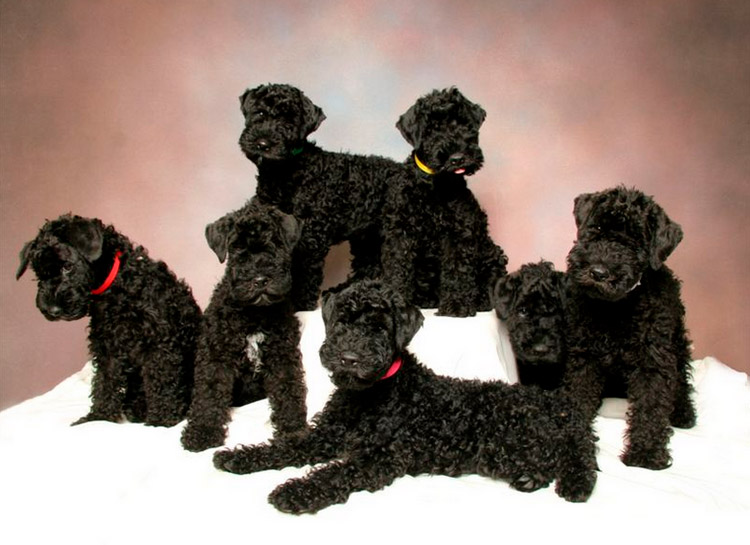
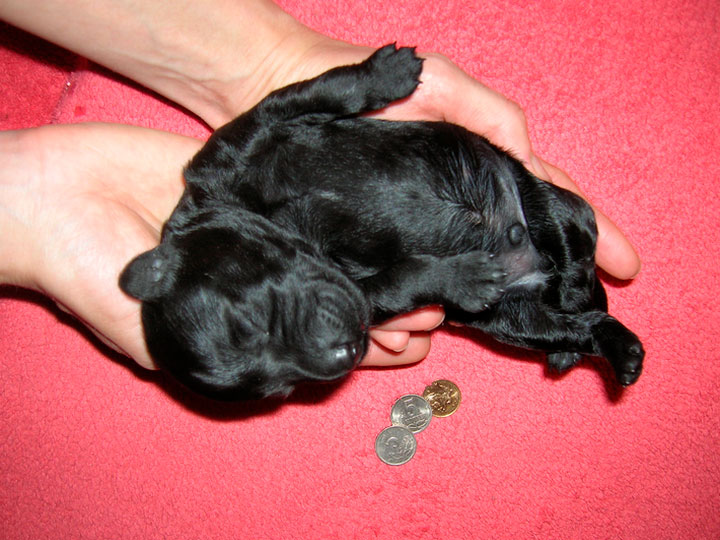
The most convenient way to find a Kerry Blue Terrier puppy is through a club, which registers all matings and litters and provides contact information for kennels and breeders. Kerry Blue Terrier puppies are born black. By 18 months of age, they should turn blue or at least show signs of changing color (changing to brown).
When choosing a puppy, pay attention to breed balance and posture. A promising puppy will naturally strike beautiful poses, carry themselves confidently, without being constrained, and actively explore the world. Add to this a beautiful, level head, wide jaws, and sweeping, powerful movements. Unfortunately, the color and quality of a puppy's coat can be very difficult to predict; it can often change rapidly, for better or worse, only after a year. When predicting a dog's coat type and color, parents primarily rely on their qualities, and the same applies to their character.
The main natural problems remain large stature, dark coloring, and atypical coat. Such defects become apparent only in adulthood, making it significantly more difficult to select a puppy for shows and breeding.
The price of a Kerry Blue Terrier puppy ranges from 20,000 to 50,000 rubles. The price is influenced by demand, the kennel's status, the pedigree and achievements of the parents, and the puppies' potential (for home use or for show).
Photos
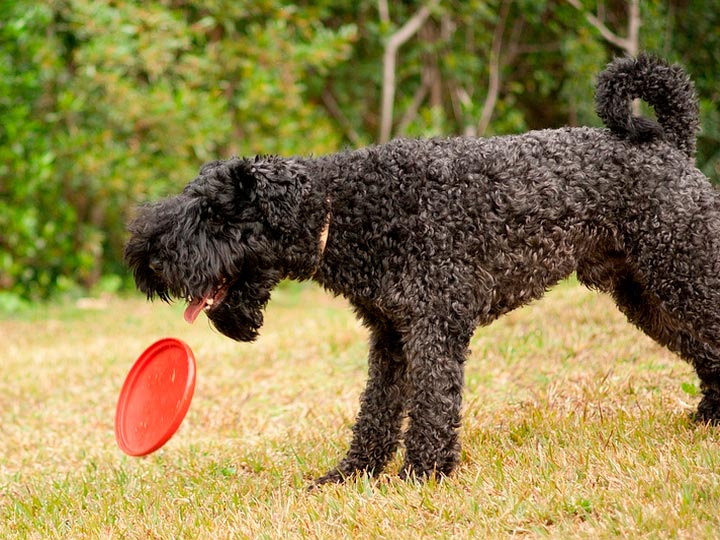
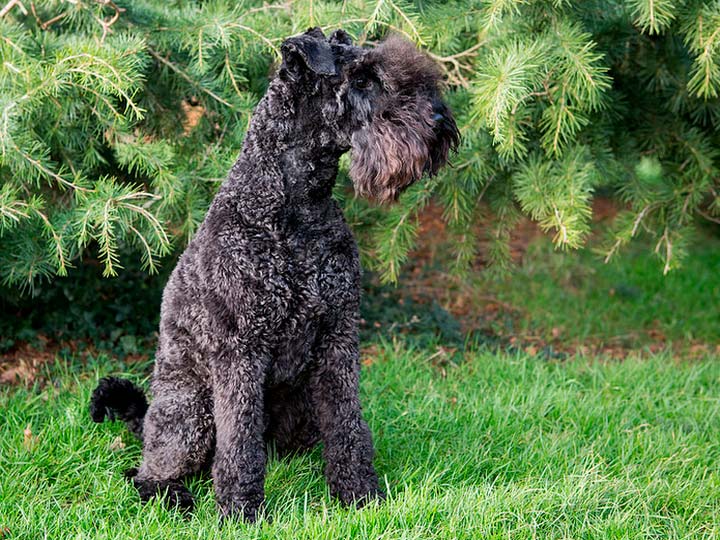
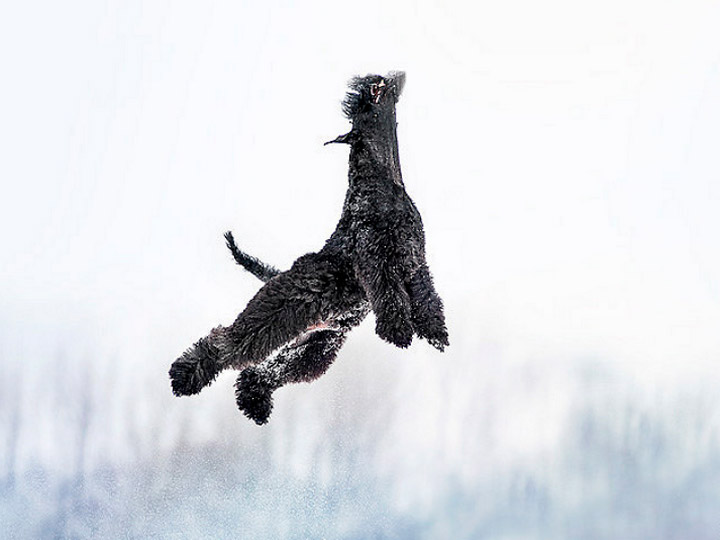
The gallery contains photos of puppies and adult dogs of the Kerry Blue Terrier (Irish Blue Terrier) breed.
Read also:
- Wheaten Terrier (Irish Soft Coated Wheaten Terrier)
- Maremma Sheepdog
- Bearded Dog: What is the name of the breed?


Add a comment