
Cairn Terrier
The Cairn Terrier is a small working dog originally from Scotland. For a long time, these brave and agile dogs were used as guard dogs, rodent exterminators, and burrowing animals. Modern Cairns are friendly, reasonably independent, and intelligent companions. Many are familiar with them from "The Wizard of Oz," in which the illustrator portrayed a Cairn Terrier as the talking dog Toto.
Content
History of origin
Cairn Terriers are considered one of the oldest terrier breeds. Their ancestors inhabited the Hebrides as early as the 17th century. They may have lived in this area even earlier, but there are no surviving records. The name "Cairn" comes from a Celtic word meaning "rocky terrain" or "rock pile." These small dogs lived and worked in precisely these conditions for centuries.
Until the early 20th century, when the breed was officially recognized by the English Kennel Club, West Highland and Cairn Terriers shared common ancestors. Dogs of different types were often born in the same litter. This explains the confusion in the old names of Scottish terriers. If dogs originated in the Scottish Highlands, they were called Highland Terriers, while if they lived on the Isle of Skye, they were called Skye Terriers.
Cairn Terriers have never been particularly popular, but they are mentioned in some literary works and have appeared in numerous films and television series. For example, in the first edition of The Wonderful Wizard of Oz (1899), Baum doesn't specify Toto's breed, but illustrator W.W. Denslow drew a Cairn Terrier. On television, Cairn Terriers can be seen in the film Kingsman: The Secret Service and its sequel Kingsman: The Golden Circle, the British television series Upstairs, Downstairs (1971), the film The Uninvited (1944), the American television series Mr. Robot (2015), and several others.
Under its modern name, the Cairn Terrier was first shown at Crufts in London in 1909. Some dogs were recorded as short-haired Skye Terrier With erect ears. Under this name, they were previously shown at a show in 1860. In 1910, the Cairn was recognized by the UK Kennel Club. Somewhat earlier, in 1907, white dogs began to be shown separately. They later became a distinct breed. West Highland White TerrierIn 1912, a stud book was opened for Cairns, and already in 1913, the first dogs of this breed were entered into the American Stud Book. Until 1924, Western White Terriers, Scottish Terriers Cairns and Cairns were often bred together, and puppies of any color were registered as Cairn Terriers.
Video about the Cairn Terrier dog breed:
Appearance
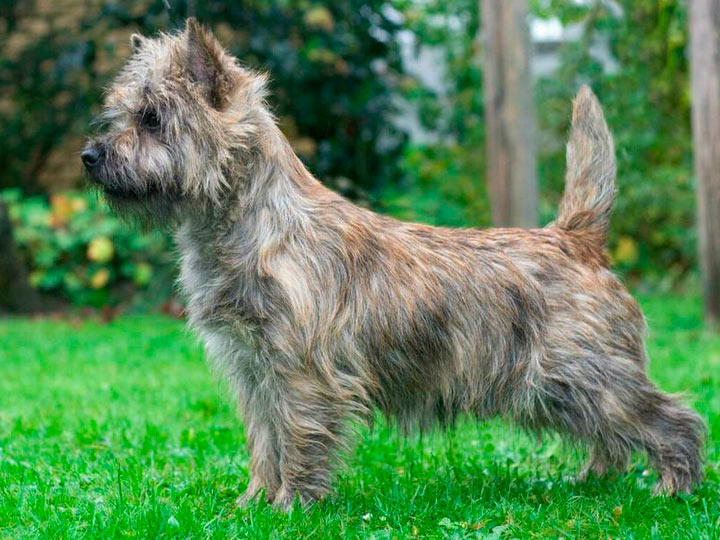
The Cairn Terrier is a small, sturdy dog with a harmonious build, free movement, and coarse, wiry, medium-length coat. Sexual dimorphism is moderate. Height at the withers is 28-31 cm, weight is 6.5 kg. The standard also specifies a desired body length of 37-39 cm. The Cairn Terrier has some similarities with the Norfolk Terrier and Norwich Terrier.
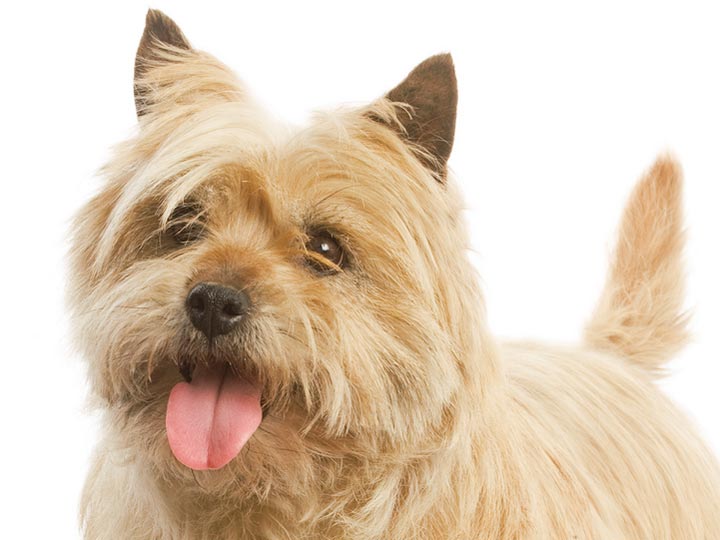
The head is small with a broad forehead and a slight depression between the eyes. The muzzle is pointed but not heavy. The jaws are powerful. The Cairn has a characteristic fox-like expression. The stop is smooth but clearly visible. The nose is black. The teeth are strong, meeting in a perfect scissor bite. The eyes are medium in size, set wide apart, dark in color, and very expressive. The ears are triangular in shape, small, set high, and wide apart.
The neck is set high, moderately long, and strong. The chest is deep and broad. The back is not too long and straight. The loin is flexible and strong. The croup is strong. The forelegs are parallel, with sloping shoulders and not too short forearms. The hind legs have strong thighs, well-defined angulation, and short metatarsals. The paws have strong, rounded nails. The front paws are slightly larger than the back paws. The pads are strong and thick. The tail is not long, set high, and carried almost vertically. Docking has long been banned in Scotland, but previously, it was common to crop the ears and tails of these dogs.
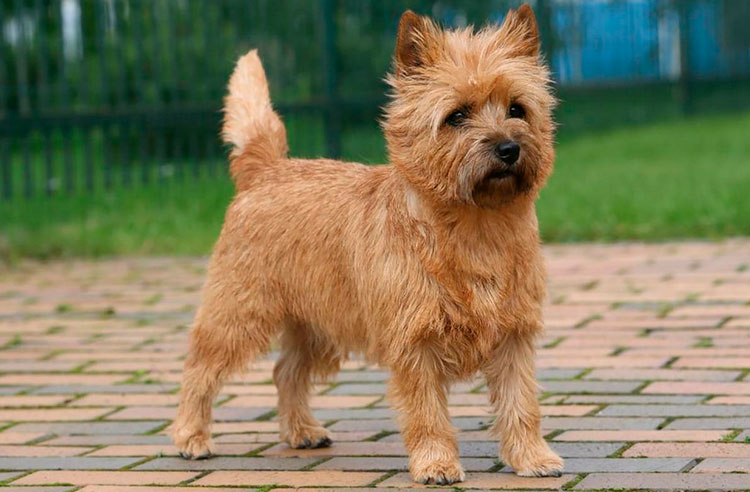
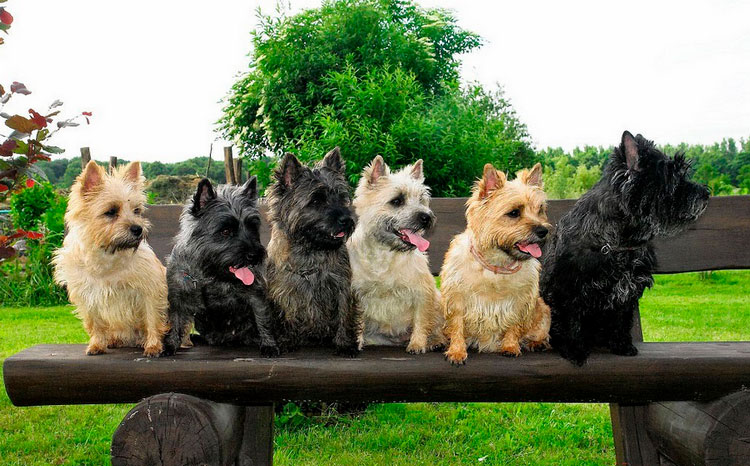
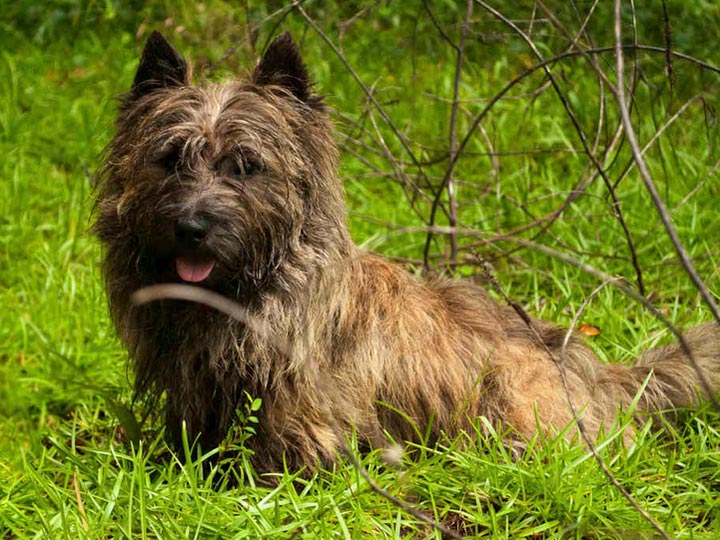
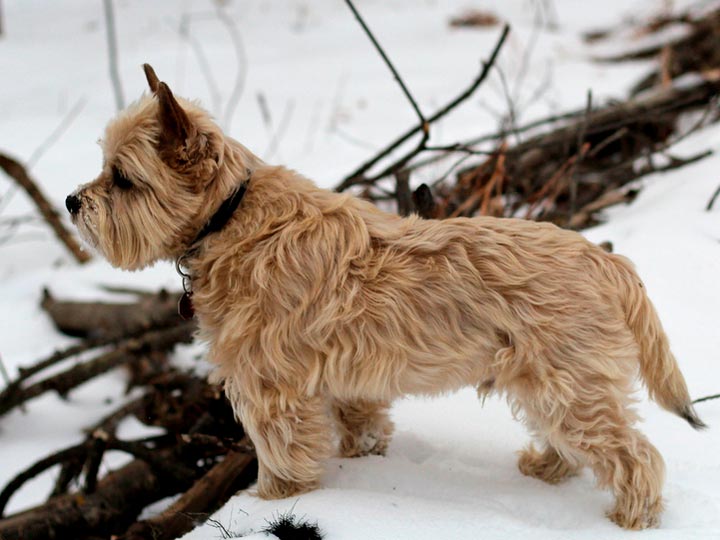
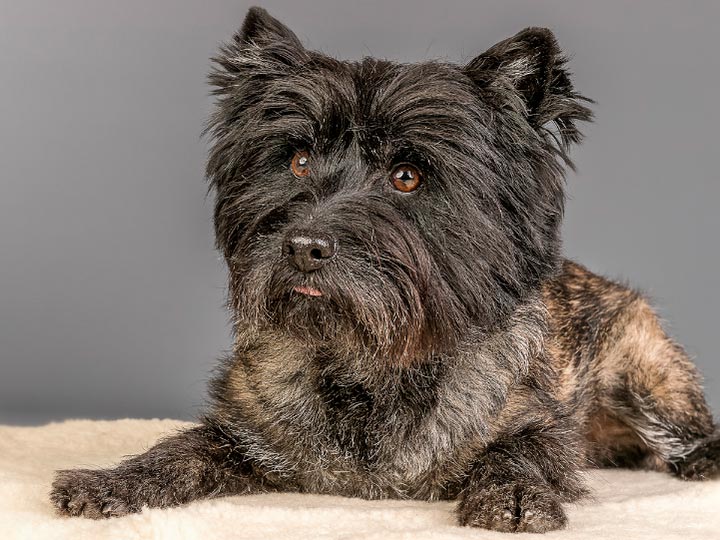
The coat is thick and double. The outer coat is medium in length, coarse, harsh to the touch, straight, and may be slightly wavy. The undercoat is soft and dense, slightly lifting the outer coat away from the body. On the head, the hair is bushy, forming a small mustache and beard. The ears are trimmed short. Several colors are acceptable: sand, red, and gray in various shades (pure black is unacceptable), and brindle, which has a darkened muzzle.
Character
The Cairn Terrier is a typical working terrier in both appearance and character: agile, energetic, self-assured, but not aggressive. At least toward people. Its hunting instincts, which remain to this day, make it a favorite predator of small rodents and birds. Bold and alert, it excels at guard duty and may even attempt to protect its owner and property. However, its size is unlikely to intimidate ill-wishers.
The Cairn Terrier is a wonderful family companion: cheerful, engaging, lively, playful, and friendly. They thrive on attention and can be overly clingy if they don't get it. They love all family members, but are usually completely devoted to just one person. They don't tolerate prolonged periods of loneliness well. Cairn Terriers get along well with children and tolerate noisy groups, but may occasionally shy away from overly intrusive interactions.
When it comes to pets, a properly socialized and trained Cairn Terrier strives for a conflict-free life. They get along well with cats, but their peaceful coexistence with domestic cats doesn't extend to stray cats. They generally don't bully large dogs, and they enjoy playing with smaller dogs that match their temperament, although they may prefer the company of their owner.
Education and training
The curious and intelligent Cairn is easy to train. During puppyhood, difficulties with training can be caused by the puppy's excessive activity, as well as its stubbornness and independence. Training should not be lengthy; it is best to conduct it in a playful manner using positive reinforcement. It is crucial to engage the puppy in training; this can lead to significant results. Using physical force will inevitably result in the dog becoming withdrawn and unwilling to obey.
With proper, consistent training, a Cairn Terrier can learn an unlimited number of tricks and commands. The dog's energy and desire to please its owner allow it to excel in a variety of sports, including agility, freestyle, and frisbee.
The Cairn Terrier is proactive, loves to make his own decisions, and won't obey even the slightest gesture. However, he is also very owner-oriented. With proper training, he will be an obedient friend and loyal companion.
Content Features
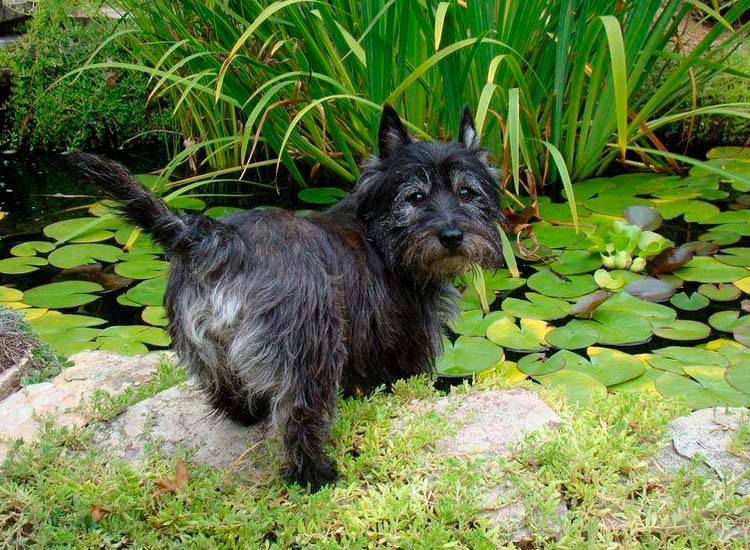
The Cairn Terrier is hardy and easy to keep, thriving in any weather. Its tousled coat protects it from rain and snow. It thrives in small apartments and could theoretically live outdoors, but given that it's a companion that requires constant interaction with its owner and should be a full member of the family, outdoor living is not ideal. The Cairn Terrier is a good choice for families with older children, as well as for first-time dog owners who don't have the time to spend on grooming.
Owners of private homes and beautiful flowerbeds should be mindful of terriers' love of digging and discourage this behavior from the time their claws are small. Owners of apartment dogs should discourage excessive barking. Cairns are very alert and often react to the slightest noise. It's important to teach your dog to distinguish between situations in which barking is necessary and those in which it is not.
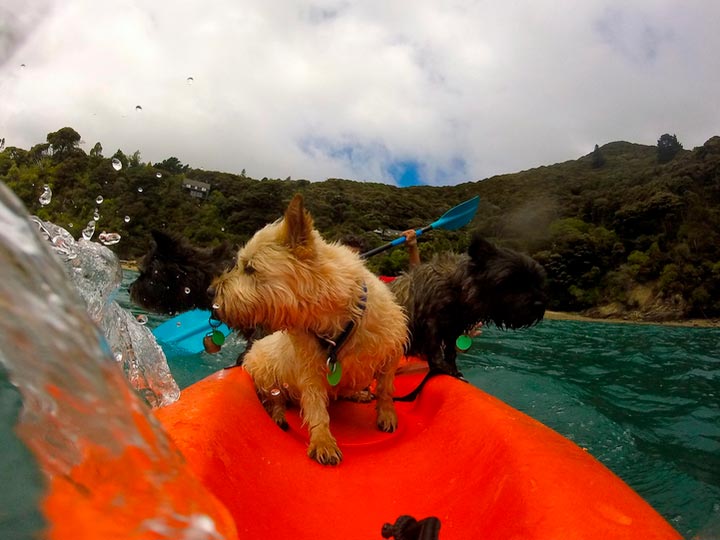
Daily walks will help this active dog burn off energy and stay in shape. Short walks twice a day are sufficient for the Cairn Terrier. It's advisable to supplement walks with energetic games. It's best to keep the dog on a leash. Their love of chasing small game and birds can lead to the dog being lost and also increases the risk of running into the road and getting injured. Most Cairn Terriers love to swim, happily jumping into bodies of water in hot weather. With consistent training, they can even become companions on jogs and long hikes. They adapt easily to new environments, making them easy to travel with.
Care
Cairn Terriers shed little, which is a definite plus for an apartment dog. Regular bathing and the right cleaning products will prevent any odor. Bathing is typically done every two to three months. Due to their unique coat, slicker brushing or clipping is not recommended. This practice negatively impacts the condition of the coat, making it softer and unnatural for the breed. Brushing the Cairn Terrier's coat once a week is sufficient. During the shedding season, trimming is recommended to facilitate the shedding of the coat.
From a young age, it's advisable to accustom a Cairn Terrier to having its teeth brushed at least two to three times a week. This will help prevent gum and dental disease in adulthood. Nails should be trimmed once a month unless the dog wears them down on its own, which is mandatory on hard ground with regular walks. Ears should be cleaned weekly if necessary, and the skin should be inspected. Excessive tearing is not typical for this breed.
Nutrition
Most breeders and owners feed their Cairn Terriers commercially prepared foods. Super-premium or holistic diets are preferred, as they fully satisfy all their nutritional needs. Servings are calculated according to the package directions. However, they can be slightly adjusted depending on the dog's size, age, and activity level.
If a kern doesn't get enough exercise, it's important to prevent it from gaining excess weight. This can be achieved by reducing portions or switching to a low-calorie diet.
A Cairn Terrier of normal weight has ribs that are easily palpated but not visually visible. If desired, the dog can be transitioned to a natural diet. The diet is prepared according to standard guidelines.
Health and life expectancy
Breeders and veterinarians identify a number of diseases that are typical for the breed. Some are hereditary, while others are caused by non-specific factors (injuries, toxins, infections), but they are more common in Cairn sheepdogs than others.
- Ophthalmological diseases (cataract, corneal dystrophy, entropion, ocular melanosis, progressive retinal atrophy);
- Craniomandibular osteopathy (lion jaw);
- Disease of the endocrine system (diabetes mellitus, hypothyroidism);
- Von Willebrand disease;
- Problems with the musculoskeletal system (hip dystrophy, femoral head necrosis, patella dislocation);
- Leukodystrophy;
- Allergies;
- Portosystemic shunt.
The lifespan of a Cairn Terrier free of hereditary illnesses can reach 15-16 years, with the average lifespan being 12 years. To maintain your Cairn Terrier's health, it's important to follow standard preventative care (vaccinations, treatment for external and internal parasites), as well as regular medical checkups.
Choosing a Cairn Terrier Puppy
When choosing a Cairn Terrier puppy, follow standard guidelines. Finding a puppy in major cities in Russia and the CIS is easy. As the popularity of small dogs grows, so does the number of kennels breeding this breed. It's best for prospective owners to decide on the puppy's gender, desired color, temperament, and class in advance.
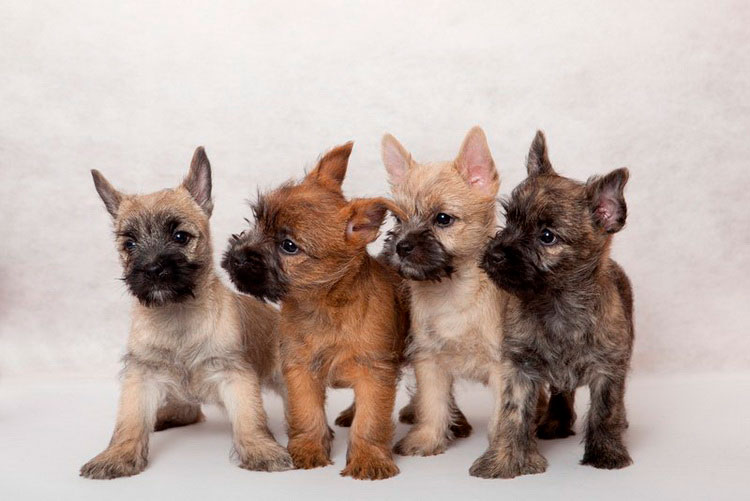
If you need a companion for your child, consider adopting a pet-class puppy. It's sometimes possible to find a puppy with disqualifying faults that will prevent it from participating in shows or breeding, but don't threaten its quality of life (kinked tail, malocclusion, cryptorchidism). Such dogs are significantly less expensive than their counterparts with the correct conformation. Show-class puppies can have a show career and, if they score well, are used for breeding. These puppies command the highest prices and can only be purchased from a reputable kennel. If you have high standards for a dog, it's best to choose a puppy at 6-7 months of age, when you can assess its conformation, bite, and temperament. The older the Cairn, the more accurate the prognosis. Seeing a future champion in a 2-month-old puppy is virtually impossible, even for an experienced breeder.
Some people sell mixed-breed dogs. Some mention this in their ads, while others hide it to keep the price down. Therefore, it's important to familiarize yourself with the standard in advance. Even a small puppy should largely meet the requirements described in the document. If it's a mixed-breed dog, there will certainly be discrepancies.
It's important to ensure the parents are healthy. Ideally, they should be tested for at least the most common conditions: hip dysplasia, bleeding disorders, and progressive retinal atrophy. Purchasing a puppy from fanciers who bred their dogs for "health" or profit increases the risk of getting a puppy with hereditary diseases or mental disabilities.
Price
The price of a Cairn Terrier puppy varies widely. It is influenced by the kennel's location, its status, the level of its breeding stock, and the expected performance of the litter's puppies. Couch-friendly puppies cost 25,000-30,000 rubles. Promising puppies for show and breeding start at 45,000 rubles. Cairn Terrier puppies without papers usually cost no more than 10,000 rubles.
Photos
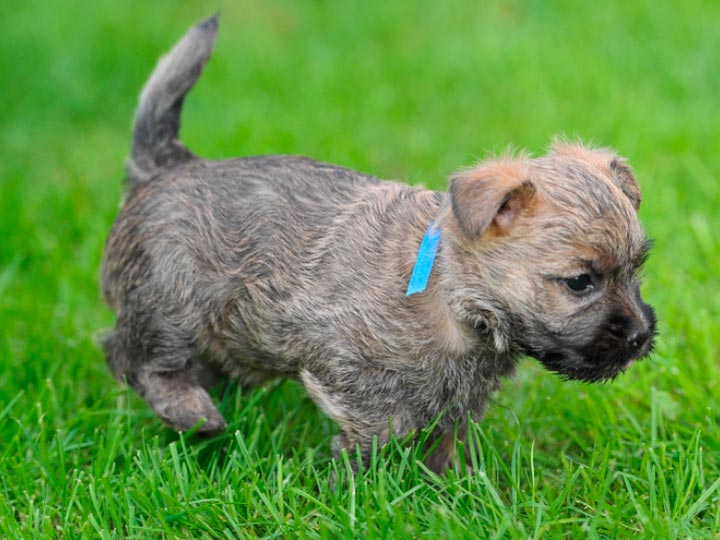
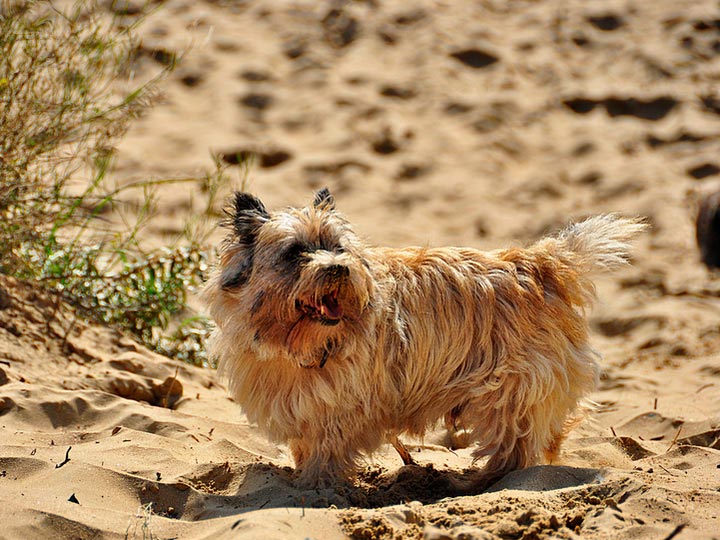
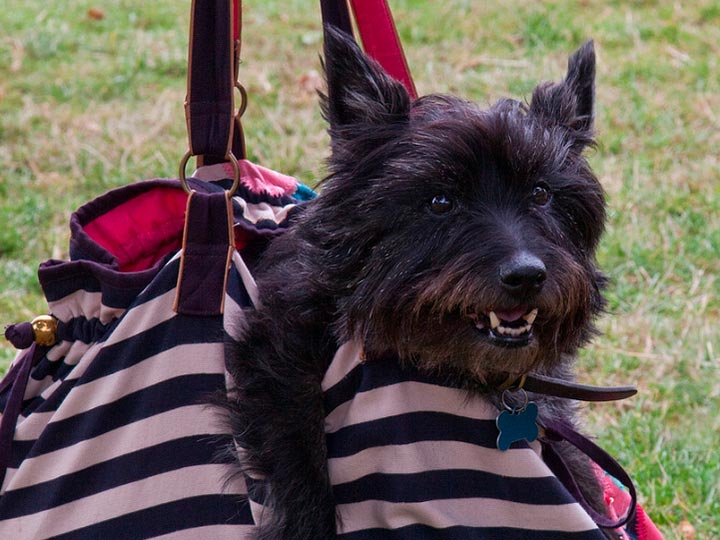
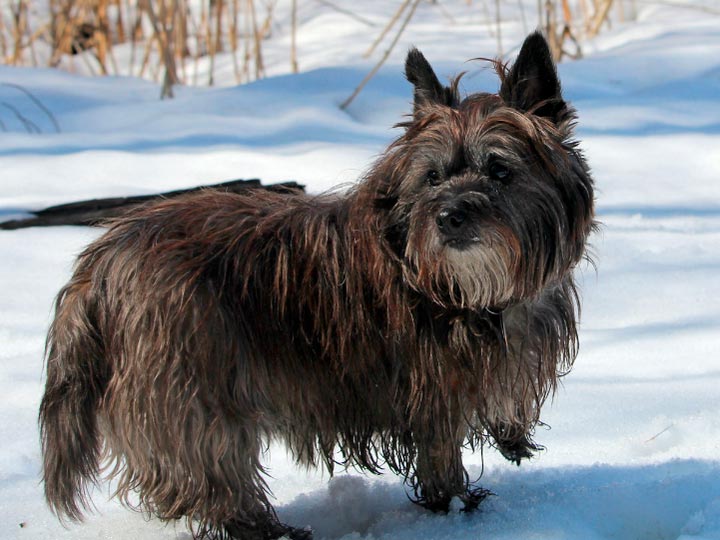
The gallery features photographs of Cairn Terriers of various genders, ages, and colors. Even the photos demonstrate how energetic and cheerful these dogs are.


Add a comment