
Cavalier King Charles Spaniel
The Cavalier King Charles Spaniel is a small companion dog breed developed in the UK. Like other spaniels, they are capable of raising birds and retrieving them to a hunter, but today only a few are used for this purpose. Cavaliers have almost entirely become decorative pets. However, they are not couch potatoes and will not make a great sofa decoration. These charismatic dogs are very energetic, playful, cheerful, and sociable. They are neither shy nor aggressive. They are well suited to the role of an urban family dog or companion. They get along well with children and other animals.
Content
History of origin
The Cavalier King Charles Spaniel is a direct descendant of the toy spaniels, which were common in Europe since the 16th century. Favorites of the kings and noble families of Italy, France, Holland, and Belgium, they were later brought to England and became court dogs of Charles II. Hence their name, the King Charles Spaniel.
Then the fashionable toy spaniels were replaced by pugs. Breeding brachycephalic dogs became very popular, affecting King Charles cats. Their muzzles became shorter and shorter. The old-style dogs seemed to disappear entirely.
In 1926, American Eldridge Roswell attempted to restore the toy spaniel's original appearance. He even established a £25 prize for anyone who could show a dog at Crufts that resembled the one depicted in paintings from the time of Charles II. This prize was established annually for five years. During this time, several dogs and a small group of like-minded breeders gathered. They spent considerable time studying the old-type toy spaniels and created a foundational standard. They believed the only way to revive the breed was to use the "spotted" dogs that sometimes appeared in King Charles spaniel litters.
The first breed club was registered in 1928. To distinguish the new breed from the short-faced King Charles Spaniel, but to emphasize their relationship, the word "Cavalier" was added to the name. The Cavalier King Charles Spaniel was officially recognized by the English Kennel Club in 1945. In 1955, by the FCI.
Appearance
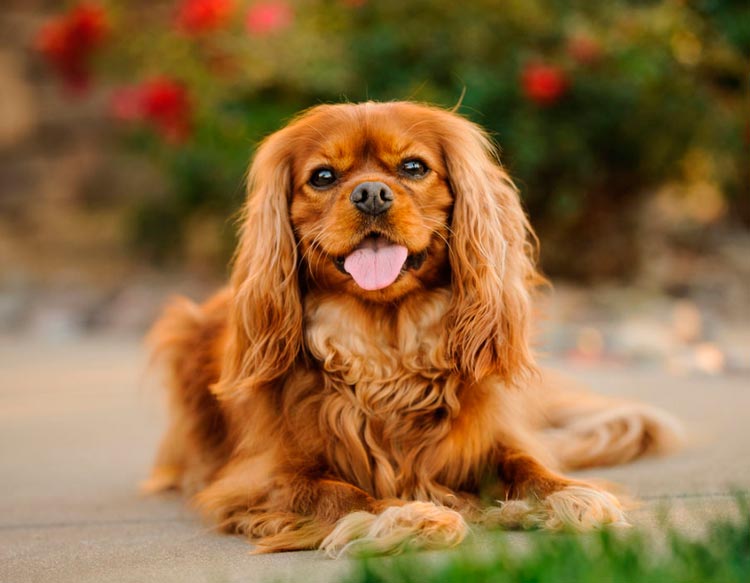
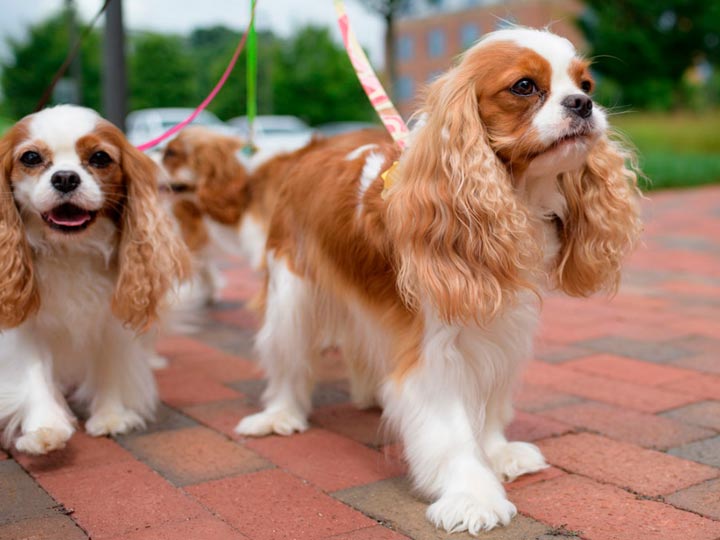
The Cavalier King Charles Spaniel is a graceful, active, well-balanced dog with a gentle expression. The coat is silky, straight or slightly wavy, with beautiful feathering. Four colors are available. The expression is alert and friendly, like the dog itself. Sexual dimorphism is moderate.
- Height at withers: about 30 cm;
- Weight: 5.4 -8.2 kg.
The skull is almost flat between the ears. The stop is marked. The length from the base of the nose to the tip is approximately 4 cm. The nose leather is black and well developed. The muzzle is conical, with well-filled areas under the eyes. The lips are developed but not pendulous. The eyes are round, dark, large but not protruding, and set fairly wide apart. The ears are long and set high. The jaws are strong, with a correct scissor or pincer bite. The neck is slightly arched and of medium length.
The Cavalier differs from the King Charles Spaniel primarily in its head structure. The skull is flat between the ears rather than domed, the muzzle is elongated rather than flattened, the ears are set higher, and the bite is scissor-like or level, whereas the King Charles Spaniel has an undershot bite.
The body is short. The topline is level. The loin is short. The ribs are well sprung. The chest is moderate. The bone is moderate. The shoulder blades are well laid back. The hindquarters have a well-defined stifle. The feet are compact. The tail is well set on and carried happily. Previously, the tail was docked to 2/3 of its length. Movement is free, with good drive from the hindquarters.
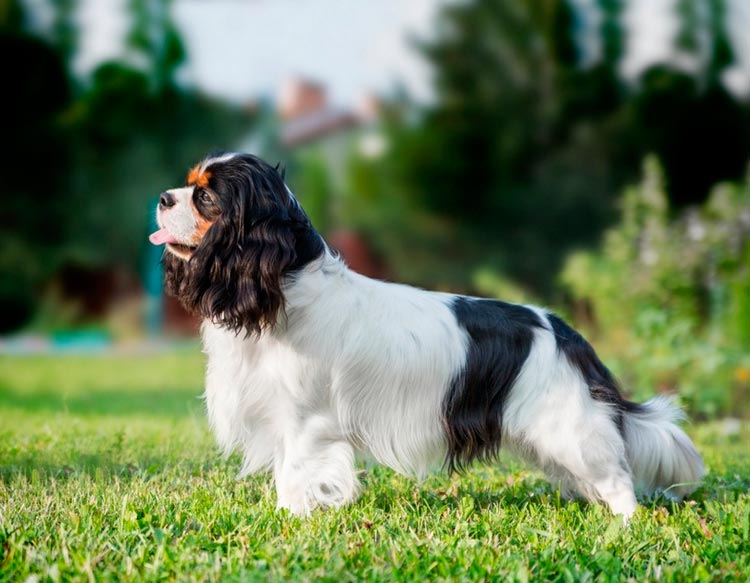
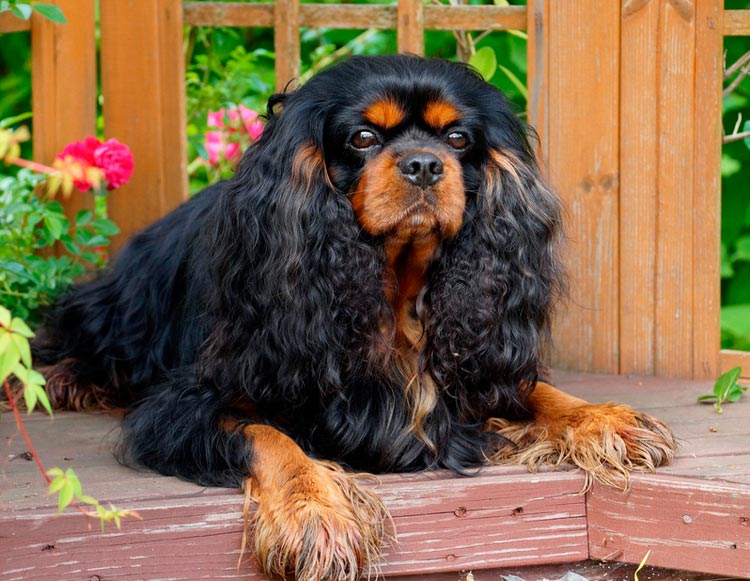
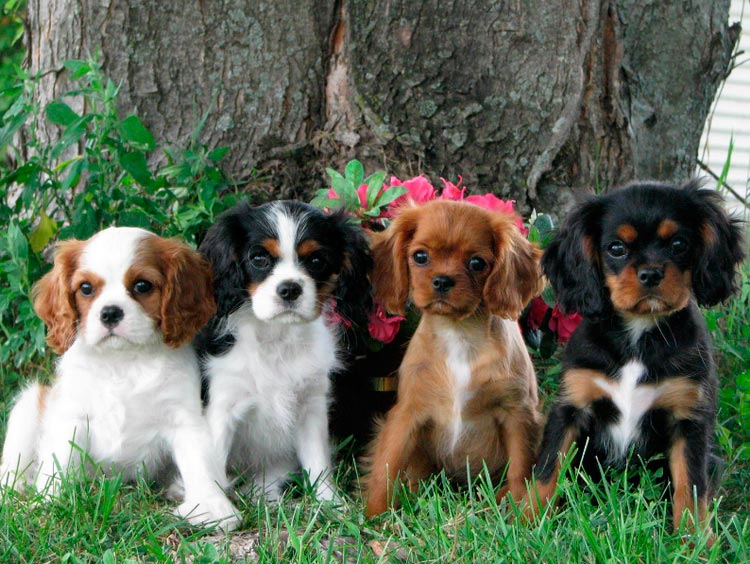
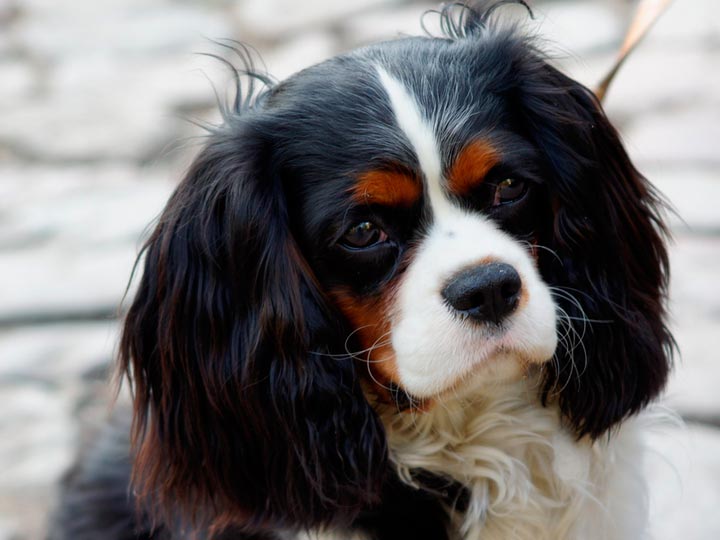
The coat is long and silky, with a slight wave permitted. A rich frill covers the ears, chest, sides, tail, and the back of the legs. Recognized colors:
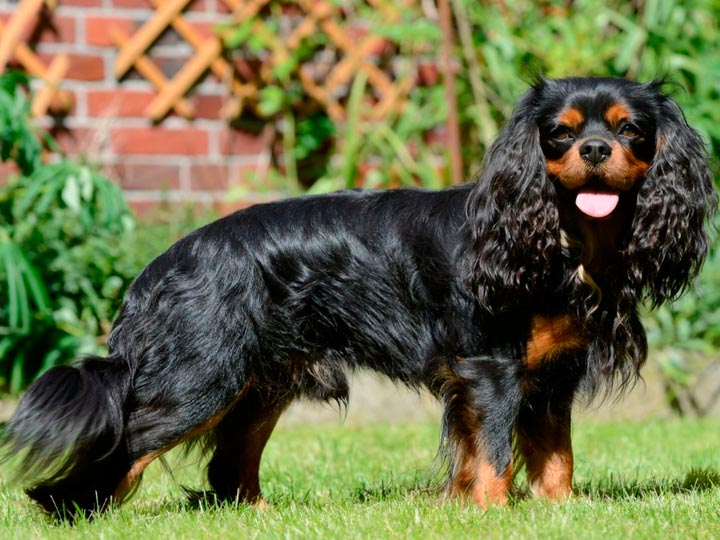
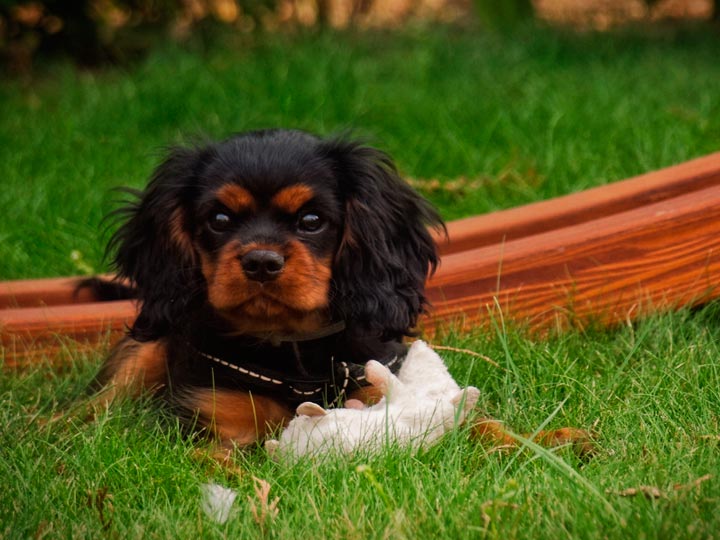
- black and tan;
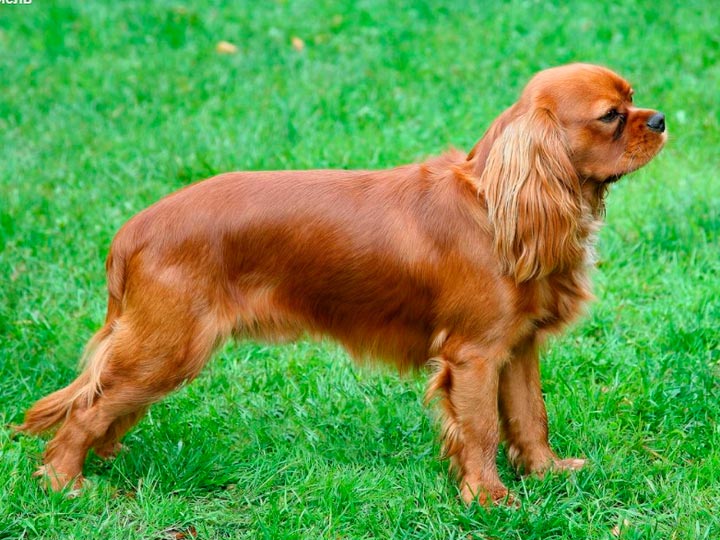
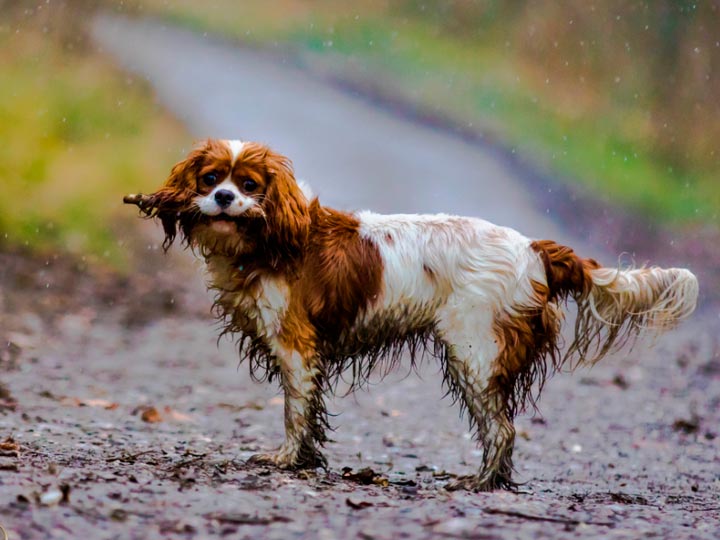
- ruby (solid rich red);
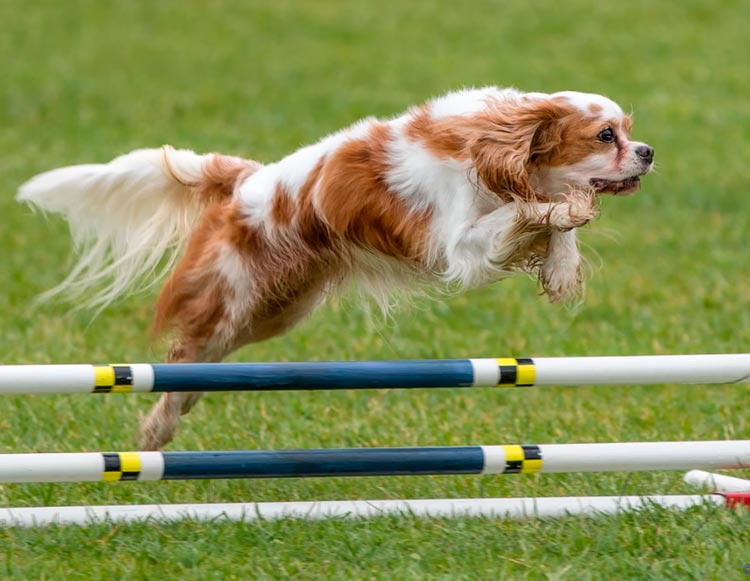
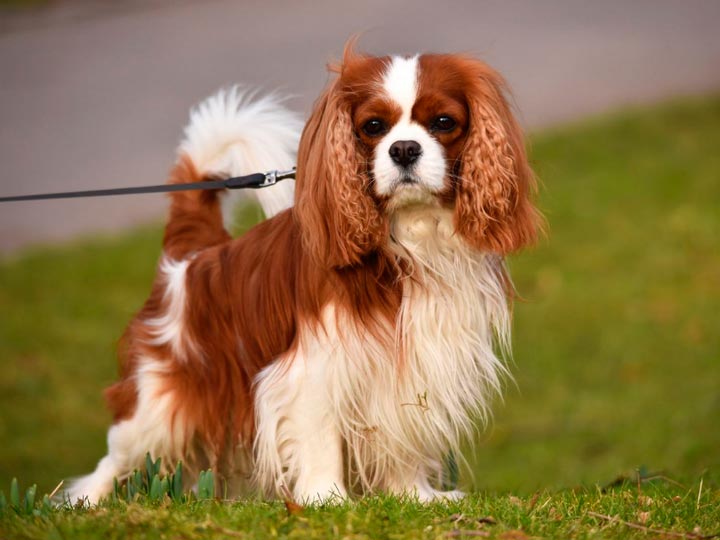
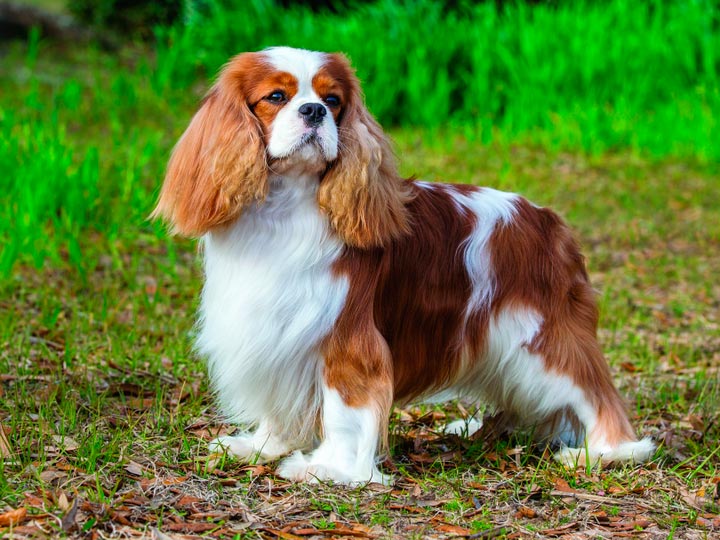
- Blenheim (well defined and separated chestnut spots on a white background);
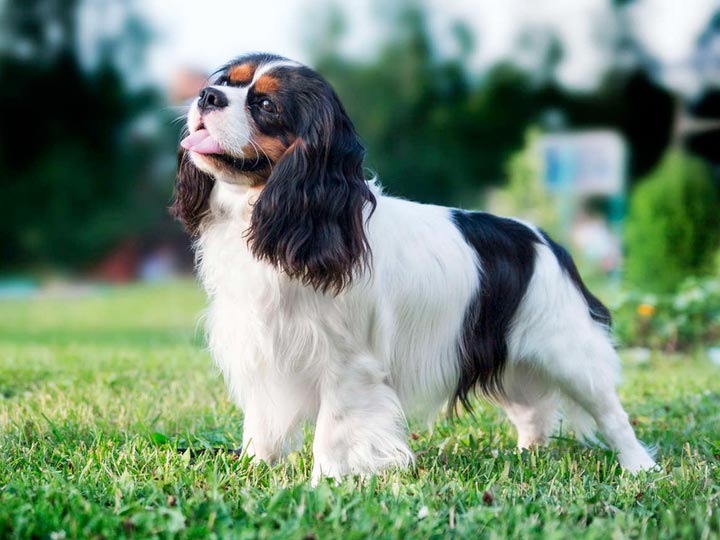
- tricolor (black and white with brown markings above the eyes, on the cheeks, inside the ears, on the inside of the legs and on the underside of the tail).
Character and behavior
The Cavalier King Charles Spaniel is affectionate, friendly, and fearless, not prone to nervousness or aggression. He adheres to the principles of brotherhood and equality with all, people and animals. He is not a very good watchdog. He may bark when called, but nothing more. Even strangers are his friends.
The Cavalier King Charles Spaniel will happily share any of its owner's hobbies and try to participate in all their activities. And if he can't help, he'll simply be there. The Cavalier gets along well with children, can play with them for long periods of time, and will follow the commands of older children.
The tireless and playful Cavalier King Charles Spaniel will make a good friend for a child.
The Cavalier King Charles Spaniel loves to be around people. The typical breed has a gentle and never aggressive temperament. This cheerful, loving dog enjoys walks and, at home, prefers to rest quietly, curled up on or near its owner's lap. It greatly values comfort and can even skillfully manipulate people to achieve its goals, such as allowing them to sleep in their chair.
Although the Cavalier King Charles is a toy breed, it's not a couch potato. It's energetic and hardy, well-suited for long walks and even jogging. These dogs are quite restless, constantly seeking attention and enjoying companionship, but without being overly excitable.
A Cavalier's owner's attention is crucial. If they don't get it, they become apathetic and lose interest in games and other activities. Therefore, those who lack the time and desire to train a dog should consider a different breed.
Education and training
Cavalier King Charles Spaniels are highly intelligent, easy to train, and quick to learn. They can sometimes even be seen competing in obedience or agility competitions. However, most of them only get ready to go far and then slow down, seeing no point in such a challenge. They are much more interested in quickly practicing simple commands alongside their owner, rewarded with treats and lavish praise.
Cavaliers are sociable and responsive, so even owners without experience with dogs rarely encounter any difficulties or problems.
Cavalier King Charles Spaniels are sociable and intelligent, but it would be a mistake to think they can meet all the owner's demands without training. For a Cavalier to behave like a king, it needs to be taught. Socialization during adolescence is crucial. Teaching them house etiquette and basic outdoor commands will make life with this dog simple, comfortable, and safe.
Content Features
The Cavalier King Charles Spaniel is suitable for living in a country house or city apartment. It is absolutely not suited for outdoor living, especially year-round. While a small pet can be given its own space with a bed and toys, don't expect it to spend much time there. A Cavalier will always be where its owner is. It is also very unobtrusive, neat, and quite clean.
It's best to walk these energetic dogs daily for at least 30-40 minutes. They're easily trained to use a pad or litter box, but moderate exercise is essential to maintain muscle tone.
Cavaliers should be fed responsibly. They are generally not picky eaters, but can suffer from allergies or digestive sensitivities. Most owners prefer super-premium or holistic dry food. Natural feeding is also possible if desired. The diet is formulated according to standard recommendations, taking into account age, activity level, and physiological state (pregnancy, lactation).
Cavaliers have the most pleading and "hungry" eyes in the world. This often leads to them becoming overweight. Excess weight, as is well known, is very harmful for dogs.
Care
Grooming a Cavalier King Charles Spaniel is not difficult, but it does require a number of regular hygiene procedures.
- Daily brushing helps maintain the coat and prevent tangling. Cavaliers shed twice a year.
- Bathe as needed, on average once every 14 days.
- Cleaning ears weekly.
- Nails should be trimmed at least once a month. Excessive length can cause pain and structural changes in the toes.
- Wipe the eyes as needed, remove accumulated tears from the corners, and ensure the tear ducts are kept clean. If the dog has white fur in this area of the face, additional bleaching may be necessary.
If the Cavalier is not being shown, many owners prefer to trim the fur short to reduce tangling and eliminate the need to remove twigs, leaves, and other vegetation after walks.
To avoid having to wash your dog's ears after every feeding or walk, use special caps. For walks in dirty weather, wear thin overalls and shoes; in cold weather, warmer clothing may be necessary.
Health and life expectancy
Since the restoration of the Cavalier King Charles Spaniel, breeders have been concerned with keeping the breed as healthy as possible. However, some genetic diseases remain quite common:
- heart failure caused by mitral valve insufficiency (is the most common cause of death);
- syringomyelia (a disease of the nervous system in which cavities form in the spinal cord);
- episodic falling syndrome;
- thrombocytopenia and macrothrombocytopenia;
- hip dysplasia;
- dislocation of the patella;
- ophthalmological diseases (cataract, retinal dysplasia, distichiasis, entropion, microphthalmia, progressive retinal atrophy);
- otitis of various etiologies;
Cavalier owners should pay special attention to disease prevention, which includes: timely vaccinations, antiparasitic treatment, adherence to all care and feeding recommendations, and annual preventive medical examinations. Life expectancy is 11-13 years.
Choosing a puppy
Before making a final decision to buy a Cavalier King Charles Spaniel puppy, you should familiarize yourself with the breed and learn not only its strengths but also its weaknesses. To do this, you can attend a nearby dog show or visit a breed forum.
The Cavalier King Charles Spaniel isn't a very popular breed. Finding a breeder isn't difficult, but you may have to wait a long time for a puppy of your desired gender and color. Low competition allows breeders to maintain high standards in terms of quality and price. Finding a good puppy for shows or for the couch is made easier by the National Breed Club, which provides information about breeders, upcoming matings, and the best examples of the breed.
Good genetics of the parents is half the battle when choosing a worthy representative of the breed. If the parents of a litter aren't particularly beautiful or healthy, their offspring will likely grow up to be the same.
It's best to decide on the desired gender and color in advance, keeping in mind that some puppies have a rich, saturated coat at birth, while others have a smoky, rather faded color that won't fully change until they're closer to 5-6 months old. Gender has virtually no effect on a Cavalier's personality. You should also decide what you want the dog for: show dogs, breeding dogs, or as a pet.
Cavalier puppies should be completely healthy in appearance. Attention is paid to the conditions they are kept in and their diet. The mother should be assessed; despite lactating, she should appear reasonably well-fed. It's a good idea if the breeder can provide test results for common breed-specific diseases on their adult dogs. All puppies should be approximately the same size, well-fed, active, and have a shiny, clean coat. They can vary greatly in temperament. Some are more active, others more cautious, but under no circumstances should the puppies be fearful or aggressive.
The physical and psychological health of puppies largely depends on the conditions of their keeping and nutrition during the first months of life.
It's recommended to take a puppy to a new home no earlier than two months of age, after its first vaccination. Some breeders don't release them until after the second vaccination, closer to three months of age. Along with the puppy, the new owner should receive a veterinary passport with records of deworming and vaccinations, a birth certificate, and a puppy card, which is then exchanged for a pedigree.
Wanting to save money, the owner risks getting a sick, cowardly and capricious animal.
Price
The Cavalier King Charles Spaniel is not a cheap breed. A puppy with papers and a good pedigree costs around 80,000-100,000 rubles. A puppy without papers sells for between 20,000 and 400,000 rubles. Mixed breeds or mixed breeds with similar colors are often sold for less.
Photos and videos
You can see more photos of Cavalier King Charles Spaniels in the gallery. The first four photos feature Cavaliers in all standard colors in the following order: Blenheim, Ruby, Black and Tan, and Tricolor.


Video about the Cavalier King Charles Spaniel breed
Read also:


Add a comment