
Cataracts in dogs
Cataracts in dogs are one of the most common eye diseases. The most characteristic symptom is clouding of the lens. Why does this happen? In this article, we'll explain how to recognize the condition and how to treat cataracts in dogs.
Cataracts are caused by protein denaturation (coagulation). As a result, insoluble, milky-white fibers appear inside the lens. So what causes proteins inside the "natural lens" to coagulate, and what can trigger cataracts in dogs?
Content
Reasons
Scientists are still trying to discover what exactly causes lens clouding. They have unanimously agreed on one cause of cataracts in dogs: genetic predisposition. It has already been proven that 8 out of 10 puppies will develop cataracts if at least one of their parents had the condition. However, there are other factors that lead to cataracts, or, so to speak, contribute to them. These include:
- Trauma. Blow, scratch, constant mechanical irritation.
- Eye burns. Chemical, thermal (although less common), ultraviolet.
- Diabetes mellitus is the most common cause of cataracts in dogs.
- Problems with the immune system (weak immune response). Also, if the dog experiences the same infectious disease more than once a year.
- Poisoning. From medications and chemicals, but most often from alcohol. Never give alcohol to a dog!
- Age-related changes. Well, who isn't affected by age? Both humans and animals suffer from a host of ailments with age. And one of them is cataracts.
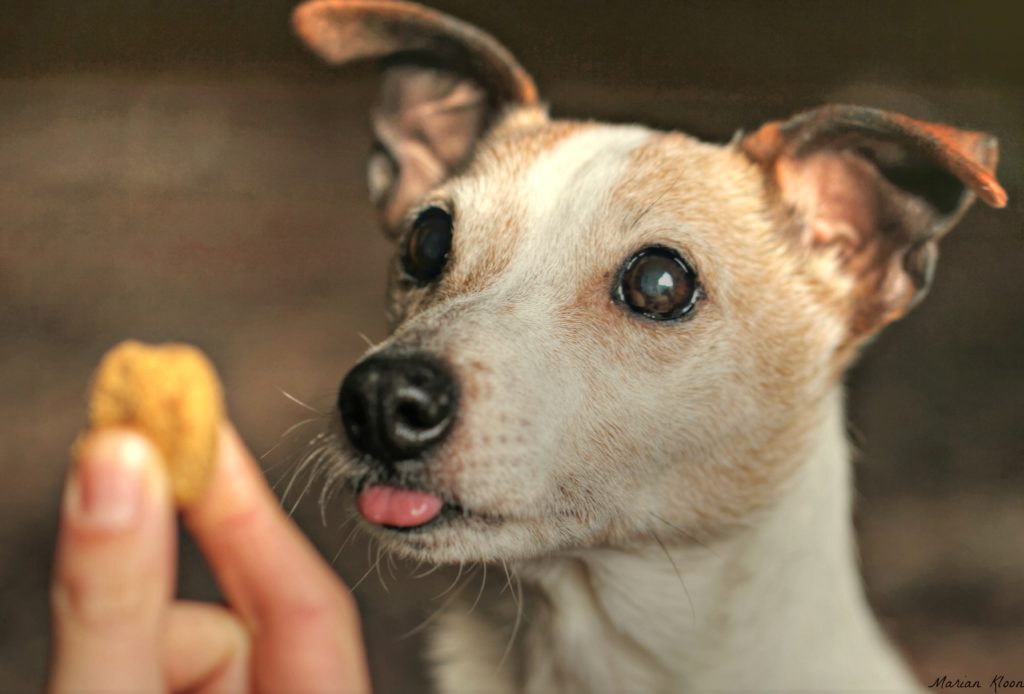
Breed predisposition
The most common breeds affected by this condition are poodles (particularly toy, miniature, and standard poodles), spaniels (American and English), miniature schnauzers, terriers, and golden retrievers. However, other breeds can also suffer from lens opacity.
Types
There are two types of cataracts in dogs:
- Primary. With this type, the disease is either congenital (the puppy is born with this pathology) or acquired (it may develop after an illness). But how can a puppy be born with cloudy eyes? It's very simple: it could have contracted an infectious disease in the womb (along with its mother), suffered from toxins (if the mother was poisoned), or even trauma (if the pregnant animal was beaten, fell, etc.). Primary cataracts in dogs also develop as a result of aging. It progresses through four stages.
- Secondary. Here, cataracts occur alongside another disease. That is, a dog's lens becomes cloudy, but at the same time, the pet also has another disease. Secondary cataracts are a symptom of another pathology developing in the body.
Stages of disease development
By recognizing the symptoms of eye problems in your pet, you can begin treatment, thereby preserving your pet's vision for longer. There are four stages of cataract development in dogs:
| Initial | The very beginning. And it lasts for years. The initial changes are invisible to the naked eye. To confirm that cataracts have begun, a dog needs to undergo an examination at a well-equipped veterinary clinic. |
| Immature | The cataract is starting to worsen, but the veterinarian won't perform surgery at this stage. It will be necessary to wait until the disease progresses to the next stage. Vision is gradually deteriorating. |
| Mature | At this stage, cataract symptoms are already noticeable. Vision is almost completely lost. It is at this stage that surgery is necessary. |
| Overripe |
It's best not to let the disease reach this stage, otherwise the dog's treatment will be complicated. Yes, surgery is possible. But the longer the owner delays, the less likely it is that the pet's vision will be restored. |
How quickly cataracts develop in a dog depends on the individual characteristics and health of the animal, as well as external factors.
Unfortunately, owners often notice their pets' eye problems too late, and they seek veterinary care when the cataracts are already mature or hypermature, making medical treatment impossible. Therefore, the dog is referred for surgery.
Symptoms
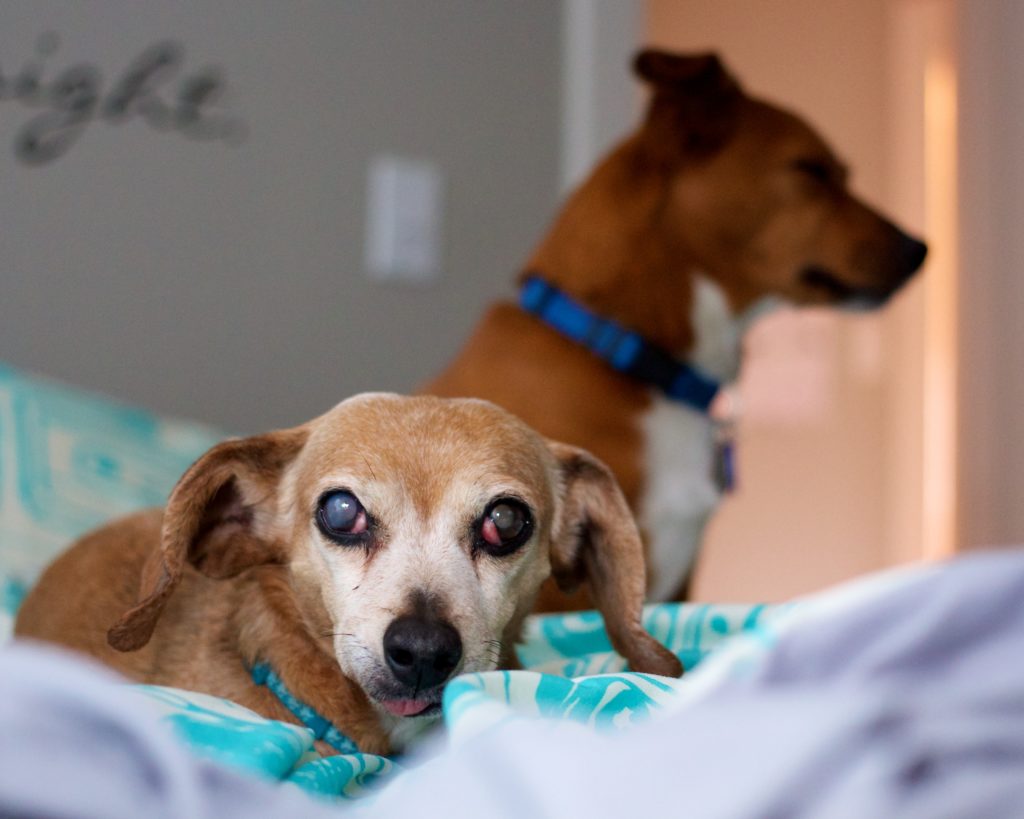
The most obvious and reliable symptom of cataracts in dogs is clouding of the lens itself. When you look into the animal's eyes, you'll see a white circle in the center (where the pupil used to be), like a cataract. This whitish spot can appear in one or both eyes at once.
-
At the onset of the disease, this clouding may be minor. The spot will gradually increase in diameter. Over time, this "cloudiness" will occupy the entire pupil. Essentially, the pupil is a "hole" that can expand and contract in diameter. Light rays entering the eye through it cannot pass through the crystalline lens, which acts as a lens. Normally, the crystalline lens is transparent, so light passes through unimpeded. This results in a black pupil.
-
With cataracts, light is reflected off the cloudy lens, causing us to see a white circle. This is how, even without special equipment, you can tell if your dog is having eye problems.
- Vision is impaired. As a result of this cataract symptom, your dog begins bumping into things. They walk very carefully, unhurriedly, and refuse to play their favorite games.
But don't discount the possibility that your dog may have another eye condition with symptoms similar to cataracts. Therefore, unless you're a qualified canine eye specialist, it's best to consult a veterinarian about the growth.
Using modern diagnostic methods and state-of-the-art medical equipment, veterinary clinic specialists reliably identify the symptoms associated with cataracts. Animals are examined using both traditional and new methods, allowing for a more accurate diagnosis.
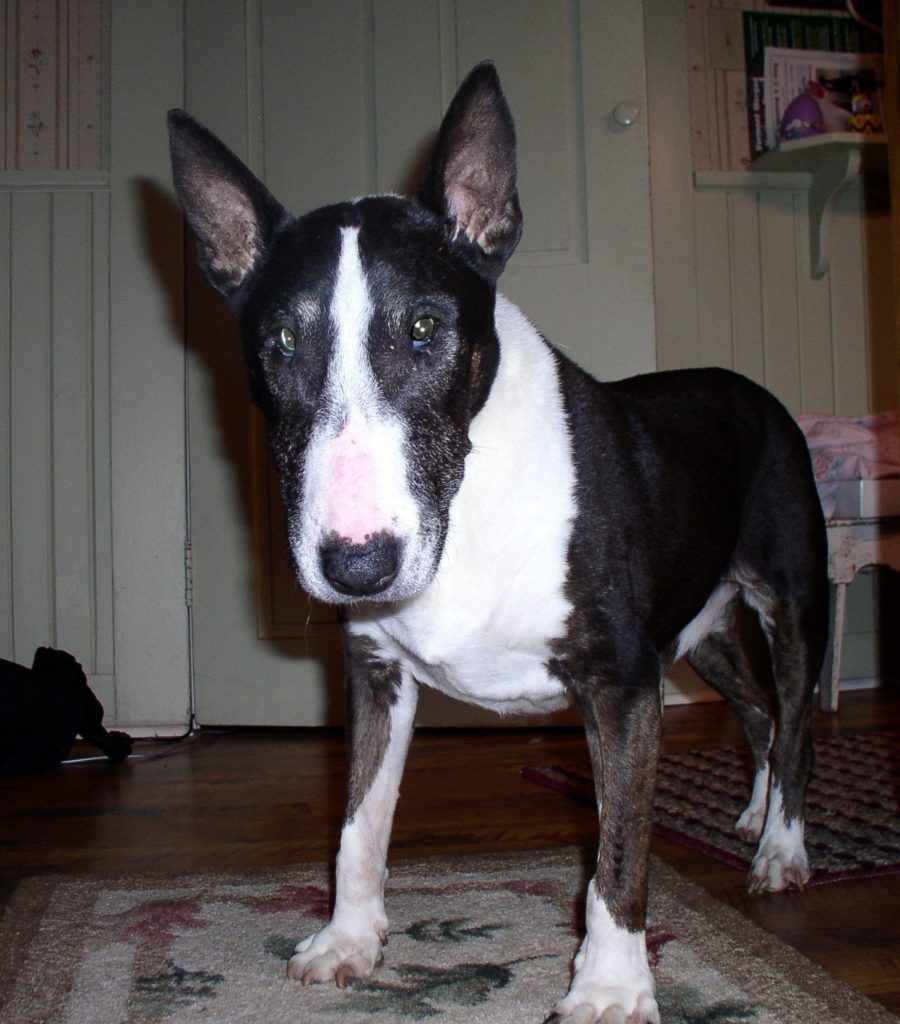
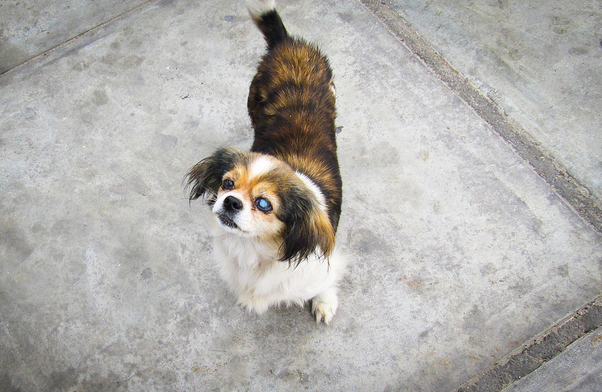
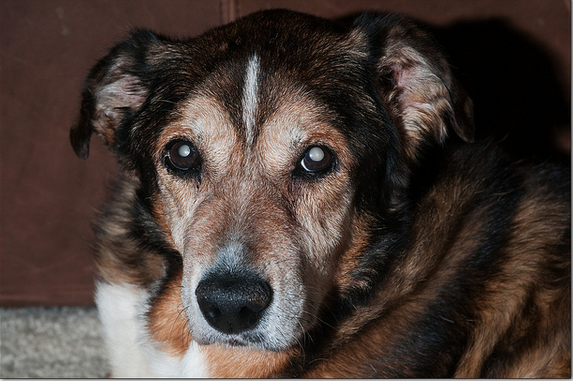
Below are photos of examples of cataracts in dogs of different breeds:
Treatment
How do you treat cataracts in dogs? Unfortunately, treatment in this case is exclusively conservative – surgical.
Medication for cataracts in dogs doesn't offer 100% cure; it only helps slow the process of lens clouding. Medications are prescribed at the very onset of the disease (before surgery is required). Vitamin and enzyme supplements are most often required. There are also a wide variety of eye drops available. However, they still can't completely cure the animal. Scientists are still trying to develop a medication that will stop the clouding process.
The sooner an owner recognizes the first signs of a serious condition and takes their pet for treatment, the greater the chance of timely surgical intervention. Cataract removal in dogs is known to be one of the most technically complex surgeries performed on mucous membranes, and the best results can be expected in the early stages of the disease.
Preoperative preparation
If a partial or complete lens removal is planned, your pet should undergo a complete medical examination approximately four weeks prior to the planned surgery. Since the procedure will be performed under general anesthesia, the veterinarian must ensure the pet's physical fitness for the procedure. This includes blood and urine tests, monitoring for any changes in blood pressure, and assessing the pet's medical history.
If your pet has diabetes, it is extremely important to have all parameters of the blood tested before surgery.
In addition, veterinarians may recommend that the dog be given drops for 14 days to relieve inflammation. eye drops Before surgery. Flurbiprofen, a proven anti-inflammatory cataract eye drop for dogs, is typically used for this purpose.
Cataract surgery in dogs
If we talk about the surgical method of treatment, it is worth mentioning that there are 2 methods.
- One is the oldest. It involves removing the old, cloudy lens and replacing it with an artificial one.
- The second method, called phacoemulsification, produces positive results even in the early stages.
The name is long and somewhat intimidating, but the method is actually not that complicated. And it's a more modern treatment. The gist of it is this:
A small puncture is made in the cornea, and the lens is crushed using ultrasound. The fragmented material is removed through the same puncture (no more than 2 mm). A folded, special artificial lens (IOL, or intraocular lens, to put it simply) is inserted in its place. Once the IOL is in the lens capsule (nothing of the original lens should remain), it unfolds. The animal can see again.
During surgery, it is recommended to use viscoelastics—gel-like medicated solutions injected into the eye to protect it from damage and infection during surgery. The use of additional ocular protection, as well as the treatment of surgical instruments with a viscous substance, improves the safety of the phacoemulsification procedure and reduces the pain associated with it.
Sutures are usually not placed on the eye without a good reason. The puncture gradually "self-seals" and heals in about 10 days.
According to experts, the highest quality artificial lenses are produced by the German company "Acrivet".
The cost of the surgery varies depending on the severity of the disease, the city, the doctor's qualifications, and the veterinary clinic's equipment. However, you shouldn't expect a price below 12,000 rubles per eye. If both eyes are cloudy, the doctor will begin the operation on the one with the least affected eye. The other eye is operated on about three months later. This is because in the early and immature stages, the lens is still elastic, and phacoemulsification is performed with minimal complications.
Treatment without surgery: fact or fiction
Unfortunately, treating cataracts in dogs without surgery is impossible. And, as mentioned earlier, the only way to get rid of cataracts is surgery, during which the clouded lens is replaced with an artificial one, whether successfully or not (depending on various factors).
Prevention
There's no specific way to prevent cataracts in dogs. No diet, super-high-quality food, or regular vitamin supplementation will save your pet from this condition. However, they can significantly reduce the risk of developing eye and other organ diseases.
All you can do is have your pet's eyes examined and visit the veterinarian at least once a year (especially if your dog has a breed or genetic predisposition). It's crucial to research your pet's pedigree. If your dog has family history of cataracts, there's a high risk that your dog will also develop eye problems. Unfortunately, lens opacity in dogs is hereditary.
Cataract test
Hereditary cataracts in dogs are a congenital eye disease caused by a genetic mutation. Signs of the condition can appear at different times, ranging from 1 to 6 years of age. The disease can develop rapidly or gradually, affecting the lens over time. In both cases, it leads to complete blindness.
Since cataract removal in dogs is an expensive and technically complex operation—and, as experts confirm, not always effective—the primary goal of breeders is to prevent the birth of sick animals.
Perhaps in the near future, dog breeders, by gradually removing first sick dogs and then carriers from breeding stock, will completely eliminate the dreaded disease of cataracts in dogs. At least, work in this direction is actively underway.
Therefore, when planning to breed a breed, it is so important to test the dog for cataracts at an early age to exclude the possibility of developing pathology.
Genetic testing for hereditary cataracts is now available in Russia, with laboratories located in Moscow and St. Petersburg.
Using laboratory methods, saliva or blood from an animal's vein is examined.
Any questions? You can ask our website's staff veterinarian in the comments below, who will answer them as quickly as possible.
Read also:
- Eye diseases in dogs
- Ataxia in dogs: what it is, symptoms, and treatment
- Cryptorchidism in dogs: what it is, symptoms, and treatment
- Hemorrhoids in dogs: do they occur, causes, and treatment


15 comments
Svetlana
Good afternoon, we've been scheduled for diabetic cataract surgery. Our dog is a 6-year-old Labrador. Could you tell me how diabetics handle anesthesia? What are the risks?
Daria is a veterinarian
Hello! Regarding anesthesia, a full examination of the animal (heart, kidneys, liver, and other organs) is necessary, as is checking for contraindications. Even a perfectly healthy animal can react to anesthesia; individual intolerance to anesthetic components is possible. Diabetes mellitus itself is not a contraindication for general anesthesia, but caution is required during surgery. The only problem diabetes can cause is poor healing. The process will be longer, so it is imperative to follow all your veterinarian's recommendations during the postoperative period!
Ivan
Hello. How much does cataract surgery cost for a dog?
Sergey
Hello! Is it possible to perform cataract surgery on a 15-year-old dog?
Daria is a veterinarian
Hello! These days, good clinics can do almost anything, but it's unlikely anyone would take the risk with such an elderly patient. The heart is already worn out, and the pet may not survive anesthesia. Since dogs with poor vision (even completely blind ones) can live happily and adapt to such a life, it's not worth the risk. The lens isn't the most important organ, so replacing it isn't a necessary surgery. Rather, it's a matter of aesthetics (some owners don't like cataracts in their pets).
Ksenia Yesenina
Hello! Age is not a contraindication for cataract surgery. Anesthetic risks and surgical preparation are determined on a case-by-case basis. Cataracts not only cause vision loss but also inflammation, which can lead to serious complications, such as glaucoma. Such complications will also require surgery, although more severe for the patient (eye removal or replacement) to save the patient's life. It is essential to see a specialist—an ophthalmologist (the surgeon)—as soon as possible to assess the condition of the eye and the feasibility of cataract surgery.
Victoria
Hello, my dog has cataracts due to diabetes. She moves around the house briskly (as if she can see, we're even surprised sometimes). Her pupils are white, but lately we've noticed that it's like a lump forming in her eye. Is this the stage of her cataracts or is there another reason?
Daria is a veterinarian
Hello! This is most likely due to the progression of cataracts (the lens dries out and shrinks, making it less transparent). There may also be "connective tissue ingrowth" (roughly speaking, it has scarred and become very dense), which is why you'll see a cloudy spot in the pupil. However, for your peace of mind, you can still take your pet to the veterinarian, especially if the entire eye is covered in a cloud. Your pet will navigate the house "by memory," so try not to move furniture or remove obstacles from your pet's path.
Ksenia Yesenina
In diabetes, cataracts progress very rapidly, quickly leading to vision loss and, eventually, eye damage. At the first sign of lens changes, surgery should be performed as soon as possible. Diabetic patients have a good prognosis for vision preservation, but the most important thing is proper diabetes treatment.
Oksana
Hello! Could you please tell me if there's a place in the Khanty-Mansi Autonomous Okrug (Yugra) or Tyumen Oblast that performs cataract surgery on dogs? The doctor couldn't give us an answer. Thank you.
Daria is a veterinarian
Hello! Sorry, but I don't know those details. Post to the city's social media groups, search specialized veterinary groups (VK and Facebook are full of them). They'll be able to recommend a vet and give you some price advice.
Ksenia Yesenina
No. You need to go to Moscow.
Evgeniya
Good afternoon, could you please tell me where they perform cataract surgery?
Dasha is a veterinarian
Hello! Check with veterinary clinics in your city/region to see if they perform this type of surgery. Often, only large cities (or regional cities) have large veterinary clinics where veterinary ophthalmologists perform this procedure. Be prepared for a considerable price, and the rehabilitation course is also quite expensive.
Ksenia Yesenina
High quality only in Moscow and St. Petersburg.
Add a comment