
Cataracts in cats, cats and dogs
Cataracts in cats are a fairly common condition. Our pets, just like us humans, get sick, age, and lose their sight. But they can also be helped if you recognize the symptoms early and seek veterinary attention. A cat won't tell you that their vision has worsened or that something is hurting, but if an owner is attentive to their little one, they'll quickly notice the symptoms characteristic of this condition. cataracts in catsSo how and with what can it be treated? Let's find out.
Content
What is cataract?
Cats, like humans, are also prone to eye problems. Clear, wide-open, sparkling eyes indicate excellent vision. However, if you frequently notice your pet's eyes becoming dull or swollen, as if clouded over, take them to the veterinarian for a checkup. These can be symptoms of a dangerous condition called cataracts in cats, which is difficult to treat and typically focuses on alleviating the condition and preventing eye infection. However, don't delay seeking help—your pet can become completely blind if the condition is left untreated.
A cataract is a clouding of the lens. The crystalline lens is a lens, not glass or plastic like those in glasses, but a "natural" one. Normally, it should be clear and clean so that light can be refracted without distortion. Then the image reaches the retina clearly, and the brain can process it. If the lens becomes cloudy, light cannot be refracted properly, and the image is blurry, if it reaches the retina at all. If the lens is completely cloudy, the animal won't even see blurred silhouettes with that eye.
It is also sad that if the pet is not treated (even if the disease is caused by old age, the vision can no longer be restored), then inflammatory processes in the eye can develop.
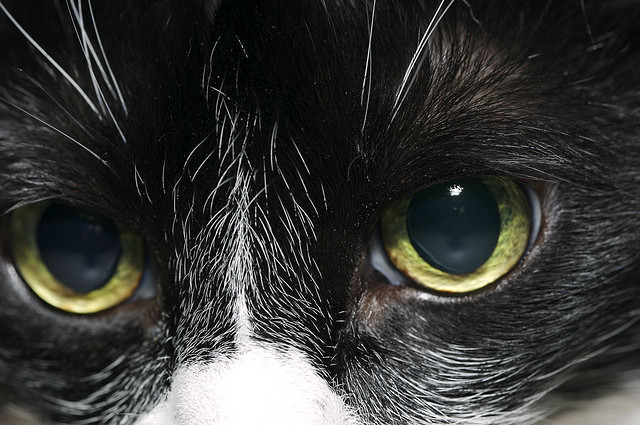
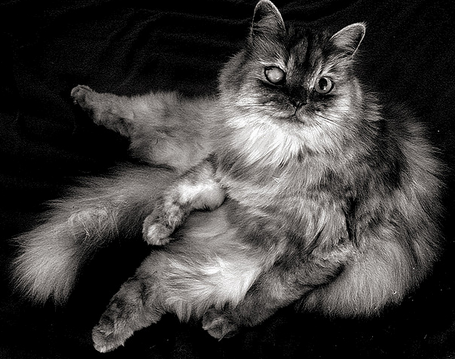
Cataracts develop when metabolic processes disrupt the eye. This leads to cell death and the breakdown of protein, which is found in large quantities in the lens. Developing cataracts in cats, the symptoms of which are initially difficult to detect, remain undisturbed for a long time and do not affect their behavior. Only an attentive owner may eventually notice that their pet's vision has become impaired, and that they rely on touch, smell, and hearing to navigate. The only obvious sign that a cat has cataracts is a change in pupil color.
You can see what cataracts look like in a cat upon closer inspection in this video:
Types of cataracts in cats and dogs
Cataracts in cats, like many other ailments, come in several types:
- congenital;
- acquired.
Congenital cataracts in cats, which are extremely difficult to treat, develop slowly during the embryonic stage. The exact causes are unknown, but most often they are caused by severe poisoning, worm infestations, and infections suffered by the pregnant female, which disrupt fetal development. However, it is possible that a healthy female cat can also give birth to offspring with lens abnormalities.
The acquired form of the disease progresses rapidly and usually occurs as a result of eye or head trauma, infections, or prolonged hormonal treatment. Cataracts in animals that affect both eyes often develop with complicated diabetes. Senile cataracts are the most common form in cats, with more pronounced symptoms and virtually no treatment.
In addition, a distinction is made between a true anomaly, in which both the inner part of the eye (parenchyma) and the lens capsule are damaged, and a false anomaly (pseudopathology), when the surface of the eyeball becomes inflamed and covered with a cloudy grayish coating.
By stage of development
According to the stage of development of the disease, the illness is classified into the following stages:
- Initial. When it's just beginning, clouding occurs at the edges. Vision deteriorates slightly, and the pet can't see clear edges, but can still distinguish objects.
- Immature. The center of the lens becomes cloudy. Vision deteriorates, images become blurry.
- Mature. The entire lens becomes cloudy. The animal can only distinguish light or dark now; it can't see any objects, not even blurry outlines.
- Overmature. The final stage, when the animal not only no longer distinguishes between day and night, but also sees nothing at all. The pet's lens deteriorates, disintegrating into fibers.
Reasons for occurrence
The pathology occurs when a large mass of organic (protein, cholesterol, fat) and inorganic (phosphorus, potassium) substances accumulates in the lens, accompanied by a decrease in fluid volume. These disturbances cause the cells to degenerate, and the resulting gaps in the capsule become filled with disintegrated material, which thickens and becomes encrusted with epithelial cells.
Of course, a variety of factors can trigger and initiate this abnormal process. Possible and most common causes of cataracts in cats include:
- Old age. The most common cause. For the lens to remain transparent, it requires continuous and undisturbed metabolic processes. It also requires a specific balance of proteins, minerals, and water. As metabolism slows with age, the lens begins to cloud.
- Congenital. This occurs if a pregnant cat has had infectious diseases, parasites, or has been treated with medications without consulting a veterinarian.
- Traumatic. This could be either a blow and bruise or a contusion.
- Metabolic disorders. It's the cause of so many diseases in animals! These include obesity, urolithiasis, and diabetes mellitus, and endocrine diseases. Cataracts are no exception; they also develop as a result of metabolic disorders. Therefore, even a young pet can begin to experience changes in the eye if it is fed an unbalanced diet, alternating natural food with commercial food.
- Using medications too long or incorrectly is a bad idea. That's why you shouldn't self-medicate. The chances of harming your pet are far greater than the chances of curing it yourself.
- Other eye diseases in cats and dogs. They spread to the lens, damaging it. For example, a banal increase in intraocular pressure (glaucoma) leads to injury to the lens, as a result of which cataracts develop in cats and dogs.
Predisposition to cataracts depending on breed
Persian and Exotic Shorthair cats are the most susceptible to lens clouding. The condition is less common in British Shorthairs and Scottish Folds. However, mixed-breed cats (i.e., non-pedigree cats) are rarely affected by cataracts.
Old pets, after 8-9 years of age, also begin to experience similar changes.
Symptoms and treatment
The symptoms of cataracts in cats are hard to miss. Just look into your pet's eyes. When the lens becomes cloudy, a milky spot appears instead of the black pupil (which is actually an opening whose diameter is changed by the muscles). The clouding is immediately noticeable, so regardless of your pet's age, examine them yourself and don't forget to visit your veterinarian.
Treatment of cataracts in cats and dogs must be carried out under the supervision of a veterinarian! No "grandmother's" methods based on "grandfather's advice" involving herbs, bat's eye, chicken feet, or red dragon's saliva. These miracle cures won't help, and their use will only harm the animal. Before giving your pet anything, consult your veterinarian!
Typically, a veterinarian prescribes special eye drops in the early stages. However, other medications are needed in addition to eye drops, so a veterinarian develops a comprehensive treatment plan. They identify the cause and, if possible, address it and its consequences. If a metabolic disorder was present, the animal's diet is changed. If diabetes has also developed in a cat or dog, that is also addressed. Worms are eliminated. Underlying inflammatory processes are identified. In short, a qualified veterinarian won't simply prescribe eye drops; they will try to rule out anything that could lead to a relapse.
If eye drops don't help, or if your cat's cataracts are too advanced, surgery may be the answer. Not every veterinary clinic offers microsurgery. It requires modern equipment, and the veterinarian must be experienced. Therefore, if your pet requires surgery, you'll unfortunately have to travel to a larger city where such surgery is available.
Unfortunately, eye drops and vitamins only slow the progression of cataracts in cats, but they cannot completely cure them. Surgery is rarely the solution.
It is performed under general anesthesia, as various complications can arise. The postoperative recovery period consists of medication and close observation of the pet: avoid bright light and ensure the cat does not hit its head, scratch its eye, etc. During surgery, it is possible to remove part of the lens or completely replace it with an artificial one.
Cataract prevention
Basic rules for preventing cataracts in cats:
- Prevent your pet from getting injured.
- Be mindful of what and how you feed your pet. Avoid alternating or mixing dry and natural food. Don't feed your pet only protein. Pay attention to the balance of protein, carbohydrates, and fat in your pet's diet. Water should always be clean.
- Visit your veterinarian at least once a year. Preventive checkups and blood tests can help detect any underlying conditions early. Diabetes in cats can be devastating. They can go blind very quickly, but unlike people with diabetes, it's possible to cure pets! The key is to begin treatment as early as possible and not let the disease progress.
- Deworm regularly. Vaccinate according to age.
- Do not self-medicate! Give any medication to your pet only after consulting a veterinarian. Do not exceed the dosage or extend the course of treatment on your own.
- Be sure to treat your pet if his eyes are sore (conjunctivitis the cat has, keratitis or something else, it doesn’t matter, if you don’t treat your eye now, you can lose it very quickly).
If, despite following all animal care instructions, cataracts still develop in a cat, home treatment is only possible with regular veterinary monitoring and strict adherence to prescribed therapy.
When only one lens is obscured, things aren't so dire. And even a cat with cataracts in both eyes isn't fatal. After all, even completely blind cats can navigate using their tactile senses, an excellent sense of smell, and exquisite hearing. With the care and support of their owners, animals quickly recover from vision loss and adapt to new conditions, living out the rest of their lives peacefully.
If you have any questions about the symptoms and treatment of cataracts in cats, ask them in the comments, and we'll be sure to answer them!
Read also:
- Eye diseases in dogs
- Eye drops for dogs
- Elevated Creatinine in a Cat: What Does It Mean and What to Do?


17 comments
Angelina
My 13-year-old cat has cataracts. The doctor said the process is irreversible and I should use Taufon drops. It's getting worse, should I continue using Taufon drops?
Tatyana Shmonina - veterinarian
Hello! You shouldn't continue using the medication if it's making things worse.
Xenia
We have a kitten 2.5 months old
She has a white film on her eyes, please tell me what to do?
Daria is a veterinarian
Hello! You need to go to the clinic and get checked. It could simply be keratitis, or a symptom of an infection (the baby probably hasn't been vaccinated), or maybe it's the third eyelid that's positioned this way, and you're just misunderstanding and describing it. They'll prescribe either drops and antibiotics, or antivirals and serums, or surgery. Your vision also needs to be assessed. It's possible your vision has deteriorated.
Natalia
My kitten is 2.5 months old. One eye has become slightly cloudy. We went to the vet today. He said it's a congenital posterior cataract. The other eye is developing too. I told him the only solution was surgery. He said medication wouldn't help and didn't prescribe anything. We live in Ulan-Ude, where they don't perform such surgeries. What should we do? The kitten is just starting out. What eye drops should I use? Where can I get these surgeries performed?
Daria is a veterinarian
Hello! How does it become cloudy? Does it start in the center of the pupil and gradually spread to the entire pupil? Or does the entire cornea become cloudy and whitish? I can't tell you about surgical sites, as I don't know. The easiest way to find groups in your area on VK or Facebook is to find veterinarians in your area. Maybe someone can recommend something. Is there anything else? Is it just cloudy? What tests have been done?
Raisa
Hello. My kitten is 3 months old, and one of his eyes is completely cloudy, with no visible pupil. He was prescribed Dorzolamide and Timolol eye drops. His eye was very large, but now it's gotten smaller. Some layers are peeling off, and a bubble has appeared in the middle where the pupil should be. The doctor says he needs to have his eye removed when he's 5 months old. Could you tell me if it can be cured, or at least not removed?
Dasha is a veterinarian
Hello! It all depends on the extent of the eye damage. Your veterinarian has seen your pet and assessed the situation. Removing the eye is only possible if there is no damage to the surrounding tissue (one eye will dry out and that's it). However, even then, there's a risk that the tissue will eventually become inflamed again and spread to surrounding tissue. Therefore, it's best to remove the eye, but in some cases, the inflammation can be stopped and the eye can be preserved.
Raisa
Dasha, I'm sorry to bother you again. Maybe you can tell me what I can try to treat it with. I sometimes apply tetracycline, but I probably shouldn't. They also recommended Kornegel ointment. Maybe you can tell me something. I need to try everything. I really want to help save my eye.
Irina
Our kitten has cloudy eyes, is this a cataract?
Dasha is a veterinarian
Hello! Why cataracts right away? Or could it be keratitis? Or some other eye disease? Until the animal is examined in person by a veterinarian, a diagnosis, much less treatment, can't be made! It's impossible to tell what's wrong with a kitten based on a description like this. We need to know what triggered these changes. It's necessary to take a swab of the eye and rule out infectious diseases (like chlamydia, mycoplasmosis, and others). Only based on these tests can we determine the appropriate treatment for the little one.
Sofia
Our little whisker is 6 years old. Yesterday, we noticed a clear oval in his pupil. He constantly squints when he's in a bright room. He had surgery on that eye to close his third eyelid. Could you please tell me if these surgeries are performed, and could it be a cothoracic lesion?
Dasha is a veterinarian
Hello! Of course, third eyelid surgery is performed: removal, suturing, and cosmetic procedures. But there must be a medical reason for this. Regarding the spot, you should see a veterinarian for an in-person examination. It's too early for cataracts (they rarely develop before age 8). An examination is necessary; there may be some inflammation, and prompt treatment can save both the eye and your pet's vision. Don't delay your visit to the vet. Even if it is a cataract, your veterinarian will prescribe the right treatment for your pet.
Alexandra
My cat is 16 years old. A week ago, I noticed that the pupil in her left eye is normal, black, and the right one has a red tint. Today, the right pupil is constricted and the left one is dilated. She constantly covers the eye with the constricted pupil. Does this mean it hurts? What should I do? How can I treat it?
Dasha is a veterinarian
Hello! Your cat is getting older, so age-related changes (including those in the eyes) are not uncommon. However, the fact that her pupils are different sizes is a reason to consult a veterinarian (if you live in a large city, it's best to see a veterinary ophthalmologist right away). Often, this isn't related to the eyes themselves, but to changes in the brain. However, the fact that you noticed a red tint could indicate inflammation or a hemorrhage in the retina (meaning an in-person examination by a veterinarian is essential in any case). Has your pet had any recent injuries? Perhaps she fell or hit her head? Perhaps she ran into something that didn't quite make it? Perhaps something fell on her? Has she been sick recently? Perhaps she had an infectious disease that caused complications in the brain? It's a long road of guesswork. Only an in-person examination will help determine exactly what's wrong with your pet.
Dmitry
Good afternoon !
Our cat Alisa (8 years old) was diagnosed with mature cataracts in her right eye and beginning to develop in her left.
Are there any drops that can stop development and somehow help the animal?
The veterinarians we contacted said the drops were completely useless.
Dasha is a veterinarian
Good afternoon. If the veterinarians who examined your pet in person have all concluded that eye drops won't help, your only options are surgery (lens replacement) or simply accepting the cloudy eye. Your pet is elderly. These are most likely age-related changes, which, unfortunately, are the most difficult to treat. Unfortunately, there's no magic cure that will immediately halt the progression of such conditions. Using the prescribed eye drops will help slow the changes somewhat (the lens will become completely cloudy later than without treatment). However, surgical intervention is unlikely to be an option.
Add a comment