
Catalan Shepherd
The Catalan Shepherd is a long-haired, medium-sized herding dog native to the Spanish Pyrenees. For centuries, it was used for herding livestock and guarding. Today, it has also found use in other areas. It has a pleasant personality and exceptional intelligence. It requires simple but regular grooming.
Content
Breed characteristics
The Catalan Shepherd is a devoted companion who will happily accompany you on walks and participate in any family activity. While they are considered a "one-person dog," most owners report that they get along well with all family members, including children.
|
Original title |
Chihuahua |
|
Country of origin |
Spain |
|
The first mention of the breed |
18th century |
|
Weight |
16-18 kg |
|
Height (at withers) |
45-55 cm |
|
How long do they live? |
12-14 years old |
|
Price (with pedigree) |
10,000 – 35,000 rubles |
Based on information provided by Catalan Shepherd breeders, we have compiled a table of characteristics that describes the representatives of this breed in detail:
|
Characteristic |
Level |
Points |
|
Size |
|
3 out of 5 |
|
Intelligence |
|
4 out of 5 |
|
Training |
|
5 out of 5 |
|
Noisiness |
|
3 out of 5 |
|
Health |
|
4 out of 5 |
|
Picky eating habits |
|
3 out of 5 |
|
Activity |
|
4 out of 5 |
|
Aggressiveness |
|
2 out of 5 |
|
The need for communication |
|
4 out of 5 |
|
Molting |
|
4 out of 5 |
|
Attitude towards children |
|
4 out of 5 |
|
Attitude towards strangers |
|
3 out of 5 |
|
Price |
|
2 out of 5 |




History of origin
The historical region of distribution of the Catalan Shepherd is the Pyrenees foothills in the Catalonia region of Spain. It was from here that the breed spread to other mountainous regions and is still used today for herding animals, primarily sheep.
It is difficult to say when exactly the Pyrenean Shepherds developed into the form we know today. In appearance, they resemble briards. It is quite possible that they are related breeds. Also, they could have been bred by Pyrenean mountain dogs, Pyrenean Shepherds and others.
In the 18th century, small shepherd dogs began to be actively bred in Catalonia. In 1915, the first Catalan Shepherd was entered into the Stud Book. By 1923, four specimens of the breed had already been registered. In reality, there were many more dogs, but no shepherds or farmers were interested in showing or registering their helpers.
The Catalan Shepherd Dog was the first Spanish breed to be officially recognized by the Federation Cynologique Internationale (FCI) in 1954.
Catalan Shepherds rarely appeared at shows even after their recognition. In 1965, they were saved from extinction only thanks to a previously established Madrid kennel, based in the Animal Science Department of the Veterinary Faculty of the University of Madrid. In 1974, at a show in Paris, the Catalan Shepherd Ungos de Laquetania won the prestigious title of Champion. This triumph attracted Spanish and, later, some foreign breeders to the breed.
Description of the breed
Exterior
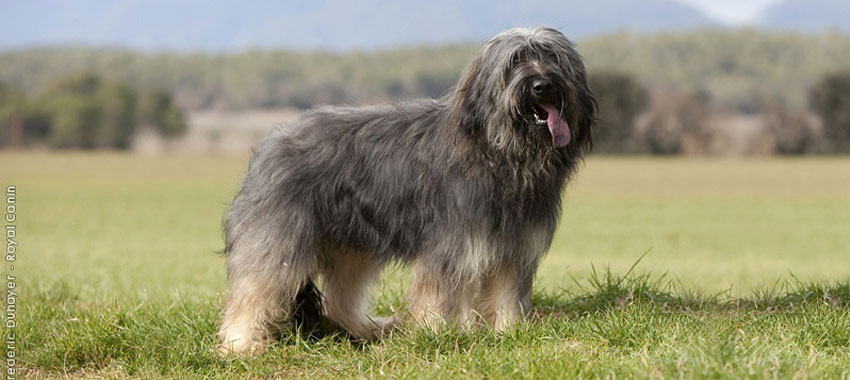
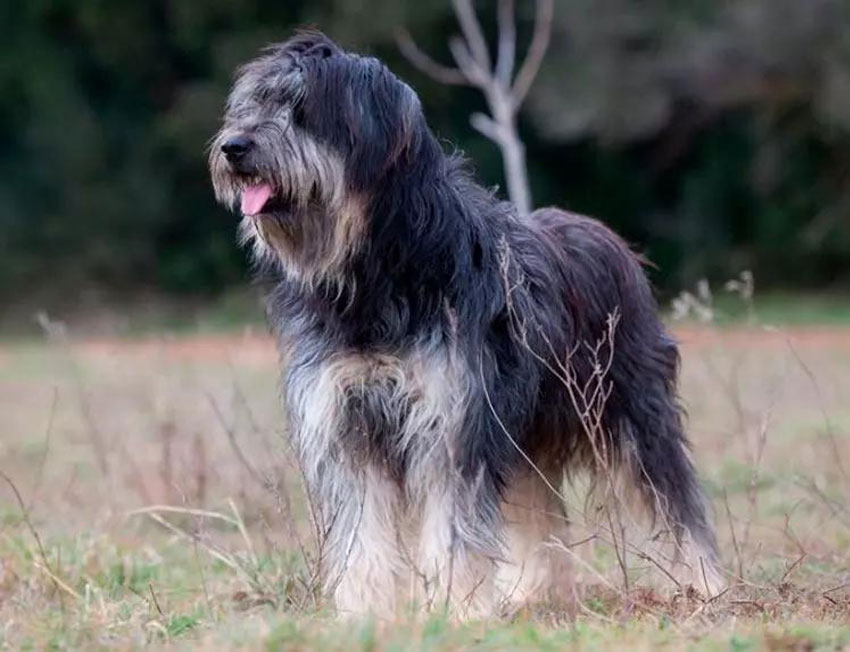
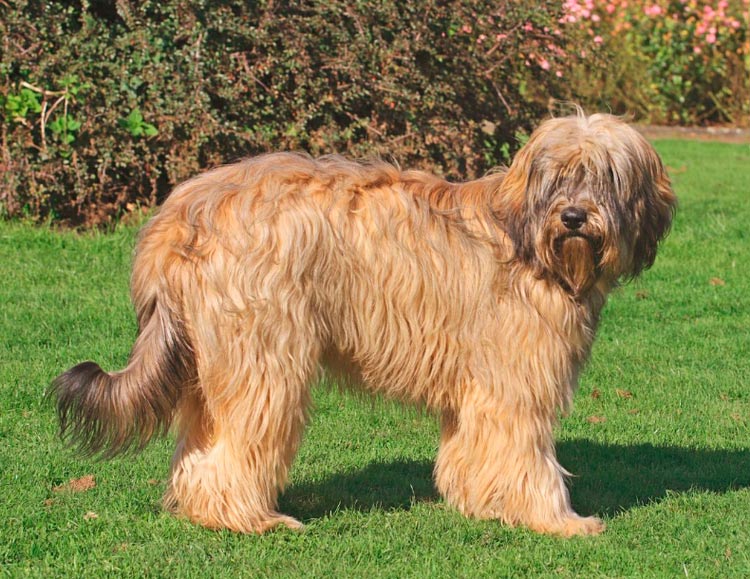
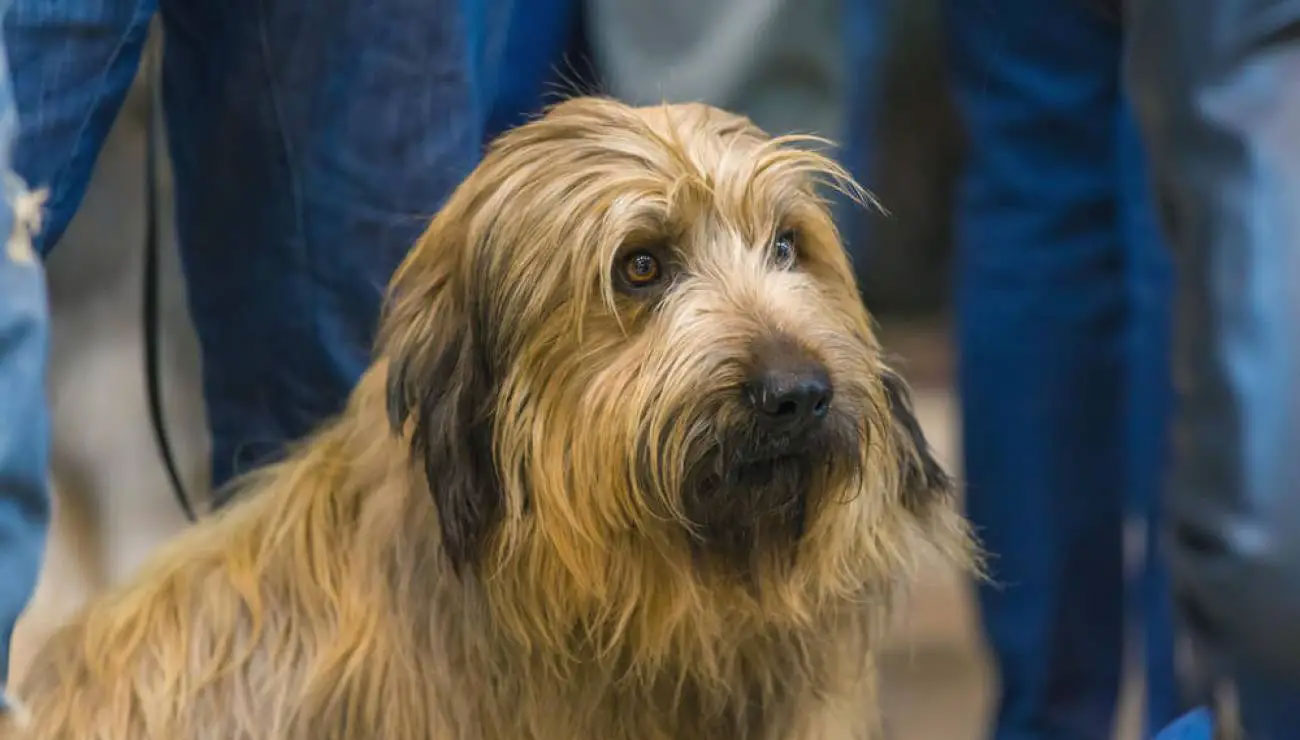
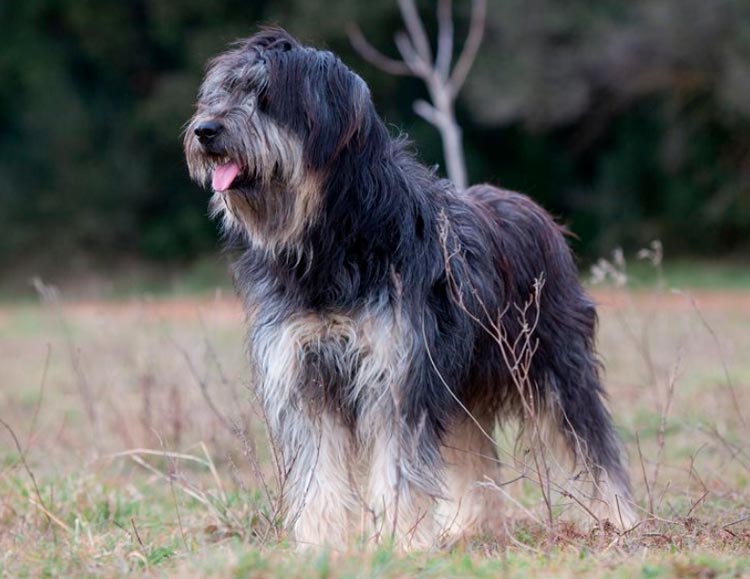
In appearance, the Catalan Shepherd is a well-balanced dog of medium height, strong build, somewhat elongated format with long, beautiful hair.
Height at withers:
- Males - 47-55 cm.
- Bough - 45-53 cm.
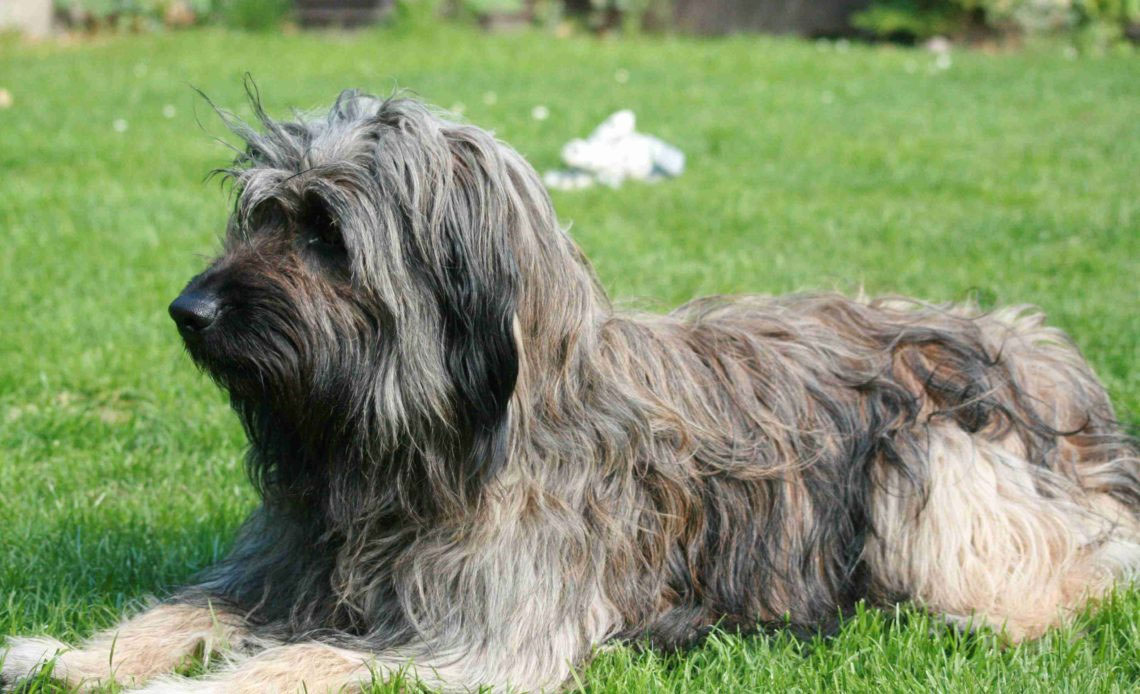
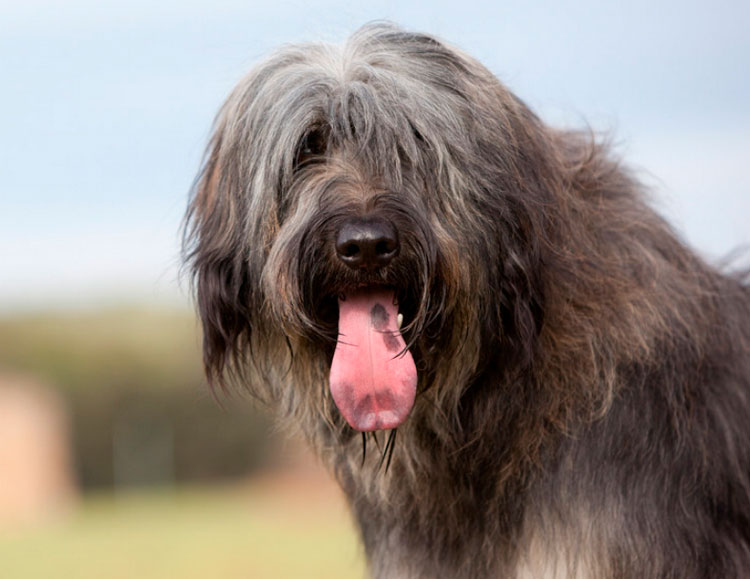
The head is round, massive, proportional, and wide at the base. The length of the skull to the length of the muzzle is in the ratio of 4:3. The skull is slightly domed with a well-defined frontal groove and developed superciliary ridges. The stop is pronounced. The muzzle has a straight bridge, a rounded outline, and the shape of a truncated cone. The earlobe is black. The lips are thick, almost straight, thick, and dense. The upper lip covers the lower lip, but does not form flews. The color of the lips and palate is black. The teeth are white, large, and strong. The bite is scissor-like. The eyes are round, large, well open, expressive, and dark amber in color. The eyelids are black. The ears are thin, pointed, hanging, triangular, set high, and close to the head. In some areas, they are docked to give them an erect shape.
The neck is strong, powerful, relatively short, and mobile. The body is strong, elongated, and well muscled. The withers are prominent. The back is straight, the croup is level with the withers or slightly lower, and slightly sloping. The chest is deep and wide. The ribs are sprung. The belly is slightly tucked up. The limbs are straight, dry, strong, vertical, and parallel. The hind legs are very muscular, vertical, and have large bones. The paws are oval, with hard, elastic, black pads. The toes are webbed. The claws are rounded, dark, and strong.
The tail is set low and can be long or short (less than 10 cm). Some Catalan Shepherds are born tailless. Working dogs may have docked tails.
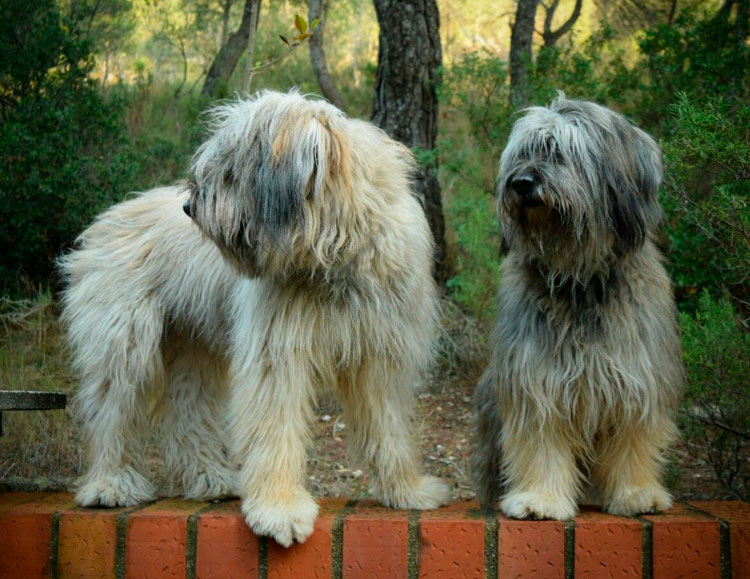
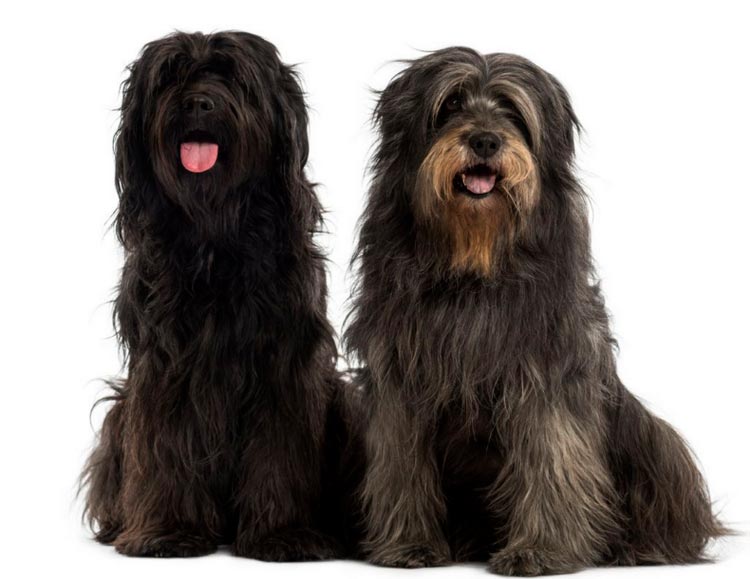
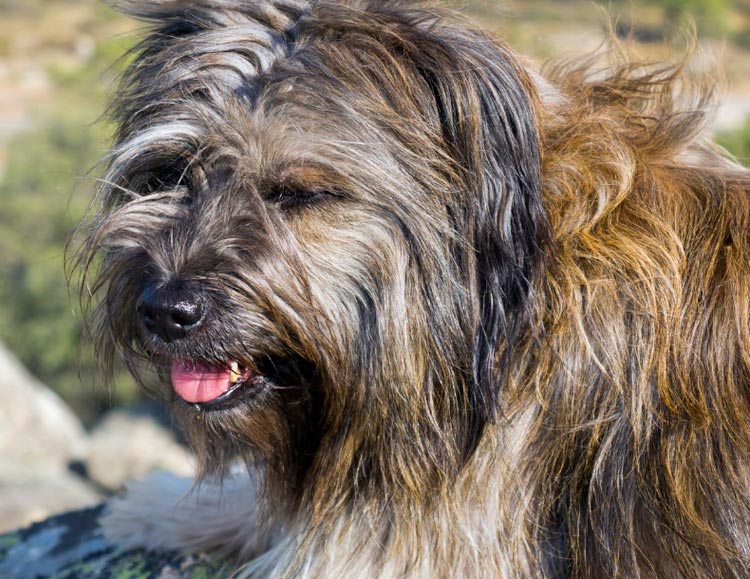
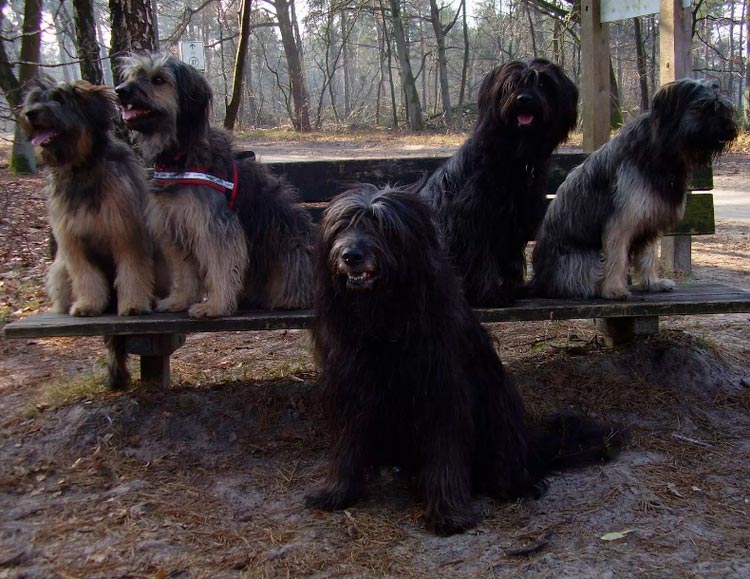
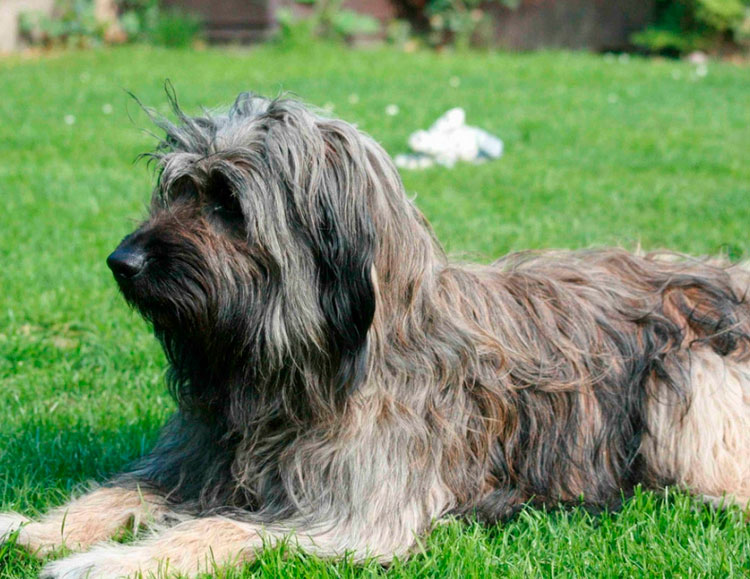
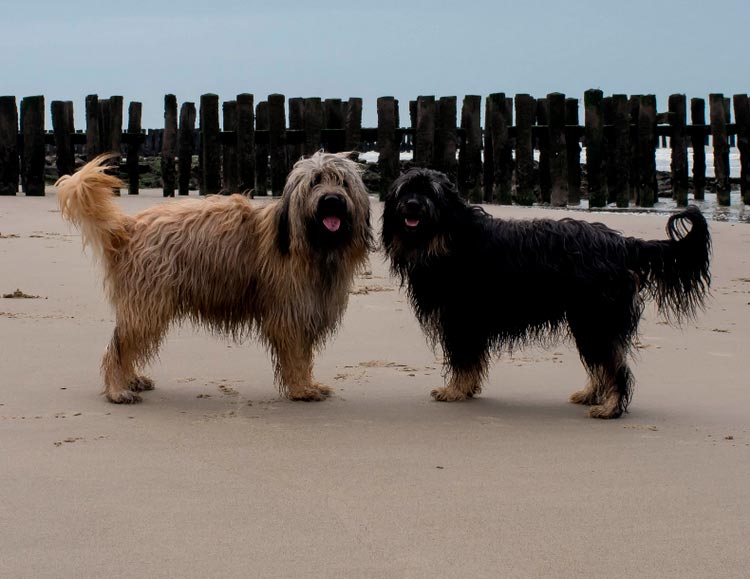
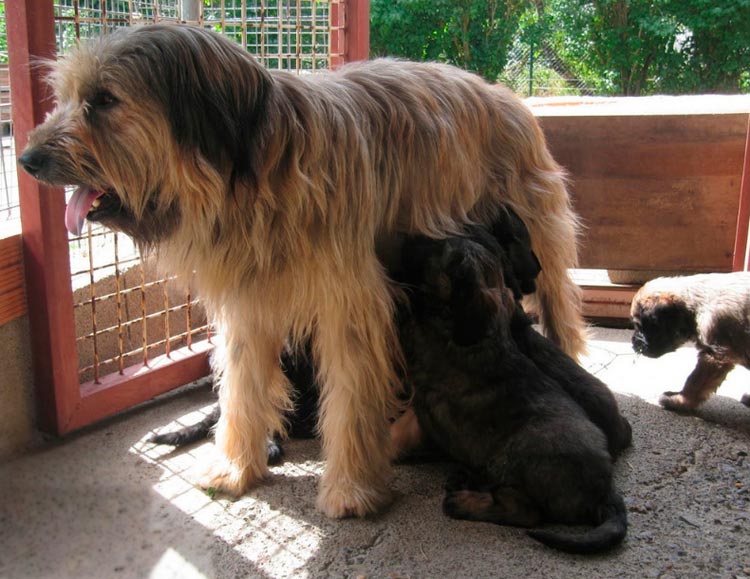
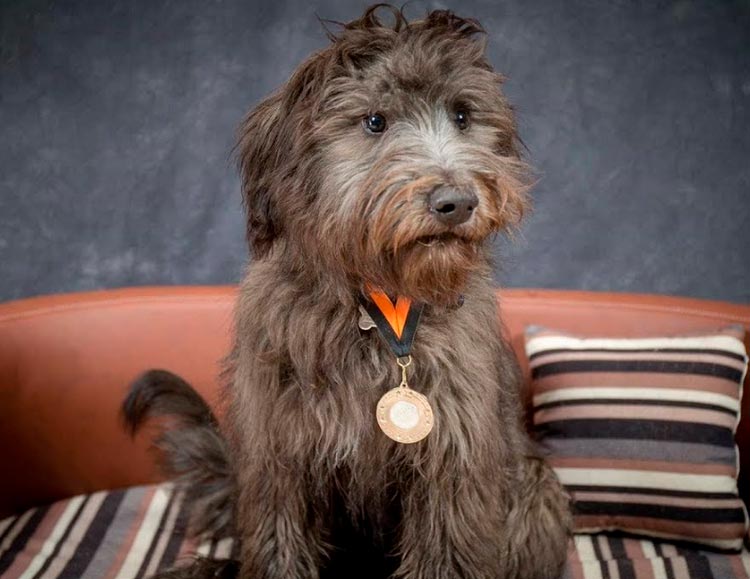
The coat is long, slightly wavy, and lies flat. The outer coat is coarse. The undercoat is dense and well-developed. The hair is thicker on the back of the body. On the head, it forms a mustache, beard, and eyebrows that do not obscure the eyes. The tail and limbs are also densely covered. The coloring of Catalan Shepherds is unusual. The tips of the hairs on certain parts of the body differ, creating a distinct shade. The dominant colors are:
- red;
- pale yellow;
- sable;
- black;
- black and white (the dog looks gray);
- grey.
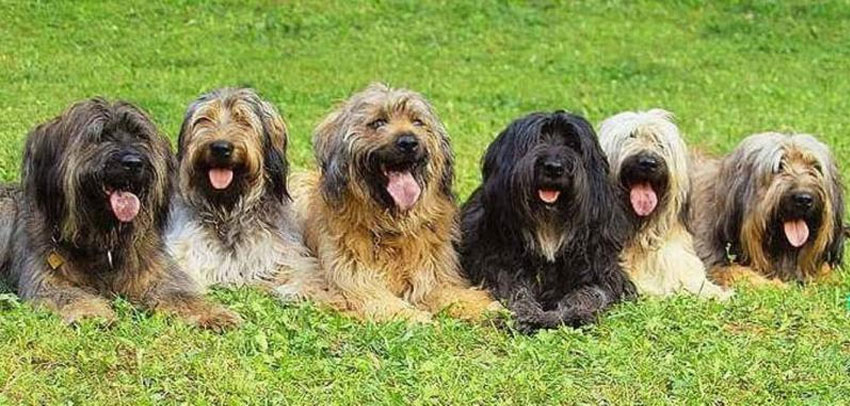
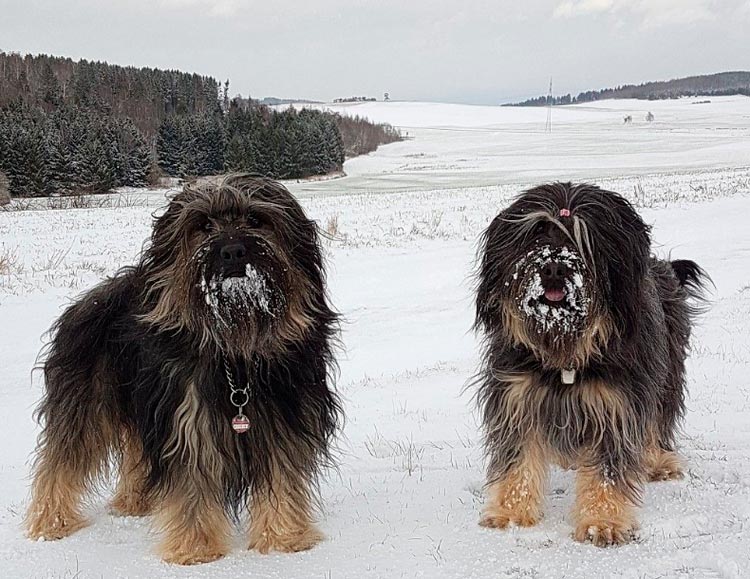
There are dogs whose coats feature black, fawn, and red, each dominating in one or more areas. These Catalans appear black and tan. White markings are not permitted. A few white hairs on the chest and toes are permitted.
Character and behavior
The Catalan Shepherd is a balanced, calm, and intelligent dog. Intelligent is perhaps a more appropriate description. At the same time, it is very courageous, but not reckless, and is selflessly devoted to its owner, and if it works as a shepherd, to the flock entrusted to it, which it will never abandon to its fate. The Catalan Shepherd is moderately energetic. It is very agile and active when needed, but otherwise, it will not run around in circles.
One of the breed's strengths is its exceptional intelligence and ability to make independent decisions. The Catalan Shepherd is a very intelligent dog, easily trained, and obedient.
Catalans are wary of strangers, with obvious suspicion and disapproval, which can make them appear unfriendly. They only show aggression toward strangers in cases of obvious danger. Catalans are attentive, alert, and cautious. They are very hardy and serious in their work. They can sometimes be overly independent and tend to make their own decisions. In everyday life, they are obedient and responsive to their owner. Depending on the circumstances, they can display extraordinary courage, but should not be shy or timid. When well socialized, they respond appropriately to any changes in their environment.
Purpose
Smart and independent, Catalan Shepherds can tend to a flock for long periods of time without human assistance. They are surprisingly alert, do not allow animals to wander off, and can quickly locate stray sheep and herd them back to the others. They also make vigilant guard dogs.
During the Spanish Civil War, Catalan Shepherds served as messengers and guards. Today, in their homeland, these dogs continue to assist farmers, are kept as family companions, successfully perform many tasks, and participate in various sports:
- agility;
- obedience;
- grazing and others.
Content Features
Conditions of detention
The Catalan Shepherd is very hardy and undemanding. It tolerates all weather conditions, including heat and cold. In extreme conditions, it can easily survive on a small amount of food. Of course, this doesn't mean you should feed your beloved dog whatever you want and keep him chained up.
The optimal option for a Catalan Shepherd is life in the yard of a private house or on a farm, where it will have work to do.
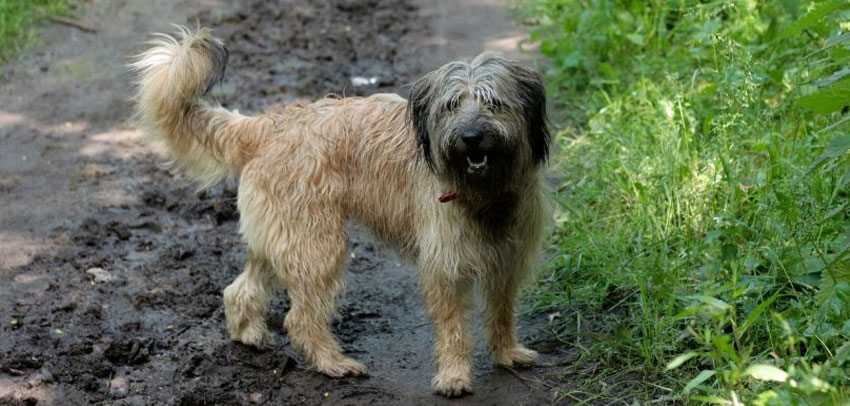
The Catalan Shepherd requires ample exercise, including long walks, games, and training. Owners who live with their Catalan in an apartment will need to pay special attention to walking.
Care
The frequency of grooming depends on the dog's living conditions. Working dogs are usually brushed much less frequently than domesticated dogs. If a Catalan Shepherd lives indoors or in an apartment, daily brushing is recommended. The same applies to bathing. Outdoor dogs are bathed very rarely, while domesticated dogs should be washed every 1-2 months.
Seasonal shedding is very profuse. First, the front part of the body sheds, followed by the back. After 1-1.5 months, with regular brushing, the coat becomes uniform.
Owners should also keep the dog's eyes and ears clean, trim its nails regularly, and accustom the shepherd to weekly teeth brushing from puppyhood.
Nutrition
To ensure proper puppy development and the ability of an adult dog to perform well and produce healthy offspring, owners must provide high-quality, balanced nutrition. A lack of vitamins and essential micronutrients can lead to various diseases and disruptions in the functioning of various organs and systems, which will inevitably impact both the animal's well-being and appearance.
Depending on your preferences and available resources, the Catalan Shepherd can be fed either specially prepared natural food or commercial dry food, a wide selection of which is available on the domestic market today.
When eating natural food, it is important to follow these rules:
- choose high-quality and safe products for your dog;
- do not leave food leftovers in the bowl (the dog must eat the entire portion);
- maintain the proportions (70-80% meat and meat products, the rest - cereals and vegetables);
- vary the dog's diet depending on physical activity and health status;
- When calculating the daily norm, take into account not only the portions, but also the treats offered to the dog during training.
When feeding industrial feeds, it is recommended:
- buy premium, super-premium or holistic class food for your pet;
- provide the animal with round-the-clock access to water;
- do not mix dry food and natural food in one bowl (it is permissible to give them at different feedings);
- do not mix feeds from different manufacturers;
- transfer the dog from one food to another gradually over the course of a week;
- Consider the age and health of the animal when choosing the optimal diet.
Health and life expectancy
Most Catalan Shepherds are healthy, hardy dogs. Life expectancy is 11-13 years. There is no data on breed-specific diseases due to the lack of research and small population sizes.
Where to buy a Catalan Shepherd puppy
Catalan Shepherds are common in Spain, especially in mountainous regions, where they are still used for their original purpose. Kennels also exist in France, Italy, Germany, and several other countries. Data for Russia and the CIS is not available. In Spain, dogs from kennels cost around 1,000 euros.
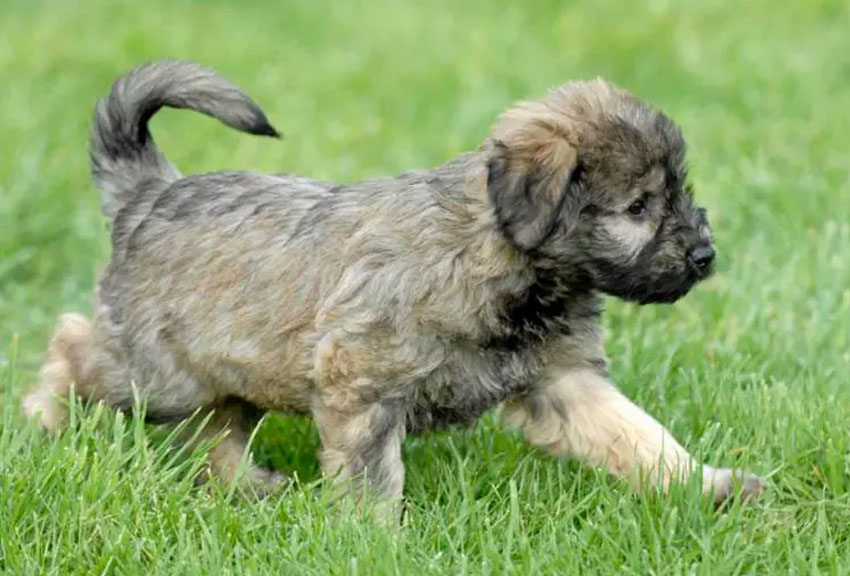
Puppies born on a farm from working dogs are much cheaper, but are often not registered anywhere and do not have documents of origin, essentially being mongrel dogs.
Photos of representatives of the breed
You can see photos of Catalan Shepherd dogs in the gallery.
Video about the Catalan Shepherd dog breed
Read also:



Add a comment