
Cardboard scratching post for cats
In the wild, cats use trees, grass, rocks, and other surfaces as "manicure tools" to help them wear down their claws. At home, scratching posts are used for this purpose. They can be made of natural and artificial materials and vary in size, shape, and design. Cardboard scratching posts are considered the most inexpensive and easy to make.
Content
About cardboard scratching posts
Despite the common perception that it's short-lived and primitive, this option is still worth considering. There are several reasons for this:
- Affordable price. You can buy the device at any pet store for 300-400 rubles.
- Naturalness. Cats, although not as sensitive as dogs, are able to distinguish materials by smell and react negatively to synthetics.
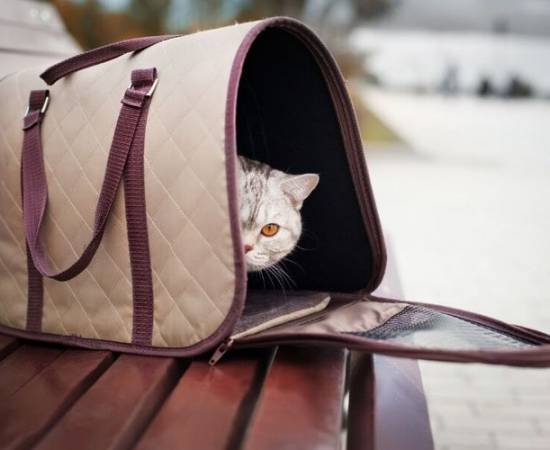
- Portability and lightweight. A cardboard board/bed is convenient to take with you on trips. Your cat will be less stressed during travel and will also adjust to a new place more quickly with something with a familiar scent at hand.
- DIY option. As an alternative to store-bought models, you can make your own scratching post. All you need is some cardboard, scissors, and glue.
Another misconception often voiced by opponents of cardboard scratching posts is that they create debris. In reality, the pieces of paper don't fly off the base during the grinding process; they only partially break off. This creates a fluffy effect, and the longer the structure is used, the fluffier it appears.
When scratching, the claws do not get stuck in the cardboard, which eliminates the possibility of microtrauma and other discomfort for the animal.
Types of cardboard scratching posts
Based on experience and feedback from cat owners, the following types of scratching posts are the most popular:
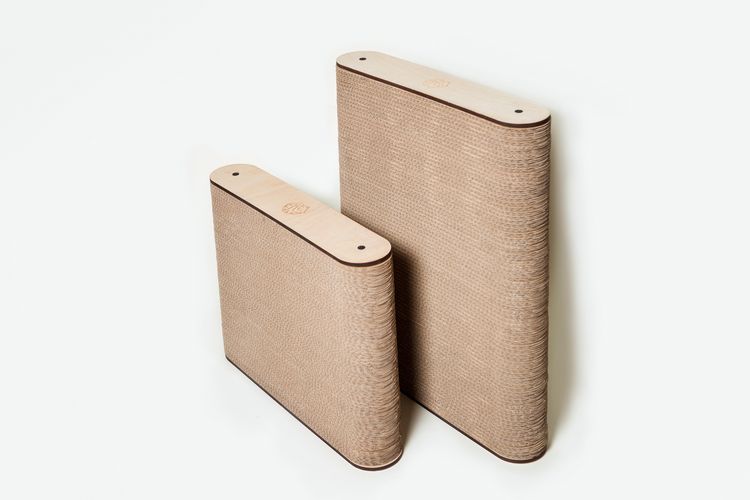
- Wall-mounted. Can be single or corner. It doesn't take up much space, is compact, and doesn't get in the way. It attaches to any vertical surface, from doorframes to the back of a cabinet or sofa. Depending on the cat's age and size, it can be placed directly on the floor or raised higher to allow the animal to stretch out fully.
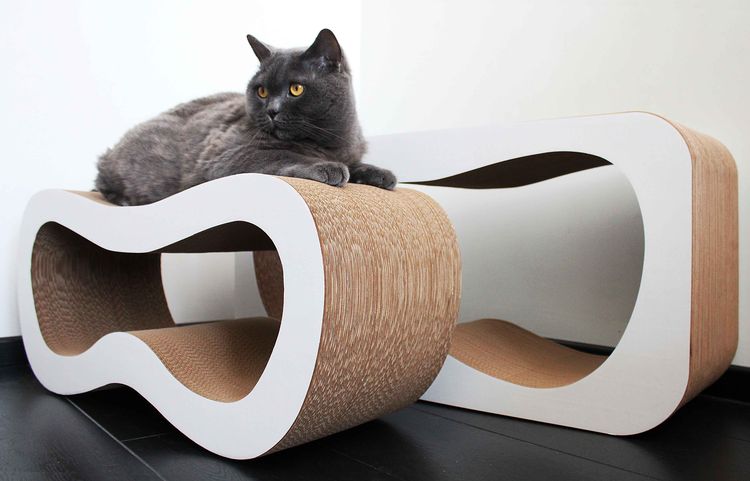
- HousesThe walls and roof of the house can be used as scratching posts. There are many variations of this design available. Before purchasing, it's a good idea to observe your pet and determine whether they prefer scratching vertical and horizontal surfaces, or inclined ones.
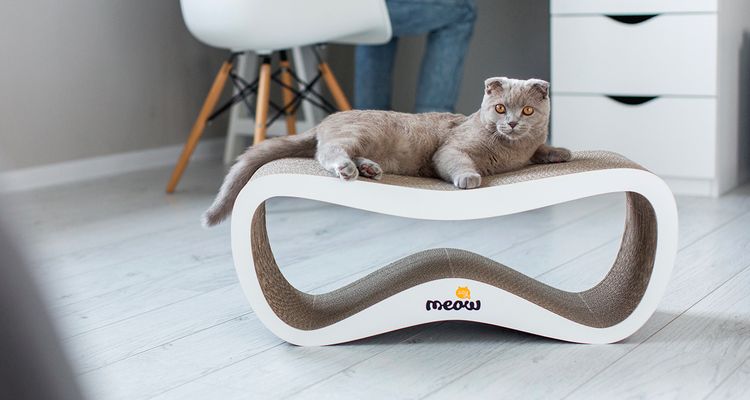
- A cat bed. A versatile structure that serves two functions: a place to sleep and a scratching post. Cats can sharpen their claws, stretch, and complete all other aspects of their exercise routine without leaving their "bed." These beds fit perfectly into any interior, are lightweight, and easy to move. They can be flat or curved.
- Shelf. Ideal for cats who love to jump on cabinets, refrigerators, and other tall furniture. This model is also suitable for those with a dog. This shelf makes it easy to avoid attackers and hide at a safe height.
- Post. Posts with straight sides are typically made of cardboard. To ensure the post stays in place even when your cat jumps on it at full speed, it's best to secure the base to the floor. It's best to buy a model designed for an adult cat, at least 70 cm high. Ideally, the scratching post should end with a shelf at the top, providing additional sitting and lying space.
How to choose
The answer to this question can only be obtained through experience. The main clues are intuition and observation.
- If your pet primarily scratches walls, door frames, and furniture, you should consider a vertical scratching post. If your pet scratches carpet, linoleum, or other flooring, you'll need a horizontal model.
- It's important to consider the size of your living space. If a full-size play system isn't feasible, you'll have to settle for more compact versions of sharpeners that fit within the available space.
- The higher the scratching post, the better for the cat. It gives the cat more range of motion and the ability to bend to its full height.
There's no need to buy baby "cattery" toys first and then replace them with adult-size ones. Kittens grow quickly, and even if they don't quite reach the top of the post or the end of the bed yet, that's okay. In a couple of months, the situation will change, and all the proportions will fall into place.
How to teach a cat to sharpen its claws
There is no single recipe, but the following recommendations are worth considering:
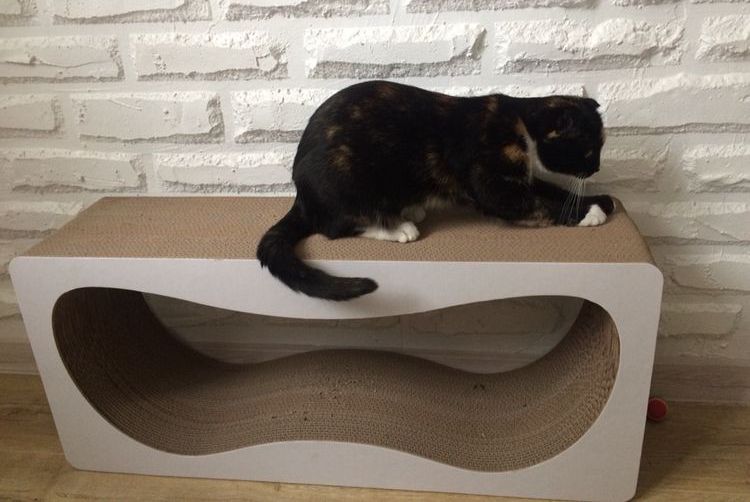
- Use one or more toys as visual bait. They can be placed on the structure or to the side, or even hung from above. The animal will reach for them, brushing its claws against the cardboard surface, and learn the correct movements through play.
- Inspire your pet by example. Pretend to sharpen your own nails on a scratching post, thereby encouraging the cat to imitate your owner.
- Wipe the surface with a cloth, after running it over another cat's fur. The animal will smell the foreign odor and will diligently mark territory, scratching the surface.
- Saturate the cardboard with a pleasant scent, such as mint or lime. Avoid valerian root, as its scent will numb the animal.
- Praise the cat when it does something right, reward it with treats, pet it, and show your affection in every possible way.
We also described some methods for training a kitten to use a litter box. in this article.
Read also:
- How to stop a cat from scratching furniture, sofas, and wallpaper
- Master class on making a scratching post
- How to stop a cat from biting



Add a comment