
Carthusian cat (Carthusian cat, Chartreux)
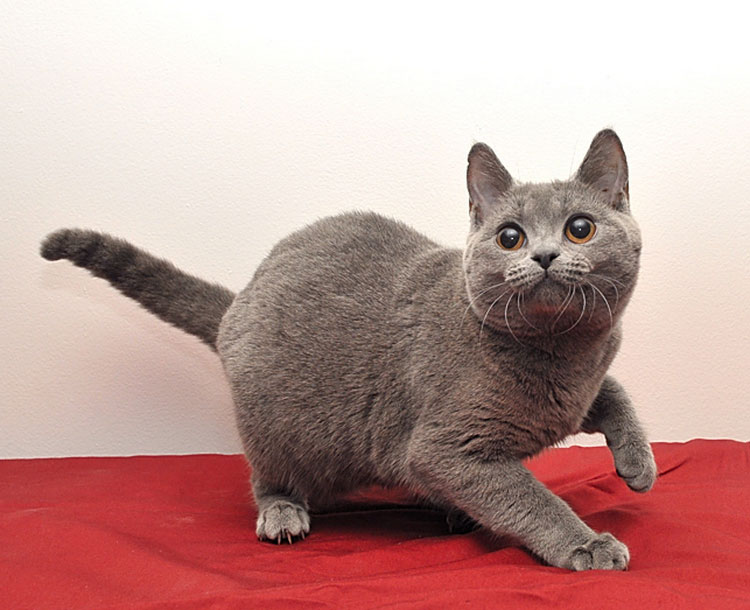
Carthusian cat The Chartreux, also known as the Chartreux, is a French shorthaired cat breed with a solid blue coat and amber eyes. Chartreux cats have a calm, moderately playful, and independent nature, and are generally quiet, which is a significant advantage for many. The breed hasn't achieved widespread popularity, but there are catteries in many major cities in Europe and America that breed these French cats.
Content
The origin of the Carthusian cat breed
Old manuscripts indicate that the breed's history began in the 15th century, and its "fathers" can be considered the maps of French monks. Returning from another expedition to France, they brought back several blue cats, which later became the ancestors of all Carthusian monks.
The monks of the Grande Chartreuse monastery had a strong affection for their cats. Near the city of Chartres, there is still a mountain called the Gray Cat. For a long time, the members of the Carthusian order were very protective of their breed and reserved the right to breed them, selling only neutered animals.
Breeders only showed interest in the breed after World War I. The cats were first shown in 1928. Interestingly, after World War II, Chartreux cats practically disappeared from their homeland, and the situation remains unchanged today.
Video review of the Carthusian cat breed:
Appearance and standards
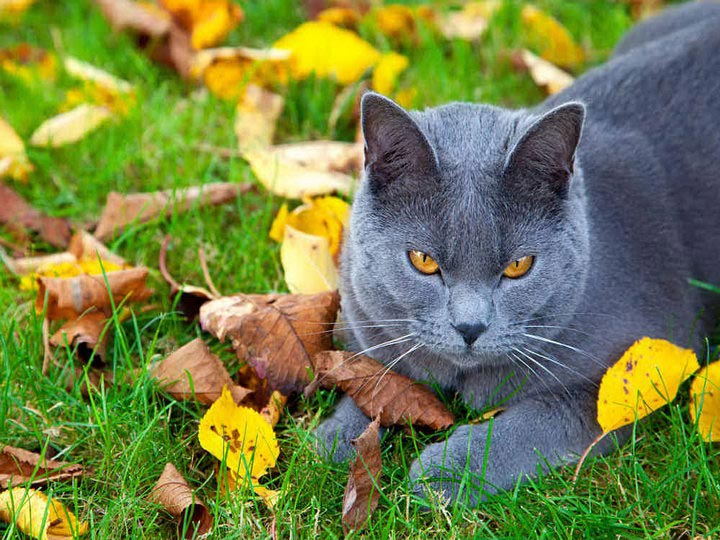
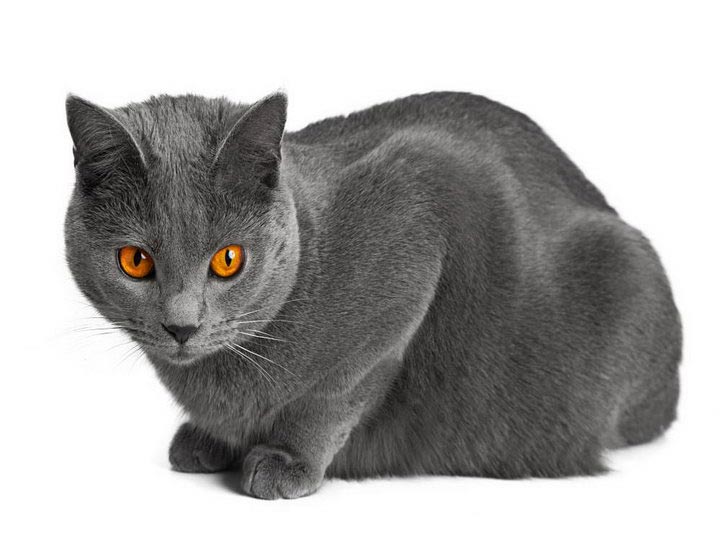
Carthusian cats are distinguished by their robust build, soft, thick blue fur, and expressive amber eyes. They are medium-sized, with males weighing 6-7 kg (13-17 lbs) and females 4-5 kg (9-11 lbs).
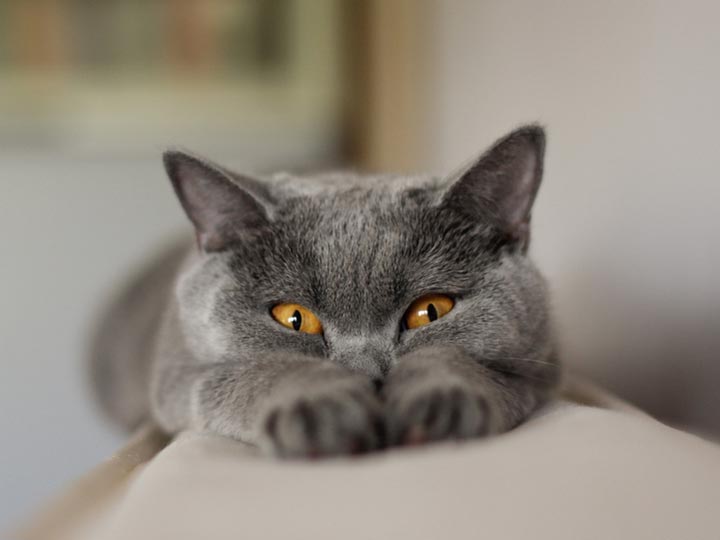
In the photo, it's easy to confuse a Chartreux with a British Shorthair. This is primarily due to the blue color, which is the most popular and widespread color in the British Shorthair, but the only color in the Chartreux.
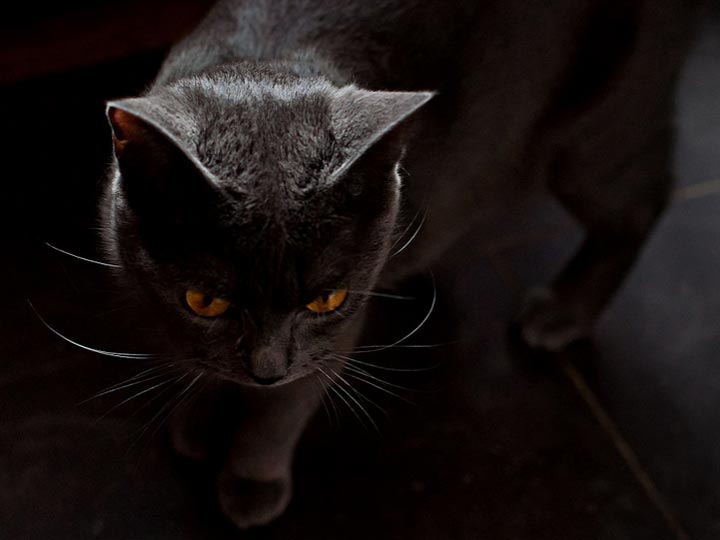
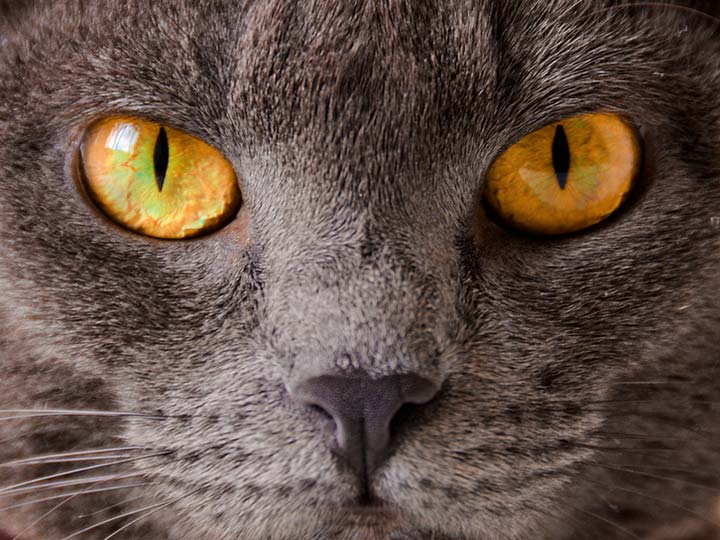
The head is rounded and broad. The cheeks are round without a pinch. The nose is straight and medium length. The muzzle is small and narrow, tapering downwards, giving the expression of a pleasant smile. The eyes are round, large, and filled with a lively sparkle. The ears are set wide and high, tilted slightly forward, with rounded tips. The nose is exclusively gray; black or pink indicates the presence of foreign blood. The eyes are an even, rich amber color.
The body is heavy and muscular. The chest is very well developed. Overall, the cat appears quite powerful. Short, fine-boned legs end in powerful, rounded bulbs. The tail is proportional and not bushy.
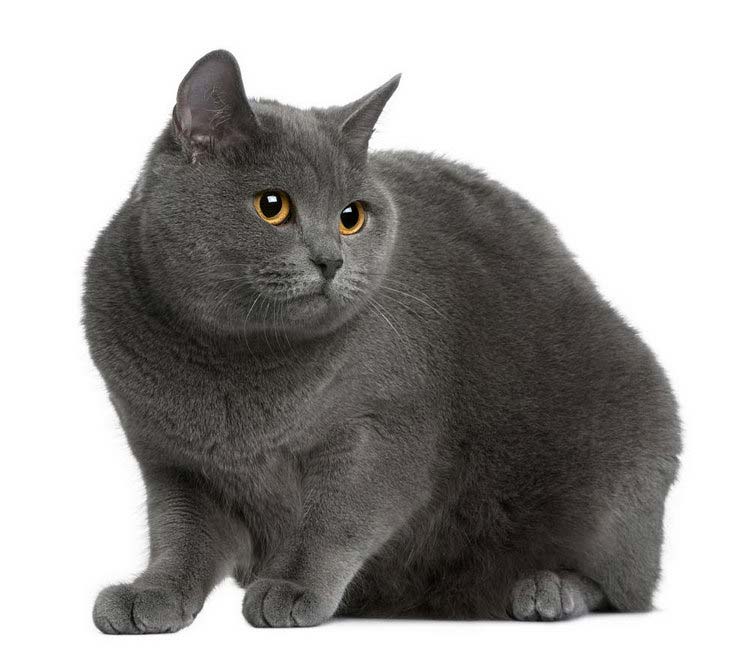
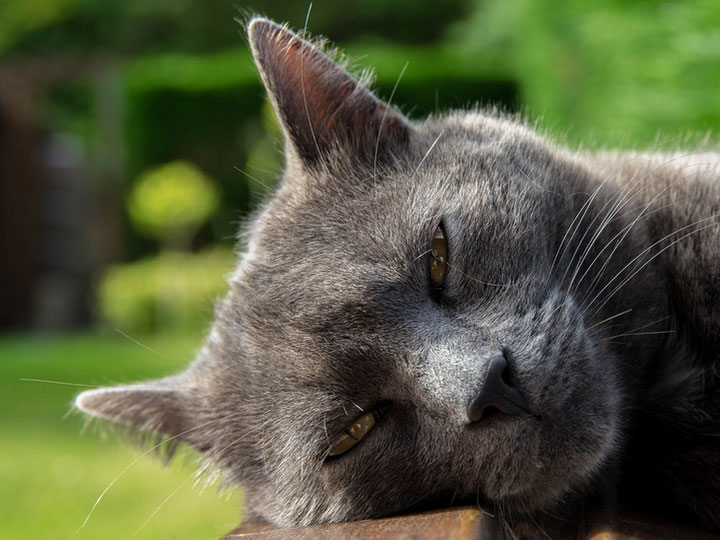
The Carthusian cat's coat is soft, thick, lush, and very dense. It consists of a topcoat and an undercoat. On the neck and sides, it feels like sheepskin. The coat has a woolly texture. All shades of blue are permitted by the standard. In the sun, the coat should shimmer and shine.
Character
Chartreux cats have a calm, even temperament. They are independent and self-assured, yet they crave affection and care from their owners, to whom they are as devoted and grateful as cats. These cats are very gentle and affectionate companions, eager to be close at all times. If everyone else in the family is busy, a Chartreux cat won't be a nuisance; she'll simply be nearby, minding her own business, as long as she's not chased away.
Kittens are very playful and active, but they rarely and unintentionally get into mischief. As they mature, they become calmer; one might even say that adult cats are somewhat lazy. When not resting, Carthusians prove to be excellent hunters. And if they can't go outside, they'll happily hunt insects or their own toys.
The Carthusian cat is more lazy than playful, but has a strong enough character to stand up for itself and fight for territory when necessary.
Chartreux cats very rarely meow. Their voices are very thin and quiet, almost like a kitten's. Another characteristic trait of the breed is jealousy. Chartreux cats absolutely cannot stand competition from other animals or people. However, if there is no one to be jealous of, a Chartreux cat will always be in a good mood and display all the most positive traits of its character. The consequences of keeping birds, fish, or hamsters together are difficult to predict. It is quite possible that even a well-behaved cat will occasionally prey on defenseless neighbors.
Maintenance and care
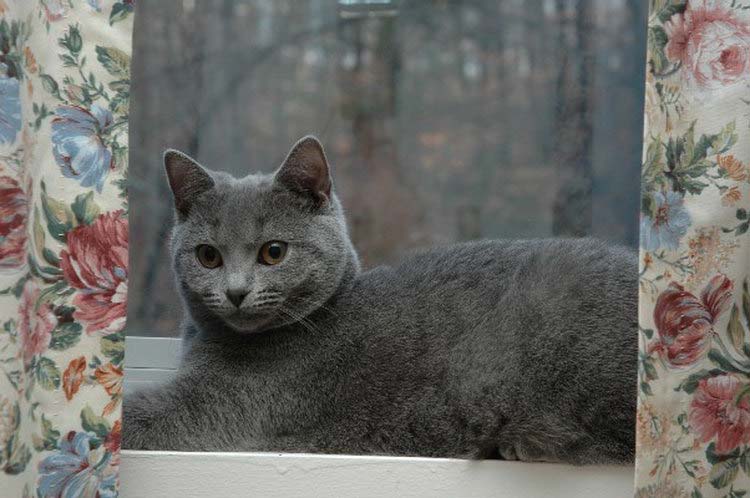
Carthusian cats adapt well to any living conditions. They feel equally comfortable in an apartment or in the yard of a private home. They adapt to new surroundings very easily. They handle the stress of moving much better than most other breeds. Carthusian cats love to bask in the sun, but ultraviolet rays can cause their beautiful coat to fade and turn brown.
A Carthusian cat will definitely choose a favorite spot in the house, and it won't always be a bed provided by the owner. It's hard to say where this spot will be—a chair or a shelf in a closet—but it will be almost impossible to discourage the cat from leaving it. Carthusian cats are particularly averse to closed doors. It's best to take this into account, and don't be upset if your cat spends a long time scratching at the door in an attempt to open it.
Carthusian kittens learn house rules very quickly. Once trained by their breeder, they almost immediately remember where it is in their new home, as well as the location of their food bowls.
Care
Caring for a Chartreux is not difficult. They shed quite heavily, but brushing them once or twice a week will minimize stray hair. Frequent bathing is not necessary; they are quite good at grooming themselves. Chartreux cats are usually given a full bath with shampoo before shows or after the shedding season ends.
Ears are cleaned as needed. If they don't accumulate wax or dirt, there's no need to use a cotton swab. However, it's best to trim the cat's claws every 3-4 weeks. Trim the claws just a few millimeters to prevent them from snagging on carpets and furniture. Trimming the claws is not recommended unless the cat regularly goes outside. Many cats develop oral health issues in adulthood, so it's a good idea to acclimate them to having their teeth brushed from an early age.
Diet
There are no special feeding requirements for Carthusian cats. The requirements are the same as for other cats. The diet can be natural or consist of prepared food, wet or dry. In the former case, the main course should be meat, frozen or boiled. Fermented milk products, eggs, and fish should also be included. If the cat doesn't eat any fruits or vegetables, it's essential to sprout grass or provide vitamin and mineral supplements. If the diet is based on complete prepared food, no supplements are required. Carthusian cats are prone to obesity, so it's best to feed them in portions on a regular schedule.
Health and life expectancy
Chartreux cats are generally strong and healthy, but due to their large size, they often suffer from joint problems, especially in old age. Owners also frequently encounter oral diseases. Chartreux cats are susceptible to any feline disease if not properly cared for and fed. Like other cats, they require routine vaccinations and regular treatment for internal and external parasites. The average lifespan is 13 years.
Choosing a kitten and price
The breed hasn't gained the same popularity as, for example, British or Scottish cats. Even in its homeland, it can be considered rare. The best lines of Carthusian cats are represented in the United States. The Carthusian cat is quite expensive, so it's not surprising that scammers often try to exploit the breed's rarity, selling both purebred and non-pedigree cats as Blue Frenchies.
Thanks to the internet, finding a nearby Chartreux cattery isn't difficult, but whether they have available kittens is another matter. If you can't find a cattery or kittens, consider other breeds that are very similar in appearance to the Chartreux: Russian Blue cat, Korat, British or Scottish short-haired.
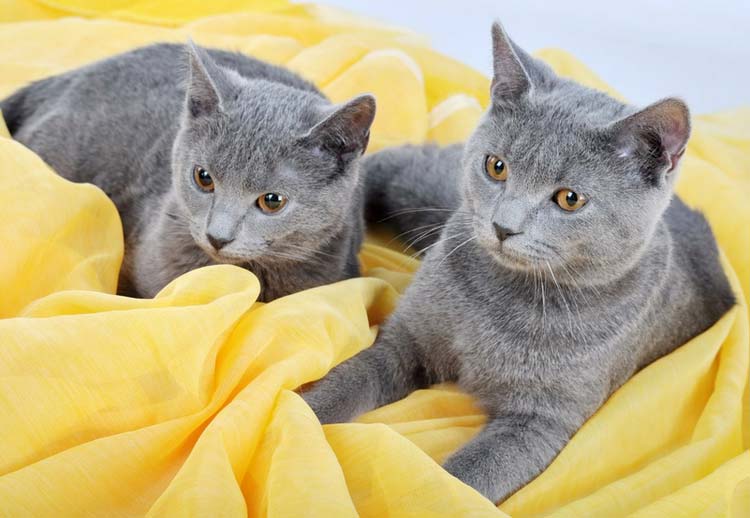
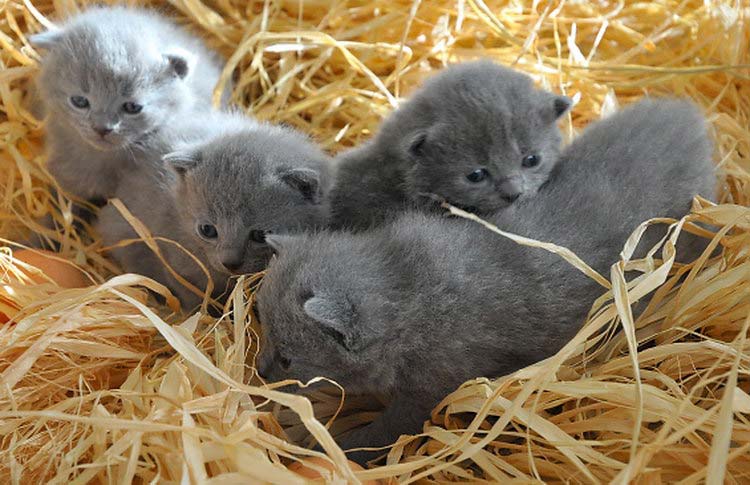
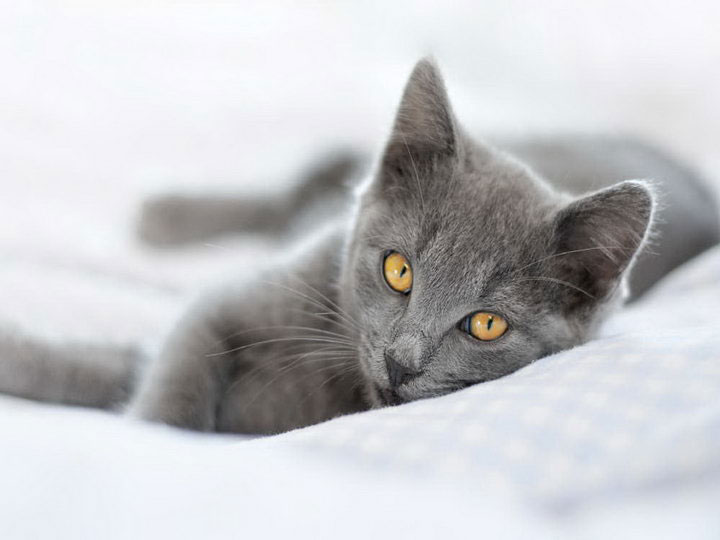
Young kittens may have rings on their tails and stripes on their fur. In true Frenchies, these stripes disappear over time, giving way to a perfectly uniform color.
There is another important feature of the breed. Carthusian kittens are born with blue eyes, which they gradually acquire. gray, and then take on the final copper or orange color without any green admixture.
The average cost of a Carthusian kitten is 20,000 rubles.
Photos
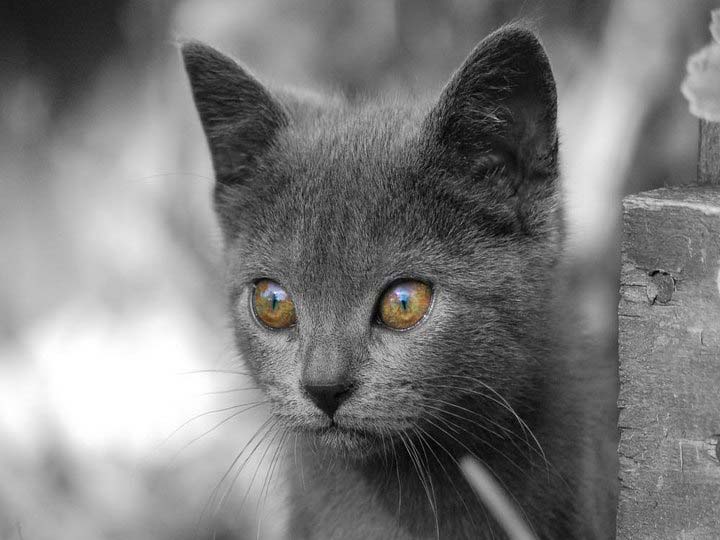
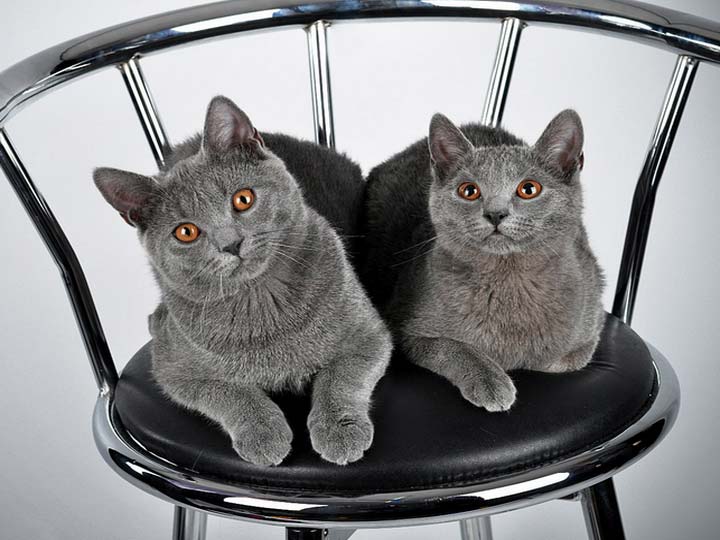
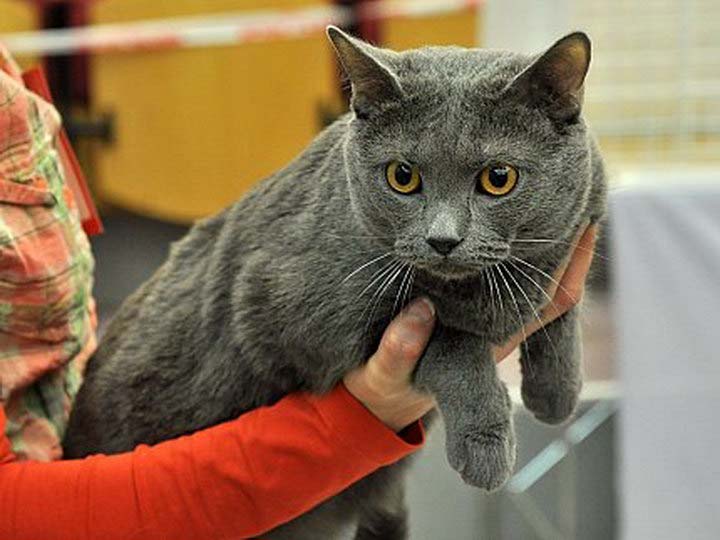
The gallery contains photos of Carthusian cats and kittens:
Read also:
- The Top 15 Most Popular Cat Breeds in the World
- Somali cat (Somali)
- Volpino Italiano (Italian Spitz)


Add a comment