
Miniature Pinscher (Zwergpinscher) is a dog breed
Over the centuries of the breed's existence, Miniature Pinschers (Zwergpinschers) have proven themselves in virtually every field. They were used as guard dogs on farms, where they were prized not only for their loud bark but also for their ability to reliably catch rats. They often accompanied carriages and stagecoaches, both for ordinary people and nobles.
Content
History of the breed's origin
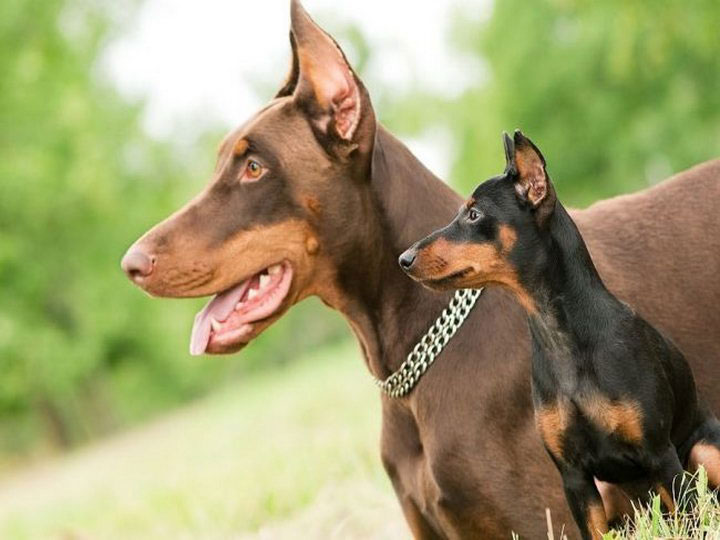
Contrary to popular belief, the Miniature Pinscher is not related to the Doberman and shares nothing in common with them except their coat color, native land, and guarding instinct. The breed's country of origin is considered to be Germany, but it is difficult to say for certain where, when, and how they were first developed. The origin story of the Miniature Pinscher begins with the first mentions of similar dogs found in writings and works of art dating back to the 15th century, while selective breeding of the Doberman, then known as the Thuringian Pinscher, only began in the 19th century. But let's return to the Miniature Pinscher.
It's believed that Pinschers came to Germany from Scandinavia, and they became very popular with practical Germans for obvious reasons: they eat little, work hard, and take up almost no space. Even in the Middle Ages, these amazing miniature dogs were recognized as the best coachman's assistants. They lived in stables, where they performed guard duties. But they also caught rats and performed many other small tasks, which they performed with excellence. For these qualities, they were called "stable griffins."
In 1836, the breed was first mentioned as the Miniature Pinscher. Large-scale breeding began in the second half of the 19th century, and just a few years later, it was first exhibited and the first standard was developed. Everything would have been good for the Pinscher, but People invented the car, and therefore the dog - the coachman's assistant - became unnecessary in times of technological progressThis wonderful breed would have disappeared without the efforts of enthusiasts who worked hard to transform the Miniature Pinscher into an excellent companion with guard instincts, incredible activity, and an imperial territorial streak.
Later, they were even used for hunting. And the fact that these dogs are excellent companions is beyond doubt. As for their purpose, there's no single key characteristic; these are undoubtedly versatile animals that, despite their diminutive size, will accomplish any task assigned to them.
Appearance and standards
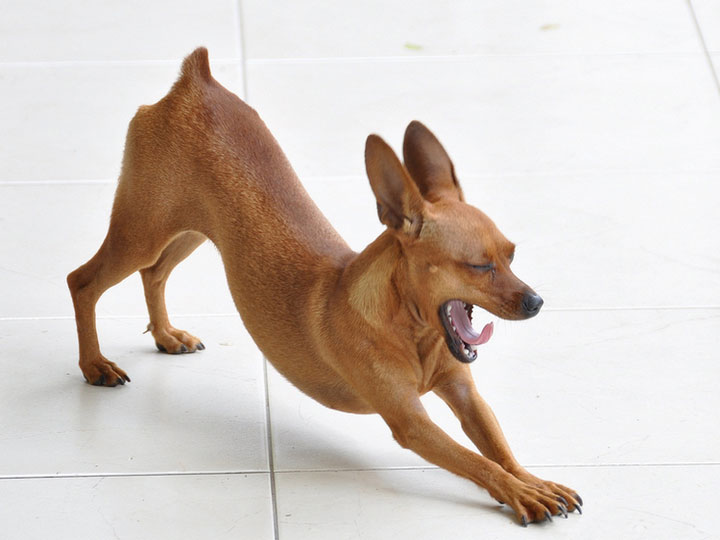
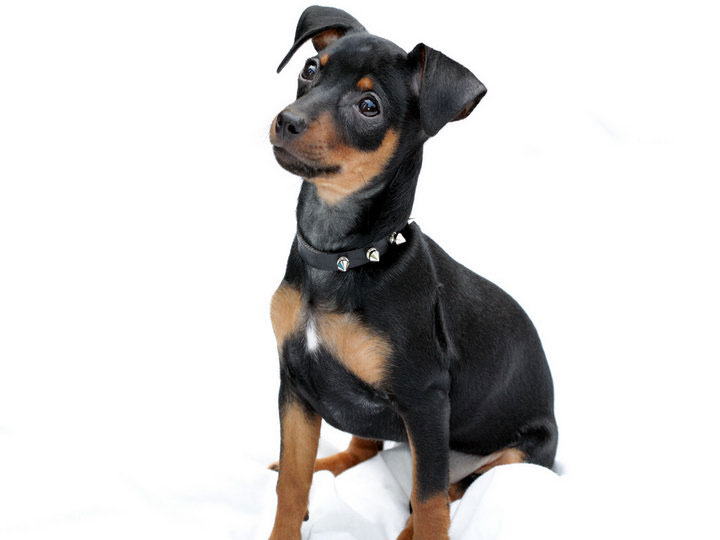
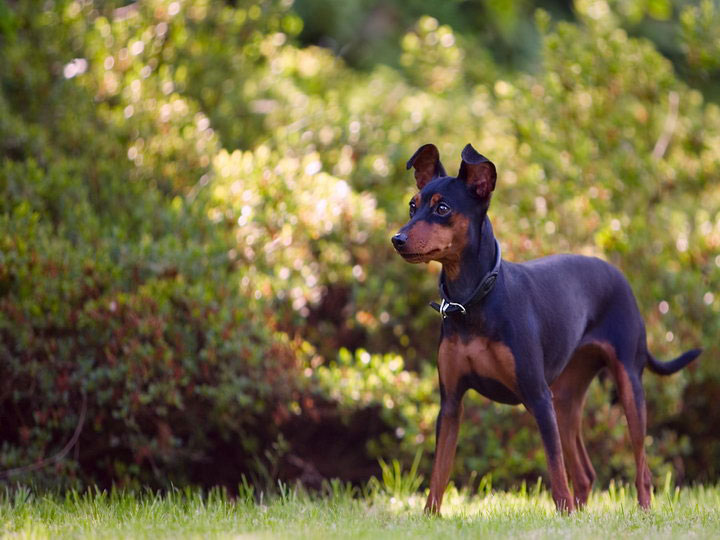
The Miniature Pinscher's appearance is undoubtedly remarkable. They are energetic, slender, and delicate-looking dogs. Their unusual, dancing gait is also noteworthy. A Miniature Pinscher puppy, as you can see in the photo below, is very different from an adult dog with its softer contours.
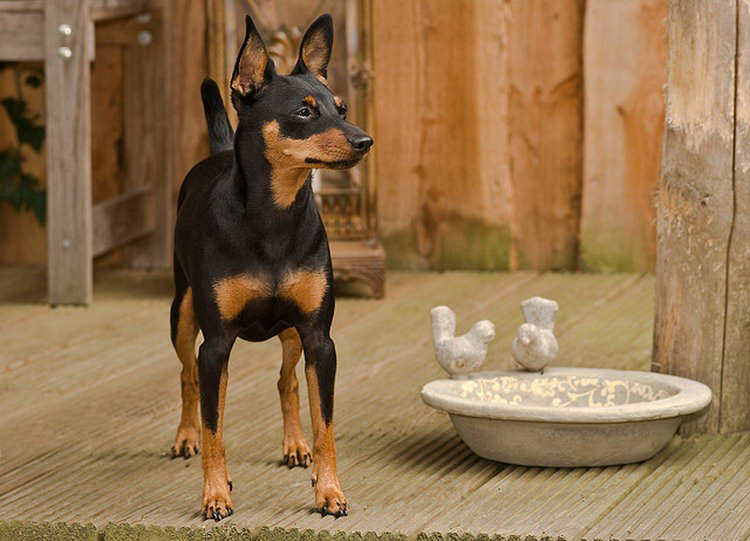
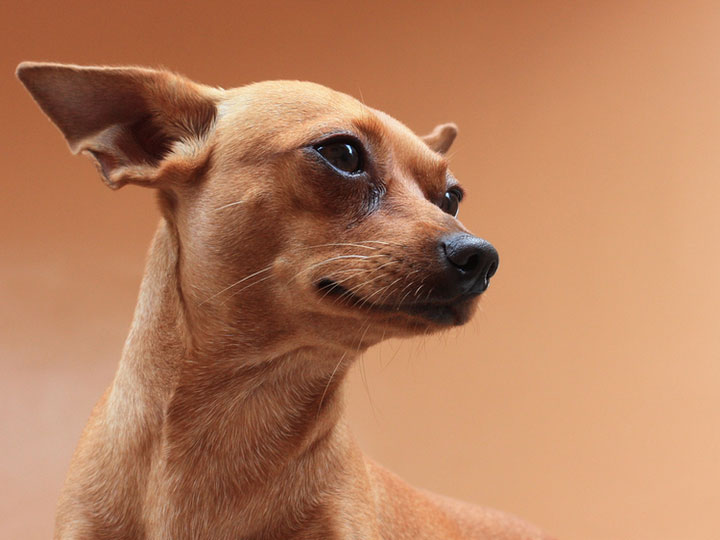
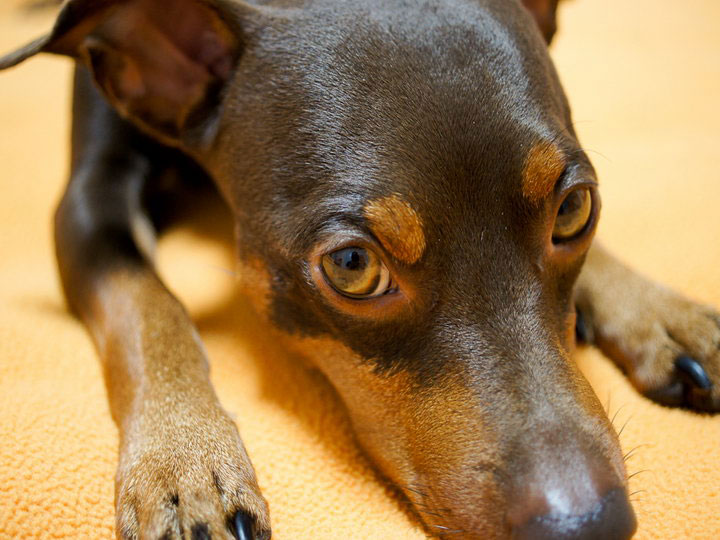
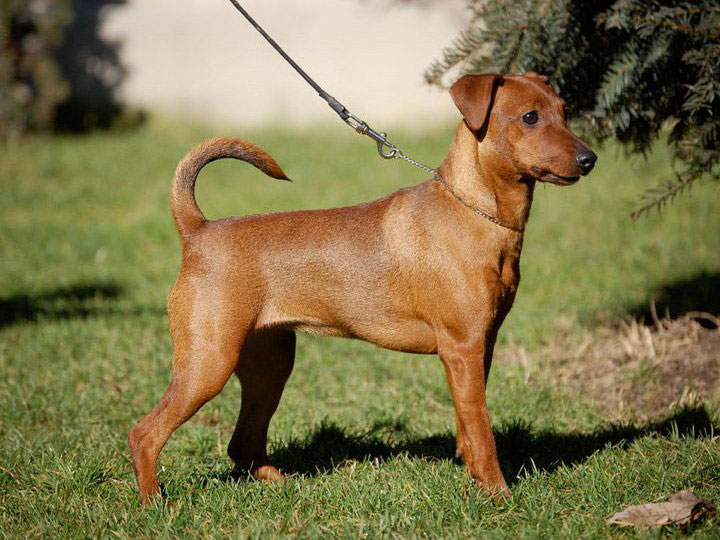
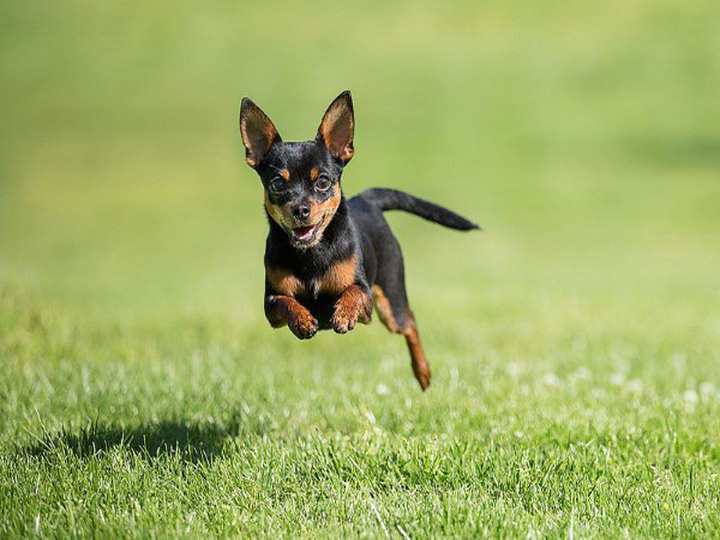
The head is small, with the forehead parallel to the bridge of the nose. The nose is always black. The bite is scissor-like. The eyes are oval and dark. The ears are set high, hanging or erect, and triangular in shape. The neck is slightly arched and dry. The back slopes slightly from the withers to the tail. The croup is rounded. The chest is moderately wide. The belly is tucked up. The front and hind legs are straight, set parallel. The movements are harmonious and strong, while the back remains firm. The skin is tightly adjacent to the entire body. The coat is thick, short, and shiny. The coloring can be black and tan or solid fawn. The Miniature Pinscher is very small; the dimensions of an adult dog are: height at the withers - up to 30 cm, weight - up to 6 kg.
Miniature Pinscher training
Miniature Pinscher training begins early. Although these dogs have long since become toy pets, their protective and watchdog instincts are still alive, and if improperly trained, they can develop into territorial aggression.
Pinschers are easy to train, and are known for their inquisitive minds, agility, and desire to take a leadership position. Therefore, if their owner shows weakness, they will immediately take advantage of the opportunity.
Training a Miniature Pinscher can be challenging for inexperienced owners. These dogs aren't always obedient, and their training requires creativity and patience. Dogs are not punished for mistakes, but are always rewarded for obedience.
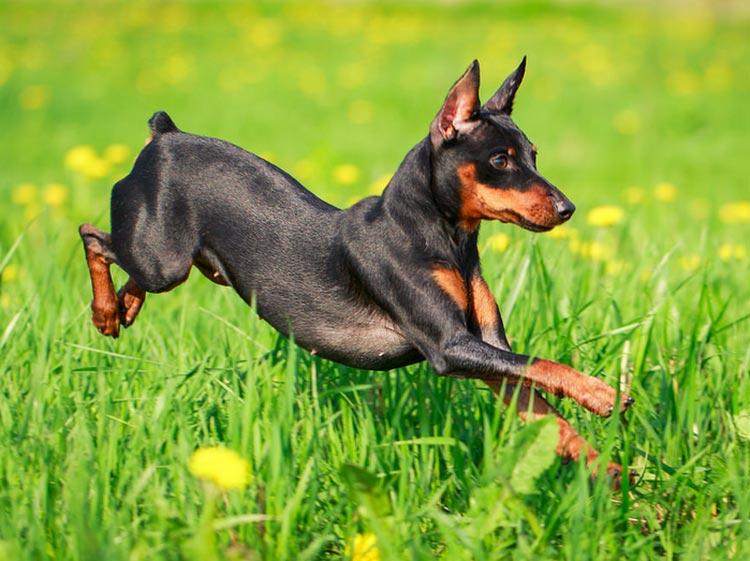
Pinschers require a great deal of exercise. These dogs are athletic and somewhat restless. They need to burn off all their pent-up energy throughout the day, and active play and long walks twice a day are excellent for this purpose.
If you socialize your dog from an early age and accustom it to playing with other dogs, it will happily frolic in their company. If desired, you can train your pet in various sports, such as agility or freestyle.
The character of the Miniature Pinscher
These dogs have an active and inquisitive nature. They always need to be the center of attention, knowledgeable, and involved in everything. Miniature Pinschers have a strong and independent character, but they also become very attached to their owners.
If you don't give your pet enough time, they'll inevitably find something to do, but not before becoming upset and drawing conclusions. These dogs have an energetic, lively, balanced, and slightly self-assured temperament. Generally speaking, the Miniature Pinscher's personality can be described as choleric. Pinschers are easily excited and just as quickly calmed down. They are strong and independent. They are also somewhat suspicious and prone to excessive barking. Only proper training can teach them hospitality. They won't be sad or bored for long, even when their owner is away, and will quickly find something fun to do.
Maintenance and care
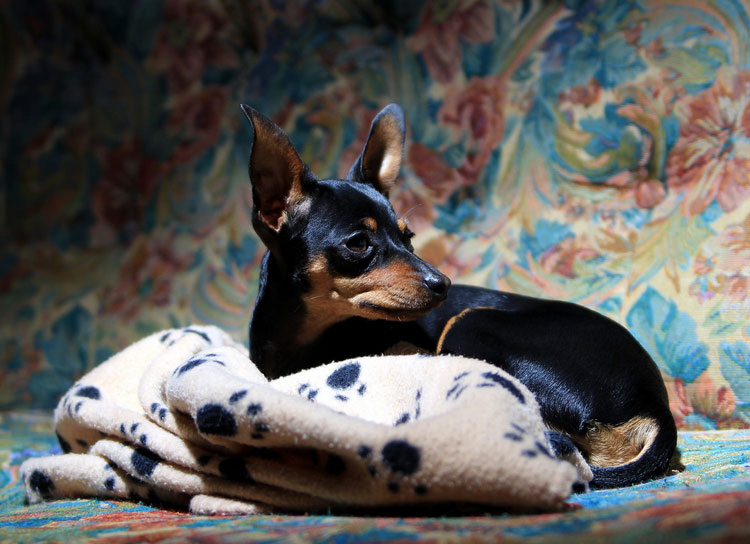
The Miniature Pinscher (Zwergpinscher) is perfect for living in an apartment, and it would be great if he lived in a house with his own yard. It is very important to provide the Pinscher with his own place to rest and sleep, which should be hidden from prying eyes.
It's difficult to say how well a Pinscher gets along with other animals, depending on the puppy's socialization and the age difference between the pets. While playing, a Pinscher can harm small rodents and birds, and cats generally try to avoid their excessive intrusiveness, so making friends with them is rare. Pinschers get along well and enjoy playing with children, who understand that these dogs need their own space and are not toys. It can be a bit more challenging if the first child is born when the dog is already an adult.
Care
Miniature Pinscher grooming is simple. Brush the dog with a special, dense brush for short-haired dogs a couple of times a week. After brushing, you can remove any remaining dead hair with a damp cloth. Bathe them infrequently, and after bathing, it's important to let them dry thoroughly in a draft-free room. Trim their nails occasionally; due to their light weight, they don't always wear down on their own. With regular attention to grooming, your Miniature Pinscher will always look like they did in their dog show photos.
Clothes and toys
Very sensitive these little dogs Miniature Pinschers are sensitive to cold, so as soon as it gets cold outside, they need to choose clothing that's appropriate for the weather. It should be comfortable and won't restrict their movement. If the apartment is chilly in winter, you can dress your dog in a light knit T-shirt. In summer, clothing is unnecessary; the only thing worse than cold is heat. Miniature Pinschers are very inquisitive, and their toys should stimulate and satisfy their curiosity. Clockwork, interactive toys, or toys that make interesting sounds are ideal. Pinschers often enjoy collecting toys, placing them in different places.
However, try not to give your pet more than three toys at a time, otherwise they'll lose interest. Also, avoid buying toys made of plastic or rubber, as chewing them can cause your dog to swallow a piece.
Feeding and health
Feeding miniature dogs requires careful and responsible management, whether it's natural food or dry food. Natural food should consist of meat, around 40%, typically horsemeat or beef. Plant-based ingredients make up a third of the diet, with the rest being grains. At a young age, it's recommended to add dairy and fermented milk products, provided the dog has no digestion issues. Puppy transitions to dry food should be made as early as possible, very carefully and gradually. The food should be high-quality, at least premium, and specifically formulated for puppies or adult dogs of this breed and size. It's best not to give other foods to your dog, or only rarely as treats.
Feeding should be healthy and scheduled. It's important that the dog eats its portion in one sitting. Pinschers have no control over their eating habits, which is why they often suffer from obesity and all the associated problems. Only water is left freely available.
Miniature Pinschers are considered a healthy breed. They are generally healthy, but some common health issues include eye diseases (cataracts, glaucoma), diabetes, kidney stones, and shoulder dislocation. Allergies are common in this breed. If there are more than two puppies in a litter, the mother may need assistance with feeding. Life expectancy is 13-15 years.
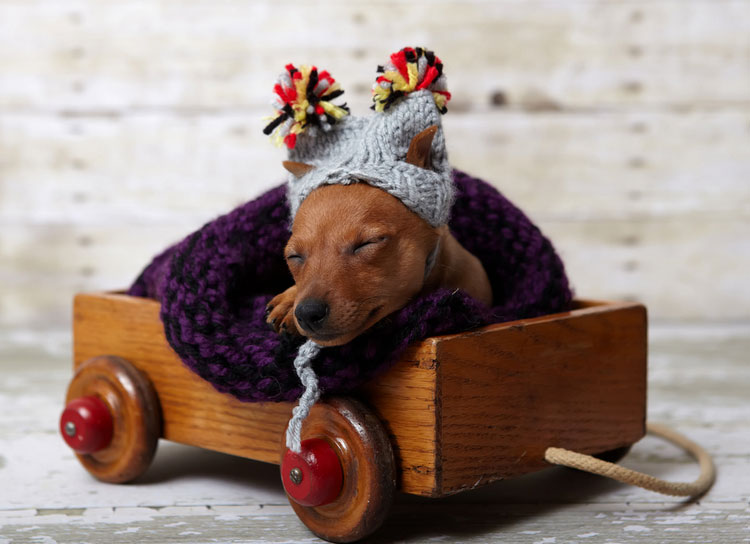
Miniature Pinscher puppies
When choosing a puppy, many people use the tried-and-true method of sitting down and calling the puppies. The one who comes running first is likely to go to their new home. But this isn't the only guide; there are a number of nuances worth considering. Observe the puppies beforehand, paying attention to their mother, whose appearance will indicate the overall health of the litter. Young Miniature Pinscher puppies, unless they're sleeping, are constantly busy. This is also typical of an adult dog. If a puppy is lethargic and inactive, this should be a warning sign. A puppy should have an excellent appetite.
The puppies are examined visually, checking for proper bite, the condition of the mucous membranes, and the cleanliness of their fur, eyes, and ears. Their hair and nails should be neat and free of brittleness. The coat should be shiny and dandruff-free. Don't choose a Miniature Pinscher puppy based solely on a photo; it's important to see the dog in person.
Tails are docked within the first 3-5 days of life. This should be arranged by the breeder. However, it's important to note that in some countries, docked dogs are prohibited from being shown. In Russia and neighboring countries, there are no such restrictions yet. Ears are docked starting at three months of age; this is the easiest time to determine the future shape and size.
The cost of puppies ranges from 250 to 700 USD.
Photos
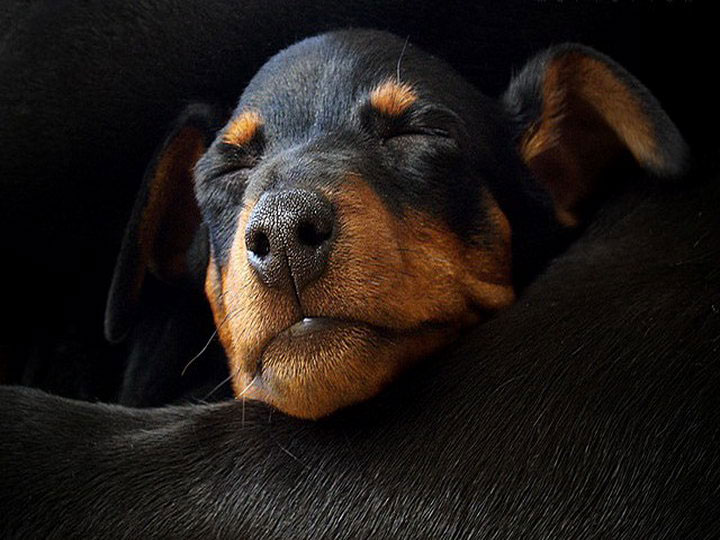
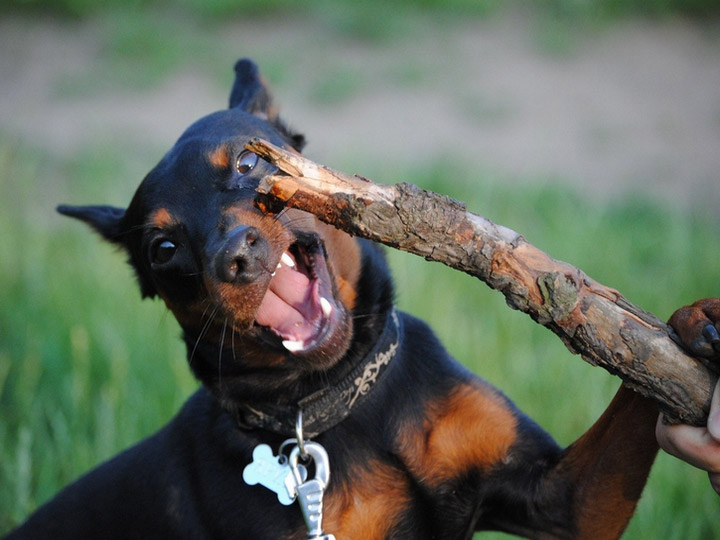
Photos of the Miniature Pinscher (Zwergpinscher):
Read also:


1 comment
Marishka
The best breed in the world, in a hurry!
Add a comment