
Miniature Dachshund
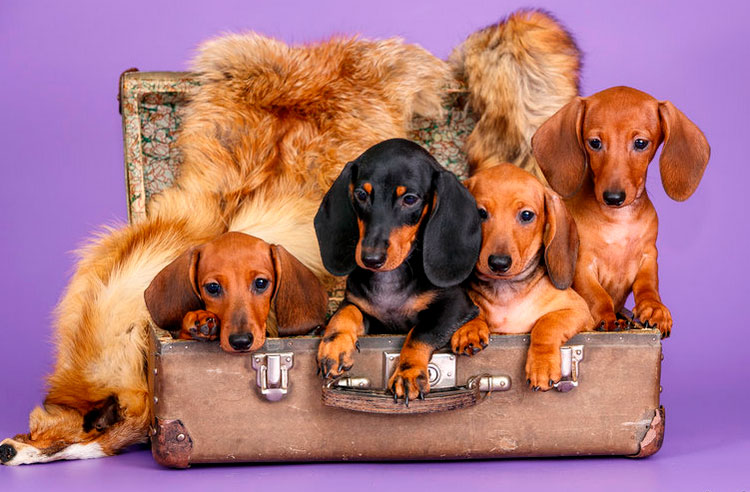
Miniature dachshunds are ideal for apartment life. They are cheerful, intelligent, friendly, and courageous. Even among them, there are some born hunters, but miniatures are more often kept as companions and family dogs. There is no official breed called the Miniature Dachshund. This term is commonly used for miniature and rabbit-type dachshunds, referring to a small dachshund.
Content
History of origin
Dachshunds have been known since the Middle Ages. They were bred by hunters who needed a small, short-legged dog for hunting burrows. Dachshunds are considered to be their ancestors. Thanks to their character traits, high work capacity, and endurance, the dachshund quickly gained popularity. In the mid-18th century, the process of exterior refinement of the diverse stock began. Several decades later, the dogs had acquired almost all of their modern traits and became more "noble." Active export of the dogs abroad began. The long-haired dachshund was first mentioned in the early 19th century. It was created by crossing smooth-haired and spanielBy 1836, all three varieties were described: smooth-haired, long-haired, and wire-haired. The first club dedicated to breeding dachshunds was founded in 1888.
The hunters have burrow dog, capable of dealing with foxes and badgers, but one was also needed that was suitable for hunting rabbits, a much smaller animal that lives in correspondingly narrower burrows.
Using a standard dachshund for such a wide range of hunting situations was impossible, so breeders set out to create a "miniature" dachshund. Breeding small dogs was more difficult, but the effort was successful, and in 1905, the Rabbit Dachshund Club opened its doors to hunters.
Video about the dachshund dog breed:
Appearance
The standard distinguishes three dachshund varieties based on size. Interestingly, the type is determined not by height or weight, but by chest size.
- Standard – the largest. Chest girth is from 35 cm. Height at the withers is 20-27 cm, and weight is 7.5-9.5 kg.
- Miniature – medium size. Chest girth – 30-35 cm, height at the withers – 14-21 cm, weight – 4-5.5 kg.
- The rabbit dachshund is the smallest breed. Its chest circumference is up to 30 cm, its height at the withers is up to 20 cm, and its weight typically ranges from 3-4 kg.
As you can see, the standard does not include a variety called the Miniature Dachshund. Unsure of the correct classification, some people sometimes use this term for the Rabbit Dachshund and Miniature Dachshund.
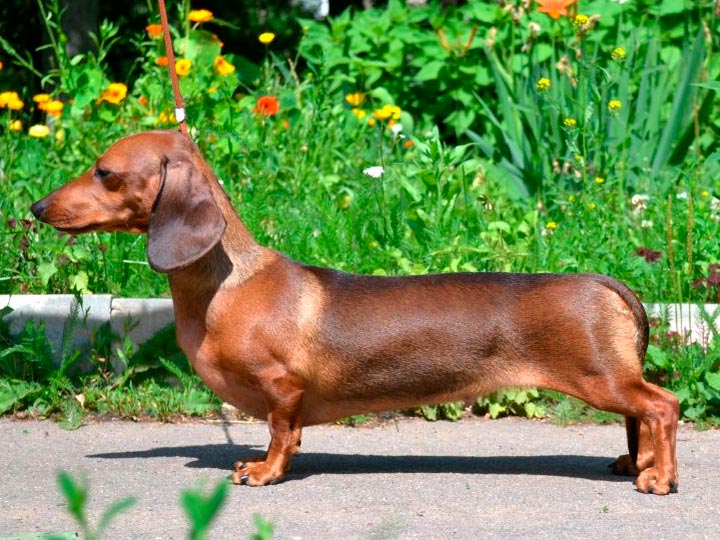
The dachshund's appearance is quite distinctive. It's a stocky, short-legged dog with an elongated, compact build, well-defined muscles, and a bold head carriage. It's very agile and flexible, despite its unusual figure.
The head is elongated, tapering evenly to a well-developed nose. The muzzle is long. The lips are tightly fitting. The teeth are complete. The bite is scissor-like. The jaws are well developed. The eyes are medium-sized, oval, and set wide apart. They are brown (light or dark) in all colors. Blue or off-white eyes are acceptable in merle-colored dogs, but are undesirable. The ears are set high, long, rounded, drooping, and fairly large in proportion to the head.
For decades, the dachshund has been bred in three sizes: standard, miniature, and rabbit; and three coat types: smooth, wirehair, and longhair.
The neck is long, carried high, and flexible. The withers are well defined. The back is straight or slightly sloping. The loin is fairly long and muscular. The croup is long and wide, slightly sloping. The chest is well developed, protruding so that the sides are prominent. The ribs are well sprung. The forelegs cover the lowest point of the sternum. The belly is slightly tucked up. The tail is set high, tapering to a point. The legs are short, with well-defined, dry muscles and strong bone structure. The paws are small, with well-knit toes with short, strong nails and plump pads. Dewclaws must be removed.
The skin is tight-fitting. Dogs are divided into three varieties based on their coat type:
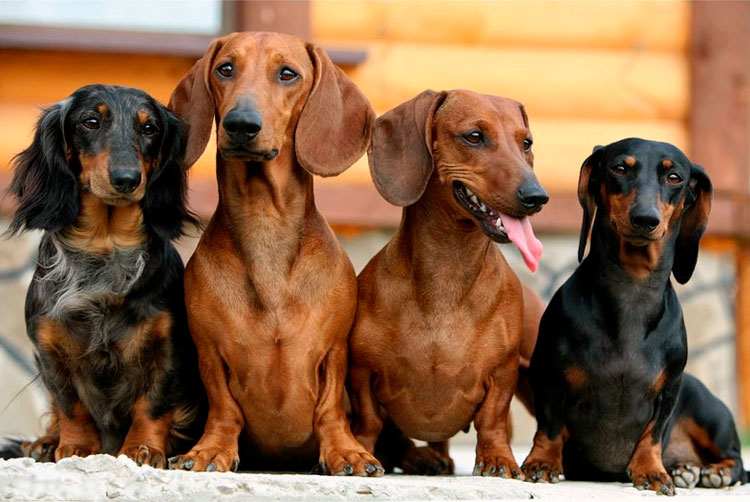
- Smooth-haired - the coat is very short, close-fitting, thick, and hard;
- Wirehaired – the hair on the muzzle forms eyebrows, mustache, and beard. The hair is approximately the same length on the body, lying close, wiry, and has an undercoat. The hair on the ears is shorter, almost smooth.
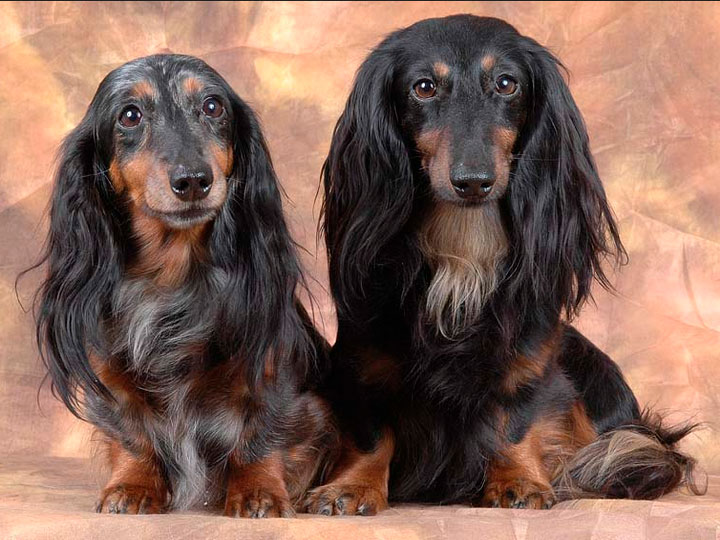
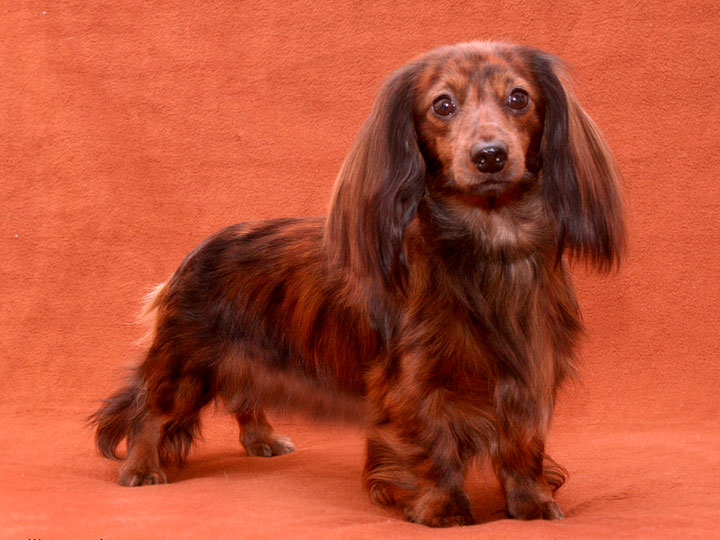
- Longhaired – the coat and undercoat are shiny, long, smooth, and soft. It lies close to the body. It is longer on the throat and underparts, and on the ears it extends beyond the lower edge, forming a fringe. The tail is well-feathered.
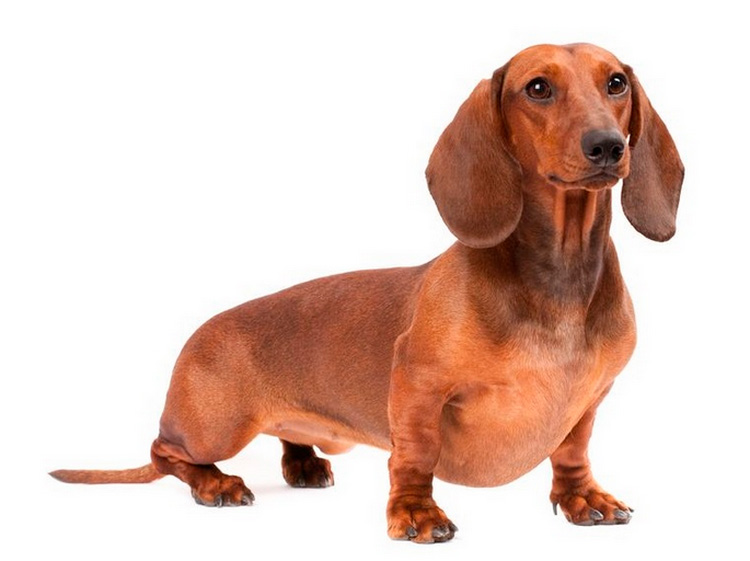
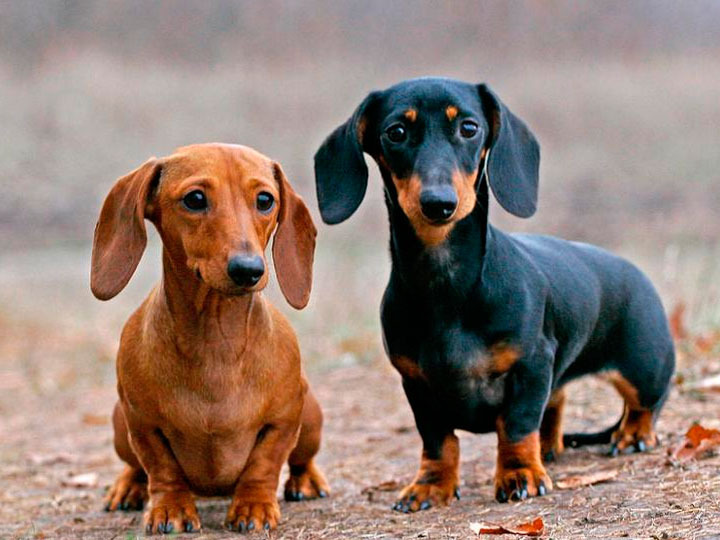
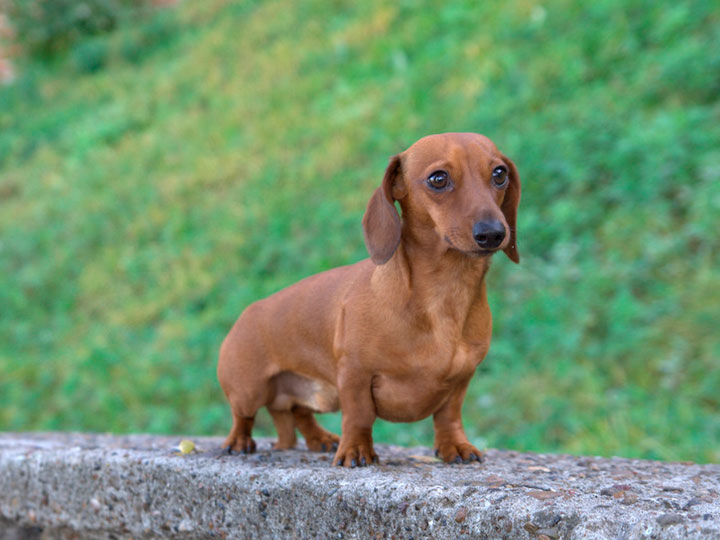
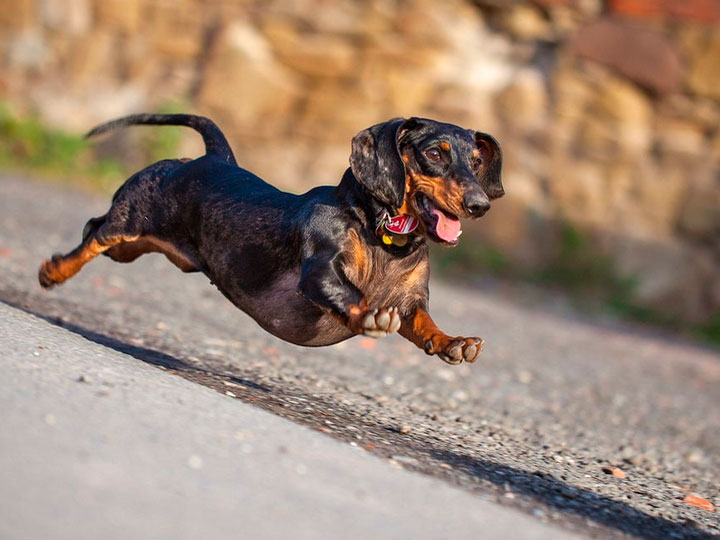
The color can be solid (red, red, fawn); two-color (black or brown with tan markings); marbled; brindle. The wire-haired variety also has zonal agouti (wild boar).
Character
By nature, dachshunds are friendly, loyal, playful, and sociable. These qualities, combined with a balanced temperament, intelligence, self-esteem, and excellent adaptability, have made the breed so popular. On the street, dachshunds are independent and courageous, on the hunt, they are brave and adventurous, but at home, they are sissies who love comfort and sleep under a blanket. It's worth noting that the hunting qualities of miniature dachshunds are not as pronounced as those of standard dachshunds, as they are primarily bred as toy dogs.
The Miniature Dachshund is very intelligent and quick-witted, but also willful and stubborn. It can feign stupidity if it suits its purpose. As a puppy, it adapts quickly to a new family. It usually recognizes only one person as its owner. It bonds with others, but does not consider others superior. Dachshunds have an excellent memory and can be vindictive.
The dachshund is a bold and alert dog with a strong territorial instinct. It often displays possessiveness over toys or food. However, it should not be vicious or aggressive towards its own kind. This behavior should be eliminated immediately, especially in households with children.
The dachshund is a great choice for a family with children, provided the child is old enough to handle the animal gently and carefully. This energetic and playful dog will happily play with a child for long periods of time, but may not always tolerate intrusions on the dog's personal space. The child should understand that if the dog wants to rest or be alone, it should not be disturbed. If children are added to the household after an adult dog is born, it may be impossible to change its negative attitude toward the human child or convince it not to be jealous.
A small dachshund is confident that she's a big dog and isn't shy about showing off her strong character. For this reason, she shouldn't be spoiled. Even a miniature dachshund needs proper training.
They generally get along well with other dogs, but prefer the company of short-legged dogs. Males can be pugnacious and may clash with larger dogs. Dachshunds chase stray cats, but they often get along well with domestic cats. They hunt small animals and birds.
Education and training
A small dachshund puppy deserves nothing but love and pampering, but it also needs training from the moment it arrives. This process should be consistent and gentle. The dog should be taught in a stern tone what it shouldn't do. Never use physical force, yell, or wave your arms.
A puppy should see its owner as a leader and protector. This will help build a trusting relationship with the dog and raise a well-balanced, obedient dachshund that will be trouble-free both at home and on walks. A dachshund can know and obey all commands, but various courses, such as city obedience or OKD, are considered a waste of time. Due to their low motivation, dachshunds are rarely included in agility.
It's crucial to prioritize socialization from an early age. Puppies are taught to interact with other people, go on walks, and befriend other dogs, and to be comfortable with loud noises and new environments. While playful, a puppy may bite—this is normal; the owner must teach them to control their bite.
A healthy dachshund shouldn't bark or bite excessively. Besides bad genetics, this problem also occurs in dogs that have been poorly trained or have had no training at all.
With the right motivation (usually a treat), a dachshund learns various commands very quickly and happily performs tricks to the delight of its owners and guests. However, it's not always obedient on walks, especially if it's preoccupied with something more interesting (like a bow tie). It's also important to keep in mind that dachshunds love to play tricks and feign ignorance. The owner should be firm and patient in waiting for the command to be carried out. Never allow a dachshund to ignore its owner's requests.
As for training, a miniature dachshund may not be trained as a hunter and will be content with occasional walks in the forest. Those who wish can train a dachshund, if it has the talent, and take it to artificial denning competitions. This will certainly make the dog happier. Hunters rarely keep miniature dachshunds because rabbit hunting is uncommon in our country, and a small dachshund may not be able to handle a fox or a badger. Furthermore, it's difficult to find a miniature dachshund puppy from working parents.
Content Features
A miniature dachshund is not suitable for outdoor living. It should be part of the family, living close to its owner; it even prefers to sleep on the owner's bed. If you are absolutely against having a dachshund next to you, never allow the puppy on the bed. Alternatively, it should be provided with its own bed. Ideally, this should be an orthopedic mattress in a soft house.
In principle, a miniature dachshund can be trained to use a pad. Even a St. Bernard can be trained to do this, but this dog isn't suited to being a couch potato; it needs daily walks.
Dachshund puppies require extreme care. Improper care can damage the puppy's back, and certain rules must be followed throughout the dog's life. Puppy puppies under one year of age can be carried down stairs in your arms, and up to six months, they can also be lifted. Walking on a leash and swimming are good preventative measures against musculoskeletal disorders. It's not advisable to put a harness on a dachshund, especially a young one. Avoid walking on ice or any other surface where the dog's paws slip or slide. Avoid allowing the dog to stand on its hind legs or lifting it by grasping its front legs.
During the cold season, owners often dress their dachshunds in warm overalls, but this should only be done when it's truly cold outside. Covering a dog in warmer temperatures disrupts its thermal balance and leads to frequent colds. This doesn't apply to elderly, sedentary, or sick animals.
Care
Miniature dachshund grooming varies slightly depending on coat type. Smooth-haired dogs only need to be brushed once or twice a week with a special mitt or brush for short-haired breeds. Long-haired dogs require combing slightly more frequently. Wire-haired dogs require trimming and plucking every three to four months. Shedding occurs in all three varieties, but with proper grooming, it is minimal. Bathe your dog every three to four weeks, using shampoos and conditioners appropriate for their coat type.
The dog's ears are cleaned once a week. Nails are trimmed approximately once a month. Eyes are examined daily, and accumulated secretions are removed if necessary. Owners of wire-haired dogs will also need to keep their muzzles clean and wash them after feeding.
Nutrition
Breeders and owners prefer to feed their dogs commercially prepared foods, but they can be trained to eat natural foods. Food from the owner's table is not suitable; it must be prepared separately. Diets are prepared according to standard guidelines. Feeding puppies has its own specifics. Portions are calculated based on age, size, and physiological condition. Individual adjustments may be necessary.
Dachshunds are often noted for their excessive eating habits. The owner's job is to resist the dog's tricks and feed them in moderation. Dachshunds are prone to excess weight, which in turn increases the risk of spinal problems and other health issues.
Health and life expectancy
Centuries of selective breeding have left a negative mark on the breed. This applies to all varieties. Knowledge of common diseases will help future owners distinguish a puppy with defects from a clinically healthy one, and it will inform current dachshund owners about what to expect in the future and what problems to pay special attention to.
- Problems with the musculoskeletal system (patellar dislocation, elbow dysplasia, discopathy (various spinal anomalies that can lead to paresis and paralysis. The risk of their occurrence increases with improper care).
- Tail deformities are detected at various ages. Kinks are visible even in infants, while vertebral fusion is only noticeable after one year.
- Osteoporosis (swimmer's syndrome) appears in puppies at 3-4 weeks of age. The puppies have difficulty standing due to their legs spreading apart. The problem is caused by abnormal bone formation and only worsens with age;
- Deformation of the sternum (leads to serious disruptions in the function of the heart and lungs);
- Hernia (umbilical hernia is most common);
- Cleft palate;
- Cryptorchidism;
- Frog eye syndrome – due to a disruption in the immune system, conjunctivitis develops in puppies just over a week old. It causes bulging and early opening of the eyes. Mild cases resolve spontaneously, while severe cases can be complicated by dermatitis. With prompt treatment, symptoms resolve. An adult dog is likely to be prone to allergies and dermatitis.
- Acanthosis nigricans is a genetic disorder that causes thickening of the skin in the armpits, which then spreads to the thighs, shins, throat, and abdomen. Affected skin is prone to dermatitis. There is no treatment for this condition.
- Baldness – usually first appears at the age of 6-9 months with hair loss on the ears; it may end at this stage or progress, spreading to other parts of the body;
- Eyelash growth disorder is more common in wirehaired dachshunds.
- Ophthalmological diseases (progressive retinal atrophy, cataracts, optic nerve hypoplasia);
- Epilepsy;
The lifespan of a miniature dachshund is typically 13-15 years. It's important to adhere to basic veterinary preventative care, keep up with vaccinations, and treat external and internal parasites. Many diseases can go undetected for years, so it's recommended to undergo a full medical examination before vaccination, including consultations with a general practitioner, orthopedist, and ophthalmologist.
Choosing and pricing a puppy
Choosing a puppy should begin with finding a suitable breeder. If a breeder has nothing to hide, they'll showcase their dogs and the achievements of their puppies from previous litters. They'll take a responsible approach to breeding and raising a puppy, and will never release it before 1.5 months of age without its first vaccinations.
Choosing a miniature dachshund puppy will be much easier if you decide on the desired gender, color, and size in advance. The future owner must also decide what they want the dog for: will it participate in shows and breeding, hunt, or be a couch potato? Be cautious when purchasing a merle (marbled) puppy, as this color can be associated with various genetic disorders.
Matings between standard dachshunds and miniatures have been banned by the FCI since the 1950s, as have crossbreeding between rabbits and miniatures. However, some breeders continue to experiment with this. As a result, puppies of varying sizes are born in the same litter, making it impossible to predict what the puppies will be like as adults. The smallest puppies sometimes grow up to be the largest, and vice versa. It's important to consider the size of both parents. Of course, there's a risk that crossbreeding in the distant past will recur, and two dwarfs will produce a miniature, but this risk is minimal if breeding rules are followed.
A purebred dog should not only look “like a picture”, it should also be in good health, mentally healthy and balanced.
The market is flooded with inexpensive puppies that can have a wide variety of defects, from appearance to genetic defects. Psychological defects, such as lack of working ability, aggression, and shyness, are also highly inherited. Puppies born from a planned mating are certified at 45 days old. They are examined by a canine specialist, tattooed, and issued a certificate (a primary document that can later be exchanged for a pedigree). Puppies are conventionally divided into classes. Some are sold at much higher prices as promising show dogs for show careers and breeding, while others are considered pets. It's worth noting that show dogs sometimes fail to live up to expectations, while pet-class puppies grow into champions.
Prices for miniature dachshund puppies vary widely. Breeders from breeders typically cost 25,000-35,000 rubles. Puppies without papers from reputable parents sell for 10,000-15,000 rubles. Sometimes you can find ads for dachshund puppies for as little as 5,000 rubles. These puppies are typically born to dogs without a pedigree and are only called dachshunds in name.
Photos
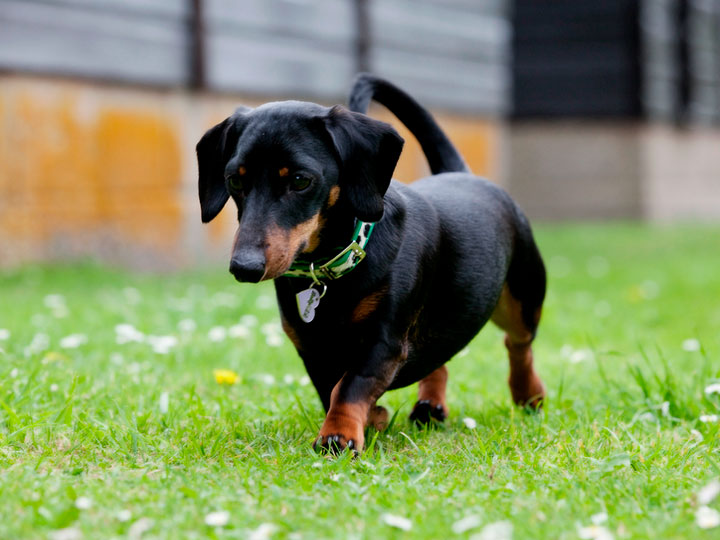
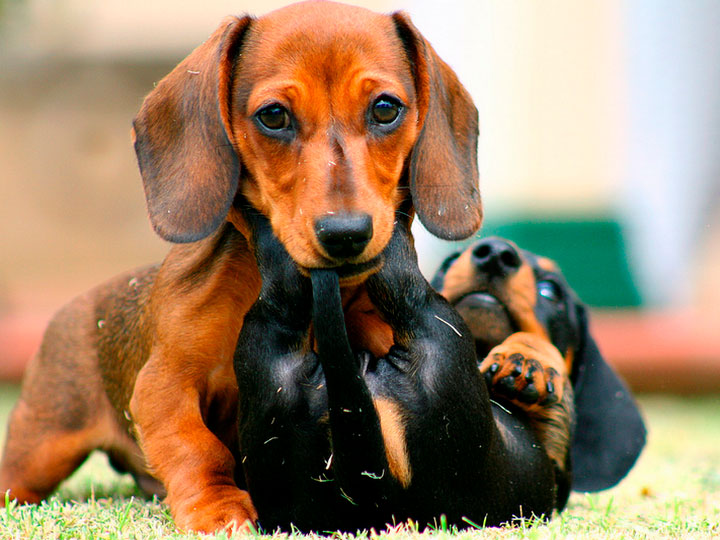
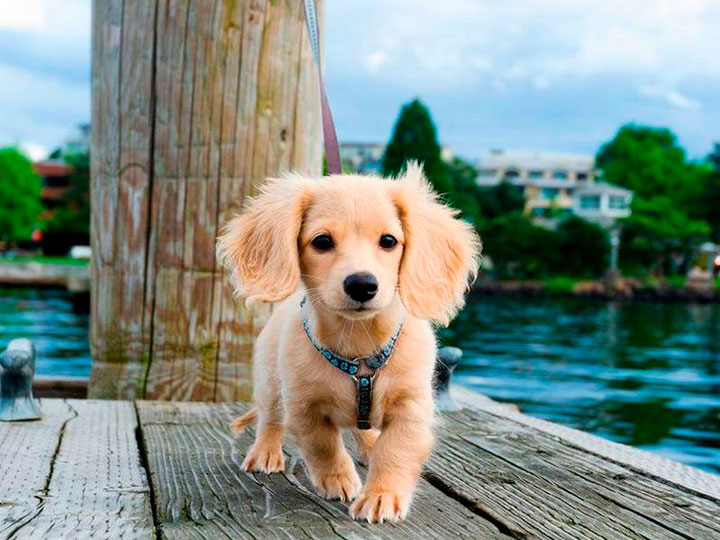
The gallery contains photos of adult miniature and rabbit dachshund dogs and puppies.

Read also:
- Small dog breeds
- Dwarf dog breeds
- Petit Brabançon (Small Brabançon, Brabant Griffon, Smooth-haired Griffon)


Add a comment