
Karelo-Finnish Laika (Finnish Spitz)
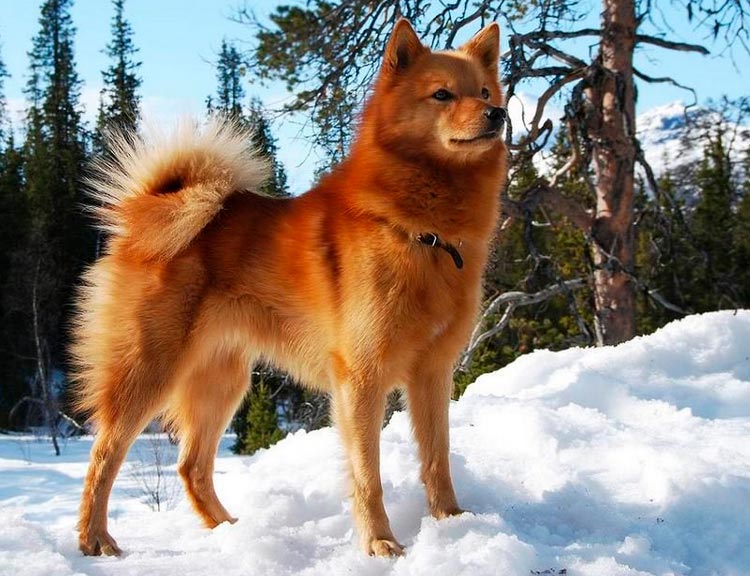
The Karelo-Finnish Laika is a hunting dog breed that is in danger of becoming extinct due to its close relationship and fusion with the Finnish Spitz. The Karelian Laika is playful and graceful, with an outstanding hunting instinct and a strong sense of self-worth. Of all the Laikas, it is the smallest and considered the most striking.
Content
History of origin
Natural selection led to the emergence in what is now Karelia of a small, dry-bodied dog that could easily navigate rocks and crust. The local population played a significant role in shaping this breed. The dogs were not traditionally fed; they foraged for their own food, and over time, they developed exceptional hunting abilities.
Based on its geographical distribution in Russia, the breed was named the Finnish-Karelian Laika. There was no need to specifically breed it; it was enough to preserve what nature had created. At the beginning of the 20th century, a standard was written for the Karelian-Finnish Laika, noting that it was the smallest of the existing hunting Laikas, energetic, agile, and lightly built. In 1947, a permanent standard was developed for the breed, which was approved in 1952. The Laika remained the same light and dry dog of small stature.
Russian cynologists set a goal: to preserve the native Karelian Ostrushka breed and to demonstrate and develop its remarkable hunting abilities. Finnish cynologists, captivated by its coloring, focused on its exterior. Their goal was to make the dogs more striking and decorative.
Everything changed for the domestic Karelo-Finnish Laika in the 1970s, when Finnish Spitz blood was introduced. This significantly increased the dog's constitution, and in 1981, the standard had to be amended. The dry, strong build that now characterized the dogs affected their performance; they became less resilient, and hunters noted a decline in their working ability. The coat also changed, becoming more "Spitz-like."
In the early 1990s, the Russian Cynological Federation was founded, which in turn reports to the International Cynological Association. The RKF could not recognize the Karelo-Finnish Laika as a separate breed because the FCI already recognized the Finnish Spitz, a breed similar in name and appearance. Despite numerous differences in appearance between the two types, the breeds were merged in 2006. Now, the Karelo-Finnish Laika must conform to the standard developed for the Finnish Spitz. With a stroke of the pen, the Karelo-Finnish Laika ceased to exist and became the Finnish Spitz.
The number of Karelian-Finnish Laikas converted into Finnish Spitz is increasing every year. Hunters, for whom they have become an indispensable companion and assistant, continue to express their indignation and demand a separation of the two breeds.
In 2010, in an effort to preserve the breed, the Russian Hunting and Fishing Union decided to rename the Karelo-Finnish Laika to the Karelian Laika and develop it separately from the Spitz. Unfortunately, little breeding stock remains. Only time will tell how fruitful the efforts of domestic enthusiasts to revive and develop this exclusively hunting breed will be.
Video about the Karelian-Finnish Laika dog breed
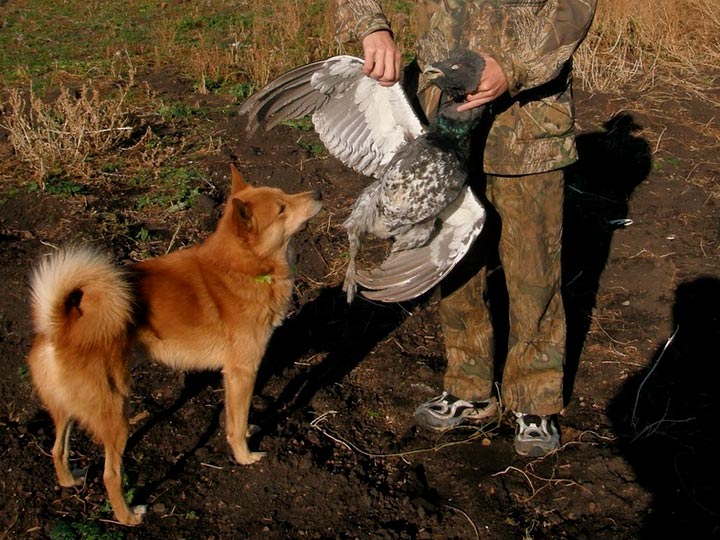
Karelo-Finnish Laika on a hunt
The Laika is a passionate and independent hunter. It works in close proximity to game, locating and barking at it. It is primarily used to hunt forest game, small fur-bearing animals, waterfowl, and large ungulates, and is sometimes used to hunt bear.
Unlike other Laikas, the Karelian-Finnish Laika does not engage in full contact with wild animals; it barks at them from a distance. Its vocalizations are non-aggressive, and it barks at different objects in varying patterns. It usually stays close to its owner. The Ostroushka is fearless, but not reckless. With proper training, it is unafraid of bears, moose, and wild boar, which, incidentally, often don't see it as a hunter and don't react. The Laika is characterized by a careful working demeanor. It accurately assesses its opponent's strength and is unwilling to risk its life.
Appearance
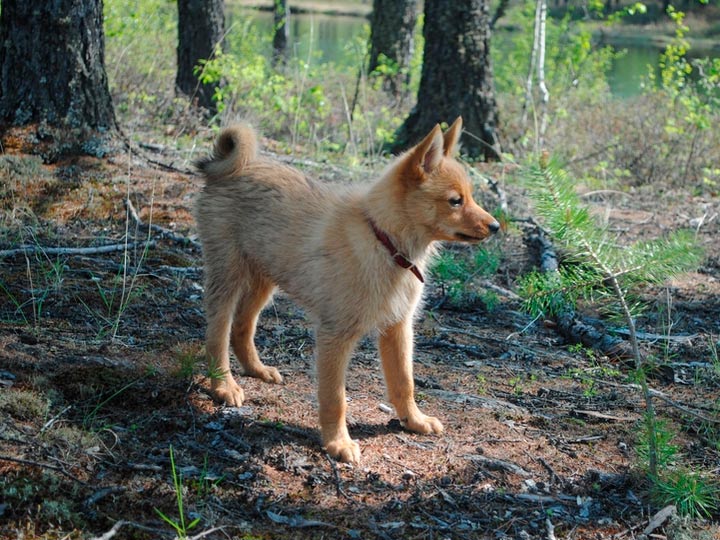
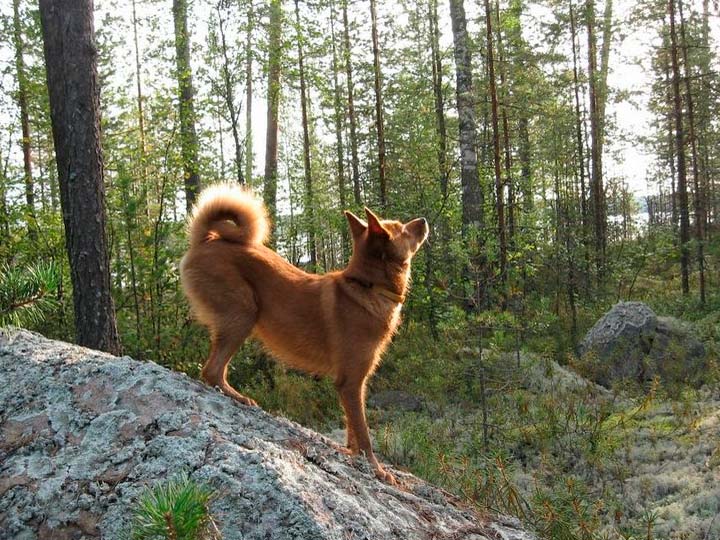
The Karelo-Finnish Laika is below medium height, with a nearly square build, a lean, strong frame, and good, correct posture. The oblique length of the body should be equal to the height at the withers. The depth of the chest is slightly less than 1/2 the height. The length of the muzzle is 3/4 of the length of the skull. The skull is slightly shorter than wide, and its width is equal to its depth. The ideal height for males is 47 cm, and for females, 42 cm. Males weigh 12-13 kg, and females 7-10 kg.
The Karelo-Finnish Laika's appearance should conform to the Finnish Spitz standard, officially accepted by the FCI under number 49. However, most working dogs bred in Russia do not always conform to this standard and have a more pronounced hunting talent.
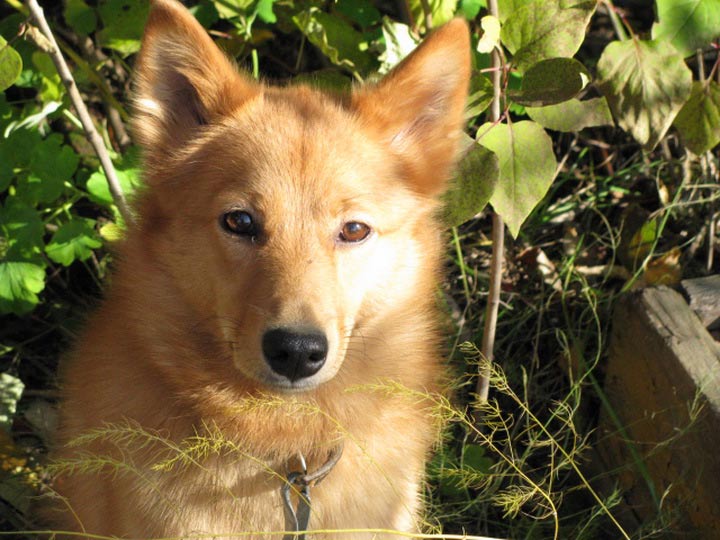
Viewed from above, the skull is ovoid, gradually widening toward the ears. Viewed from the front, it is slightly convex. The frontal furrow is shallow. The transition between the skull and the bridge of the nose is clearly defined. The muzzle is narrow, dry, and tapers evenly to a small, black nose. The bridge of the nose is straight. The lower jaw is well defined. The lips are thin, close-fitting, and well pigmented. The teeth are complete. The bite is scissor-like. The eyes are medium-sized, almond-shaped, set slightly at an angle; a dark color is preferred. The ears are set high, erect, pointed, fairly small, and very mobile.
The neck is muscular, without dewlap. The withers are clearly defined, the back is short and straight. The loin is short. The croup is of medium length, slightly sloping. The chest is deep, but not very wide. The ribs are arched. The underparts are slightly tucked up. The tail is energetically curved: from the base it lies close to the back, then goes down and pressed against the thigh. When straightened, it should reach the hocks. The forelimbs are straight, parallel, with dry muscles. The upper arm is slightly shorter than the shoulder blade and forearm. The elbows are directed backward. The pastern is of medium length, slightly sloping. The paws are rounded, the toes are well knit together. The pads are always black, elastic, covered with thick hair on the sides. The hind legs are strong, straight and parallel with moderately pronounced angulations. The upper thighs are slightly longer than the lower thighs, wide, with developed muscles. The stifles are directed forward. The metatarsus is short, set vertically. The hind legs are longer than the front legs. Dewclaws, if present, should be removed.
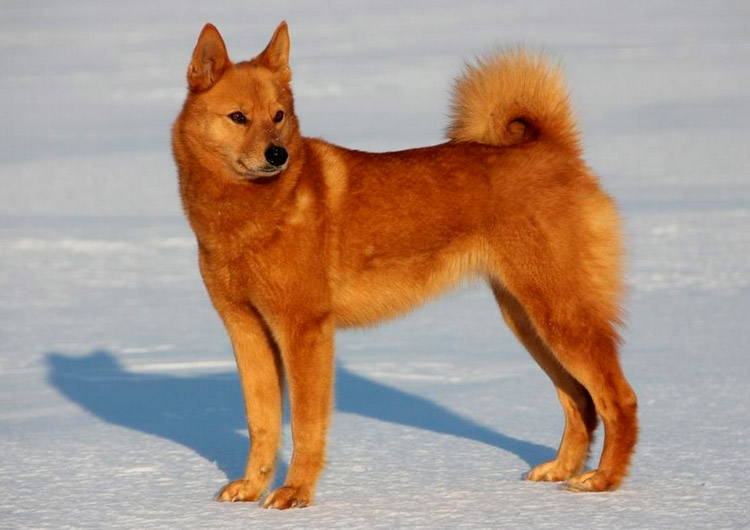
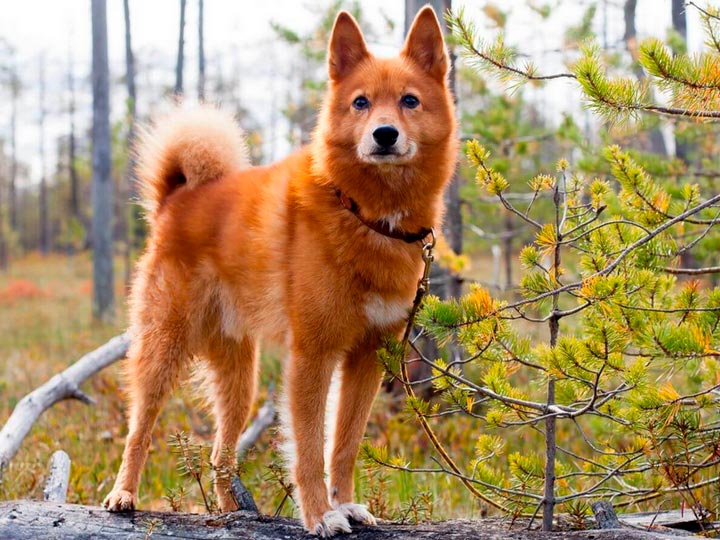
The skin is tight-fitting. The coat is medium-length, with raised guard hair on the neck and back, and short and close-fitting on the head and legs, except for the back. On the shoulders, especially in males, the hair is stiff, long, and coarser. It forms feathering on the back of the thighs. The tail has thick, long hair. The undercoat is soft, short, and dense, always lighter than the main coat. The coat is red. On the back, the hair is darker and brighter. The inside of the ears, cheekbones, belly, throat, inner thighs, chest, and tail are of the lightest shade. A white blaze on the chest and small markings on the paws are permitted.
Character
The Karelian-Finnish Laika is a self-assured, energetic dog with a lively temperament and a strong character. It is cheerful, happy, and friendly. When hunting, it is passionate, bold, and resilient. It achieves its goals thanks to its agility, excitability, and an overdeveloped passion for hunting. The Karelian Laika is courageous, but not crazy. It is very talkative and will bark at anything that attracts attention.
The Karelian-Finnish Laika is a sensitive, attentive, and intelligent dog with a strong leadership instinct and a strong pack instinct. If the owner demonstrates leadership, the Laika will obey and respect them. It forms strong bonds with other family members. It is wary of strangers, without showing aggression. Karelian Laikas do not handle changes of ownership well, but adapt easily to a new home after moving with the family. They get along well with children, but do not tolerate unkind treatment and may show their teeth, so they are not a good friend for very young children.
The Karelian-Finnish Laika is stubborn, freedom-loving, and independent, expecting fair treatment and patience from its owner. It is sensitive to mood swings and changes in environment. Its territorial instinct is moderate. Some Pointed Ears are zealous guardians of their territory and home, while others are more relaxed about property security.
Laikas get along well with dogs, but conflicts can arise. They rarely get along with other pets or farm animals; they view any living creature as prey.
Education and training
Most Laikas are very intelligent, quick-witted, and trainable, but not all. Some are very difficult to work with. The owner must be very assertive, as the dog quickly notices weakness. Sometimes it's necessary to be strict, but all punishments must be justified. With puppies, commands are practiced playfully, gradually, without being overbearing. It's usually not until 10 months that they begin to show signs of clarity, and no matter how tempting, physical force should never be used with a Laika.
Working with a Karelian-Finnish Laika requires a great deal of patience. It's only by age two that the dog begins to resemble a human's best friend. In the sense that it understands and follows commands, but not always due to its excitability. Laikas are very stubborn and willful; they cannot be corrected, but they can be trained.
Hunters advise not training a dog on just any animal, but only on the game or bird it will most often hunt. A good working Laika definitely needs practice; the more practice, the more useful skills the red-haired assistant acquires, and the more successful the hunt will be. From an early age, the dog is accustomed to the forest and gunfire. Of course, heredity plays a huge role.
Content Features
The ideal environment for a Karelian-Finnish Laika is an enclosure with regular walks in the forest. Karelians are very free-spirited and stubborn; they will dig out of their enclosure and squeeze through the narrowest cracks. They can easily wriggle out of a collar that's tightened to the maximum or chew through a leash in a matter of minutes. A pet-free yard with a high fence is also possible.
The Karelo-Finnish Laika is not well suited to apartment or house life. It tolerates cold and frost much better than year-round warmth. It is an active dog and requires ample exercise; it must be constantly occupied, otherwise it becomes destructive. It sheds heavily. The Finnish Spitz is better suited to apartment life; it lacks such a strong hunting instinct and love of freedom. Its compact size makes the Laika very convenient to keep and transport to remote hunting grounds.
Care
Karelian-Finnish Laika care depends on the dog's intended use. If it's exclusively a working dog and lives in an aviary, care consists of brushing during the seasonal shedding period and occasional bathing during warmer months. Show dogs must always look their best. Their coat is brushed once or twice a week and bathed every 6-8 weeks. Both dogs should have their ears cleaned only as needed. Nails are trimmed if they don't wear down naturally.
Working dogs do not trim the hair between their paw pads, as this protects the tufts from damage. Dewclaws It's common practice to remove them. If, for some reason, they remain, you should carefully monitor the growth of the nails, which curl and cut into the tuft as they grow. It's crucial to accustom your husky to all hygiene procedures while still a puppy. Typically, they trust only their owner to perform these procedures.
Nutrition
The Karelian-Finnish Laika is usually a very picky eater. It eats little. A natural diet is preferred, with lean meat and offal servings serving approximately 300 g per day. One-third is allocated to cereals and vegetables. Fermented milk products, eggs, and fish are added to the diet occasionally. Small amounts of bran, honey, and fish oil can be regularly fed.
Many owners feed their dogs once a day, with occasional fasting periods. At the start of hunting season or during periods of increased physical activity, the daily calorie intake is doubled or tripled. If desired, you can introduce your husky to high-quality dry food.
Health and life expectancy
Karelo-Finnish Laikas are known for their robust health. The breed is considered genetically sound. Only a slight tendency toward dermatological problems is noted, and cryptorchidism and missing premolars are occasionally encountered.
Most often, veterinarians seek help for injuries and wounds sustained while hunting. Dogs are required to receive vaccinations from puppyhood according to generally accepted schedules. They are regularly treated for internal and external parasites. Their lifespan is typically 13-15 years.
Choosing a puppy
Thanks to the division of the breed into two types: working and show, anyone can get a Karelian-Finnish Laika/Finnish Spitz.
Hunters looking for a puppy should focus exclusively on working lines. Meanwhile, those dreaming of a red-haired dog for an apartment should look for a kennel that emphasizes conformation and breeds companion and show dogs.
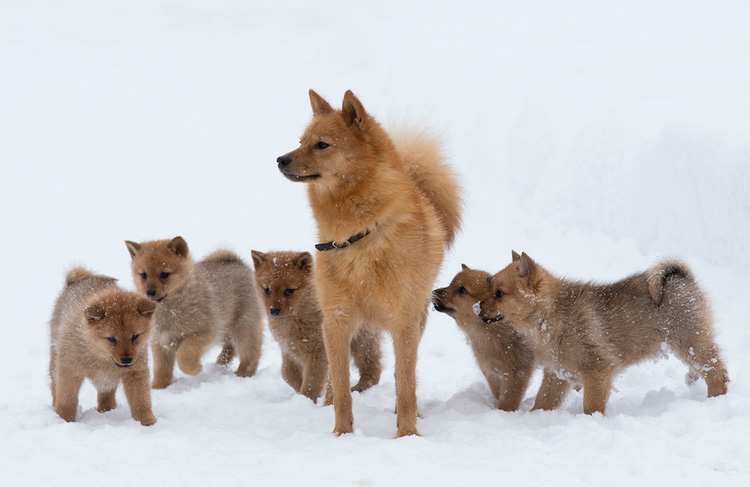
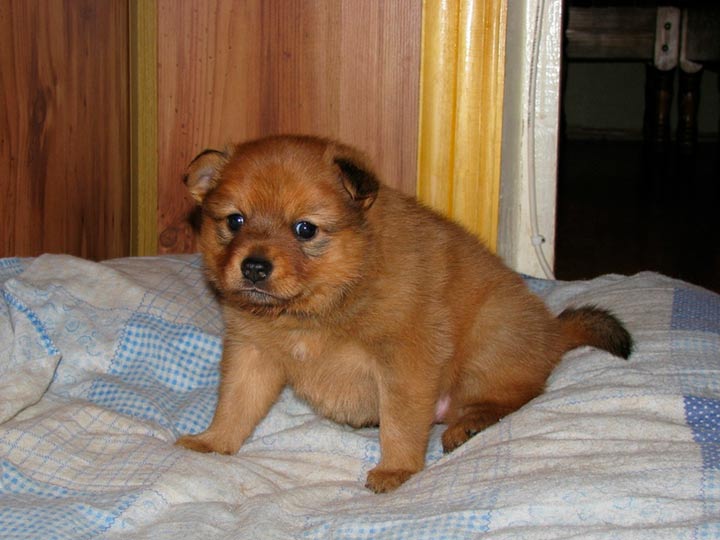
The puppies' coat is more faded, grayish, beginning to fade at 5-7 months and fully formed by 2 years. Their muzzles are more rounded, as is their overall appearance. At 4-5 months, the dog begins to elongate and acquire the shape typical of an adult Laika. When choosing a puppy from working parents, various tests are often used to determine strength of character, scent, hunting instincts, and mental stability. Puppies are usually picked up at 2-2.5 months. In appearance, the puppy should be healthy, well-built, with white baby teeth and a correct bite.
Price
The price of a Karelian-Finnish Laika typically ranges from 10,000 to 20,000 rubles. Individual dogs from working lines can cost even more. An adult dog that has proven itself in working conditions costs from 30,000 rubles, but as mentioned above, Laikas have a difficult time adjusting to a new owner. Puppies without a pedigree often sell for 5,000 to 10,000 rubles.
Photos
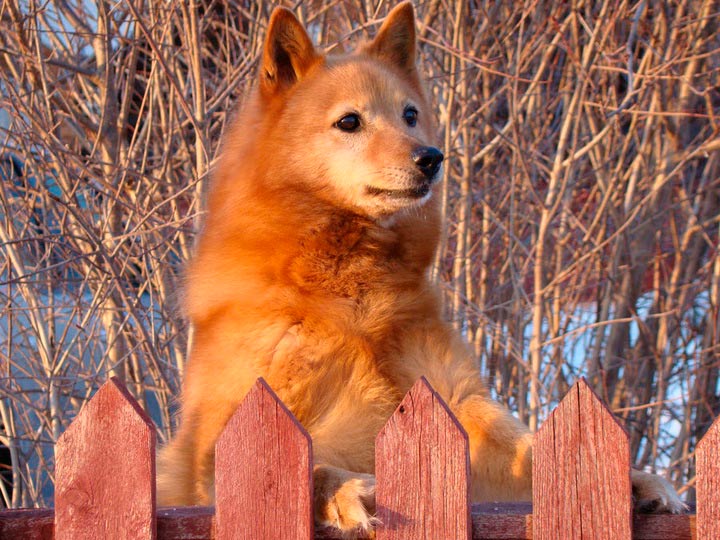
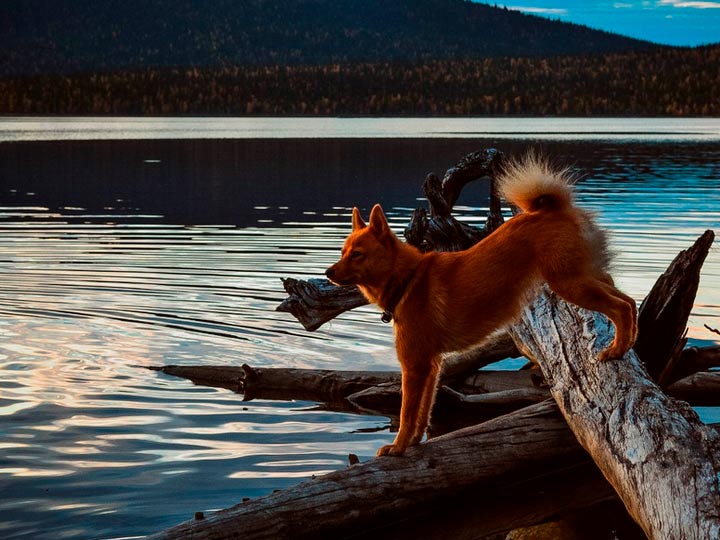
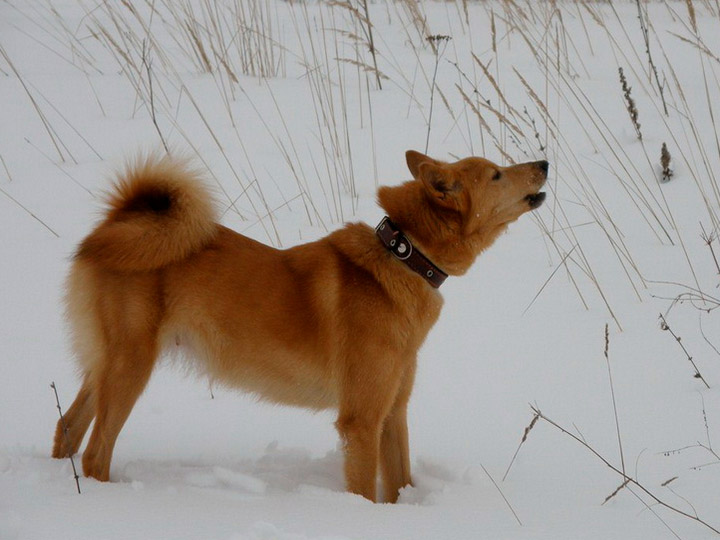
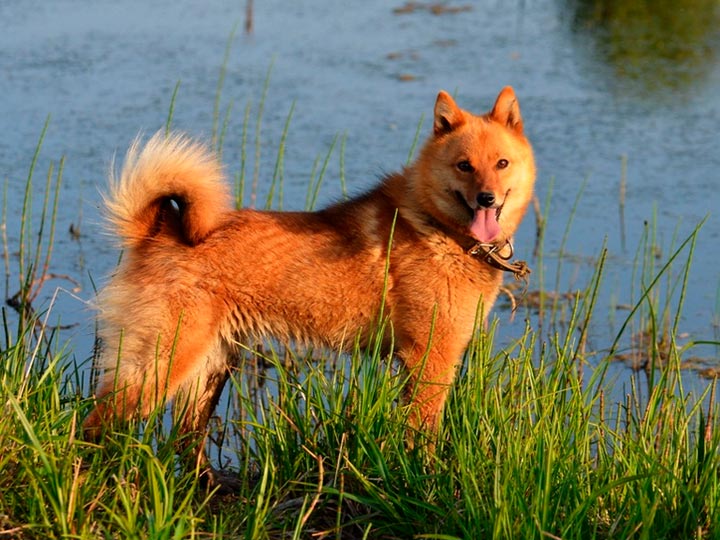
The gallery contains a collection of photos of adult Karelian-Finnish Laika dogs and puppies.
Read also:


Add a comment