
Karaket
Most cat breeds, of which there are over 70 registered, arose as a result of random mutations or natural selection in a specific area, but some were developed by deliberately crossing wild cats with domesticated cats. These breeds are called hybrids. One of the most striking examples is a recent development, called the Caracat.
Content
History and origin of the breed
Cats like these are very difficult to obtain. The first such hybrid was born by accident at the Moscow Zoo in the 1980s. A local cat snuck into a caracal's enclosure, got what the tomcat wanted, and two months later gave birth to a miracle cub. tassels on the earsIt was a male, so procreation was out of the question. Hybrid cats are infertile until the fifth generation.
Caracal or steppe lynx – a predator from the feline family. Until recently, it was considered at a trot, but after a series of genetic studies, it was necessary to separate the species into a separate genus. The name "caracal" comes from the Turkish word "karakulak," which means "black ear."
A second attempt to produce similar hybrids was made by American and German breeders in the late 1990s. However, their efforts were unsuccessful, and the work reached a dead end.
The only person fortunate enough to successfully establish a new breed is Irina Nazarova from Krasnodar. She is the founder of the Caracat breed and the owner of the first cattery of unique hybrids, called "Kataleya." Working diligently since 2007, Nazarova helped several other catteries establish this new, rare breed and also organized the first Caracat show featuring the best specimens. From 2007 to 2016, she succeeded in producing second-generation F2 Caracats, a feat of which she is truly proud. The breed has already been recognized by the International Cat Union (ICU), Russia's largest registry, and the international felinological organization TICA.
Film report about Karakets:
Appearance of the Karakets
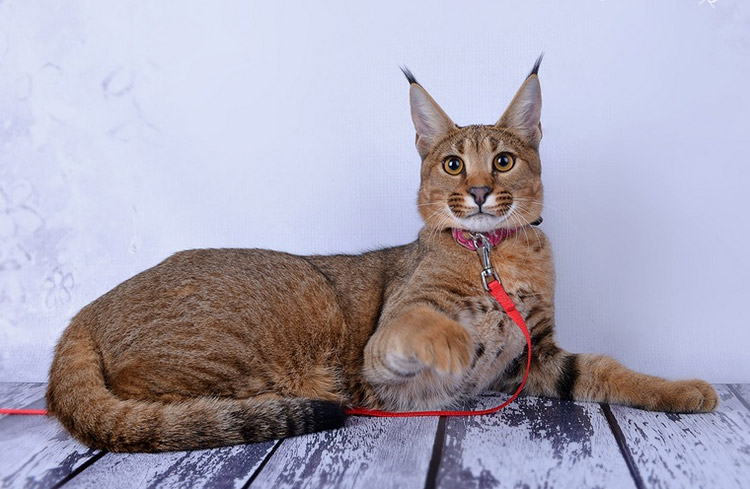
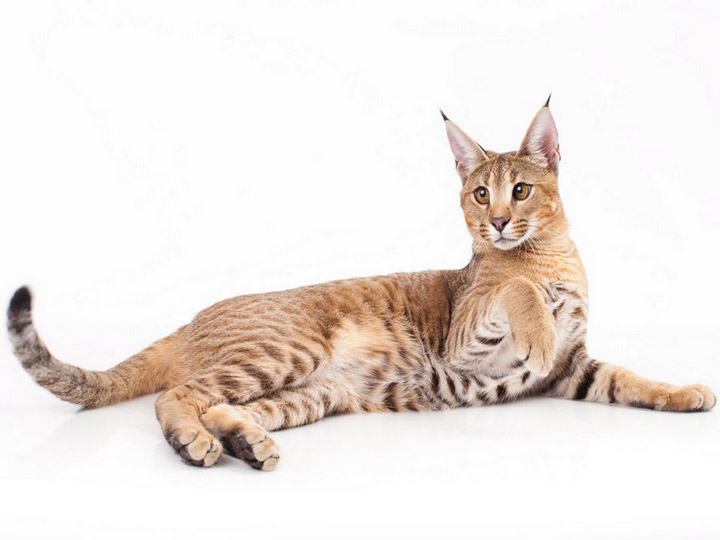
Caracats They have a distinctive appearance. They inherit many traits from the steppe cat: tall limbs, a proportionally developed muscular body, large paws, and a small fold of fat on the belly. An adult cat is up to 90 cm long, about 50 cm tall, and weighs up to 15 kg (average 9-12 kg).
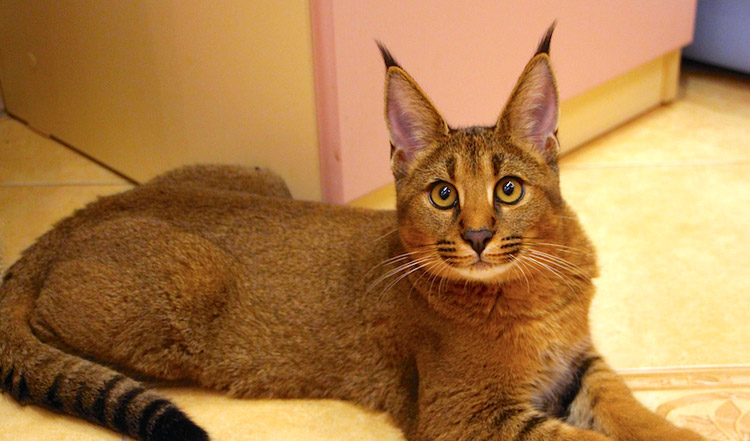
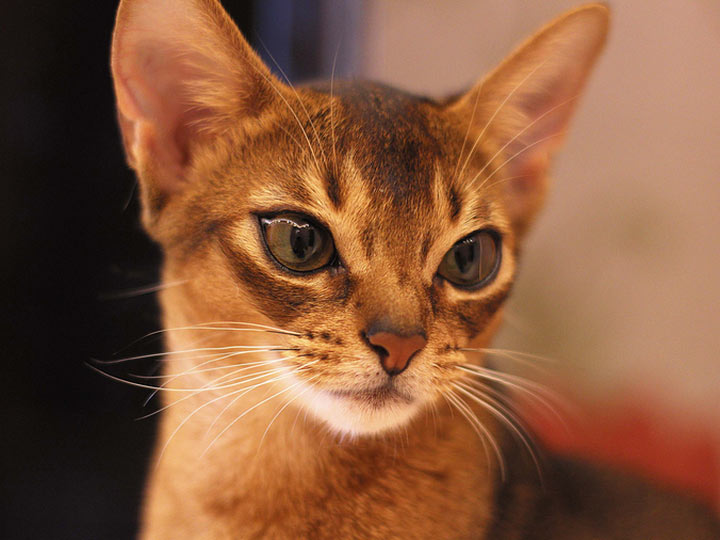
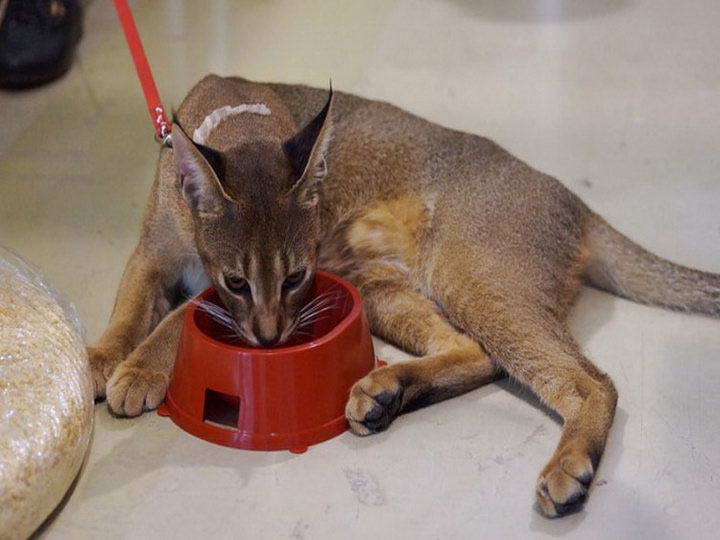
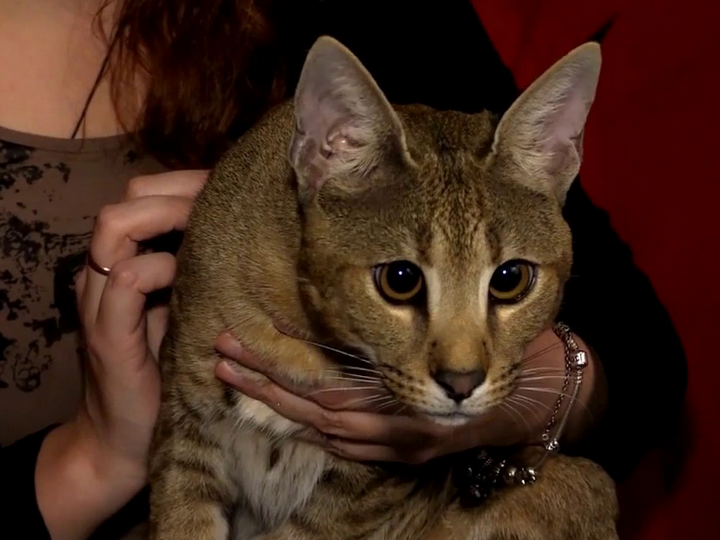
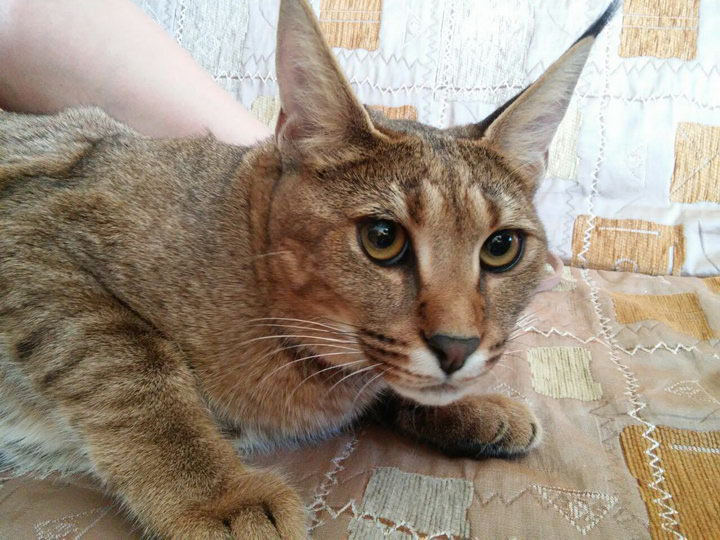
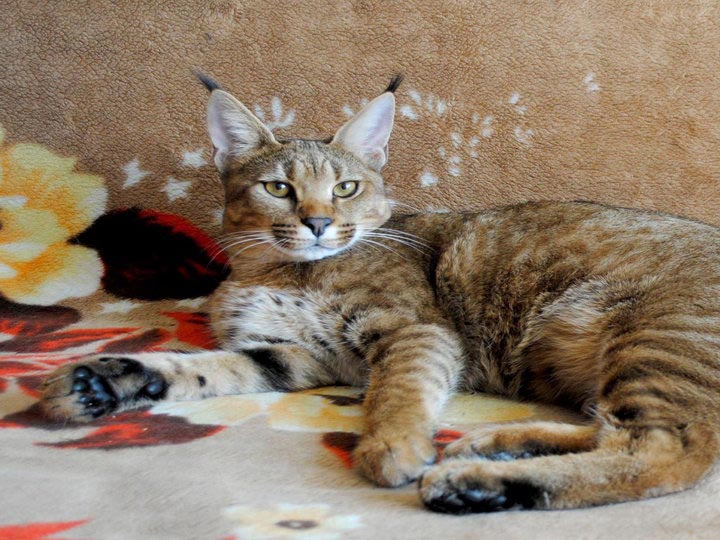
The muzzle is small in proportion to the body. The eyes are round and very expressive, largely due to the darkly pigmented eyelids. Above the eyes, closer to the inner corner, are two dark vertical markings, characteristic of wild cats. The nose is fairly wide with a large dark nose lobe, which, like that of the caracal, may have a light spot. The ears are large, set high, and very mobile. The outer surface of the ear is covered with dark hair, while the inner surface is light, but the main decoration is the noticeable black tufts at the tips.
The coat is brown with double or triple ticking. The chest, belly, and inner legs are lighter, almost white, with dark markings. Dark stripes may be visible on the tail and legs.
Hybrids F1, F2… F5 – what does this mean?
The first generation of hybrids, in this case between a Caracal and an Abyssinian cat, are designated F1—these are kittens of the first generation, which contain approximately 50% of the blood of their wild parent. F1 kittens are the most beautiful and expensive, and are also very valuable to breeders. Many of them become the foundation cats of new lines, which helps prevent inbreeding.
Second-generation (F2) kittens are born from an F1 female and a male of the breeder's chosen breed. This generation contains approximately 30% wild blood. Subsequent generations are designated according to the same principle. After the letter F, a number designates the generation. In each subsequent generation, the wild blood becomes increasingly diluted, and the appearance tends to be more domesticated.
The character of the Caracats
Caracats have a surprisingly affectionate and pleasant personality. They are intelligent and obedient cats who happily participate in all household chores and never refuse active play. They are very curious and energetic, with excellent hunting instincts. They often prefer a nocturnal lifestyle. They can be somewhat tame, possessing a feline independence and self-reliance, but are not aggressive. Interestingly, Caracats move very quietly, except when playing. As for cohabitation with other animals and their fellow cats, Caracats have proven themselves to be friendly and peaceful neighbors.
Content Features
In terms of care, Caracats are virtually no different from other domestic cats. They quickly learn house rules and are easily trained to use a regular litter box with any type of litter. Moreover, all basic hygiene and housekeeping skills have already been instilled by their breeder.
Immediately after arriving at a new home, it's best to limit the kitten's movement around the apartment. You can keep it in one room with a litter box, food and water bowl, a bed, toys, and some household items. This is essential for the kitten's smooth adaptation to the new home. It will be easier for the kitten to settle into a small space and get used to new smells and its parents. Once fully acclimated, you can train the kitten to go for walks with you on a leash.
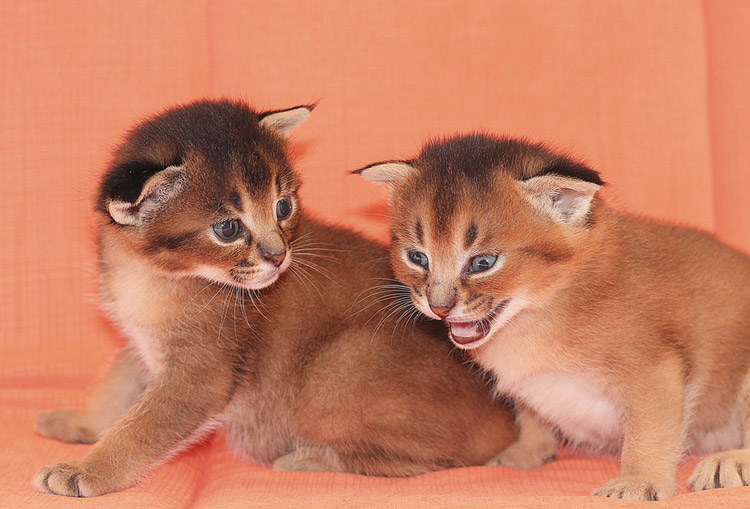
Kittens can hiss from birth and do so more often than ordinary house cats. This hissing is completely harmless; the babies are trying to show how scary and strong they are, while shaking like aspen leaves. During this period of mistrust, new owners should avoid sudden movements and noise.
Safe toys are a must. For adult cats, you can buy toys designed for small dogs, without small parts or feathers that could be swallowed. Also, consider the size and energy level of Caracats; they will need a large and stable play structure to play with.
Care
Grooming is an important part of their care. Caracats have short coats that don't require much effort, but it's still recommended to brush them weekly. During the summer, during shedding season, brushing can be done daily. Bathing is recommended no more than once every three months. This is usually not a problem; many Caracats enjoy water and showers.
What to feed a caracat
When it comes to feeding, natural foods are the preferred choice. Raw poultry, beef, rabbit, quail, and fish form the basis of the diet. These foods contain all the necessary components for proper growth and development. Otherwise, the diet should be varied and balanced. Up to two years of age, supplement the diet with vitamins and calcium. The daily food requirement is approximately 5-10% of the cat's body weight. Fresh drinking water should always be freely available.
Health
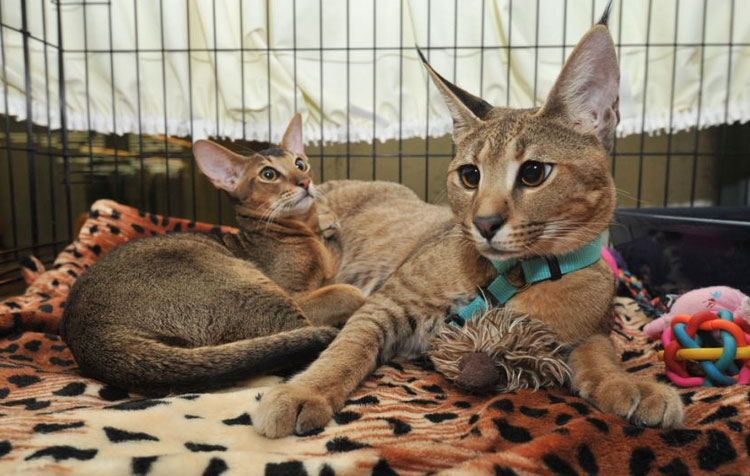
Caracat kittens are born at a standard size and age for domestic cats—65-72 days—but by the age of one month, they "catch up" to their caracal genes. Kittens grow, develop, and gain weight very quickly. Their eyes open in the second week.
Caracat breeders have not yet encountered any cases of hybrids contracting feline infections. This is likely due to the strong immunity inherited from the caracal. However, a comprehensive vaccine against feline viruses and rabies is mandatory and does not cause any adverse effects.
How much does a Caracat kitten cost?
This unique breed is not only the rarest, but also the most expensive in the world. A kitten without breeding rights costs approximately 1,000,000 rubles. For more detailed pricing information, it's best to contact the breeders directly. One of the requirements for purchasing a Caracat is maintaining ongoing contact. In exchange, the cattery provides expert advice and assistance with raising the cat.
Every year, the breed becomes more numerous, and the price of a Caracat kitten becomes more affordable, which cannot but please exotic lovers and potential buyers.
Photos
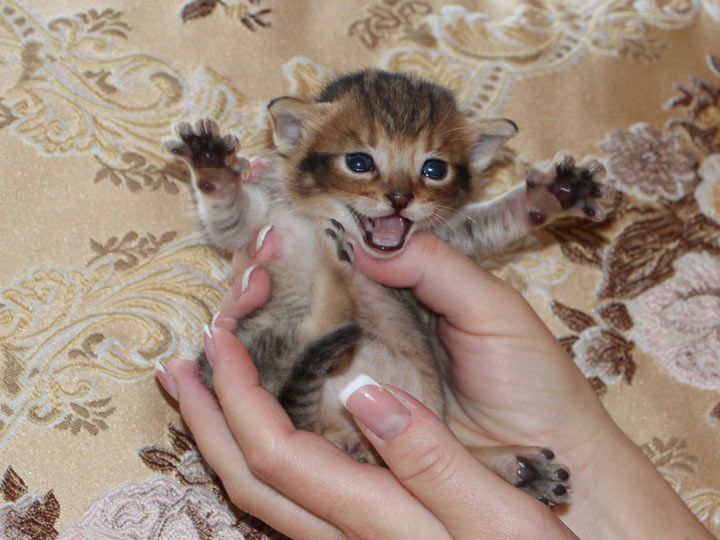
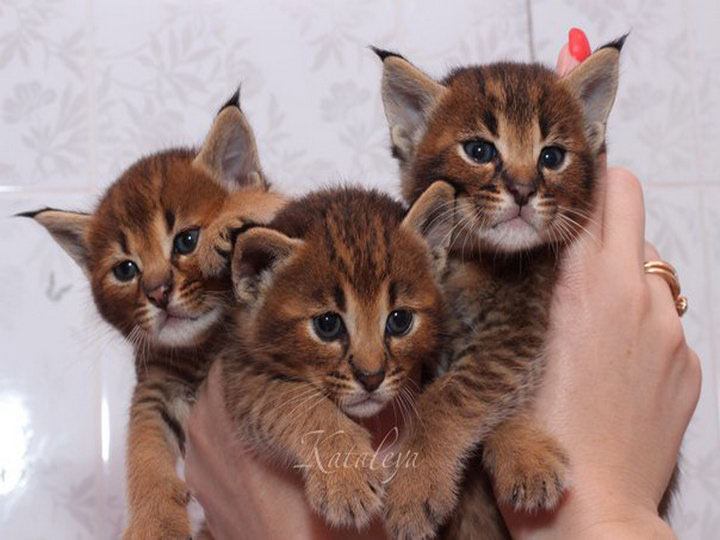
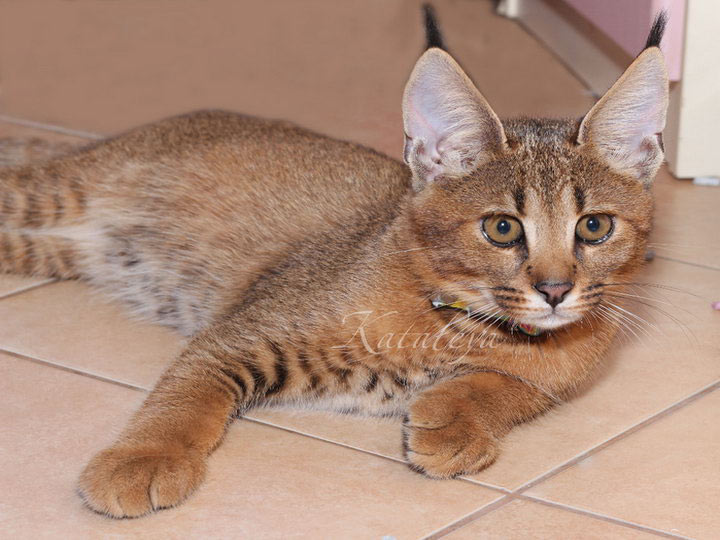
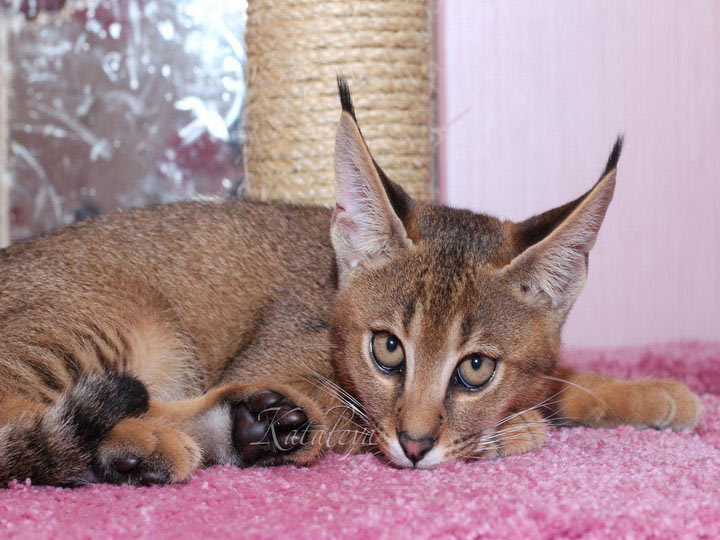
Photos of Caracat kittens and adult cats
Read also:


Add a comment