
The caracal is a big cat for exotic lovers.
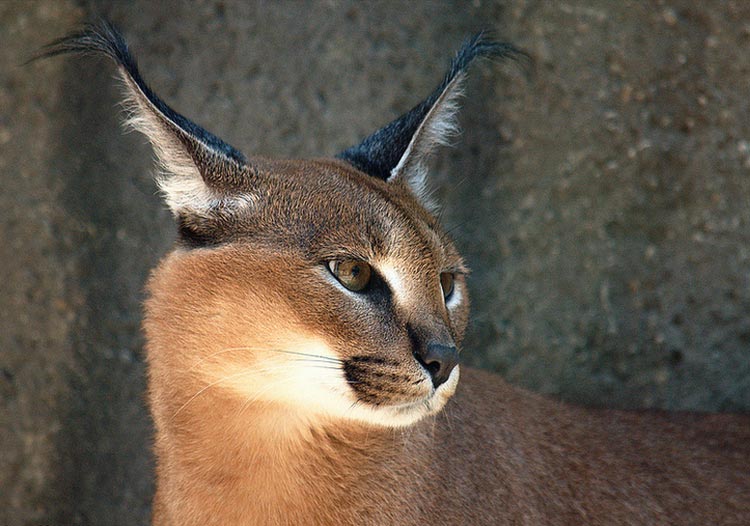
Caracal, or steppe lynx The caracal is a predatory mammal from the feline family, but humans have learned to domesticate it. Domesticated caracals are quite friendly and sociable. But it is precisely the combination of its brutal appearance and docile nature that has made it one of the most coveted exclusive pets.
Content
Caracals in the wild
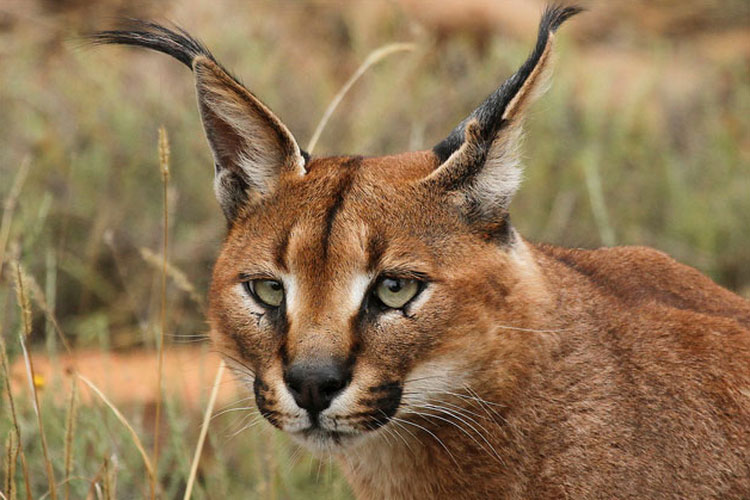
In the wild, caracals inhabit the savannas, deserts, steppes, and foothills of Africa, the Arabian Peninsula, Asia Minor, Central Asia, and the Middle East. These cats live in rock crevices and sometimes occupy the empty burrows of other animals. Caracals are primarily active at dusk or at night, but can also hunt during the day.
Caracals are unique in that they can go for long periods without water, obtaining fluids solely from their food. Like cheetahs, they use tall trees to store food. Caracals drag food and hide it on a branch, concealing it from other predators.
Caracals reproduce throughout the year. A female may have up to three partners during the courtship period. Gestation lasts 78-81 days, after which up to six kittens are born. A month after birth, when the kittens begin to emerge into the sun, the mother begins moving the kittens from one den to another once a day. After six months, the young will leave their parental home and find a new home.
How caracals became domesticated
Caracals are easily tamed. In ancient times, in some Asian countries, tame caracals were even used to hunt hares, peacocks, pheasants, and small antelopes.
Hunting with wild cats, particularly cheetahs, was very popular in the East, but since their spotted cousins were expensive, poor people captured and kept steppe lynxes, which were known as "the poor man's cheetah." Over time, such hunting became rare, and domestication of these cats was temporarily abandoned.
Just 10-20 years ago, caracals could only be found in deserts, savannas, and zoos, but certainly not in apartments or country cottages. Moreover, these cats are endangered in the wild. Everything changed in the 1980s. At the Moscow Zoo, a caracal and a common local cat, accidentally or intentionally introduced into the enclosure, gave birth to a beautiful kitten. tassels on the ears and an unusual coloring. The hybrid boy was sterile, and the story could have ended there, but no.
Naturally, news of the successful interspecies crossbreeding did not escape the attention of felinologists and breeders. Subsequently, there were many more attempts to develop a new breed. Meanwhile, the caracal cat breed, or rather the species itself, caught the attention of numerous exotic lovers uninterested in breeding. The wild cats' beautiful appearance, relatively small size, and the fact that even kittens born in the wild are easily trained contributed to their rapid popularity.
Incidentally, numerous attempts to breed caracals and domestic cats were ultimately successful. The hybrid breed has already been officially registered and is called Karaket (cara(cal)+cat).
Appearance
For a long time, caracals were classified as lynxes, which they resemble in appearance. Their beautiful ear tufts, size, and reddish coloring were misleading. Later, due to a number of genetic characteristics, they were classified as a separate genus.
Caracals are cats with the beauty and grace of true predators. They are quite large. Their height at the withers can reach 50 cm, their average weight is 15 kg, and their body length is approximately 1 meter. Their build is strong and muscular. Their well-developed hind legs are also noteworthy, allowing them to leap 4 meters from a standing start.
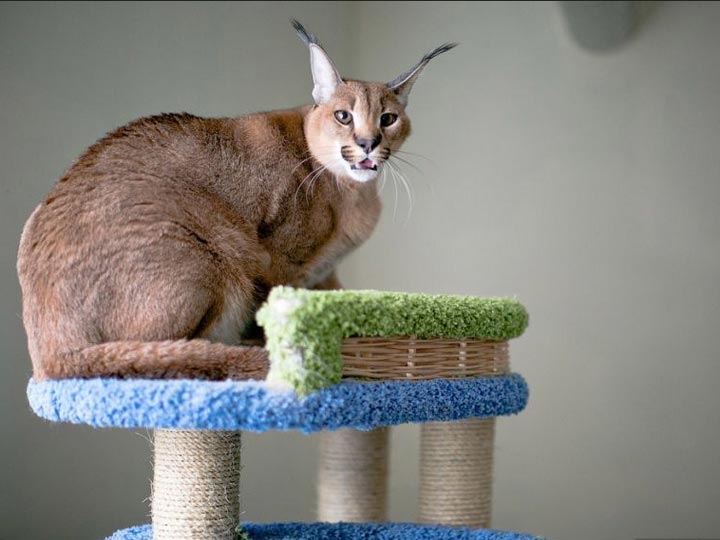
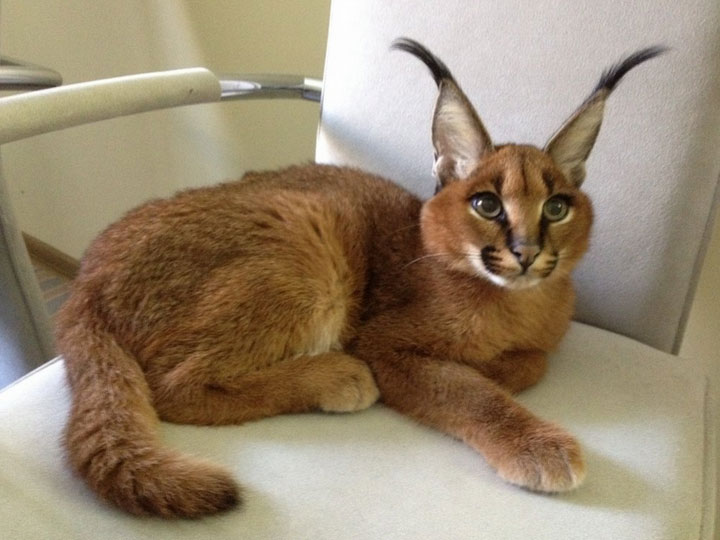
Caracals have short, very dense fur with a coarse texture and a well-developed undercoat. Their color varies slightly depending on their habitat, from brown to almost red, but the underparts are always light and decorated with numerous small spots. Black markings around the eyes are prominent on the muzzle. The ears are adorned with long black tufts, and the back is covered with short black hair, which gives the cat its name (from the Turkic "kara-kulak" meaning "black ear" or the Kazakh "karakal" meaning "black brush").
Character and habits
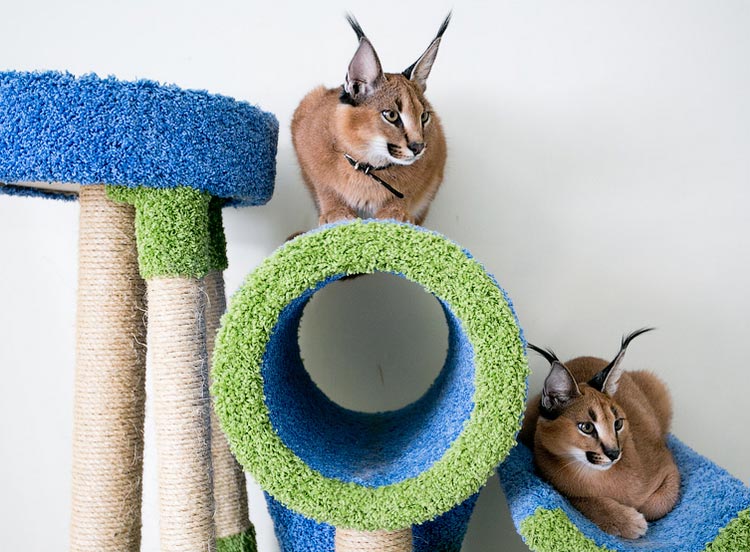
Properly raised and lovingly trained, caracals are good-natured and playful animals, perhaps only intimidating in appearance. Caracals are very energetic, curious, and intelligent. They treat all family members well and are eager to communicate. They are reserved with strangers, or even aggressive if they feel it's time to defend their territory. Caracals form very strong bonds with their owners, recognizing only one. Although caracals are relatively easy to tame, they will never behave like ordinary house cats, although they may purr when scratched behind the ear.
The first two years of adolescence are the most difficult. During this period, caracals are most emotional, much like humans during adolescence. At the same time, they are vulnerable and fearful, and can be dangerous to their owners and others. Therefore, it's important to devote as much time as possible to training them and seek professional help. Upon reaching sexual maturity, caracals begin to mark and defend their territory. Both males and females do this.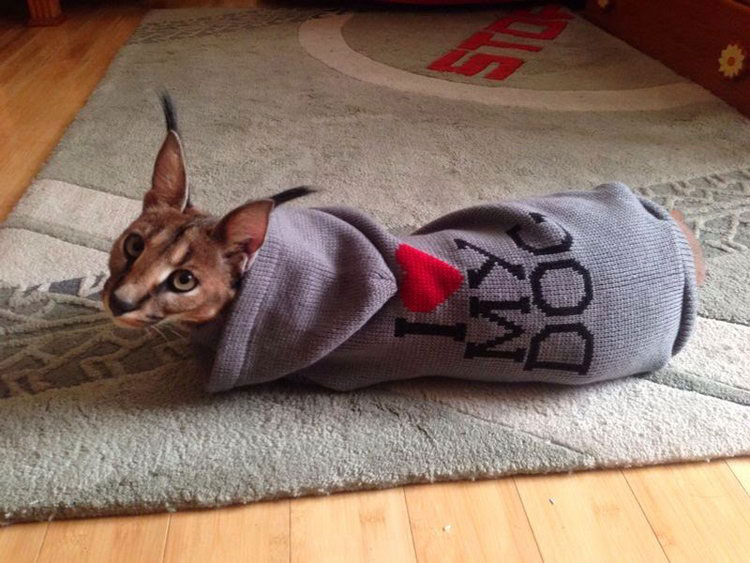
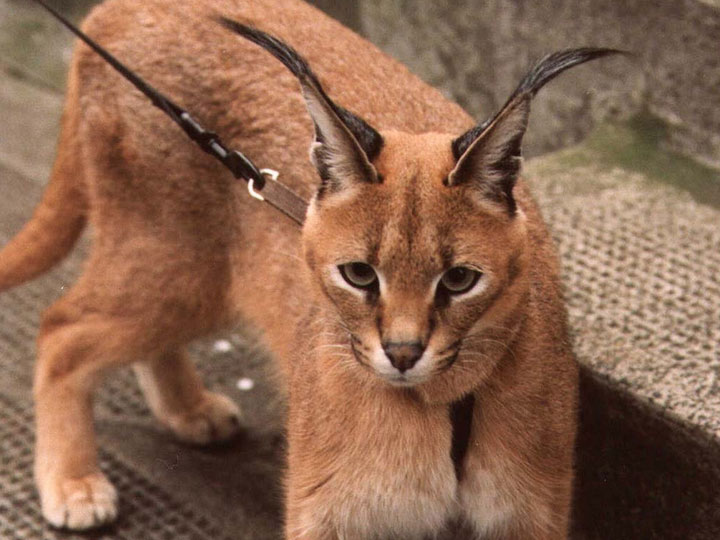
Caracals love to swim, fetch toys, and walk well on a leash. Their playful nature is similar to that of dogs, but they also have the gracefulness of cats. They get along well with other cats and their own kind. It's difficult to predict their relationship with a dog. However, birds and small rodents are always potential dinners for this ginger pet.
Families with small children should exercise caution when introducing a caracal. The animal is a predator with an independent and willful nature.
Keeping a caracal at home
Those considering a ginger kitten should understand that a caracal will need ample space, high-quality natural food, and adequate exercise and care. It's not recommended to keep a wild cat in an apartment. The best option is a private home with an attached enclosure and easy access. The cat's enclosure should be at least 2.5 meters high and at least 15 square meters in size.
Caracals are quite destructive and, when playing, can turn an entire house upside down and damage or break numerous things. Most cat toys are not suitable for a caracal. They are too fragile and small. Toys for medium-sized dogs or children's toys are suitable. A pet caracal is not cheap, as are subsequent maintenance costs.
Video about caracal care. Pitfalls.
Caracal's diet
In the wild, they feed on birds, rodents, hares, and small reptiles. This should be taken into account when formulating a pet's diet. There are several diet options for caracals, but meat is always the mainstay: chicken, beef, poultry, rabbit, rats and mice, and sometimes raw eggs. Some owners prefer to feed exclusively live food, offering mice and quail to kittens, and rats and chickens to adult cats. In rare cases, caracals are fed high-quality cat food with minimal grains and additives, but this is not the best option for a wild cat.
A caracal's diet must include live food, including fur/feathers, bones, and entrails. This is necessary to maintain normal digestion and microflora.
During the first three years, vitamins and supplements with a full range of micro and macronutrients are essential. Caracals are fed once or twice a day, but at different times to avoid getting used to a schedule. A wild cat needs to experience hunger periodically. Furthermore, it must understand that its only access to food is through the caring hands of its owner.
The amount of food depends on the animal's weight and age. The daily meat portion is approximately 3-5% of the cat's total weight. Therefore, a 10-kilogram cat will need 300-500 grams of meat per day. During warmer months, appetite may decrease slightly, while in colder months, it increases. Water should always be freely available. A fasting day should be scheduled every 7-14 days, with access only to water.

Buying a Caracal Kitten: Selection and Price
Like other exotic pets, you won't find a caracal at a bird market or on an online classifieds search for "caracal cat price in rubles." Your search for a kitten should begin with exotic animal or hybrid breeder breeders, or specialized catteries. Generally speaking, if you have the funds and desire, buying a caracal is not difficult.
It's best to adopt a caracal from a home-based breeder, rather than one kept in an aviary. It's important that the baby be in constant contact with humans from birth. This doesn't guarantee, but it increases the likelihood that it will grow up tame, kind, and affectionate.
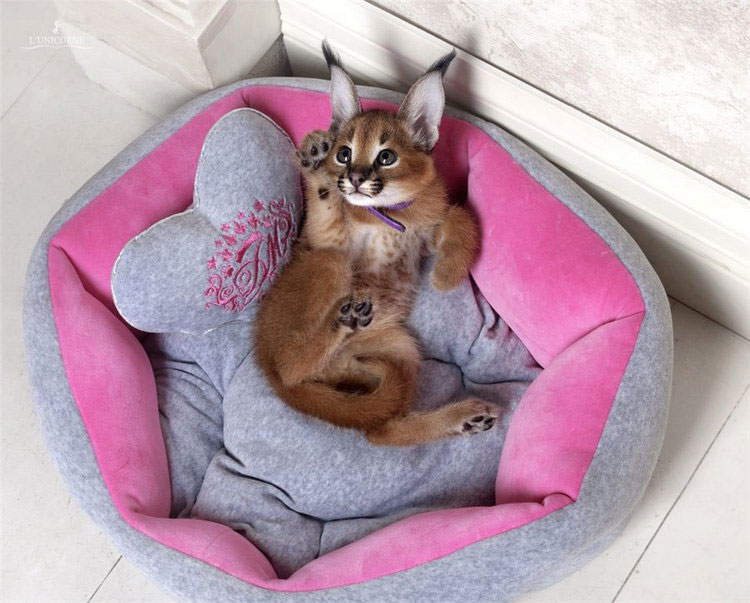
It's recommended to buy a kitten before it's six months old. A human-reared kitten will quickly adapt to a new family and environment. In terms of adaptation, a caracal is similar to a puppy: it's friendly, sociable, and less sensitive to changes in its routine and home environment than, for example, a serval.
You should not purchase animals from resellers or from people who cannot provide official documents.
It's important to determine immediately whether you want a kitten as a pet or for breeding. Firstly, this affects the price. Secondly, if mating is not planned, it's best to have the animal spayed/neutered between 3 and 5 months of age. Otherwise, problems with marking, aggression, and a desire to leave the home are inevitable.
The price of a Caracal kitten in official catteries ranges from $8,500 to $12,000. Kittens intended for breeding are typically more expensive. Gender is important; males are often less expensive than female Caracals. Prices in Russia can also vary depending on the cattery's location.
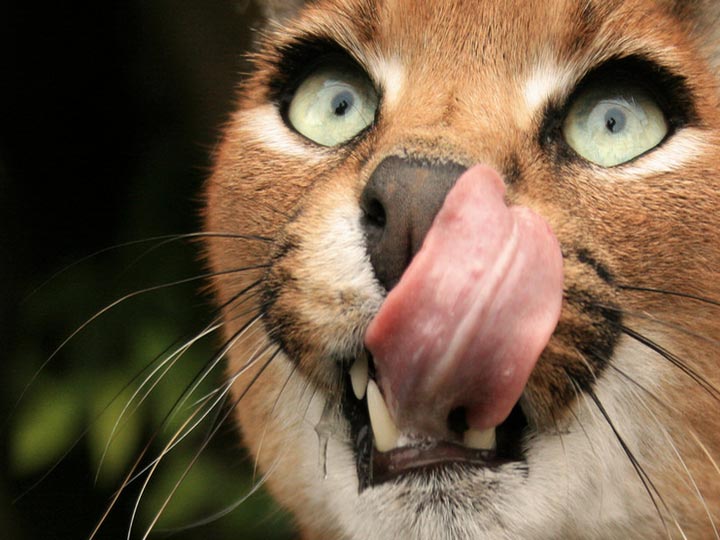
Photos
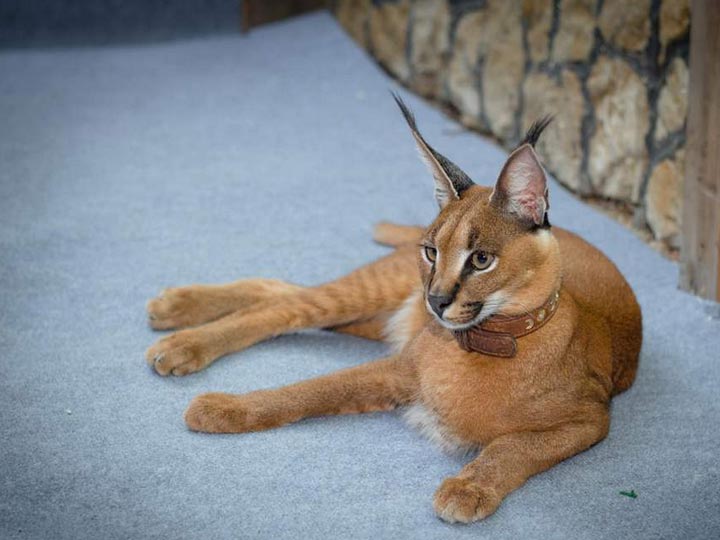
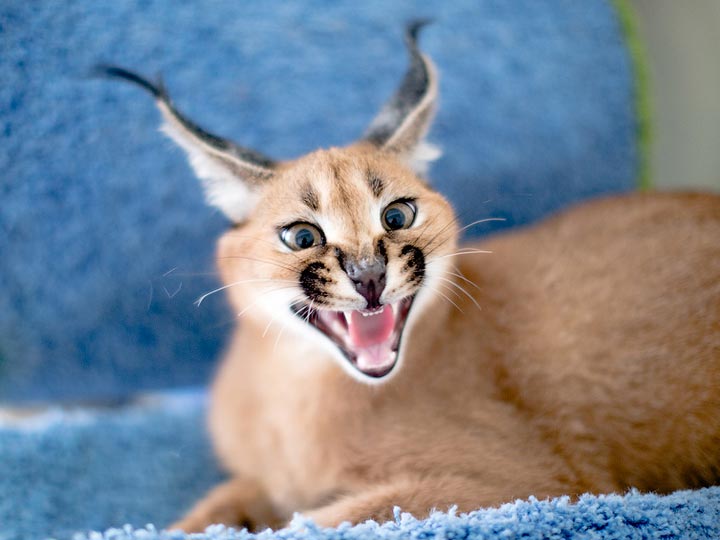
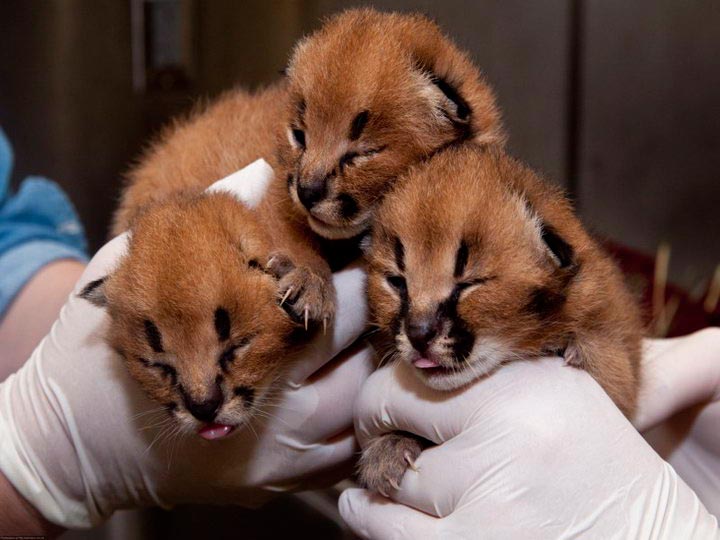
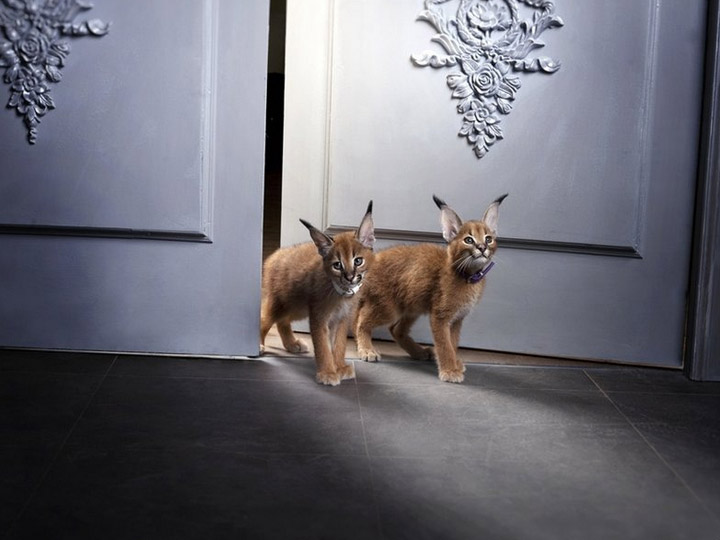
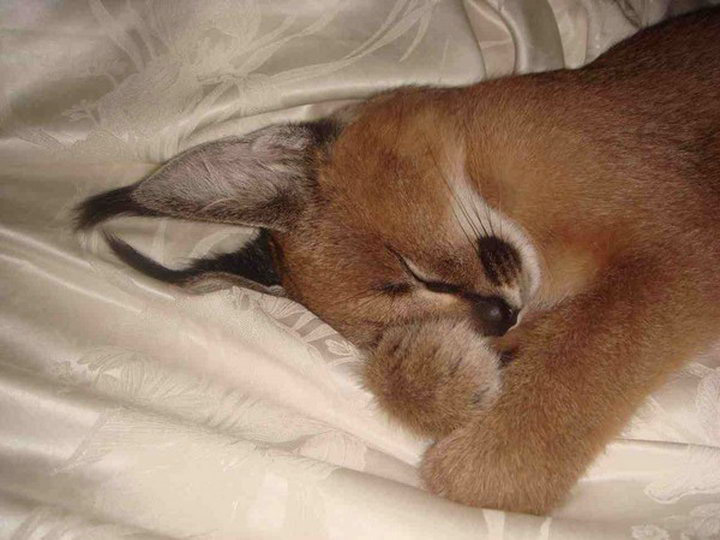
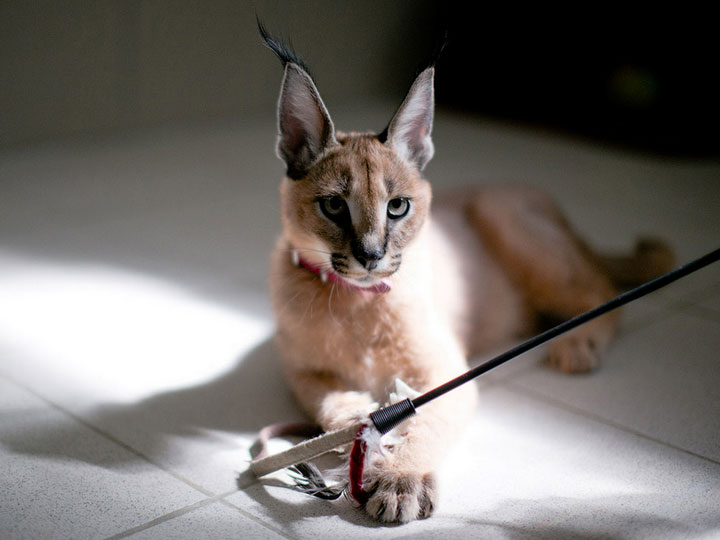
A selection of beautiful and vibrant photographs showing the caracal, a cat in all its glory, both domestically and in the wild:
Read also:


Add a comment