
Kangal is a breed of dog
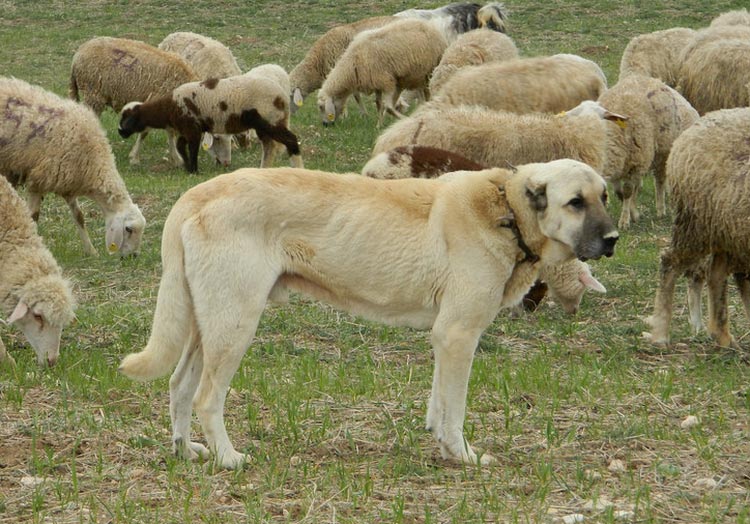
The Kangal is a breed of native guard and herding dogs from Central Anatolia. Robust, strong, and resilient, Kangals are highly prized in Turkey and considered among the best in their field. Without fear or hesitation, they can serve in any weather, protecting flocks from wolves and property and their owner from intruders. It's worth noting that this breed is rare, recognized only by the Turkish Cynological Federation, and its export outside of its homeland is prohibited.
Content
History of origin
The Kangal dog breed emerged relatively recently, when Turkish herding dogs attracted the attention of the global cynological community. However, it is undeniable that this is one of the oldest aboriginal dogs of Asia Minor, which began to develop in the natural environment of the Kangal region of Sivas no later than the 13th century. Around this time, dogs of the Central Asian type arrived in Sivas, where local populations already existed, and interbred. Subsequently, they were infused with Turkish greyhound blood, which gave the Kangals a more graceful body shape, a wolfhound-like character, excellent reflexes, and running speed. This distinguishes them from other Turkish herding dogs.
In the early 1970s, there was no single herding breed in Turkey, and consequently, no name, "Kangal," either. All herding dogs were collectively known as coban kopegi (shepherd's dog), or as the Turks themselves called them, Çoban Köpeğimiz. (Our shepherd dog). Naturally, they all differed in appearance and character. At this time (before the export ban), American breeders Ballard and Nelson managed to acquire several Turkish dogs.
Soon, the Anatolian Shepherd Club of America, founded by Mr. Ballard, and the American Kangal Club, founded by breeder Nelson, emerged overseas. It must be acknowledged that the public learned about Turkish shepherds thanks to the Americans. Ballard called them all "Anatolian Shepherd Dogs" and didn't associate them with a specific region, while Nelson identified several types and named them after the regions in which they were common: Kangal, Akbash, and Kars. The emergence of Turkish dog fan clubs in America inevitably caused concern among Turks, who felt their national treasure had been stolen. The Turkish Cynological Federation then singled out only dogs of a certain type from the Kangal region and began their controlled breeding. A standard was adopted within a few years.
In America and Europe, they stubbornly call all dogs with the Anatolian Shepherd Dog pedigree Kangals, which misleads the general public.
The American Anatolian Shepherd was originally developed from several Turkish herding dogs, with some Turkish Mastiff blood mixed in. This is why the breed is not recognized in Turkey, and it certainly cannot be credited with a thousand-year history of development.
Control over the export of dogs from Turkey
The Kangal is a national treasure, and exporting these highly-bred dogs abroad is strictly prohibited. Each puppy undergoes a thorough culling process and must meet the accepted standard down to the last hair. KIF (Turkish Cynological Federation). Not a single puppy with a pedigree KIF Can't cross the border without an owner. Because of this, the RKF closed the studbook for the breed, and the path to a "0" pedigree without documents from its historical homeland is very difficult. In any case, dogs with a registered pedigree bear the stamp: "Not subject to breeding." Such males are doomed to celibacy, and females to illegitimate offspring, which naturally cannot positively influence the breed and its development as a whole.
Kangal kennels maintain the breed's working qualities, and shepherds still favor this dog. However, even in its homeland, the breed is small in numbers. At the time of the 2013 inventory, only 157 individuals remained.
Breed recognition
On June 25, 2018, the Fédération Cynologique Internationale officially approved and published the Kangal Çöban Köpeği (Kangal Shepherd Dog) breed standard, No. 331. From now on, the breed, name, and concept of "Anatolian Shepherd Dog" no longer exist. There is only the Kangal Shepherd Dog! Any deviation from the standard is now considered a breed defect! In the FCI breed classification, the Kangal has "taken" the place of the Anatolian Shepherd Dog.
As for Anatolians, they can play a positive role in expanding the gene pool. Dogs that have a pedigree and are called Anatolian Shepherd Dog Can be re-registered as Kangal Shepherd Dogs (Kangal Çöban Köpeği (English: Kangal Shepherd Dog)) provided they fully comply with the new breed standard. Anatolian breeders who can obtain documents confirming they are now Kangals are entitled to continue breeding and showing under the new name. The rest are considered mongrel dogs.
Video about Turkish Kangal dogs:
https://youtu.be/_Wf0-rqljVY
Appearance
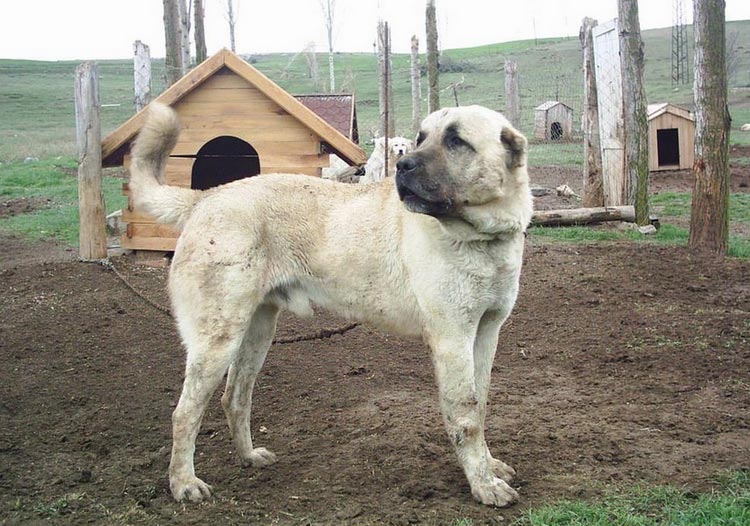
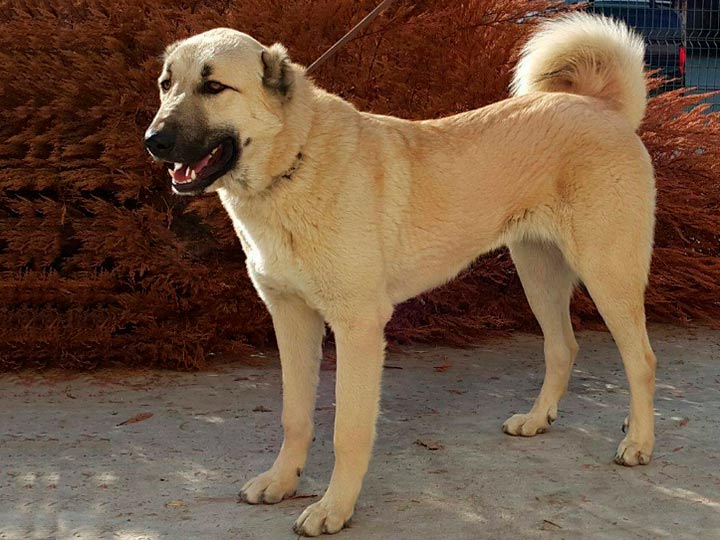
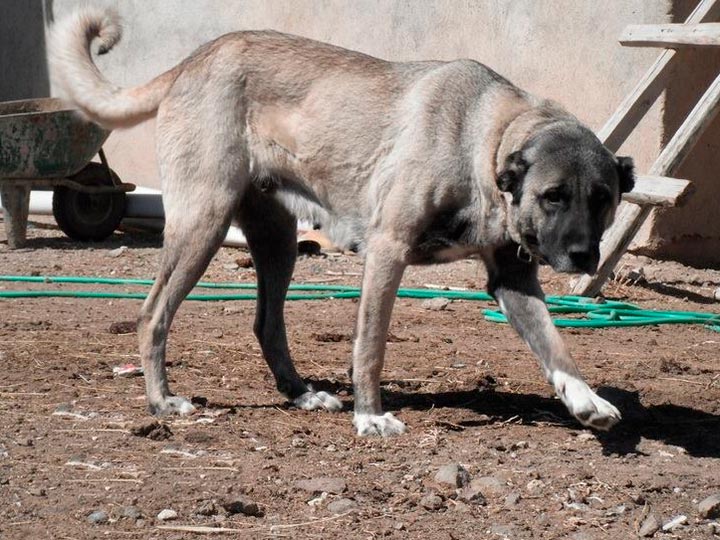
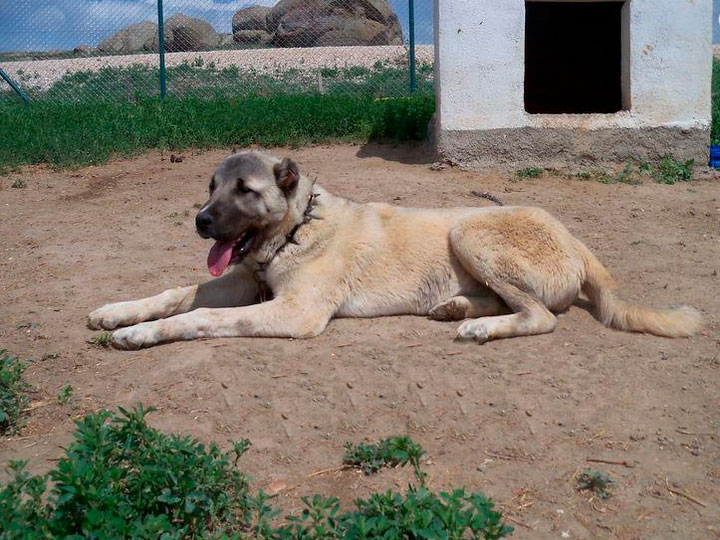
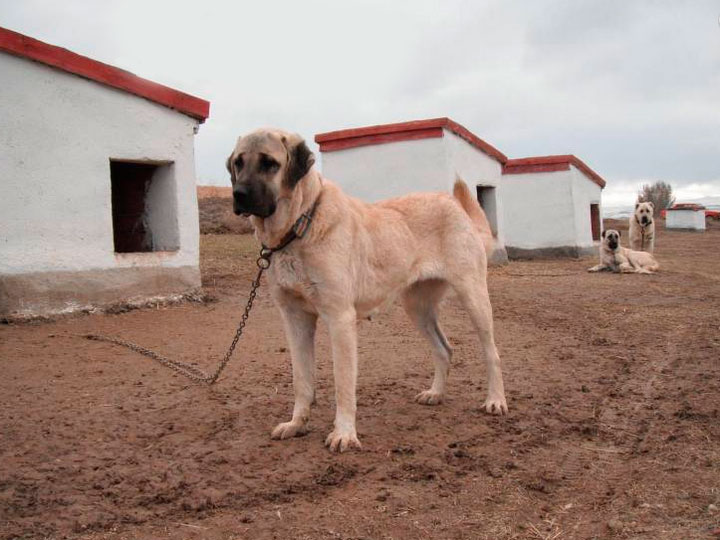
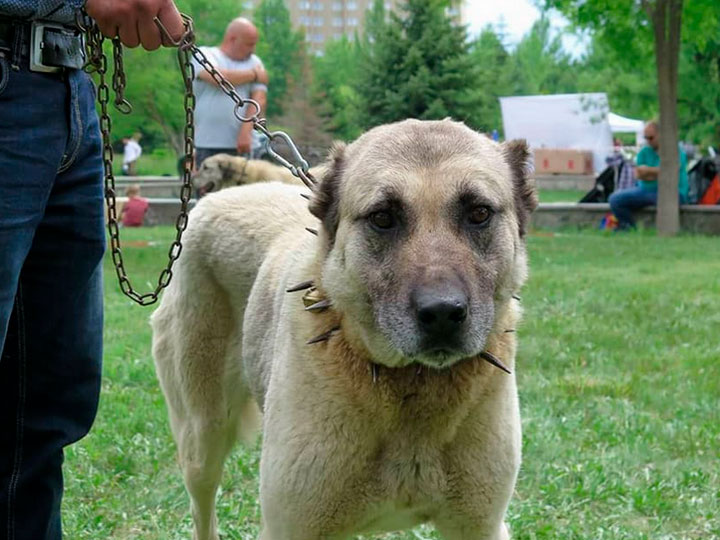
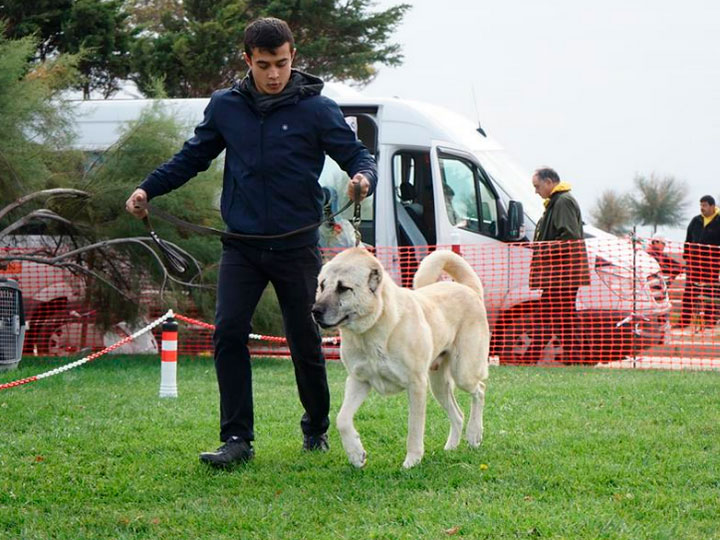
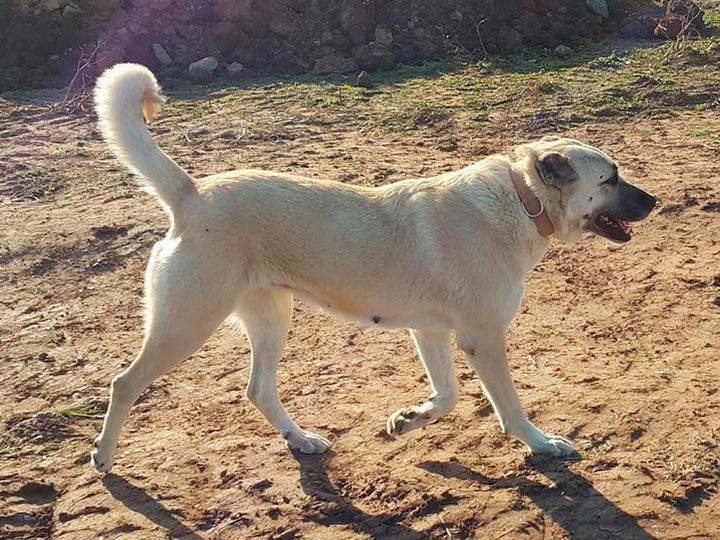
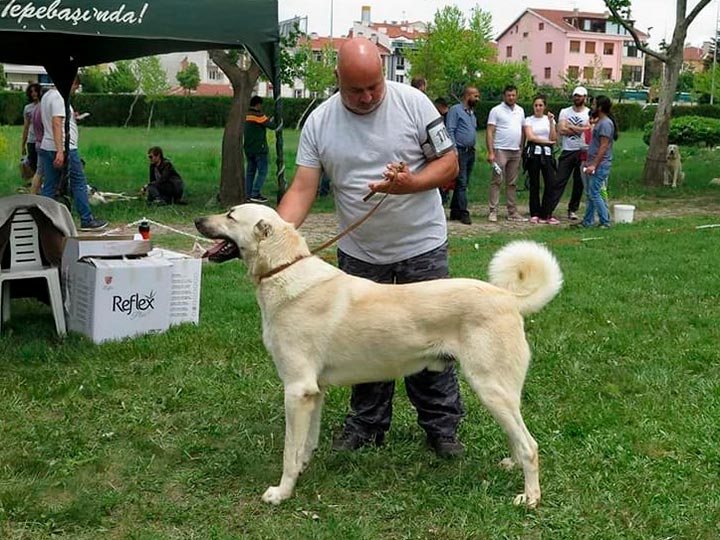
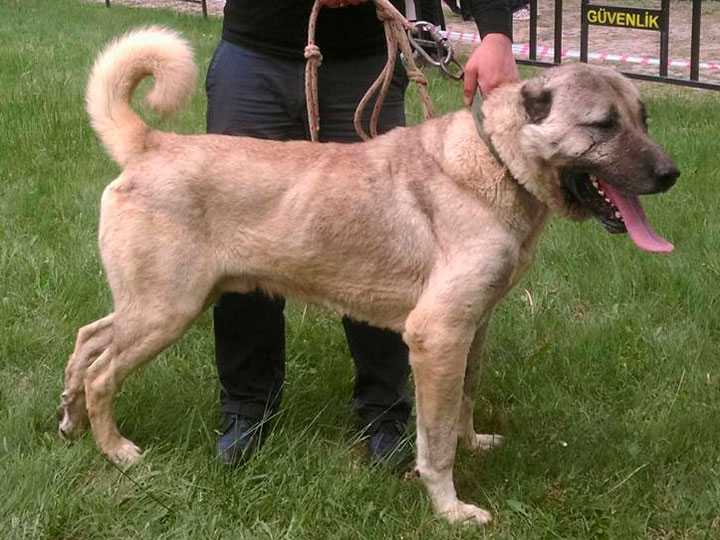
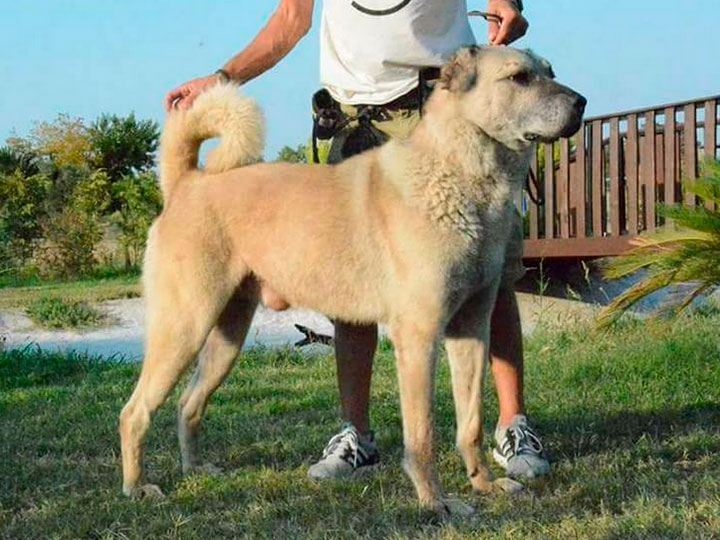
The Kangal is a large, powerful dog with strong bones and well-developed muscles. At the same time, the dog is well-balanced and even somewhat graceful. The height at the withers is 65-78 cm. You can judge the Kangal's appearance in photos.
Important proportions:
- The length of the head is 40% of the height at the withers;
- The length of the skull is 56-60% of the length of the head;
- The body length is 10-12% greater than the height at the withers.
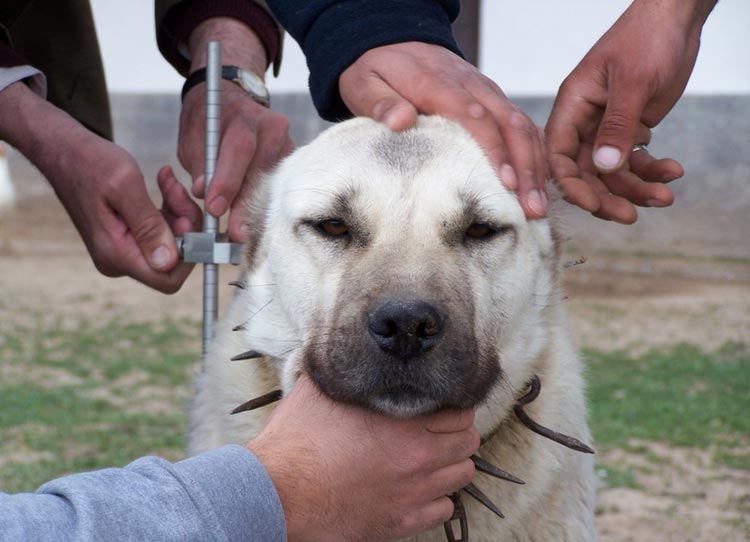
The head is fairly large. The skull should not be flat, but should be rounded on all sides. The furrow on the forehead is visible but not deep. The stop is moderately pronounced. The muzzle is broad, tapering slightly toward the nose, forming a blunt wedge. The eyes are almond-shaped, medium in size, and brown. The eyelids are not loose. The ears are set low, wide, drooping, and rounded at the tips. All visible mucous membranes should be pigmented; the intensity and color depend on the coat color.
The neck is slightly arched, strong, muscular, and of medium length with a slight dewlap. Overall, the body is very well proportioned. The chest is deep, and the belly is noticeably tucked up. The tail is long. When relaxed, it may be slightly curved; when excited, it becomes level and rises to the back. The topline is arched. Behind the withers, it slopes smoothly downwards, rises on the croup, and then tapers to the tail. The limbs are relatively long and straight. The paws are oval-shaped with well-arched toes. Dewclaws may be present, which are best removed.
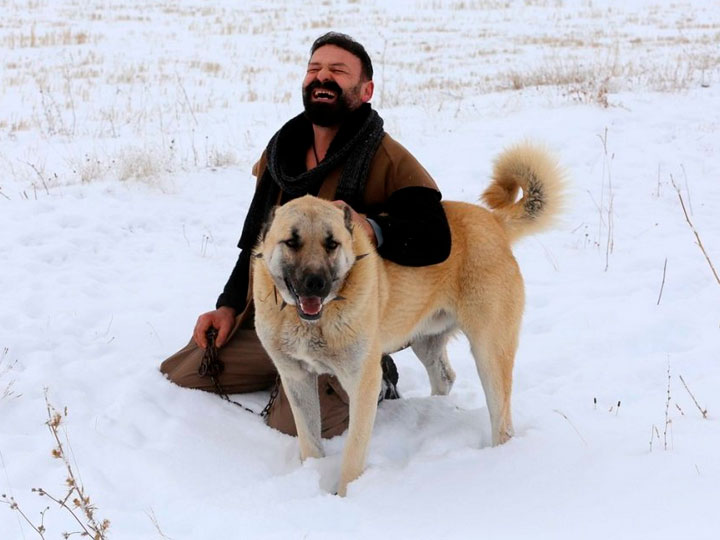
The coat is short to medium length and moderately dense. The undercoat is very short and dense. Almost any color is acceptable. Fawn is preferred. A black mask on the face and black ears are possible, but not required. Unlike many other herding breeds, Kangals are never white.
Character and working qualities
The Kangal is one of the best at its job. Turks greatly love and value a helper who can easily maintain discipline in the flock and protect it from predators. A flock is usually guarded by five to six dogs. Two dogs walk in front and two dogs walk behind, while one or two dogs are kept inside. Thanks to the Kangal's unique personality, harmonious relationships exist between all the animals. Wolves have always been and remain the main threat to the sheep. Interestingly, the gray ones often use various tricks to distract the formidable guardian from their charges. From the outside, this appears to be a strategic war, which the dogs usually win. Kangals are strong and resilient, and they can work tirelessly all day, regardless of weather conditions, hunger, or thirst.
A Kangal can hardly be called a family pet. Of course, he loves his owner, appreciates attention and petting, and tries to be close whenever possible. A well-trained dog behaves like an affectionate kitten with family members. He is wary with strangers. In the presence of his owner, he may allow himself to be petted, but when left alone on the farm, he will not let anyone pass. Kangals have genetically ingrained guarding qualities, just like herding dogs. The desire to work, constantly and diligently, makes the Kangal a working dog first and a companion only second.
Kangals are calm and non-aggressive. They will certainly display their full strength and power, but only when truly necessary. Kangals are even-tempered, independent, and stubborn. At any age, they strive for dominance, especially males.
Content
A Kangal is not an apartment dog, nor is it a play dog. It should live outdoors, but not in a cramped enclosure or chained up. Ideally, the dog should have a job and be allowed to roam freely. It's advisable to walk a Kangal outside the yard at least a couple of times a week; jogging behind a bicycle is also encouraged. A Kangal confined to a yard becomes unhappy, suffering mentally and physically. The dog may develop joint problems, appetite issues, and eventually behavioral issues.
Education and training
The Kangal, like many other herding breeds, is too independent and self-sufficient to be truly trained. It cannot be trained as a service dog; it must be nurtured and guided like a small child. The minimum requirements for a Kangal are:Near», «To me"," "No," and "Place." You can't overindulge your dog, but strictness should be moderate.
If you approach training and education carelessly, problems will soon arise. A Kangal requires an owner with a strong character and a firm hand, a leader who won't allow the dog to become dominant in the family.
Care
Grooming your Kangal's coat will improve its appearance, improve the condition of its skin, and reduce the amount of hair shedding in the yard. Kangals shed quite heavily, especially in warmer months and during the shedding season. However, brushing the dog at least once a week will ensure it always looks neat. Kangals should have their ears checked periodically to ensure they are clean. If there is a significant buildup of wax, it should be removed. Kangals need to be bathed infrequently, usually three to four times a year.
Nutrition
In Turkey, dogs are fed a natural diet. They cook grains, adding meat or offal and vegetables. Fermented milk products can be given occasionally. You can feed your dog ready-made dry food for giant breeds. There's no need to overthink the diet. Puppies up to 5 months old are fed three times a day. Unless it's a premium food, the diet should include supplements with glucosamine and chondroitin, calcium, and vitamin D. From 6 to 8 months, dogs are fed twice a day, and after 8 months, they are switched to one meal a day. Kangals regulate their portion size based on their activity level and the ambient temperature. Occasionally, dogs will have fasting days, refusing to eat.
Health and life expectancy
Kangals are very strong and resilient dogs. Humans only recently began breeding them; before that, nature itself selected the strongest. However, the breed is susceptible to problems common to large dogs, such as hip dysplasia and gastric torsion. A dog predisposed to these conditions may never develop them, as they are largely caused by improper nutrition and care.
Choosing a Kangal Puppy: Price
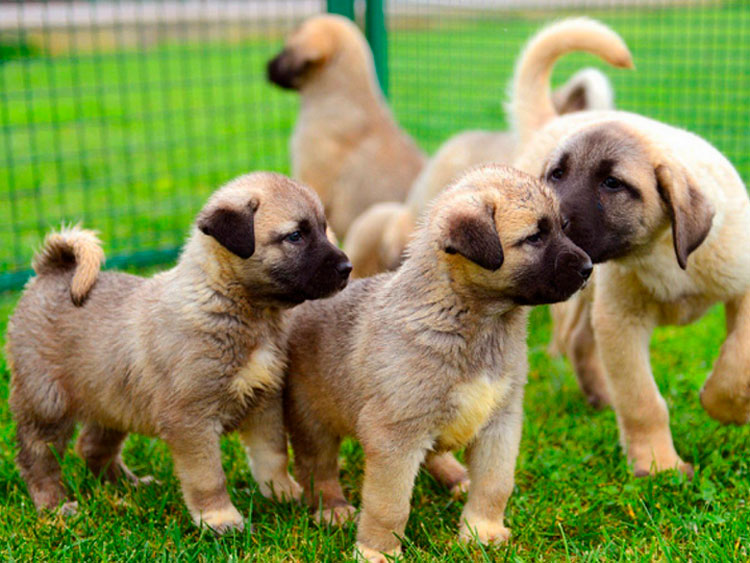
Purchasing a genuine Kangal puppy is quite problematic. Kennels primarily breed Anatolian Shepherds, which they call and sell as Kangals, hoping that the general public won't bother.
Genuine Kangals are rare worldwide. They are mostly kept by hobbyists who breed for "applied purposes," meaning without papers.It's best to look for a puppy in specialized breeders. It's important not to rush into the first litter you see, but to ensure the parents possess the necessary qualities. It's also a good idea to work with a reputable breeder. A puppy should be no earlier than two months old, and it should be healthy and vaccinated. If you need a farm helper, the puppy should be tested for herding instincts. If the dog is only intended for guard duty, herding instincts are of no use. The next step is to evaluate its appearance and ensure it meets the standard.
There are few Kangal breeders in Russia, and they can only be found through kennel websites or forums. The average price for a Kangal is 50,000 rubles. Individual Kangals can cost significantly more.
Photos
The gallery contains photos of puppies and adult dogs of the Turkish Kangal herding dog breed.
Read also:
- White Swiss Shepherd (American-Canadian Shepherd)
- Bergamasco Shepherd Dog (Bergamasco)
- Slovak Chuvach


2 comments
Maxim
Good article, but the photo doesn't show Kangals. The breed was recognized by the FCI in June 2018.
Ryabinka1
Thank you for your feedback! Unfortunately, we don't always have time to update this article in accordance with FCI breed-specific decisions.
Add a comment