
Dogo Canario (Perro de presa canario)
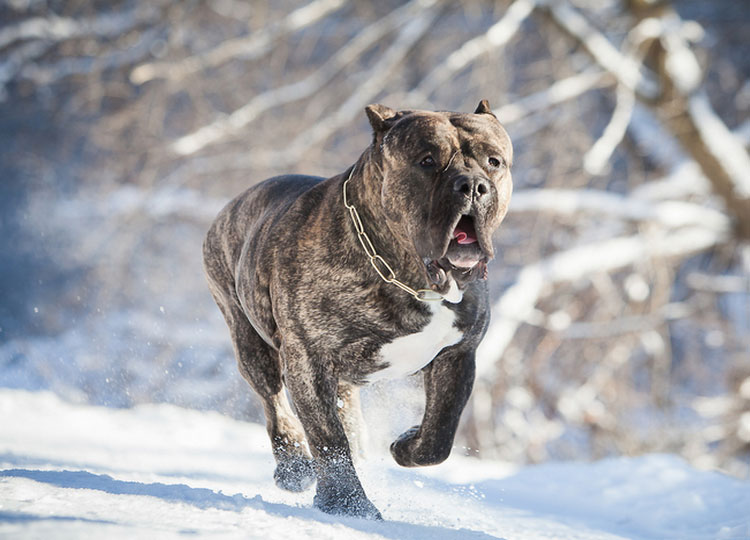
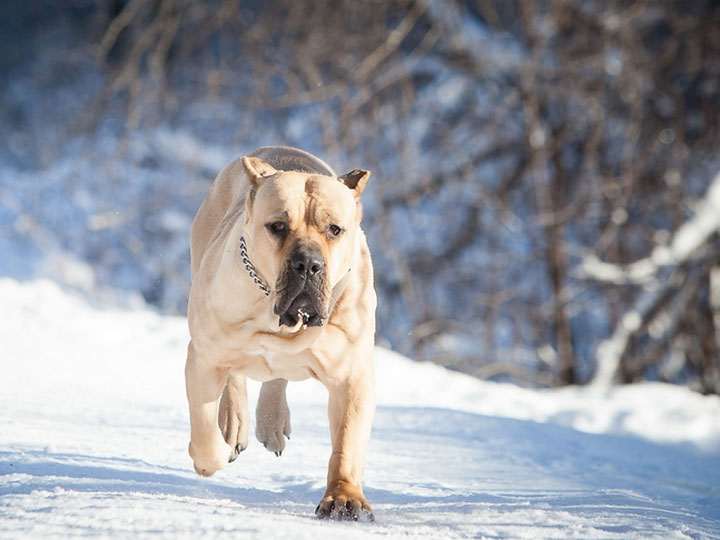
The Dogo Canario is a large guard dog of the Molossian type. In this case, their appearance reflects their temperament well: formidable, serious, and unwavering. The breed's origin is believed to be the island of Tenerife in the Canary Islands. Historically, Canarians were used to guard cattle and other livestock while grazing, but recently they are increasingly being kept as guard dogs for the home and family.
Content
History of origin
The first mention of the distant ancestors of modern Canary Islands dogs dates back to the reign of King Juba of Mauritania, approximately 50 years before the Common Era. Historians describe the dispatch of a small group of explorers to the Canary Islands archipelago. From their journey, they brought back what most astonished them: two enormous dogs with a stern disposition and a chilling bark. The ancestors of Canary Islands dogs are believed to be the Barodino Mahero, a breed native to the Canary Islands. Until recently, it was considered extinct, but some cynologists claim that locals continue to breed these dogs on the island of Fuerteventura. Puppies are usually given away for free, as there is no demand for them.
Many historical documents from the 16th to 18th centuries contain references and quotes about the perrault de presse. For a time, only shepherds were allowed to keep dogs. Later, butchers also kept them. Peasants often used the perrault de presse to exterminate small stray dogs, which were a major nuisance to local residents.
In the 17th century, Canary Islanders became interested in dog fighting, introduced to them by English colonists. Interest in the sport grew and by the 19th century had reached unprecedented proportions. Various imported breeds, local dogs, and, of course, crossbreeds of these breeds were used in the fights.
After dog fighting was banned in the 1950s and 1960s, large breeds stagnated in their development. The Dogo Canario survives today only thanks to active restoration efforts beginning in 1970. The breed's revival was slow, but its population increased significantly. New fancier clubs were established. In 2001, the Dogo Canario received official FCI recognition and standard approval under standard number 346.
Video review of the Canary Dog (Perro de Presa Canario) breed:
https://youtu.be/3ZyJoaAwm4U
Appearance and standard
The Dogo Canario is a large, Molossian-type dog, sturdy and slender, with a straight profile and a distinctive muzzle with a dark mask. Height at the withers is 56-66 cm. Weight is 40-65 kg. Sexual dimorphism is very pronounced, with males being noticeably larger and more powerful.
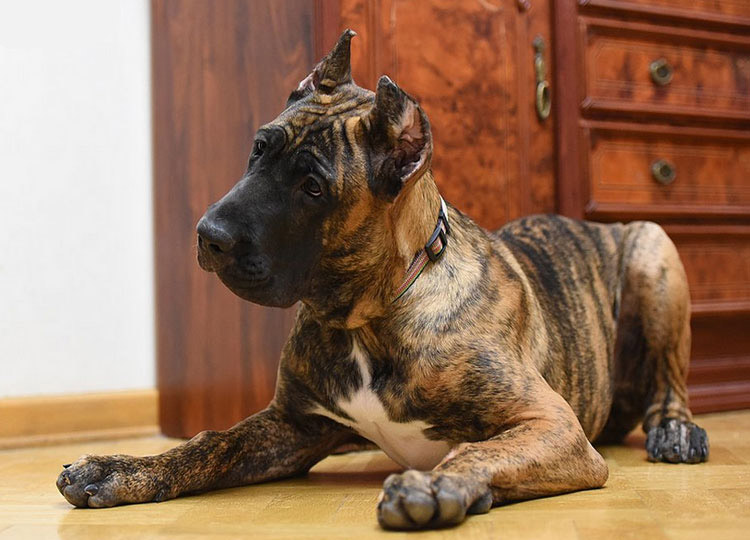
The head is massive, compact, brachycephalic, covered with thick skin. Its shape tends toward an elongated cube. The skull is slightly domed, its width almost identical to its length. The stop is not sharply defined. The frontal furrow is well defined. The nose is wide, strong, and black. The muzzle is approximately 40% of the total length of the head, very wide at the base, tapering slightly toward the nose. The nasal bridge is straight and flat. The upper lips are pendulous, but not excessively so. The jaws are very strong, with a scissor bite or a slight undershot bite (no more than 2 mm). The eyes are oval, medium to large in size, set wide apart. The eyelids should not sag. The color of the eyes ranges from light to dark brown. The ears are medium in size, set wide apart, and set slightly above the level of the eyes. They can be docked, in which case they stand erect; in their natural state, they hang down.
If you've ever considered buying a Dogo Canario puppy and have been searching for suitable parents, you've probably noticed that dogs in the breed are very diverse. This is because there are many lines that don't genetically intersect.
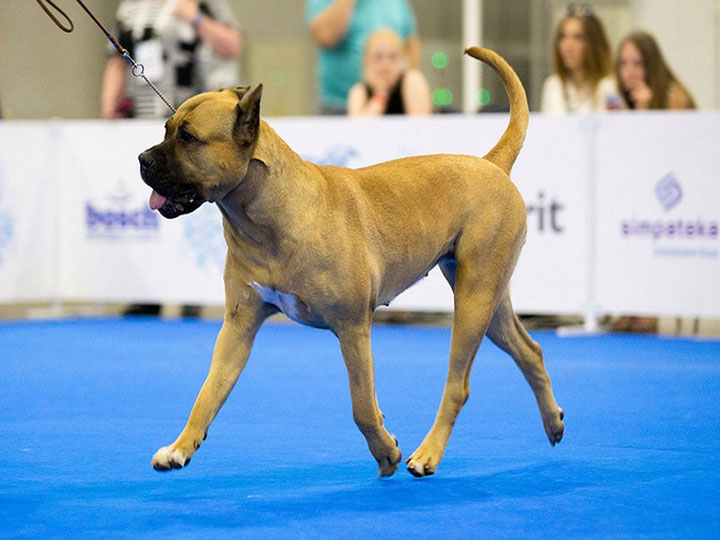
The neck should be shorter than the length of the head. The loose skin forms a slight dewlap. The body is elongated. The topline is straight, the croup is wide and rounded. The chest is deep and wide. The tail is medium length, tapering to a point. The limbs have strong bone and firm muscles. The paws are rounded, and the toes are not too close together. The pads are well developed, and the nails should be dark.
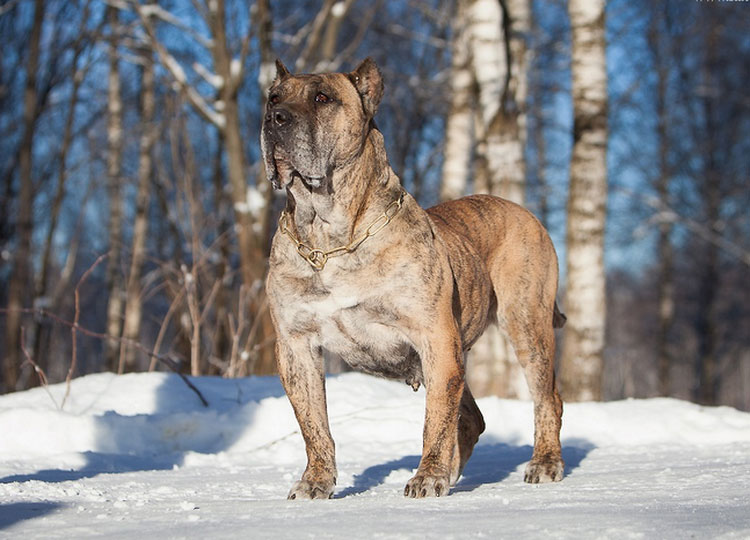
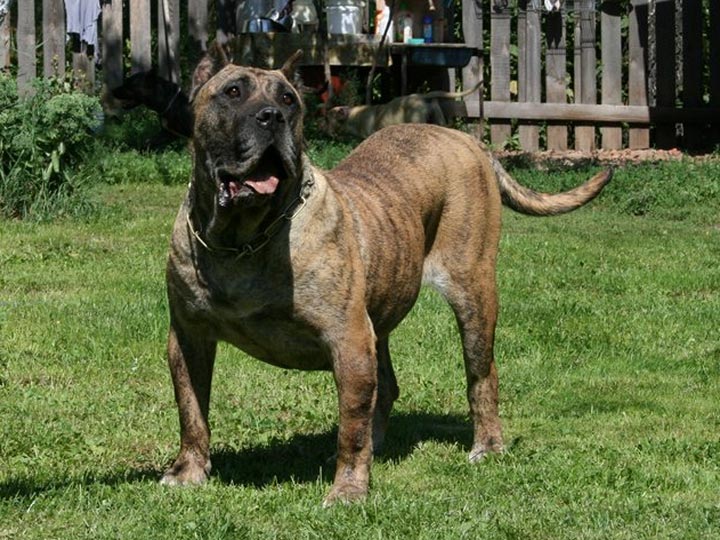
The skin is thick and elastic, forming symmetrical wrinkles on the head when excited. The coat is short, coarse, and without undercoat. It is much shorter and softer on the ears. It is slightly longer on the withers and the back of the thighs. The coat is brindle (all shades from dark brown to light gray) or solid (all shades from fawn to sandy). White markings on the chest, neck, and toes are permitted. A black mask is desirable on the head, but not above the eyes.
Character
The Dogo Canario has a calm, even temperament, yet is unusually active in work, suggesting impulsive behavior. Loyal to its owner, obedient, and self-assured, it is primarily suited for guard and protection work. The Dogo Canario has a stable nervous system. It is calm, perhaps even a little phlegmatic, but only when not working or playing. Then it can surprise with its activity and agility. It often dislikes strange dogs and can provoke fights.
It's worth noting that the Canary Dogo is stubborn and quite willful, sometimes striving for independence and dominance. With good training and good genetics, it prefers to be close to its owner and understands that its job is to protect its family and property. It is friendly with its family.
The Canary's demeanor exudes strength and confidence. The Dogo Canario is very alert and wary of strangers. At the slightest sign of alarm, it assumes a defensive posture and assesses its surroundings with a wary gaze. Any attempt by a stranger to gain trust or negotiate with the formidable guardian will irritate the latter. Silent, observant, and curious, the Dogo Canario clearly defines its territory and family; it's not easy to become one of its trusted companions.
The Dogo Canario has recently gained a reputation as a killer dog due to several attacks. Two incidents received widespread publicity in the United States. In 2001, a 33-year-old San Francisco woman died after being attacked by two dogs. In 2006, a Dogo Canario inflicted fatal injuries on its owner in Florida. Consequently, the breeding and sale of Dogo Canarios is prohibited in some countries, including Australia and New Zealand.
Training and exercise
The Canary Dog requires proper socialization and training early on. Despite all its positive character traits, training a Canary Dog and instilling protective skills in it is a lengthy and not always easy process. A dog only has one owner, who must first earn the puppy's respect and acceptance. Leadership skills, persistence, and firmness are the key to training. Canary Dogs have their own opinions regarding the need and speed of command execution. Unwilling to be trained, they will feign and deceive. Canary Dogs skillfully feign deafness, fatigue, or stupidity. Excessive leniency and pampering can lead to destructive behavior, disobedience, and related problems.
During the training process, it is important to prevent the dog from reacting inappropriately to external stimuli: cats, small dogs, and other people's children.
A strong dog with a death grip can indeed be balanced and obedient, but again, only with proper training. Be prepared for the Great Dane to periodically "test" its owner for "professional suitability," checking to see if they have lost their leadership qualities and can remain the pack leader.
The Dogo Canario is a strong, resilient dog that can patrol the area all day long, ensuring that wild animals and strangers don't prey on the flock. If the Dogo Canario doesn't have a full-time job, it requires long walks and plenty of exercise. It can participate in a variety of sports.
Maintenance and care
The Canary Dogo is undemanding in terms of living conditions and doesn't require special attention or care from humans. In cold climates, this short-haired dog can only be kept indoors. During warmer months, as well as in spring and fall, when temperatures don't drop below 5-10 degrees Celsius, this guard dog can live outdoors in a spacious, insulated enclosure. booth.
They are often aloof toward other animals. If neighbors accept the large dog's leadership, their cohabitation will likely be peaceful. It's best to give other dogs a wide berth when out for walks. They are calm toward cats in the house if they've been around them since early childhood.
Grooming is minimal. Once a week, they are combed with a fine-tooth comb. They are bathed infrequently, once every 3-4 months. In between, the coat is wiped with a wet towel or rinsed in the shower. Eyes and ears are always kept clean, cleaning them as needed. Dogs need their nails trimmed periodically, as they sometimes don't wear down on their own. Special nail clippers are typically used for this, but recently, owners of large dogs have increasingly begun to invest in electric nail files.
Health and life expectancy
Experts identify a predisposition to the following diseases in the Canary Dog breed:
- Hip dysplasia;
- Anterior cruciate ligament rupture;
- Cardiovascular pathology;
- Autoimmune diseases;
- Myositis;
- Wobbler syndrome.
Life expectancy is usually 10-12 years.
Choosing and pricing a Canary Dog puppy
The Great Dane is a relatively rare breed, so puppies often require a wait and reservations in advance. Of course, we're talking about puppies from a breeder with a preferred parent.
Before purchasing a puppy, it's important to determine its intended purpose. If you train the dog seriously and train it solely for guarding, it won't necessarily allow a judge to examine its teeth at a show. If the dog isn't a working dog and has been participating in shows from an early age, it will be more tolerant of strangers. The health of the parents and offspring is also important. Dysplasia testing is a plus, and genetic disease testing is a huge plus. You can choose the right puppy from a litter with the help of a dog trainer or try it yourself. Many tests are available today to determine key personality traits.
You shouldn't buy a dog without knowing anything about its parents. There's a chance you'll end up with an overly aggressive or sick specimen. The average price of a Canary Island Mastiff puppy in Russia is 30,000 rubles.
Photos
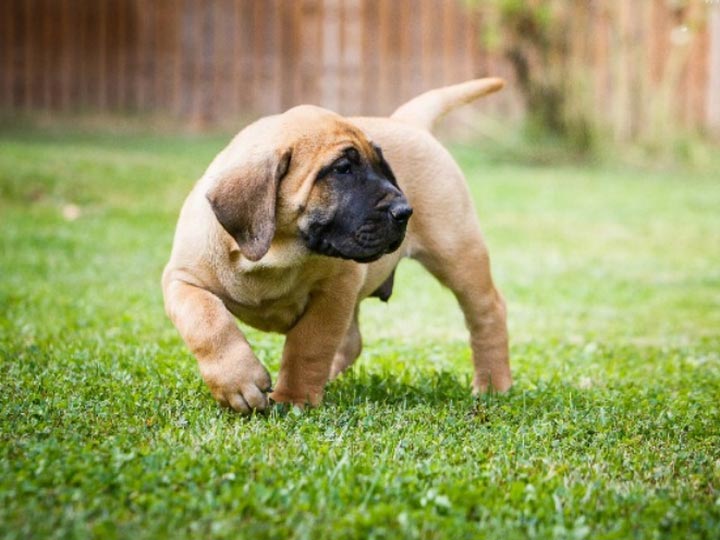
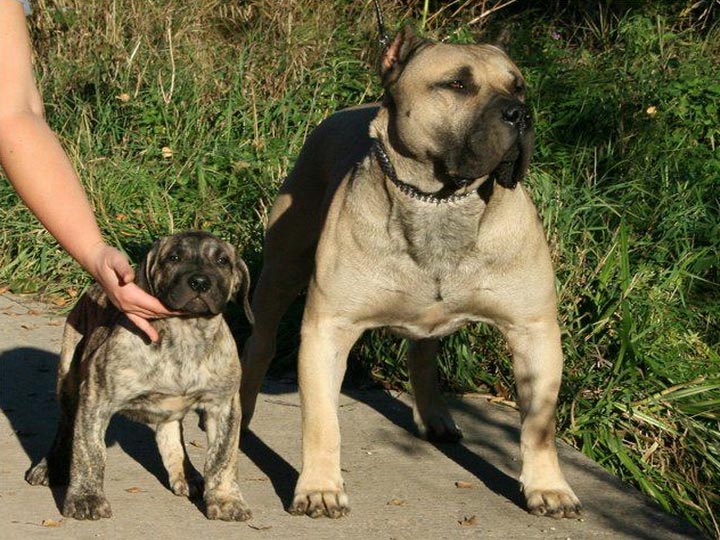
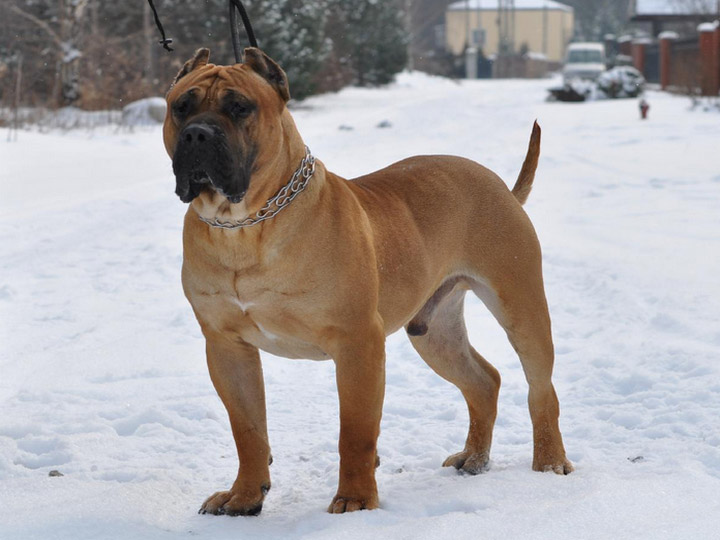
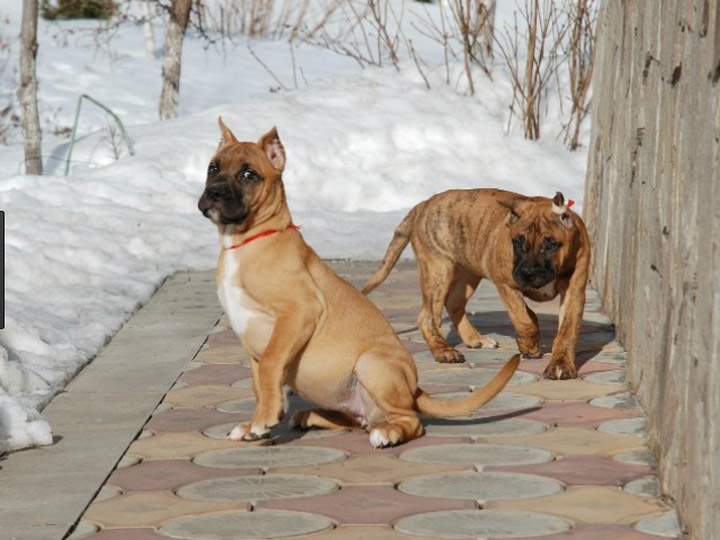
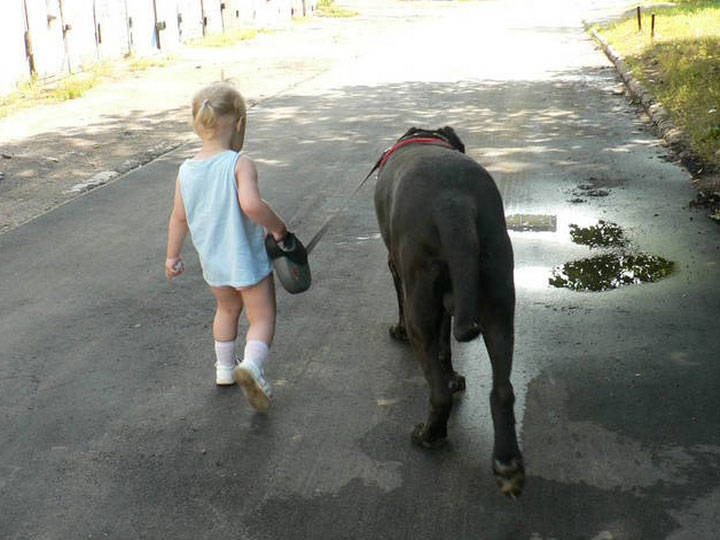
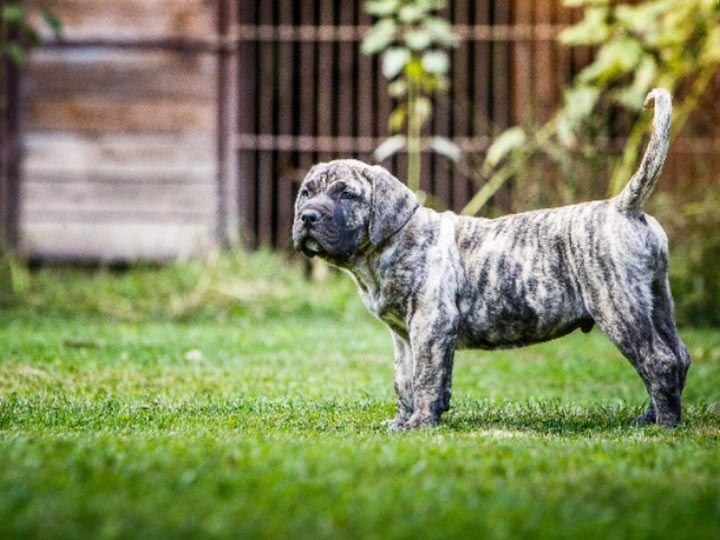
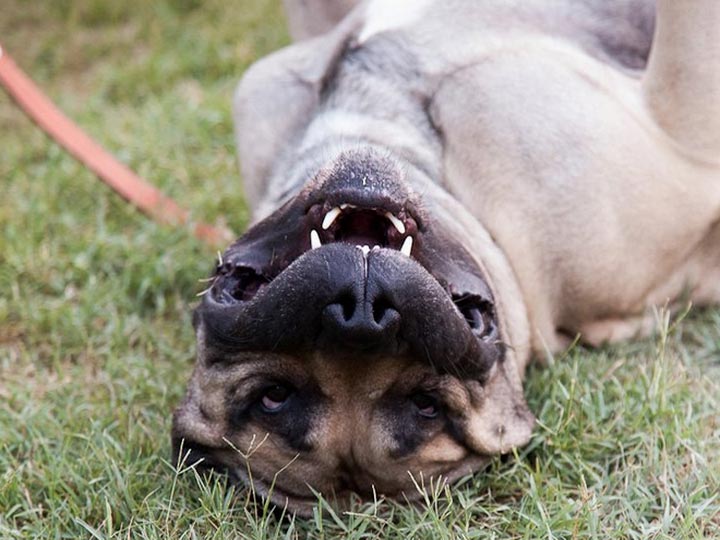
The gallery contains photos of Dogo Canario dogs.
Read also:


Add a comment