
Canadian Eskimo Dog (Inuit Dog)
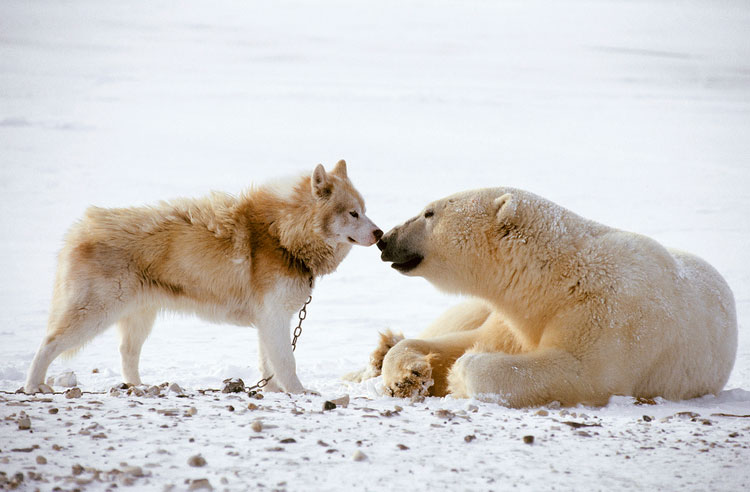
The Canadian Eskimo Dog (Inuit Dog) is an Arctic sled dog with a distinctive appearance and temperament. Today, it is one of the rarest of the indigenous sled dog breeds. This dog is strong and hardy, well adapted to life in cold climates. It has a complex, strong character, and is courageous and independent. It requires good socialization and proper training.
Content
History of origin
According to research, the ancestors of the Eskimo Laika arrived in what is now Canada with the Thule people from Greenland about 1,000 years ago. They were later bred and prized by the Inuit. They are genetically closely related to Greenland dog.
For a long time, Inuit Laikas played an important role in human life. The development of the north, the advent of technology, and changes in the population's lifestyle led to a sharp decline in their numbers. Some dogs died from infectious diseases brought to the north by new breeds. Between the 1950s and 1970s, according to various estimates, between 1,500 and 20,000 dogs were intentionally killed by the Royal Canadian Mounted Police.
Today, there are only about 500 Canadian Eskimo Dogs left. The breed is critically endangered.
Since the second half of the 20th century, Inuit dog enthusiasts have been actively working to restore the population. With the goal of preserving the breed, the Canadian Inuit Dog Federation was founded in 1972, largely funded by the government of the Northwest Territories. The federation acquired approximately 200 dogs from remote settlements to gather a sufficient genetic base for breeding. The efforts soon bore fruit—the Canadian Eskimo Dog. (English: Canadian eskimo dog) The breed was again recognized by the Canadian Kennel Club. In the mid-1990s, dog breeders in the United States became interested in it.
In 2000, the Canadian territory of Nunavut declared the husky its symbol and the word "Qimmiq" (Inuit: Qimmiq)), which once simply meant "dog" now refers to a specific breed.
Appearance
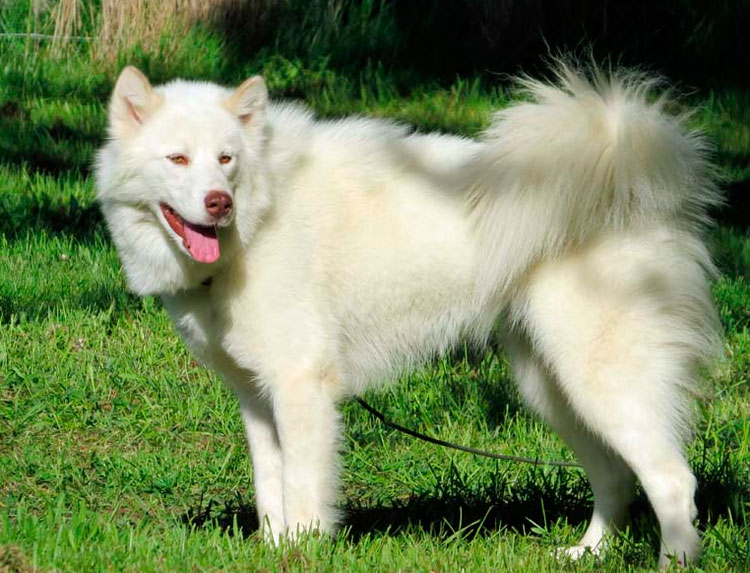
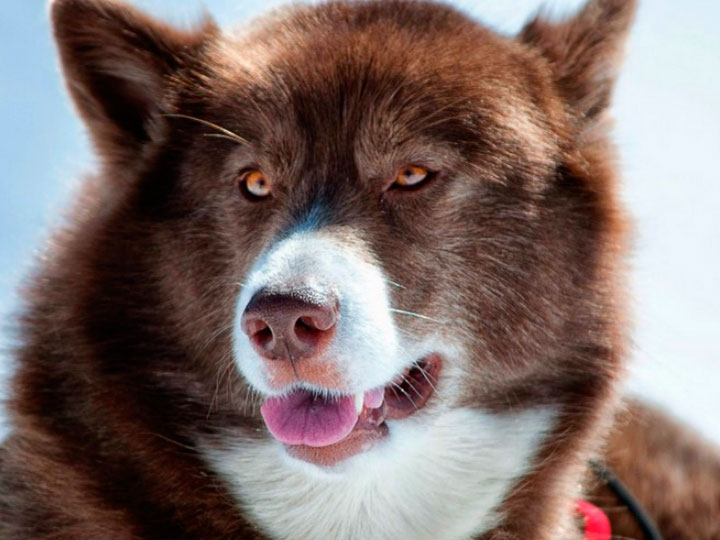
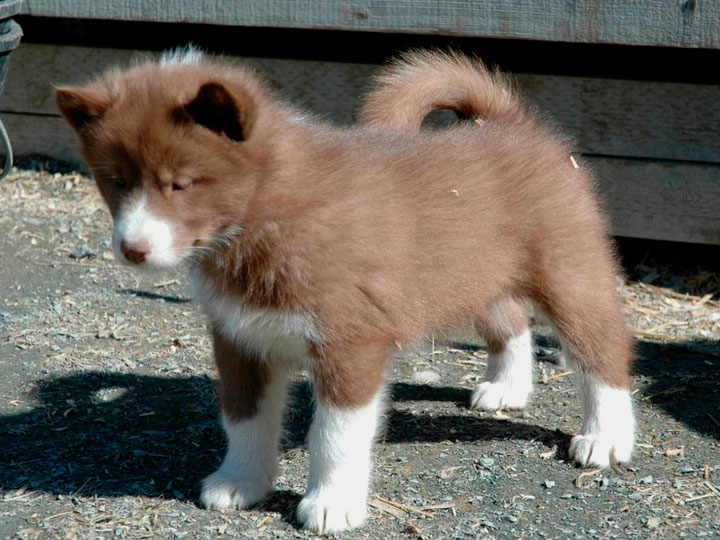
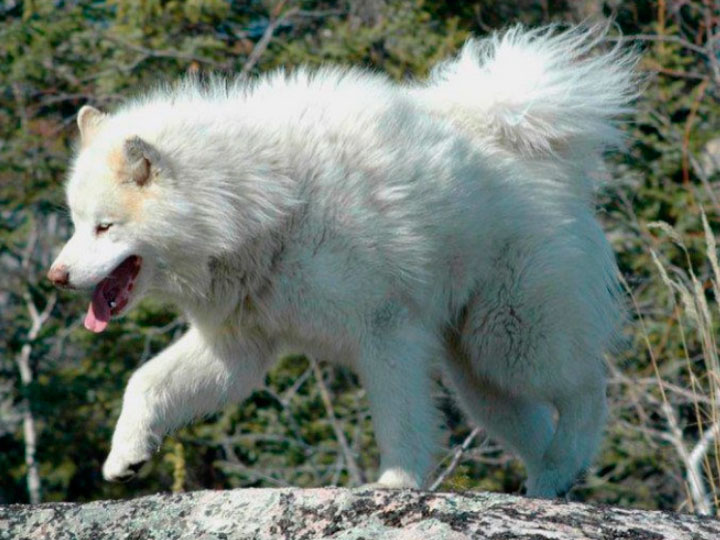
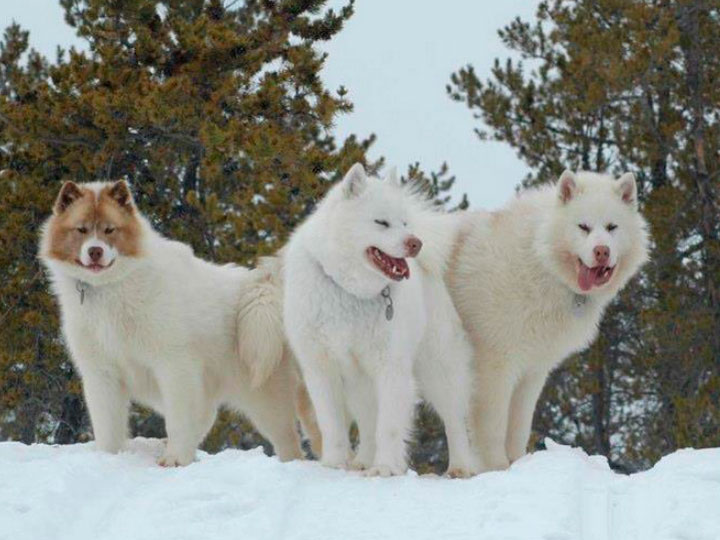
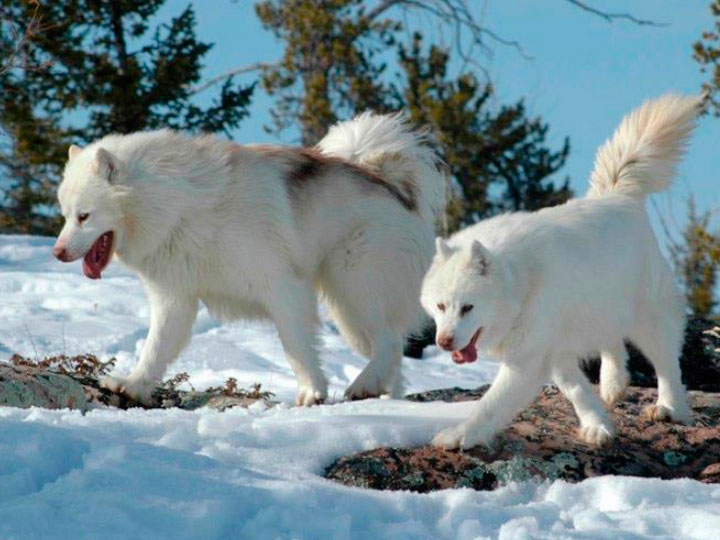
The Canadian Eskimo Dog is a fairly large, strongly built dog with a well-developed coat and pronounced sexual dimorphism.
- Height at the withers of males is 58-70 cm; weight is 30-40 kg.;
- The height at the withers of bitches is 50-60 cm; weight 18-30 kg.
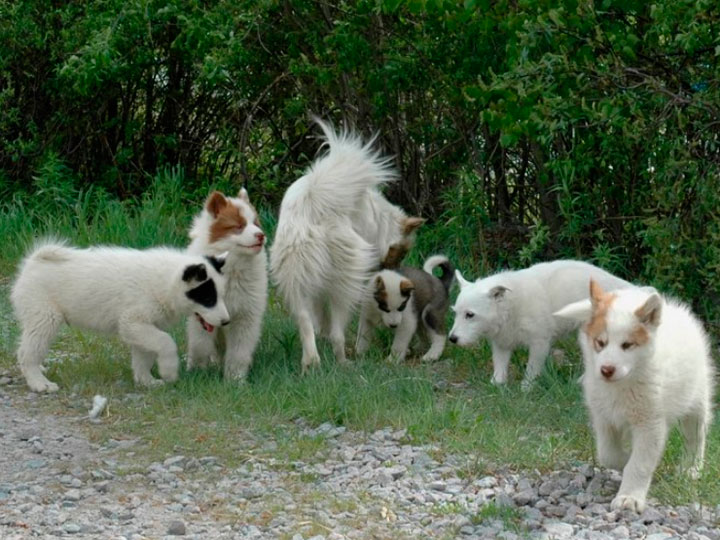
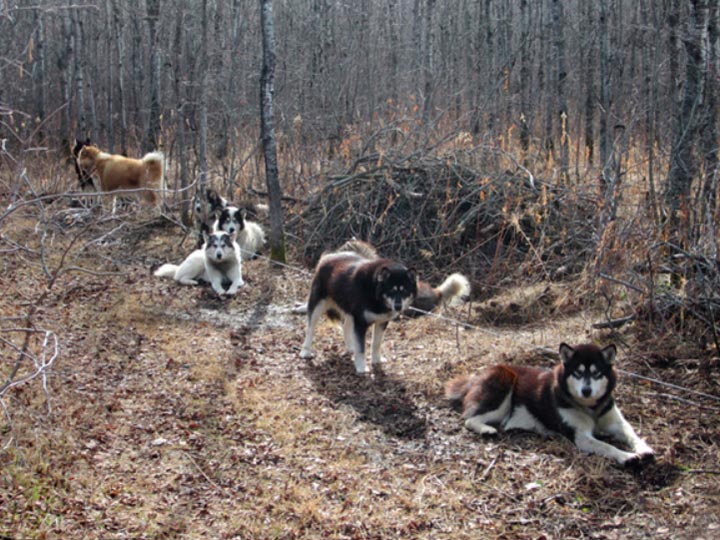
The head is wedge-shaped with a high forehead. The muzzle tapers toward the nose and is of moderate length. The jaws are wide and strong. The earlobe color varies depending on the coat, from black to flesh-colored. The eyes are small, set obliquely, and well spaced. The ears are short, slightly rounded, and erect. The neck is harmonious and muscular.
The body is proportionate, athletically built, and strong. The tail is thickly furred and carried vertically or curled over the back. The limbs are straight and strong. The paws are large, almost completely covered with fur.
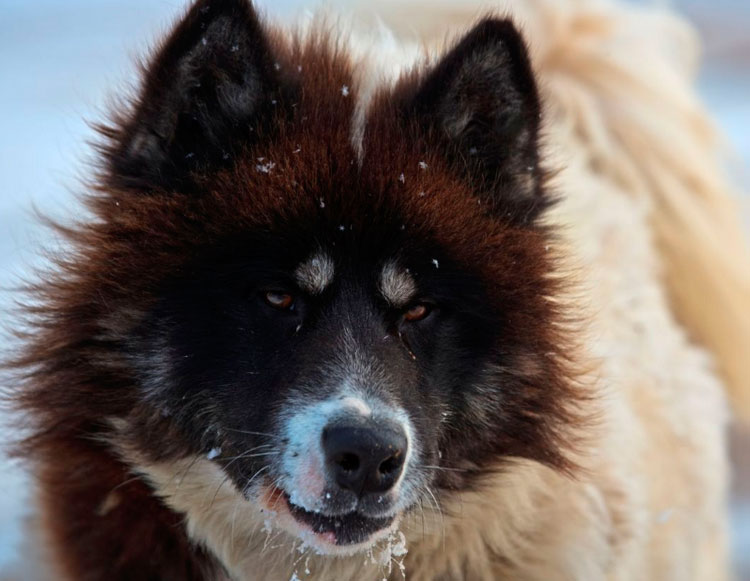
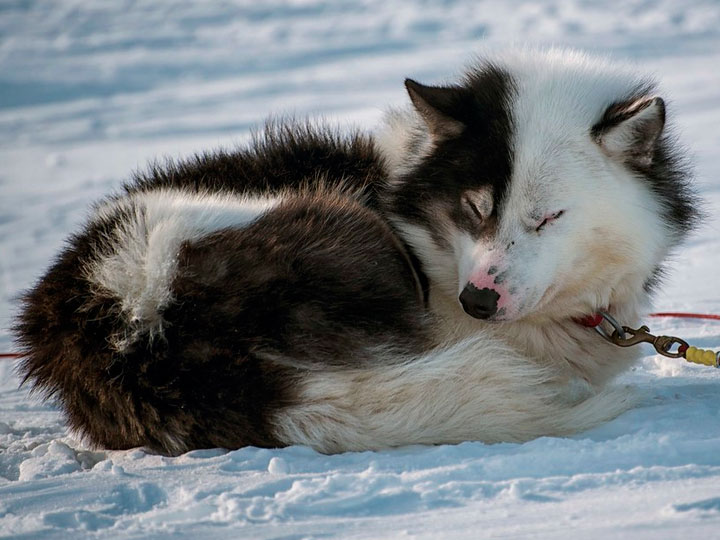
The coat is very thick and dense. The coarse topcoat, 8-15 cm long, forms a mane on the neck, and there are thick featherings on the back of the legs. The undercoat is very dense. The color is varied.
Character and behavior
Inuit dogs are characterized by loyalty, courage, exceptional intelligence, and endurance. Many possess a more or less pronounced hunting instinct. They also possess well-developed adaptive and instinctive intelligence.
The Canadian Eskimo Dog is extremely hardy, courageous, and independent. It quickly adapts to changing conditions, strictly adheres to hierarchy, and is capable of providing its own food in times of dire need.
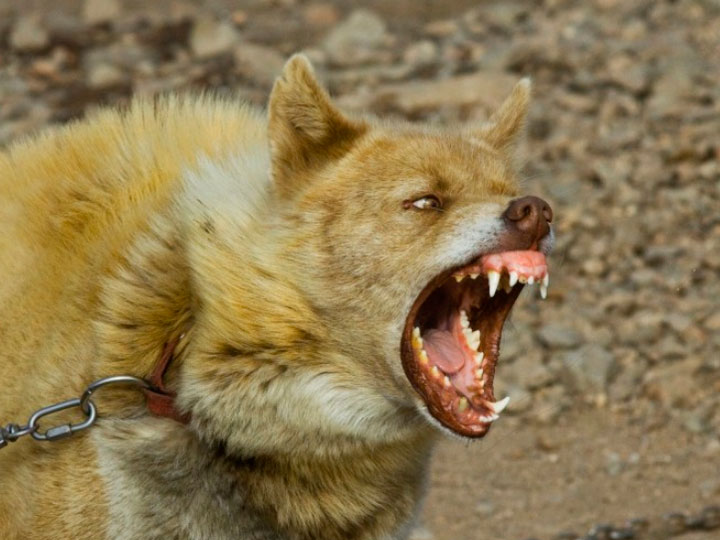
Breeders say these dogs have a very strong personality. They are hardworking, independent, and fearless around wild animals. They can be quite argumentative and aggressive. They love attention and company. As family members, they grow up devoted, but rather stingy in their displays of affection, acting rather aloof. If not properly trained, they may react to children as a potential threat.
Canadian Eskimo Dogs are prone to dominance. Therefore, owners must have sufficient experience and knowledge to properly raise and train them. When well socialized, they may be curious or aloof with strangers, and are reluctant to engage.
Content Features
The Canadian Eskimo Dog is adapted to life in cold climates. It is not suited for indoor living and does not adapt well to heat. It can die from heatstroke at temperatures that are relatively safe for other dogs.
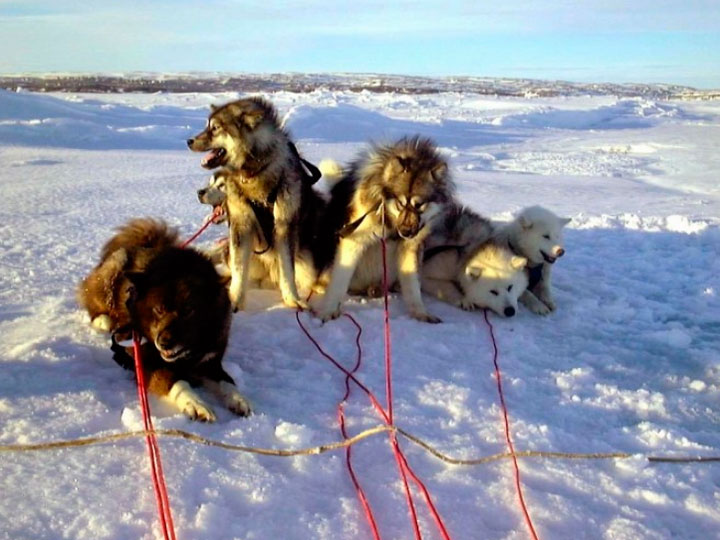
A properly trained Inuit working dog can pull a sled over difficult terrain for 50-70 miles per day. It recovers quickly and repeats this effort over several days. Therefore, physical activity must be extreme. A regular walk is not enough. Without an outlet for energy, the Canadian Eskimo Dog will howl and bark incessantly. Overexcitement can lead to nervousness, aggression, and damage to surrounding property.
Feeding
Most Canadian Eskimo Dogs cannot digest plant foods and a significant proportion of commercial feeds. Their digestive systems are accustomed to a natural, high-protein diet. Historically, sled dogs have eaten primarily walrus, reindeer, small game, fish, and seafood.
Care
The Canadian Eskimo Dog is low-maintenance in terms of grooming. Seasonal shedding is heavy, but moderate the rest of the year. To maintain a neat appearance, the coat is brushed periodically. In northern areas, bathing is not common, but some owners bathe their sled dogs before shows. Nail trimming is generally not necessary. Ear cleaning is as needed.
Health and life expectancy
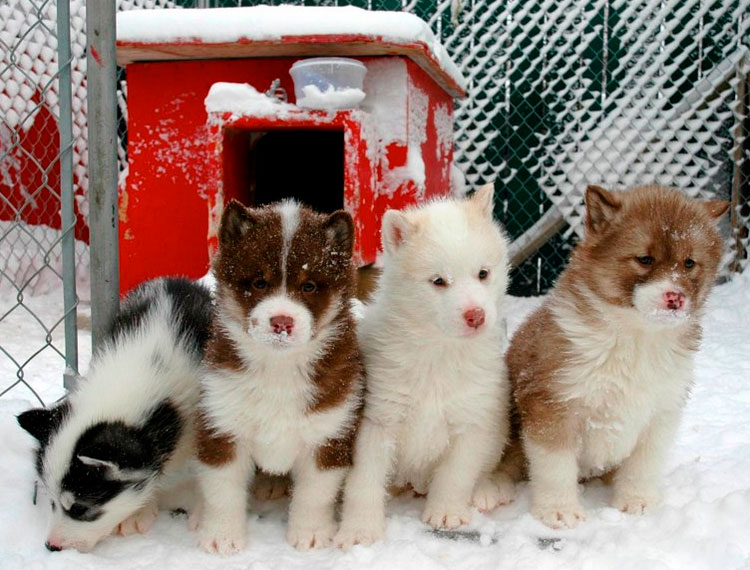
Inuit dogs were once renowned for their robust health and endurance, but they were found to be susceptible to infectious diseases, their immune systems struggling to combat pathogens uncommon in the Arctic climate. Later, the need to increase population numbers with a limited gene pool led to the emergence of various hereditary disorders. No research has been conducted on this topic, but cases of the following diseases are known:
- hip dysplasia;
- elbow dysplasia;
- gastric torsion;
- corneal dystrophy;
- progressive retinal atrophy.
Life expectancy is 12-14 years.
Where to buy a puppy
Outside of Canada, Greenland, and the northern United States, the Canadian Eskimo Husky is virtually unheard of. According to the Canadian Eskimo Husky Club, there are approximately 30 dogs in Europe, and several breeders in the UK. Potential owners may find it easier to find a breeder and available puppies through the Canadian or American Eskimo Husky Clubs.
Price
In Canada, the average price of an Inuit Husky puppy is $1,000.
Photos and videos
The gallery contains more photos of the Canadian Eskimo Dog (Inuit Dog).
Video about the Canadian Eskimo Dog breed
Read also:


Add a comment