
Campylobacteriosis in dogs: symptoms and treatment
Continuing the topic of zoonoses (diseases that can affect both animals and humans), we'll look at how campylobacteriosis develops in dogs, what symptoms may indicate a pet is infected, and what treatment a veterinarian may recommend.
Content
Etiology of the disease
Campylobacteriosis in animals – an infectious disease that affects the gastrointestinal tract, liver and reproductive system in dogs.
The causative agent of the disease is the enterobacterium Campylobacter, which has a very wide geographical distribution and is capable of intensively circulating in populations of various animals, including humans.
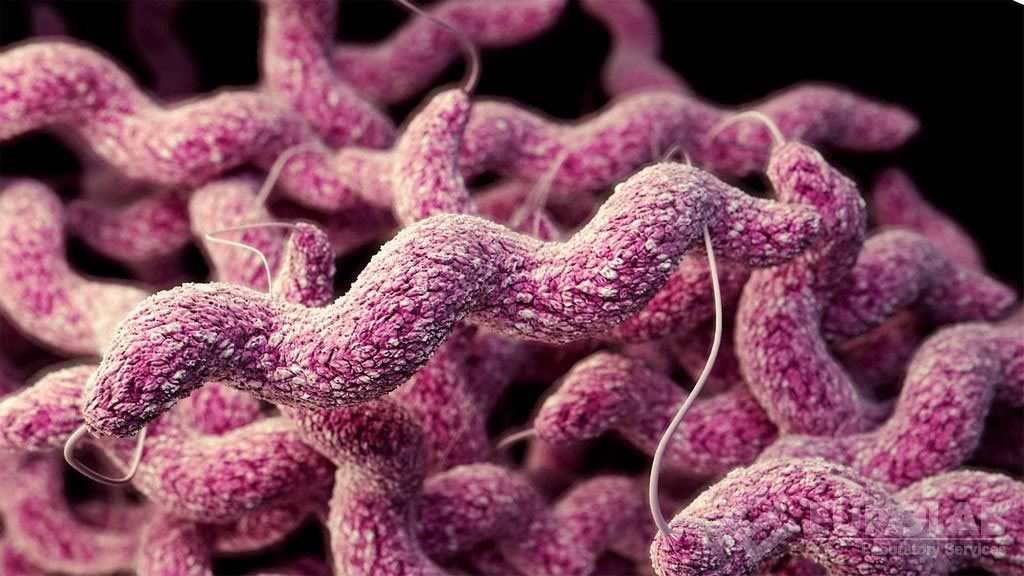
Campylobacter can be present in adult dogs, cats, humans, and many other mammals with strong immune systems without causing symptoms typical of the disease. However, latent carriers can actively shed enterobacteria into the environment through urine, feces, semen, saliva, and other fluids for many weeks or even months.
In the external environment, bacteria remain viable in animal feces for up to 3 days.
The routes of infection are quite varied:
- alimentary (by sniffing feces and marks left by an infected animal);
- food (when predators eat the meat of an infected animal);
- sexual (in the process of knitting);
- placental (from an infected dog to puppies).
The incubation period can last up to 10 days, but most often the first symptoms appear 2-5 days after the pathogen enters the dog’s body.
Symptoms and forms of the disease
Depending on the form of the disease, clinical symptoms may be acute, mild, or absent altogether.
Acute form
Most often, acute Campylobacter infection develops in dogs at an early age (up to 6 months), when the immune system is not yet formed.
The infection is most dangerous during fetal development (most often causing fetal death) and in the first 10 days of life (any acute illness during this period is extremely difficult to tolerate). Acute campylobacteriosis can also occur in weakened dogs undergoing treatment and rehabilitation, as well as in older animals.

Symptoms in this case develop very rapidly and include:
- loss of appetite or complete refusal to eat;
- vomiting and severe diarrhea with mucus;
- fever (increased temperature);
- false urge to defecate;
- pain in the abdominal area, which is expressed in the forced position of the animal;
- depressed state.
For puppies in the first months of life and weakened animals, dehydration, which develops rapidly with vomiting and diarrhea, is a danger. Without prompt veterinary care, death is possible.
Even if treatment is started promptly and the animal overcomes the infection, campylobacteriosis can cause:
- congenital malformations of the fetus;
- impotence;
- reproductive dysfunction;
- liver dysfunction;
- internal bleeding.
Chronic form
Chronic campylobacteriosis in dogs most often occurs when the immune system partially copes with the infection and the pronounced symptoms characteristic of the acute form do not develop.
However, some signs that a dog needs treatment can still be noticed. Chronic disease is characterized by:
- loss of appetite;
- decreased activity, apathy;
- periodic refusal to eat;
- vomit;
- recurring attacks of gastrointestinal upset.

In the chronic form, there may be no increase in temperature, or the temperature may increase slightly during periods of exacerbation.
Hidden form
Although carriage does not cause obvious symptoms, treatment of the infection is not only desirable, but necessary, since the pathogen secreted by the dog poses a real danger to nearby animals and people (especially children).

Medical literature also recommends preventative treatment of a dog if campylobacteriosis has been diagnosed in the owner, a child, or another animal living in the home.
Diagnosis of campylobacteriosis
Symptoms similar to campylobacteriosis in dogs can be caused by various diseases (salmonellosis, viral infections, poisoning), so before treating an animal, the doctor will definitely prescribe laboratory tests:
- stool analysis;
- rectal scraping;
- peripheral blood test (in puppies);
- Cervical mucus test (taken from bitches after a spontaneous abortion);
- semen or preputial mucus analysis (in males).
Important! Campylobacteriosis is diagnosed when Campylobacter bacteria are detected and clinical symptoms are present. A positive test result without clinical symptoms indicates a latent carrier state.
Treatment
Since campylobacteriosis in dogs can take various forms, the veterinarian will select treatment individually, taking into account the animal's condition.
Complex therapy may include:
- antibiotics (the medicine must be taken until the symptoms disappear completely and for another 3 days after the condition has stabilized);
- antipyretic;
- anti-vomiting and anti-diarrhea medications;
- drugs for the restoration of intestinal flora;
- vitamins to support immunity.
If the puppy's condition is severe, medications and antibiotics may be administered intravenously through a catheter. In this case, the dog may need to be hospitalized, as many effective dehydration stabilization techniques also involve IV fluids.
Campylobacter is most often recommended for treatment with Tylosin, Erythromycin, Azithromycin, Ciprofloxacin, or Ofloxacin, but only a veterinarian should select an inexpensive and effective remedy.
During treatment, it's also crucial for the person caring for the sick dog to maintain good personal hygiene. All grooming items, toys, dishes, and bedding should be treated with disinfectant solutions or hot water. The pathogen is killed by high temperatures, but can survive at 60°C (140°F) for up to 15 minutes.
Prevention
Any breeder forum will tell you that the primary prevention of campylobacteriosis is timely vaccination of all animals living in the household. It's important to understand that vaccination is necessary not only for purebred dogs, but also for stray cats, rabbits, or cows kept on the property.
To avoid infection during the period of development of the puppy's immunity, it is important to maintain quarantine after the first vaccination and revaccination.
It is also worth remembering that only healthy animals that have undergone mandatory examinations to detect potentially dangerous diseases, including campylobacteriosis, are allowed to mate.
Read also:
- Ehrlichiosis in dogs: symptoms and treatment
- Toxoplasmosis in dogs: symptoms and treatment
- Coccidiosis in dogs: what it is, symptoms and treatment


Add a comment