
California Spangled Cat
California Spangled CatNative to the state of California. However, it's worth noting that even Californians can't boast of its widespread distribution. Spotted cat It was created to serve as a reminder to people of the plight of its wild relatives. Ironically, it is one of the rarest and most endangered breeds, facing extinction.
Content
History of the breed's origin
The California Spangled Cat owes its origins to Los Angeles-based writer and screenwriter Paul Casey. He spent 14 years developing the cat, from 1971 to 1985. His goal was to create a domestic cat that would closely resemble a leopard in appearance.
To achieve this result, 11 generations were bred, involving several breeds and species of cats in the process of creating this shining miracle. Initially, the matings involved Siamese cats and longhaired spotted Angora cats with a silvery sheen. Then, the breeding program included British and American Shorthairs, Abyssinians, and a spotted brown Manx.
To achieve the desired appearance, stray cats from Egypt and Malaysia were eventually bred. It wasn't until 1985 that Casey was satisfied with the results, and the following year, the California Spangled made its public debut. The breed was recognized by some associations as new or experimental and received show status, but unfortunately, it was short-lived.
In 2000, TICA de-recognized the breed due to a lack of breeding progress and an incredibly low population of just 58 cats. Furthermore, other spotted breeds (the Ocicat, the Bengal, and the Egyptian Mau) eclipsed the Californian cat in popularity.
The Christmas story that made sparkly cats popular
The leopard-like California Spangled Cat wasn't bred by chance. Its creator, Arnold Casey, worked in the 1970s with Louis Leakey, an anthropologist who was outraged by the killing of leopards and ocelots for their beautiful fur and encouraged Casey to create a similar breed of domestic cat. Leakey believed that people would be reluctant to wear fur that reminded them of a pet, a family member, and thus would reduce poaching of wild cats.
In 1986, California Spangled Cats were featured in the Christmas issue of the renowned Newman Marcus clothing and shoe catalog, alongside mink, ermine, and fox fur coats. The spotted kittens were sold for $1,400, with a note advising that it was best to buy a pair. This sparked outrage among animal rights activists, but it also made the breed incredibly popular in a short time.
Breed description and standards
California Spangled cats are characterized by a large build, agility, and energy. Their bodies are long, with well-developed muscles and strong legs. All movements are graceful and fluid. They can weigh between 4 and 8 kg.
Head and muzzle
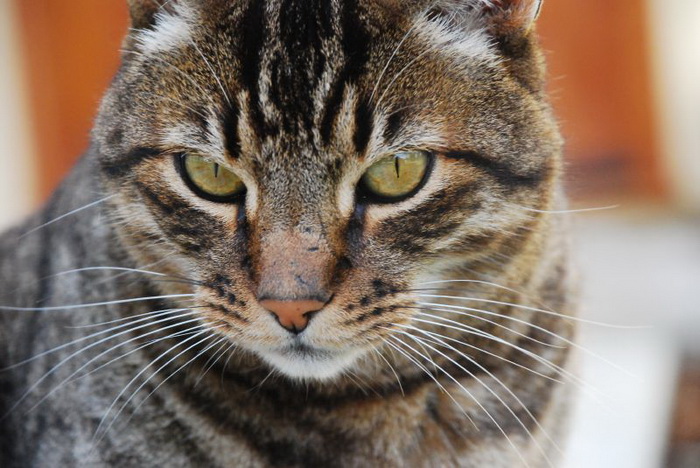
The California Spangled cat has a small, rounded head with a prominent forehead. The cat's muzzle is quite expressive, with thick cheeks and prominent cheekbones. They also have a strong, firm chin and well-developed jaws. Their ears are small, pointed at the top, and set high. Their eyes are quite large, set wide apart, and shaped like an elongated oval. The California Spangled cat's eyes are amber in color, but can vary depending on their coat color.
Body
Californian cats have an elongated, lean body with well-developed muscles and a low stance, giving them a jungle cat-like gait. Their tail is medium length. Their paws are strong and straight.
Coat and colors
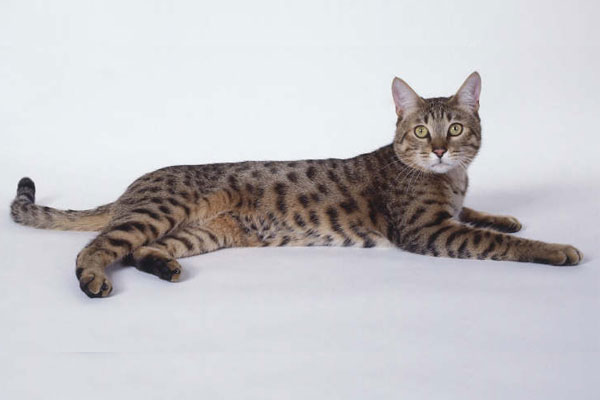
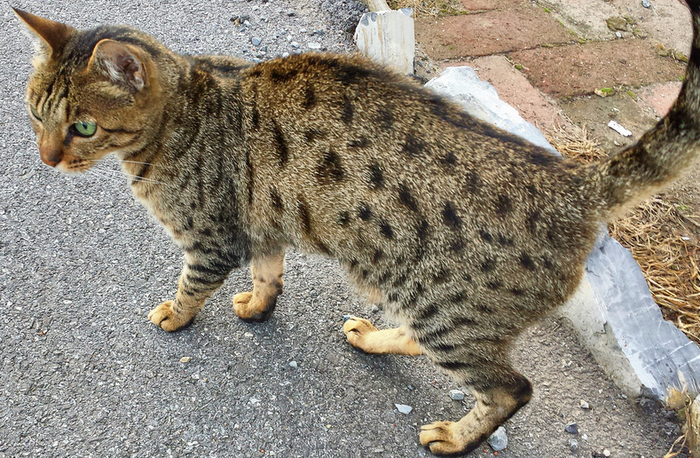
The fur is fluffy and short, lying close to the body, and is characterized by a tabby pattern consisting of dark spots in square, triangular, and circular shapes. Dark stripes also appear on the tail, which always has a dark tip.
Dark spots can be on any of the following tones:
- gold;
- blue;
- bronze;
- red;
- chocolate;
- white or silver.
Character
California Spangled cats, due to their coloring and impressive size, may appear wild and aggressive, as their appearance more closely resembles a wild leopard than a domesticated furry creature. However, first impressions can often be deceiving, and in this case, this is precisely the case. The California Spangled cat is a sympathetic, kind, and affectionate animal.
If she senses that her owner is feeling unwell or in a bad mood, she immediately runs up to them and does everything in her power to improve their condition and relieve tension. The California Spangled Cat is also very sociable, although she doesn't "talk" much. loves children very much, quickly gets along with strangers, does not like loneliness and is very grateful for the care and love that she receives.
The California Spangled cat is playful and active, a superb hunter, and a fine athlete. However, no matter how docile her nature, if she feels injustice, she will always show "who's boss."
Maintenance and care
California Spangled cats are low-maintenance. They generally groom their coat, claws, and ears themselves, but to keep their appearance more polished and to ensure they feel loved, they should be brushed periodically with a soft brush. Their eyes and ears can be cleaned as needed with a swab dipped in warm water or chamomile infusion.
California Spangled cats are natural hunters, so they should always have ample space to allow them to be active and mobile. A private home with a garden or a large apartment is ideal for them. They thrive in the outdoors and in a country house. California Spangled cats will thrive if they have a special nook with multi-level shelves designed for climbing. It is not recommended to keep California Spangled cats with:
- birds;
- hamsters;
- rodents;
- rabbits.
Remember that their hunting instincts may not work to the benefit of such neighbors.
Nutritional Features
California Spangled cats require a specially formulated, super-premium commercial food. Feeding table scraps is not recommended, as an unbalanced diet can lead to health problems and shorten your pet's life.
Health and life expectancy
The California Spangled cat was carefully and meticulously bred, resulting in robust health and resilience. There are no known genetic diseases. Average life expectancy is 13 years.
Features of mating and the course of pregnancy
Like other interesting breeds, the California Spangled cat must produce offspring. This is what all breeders strive for.
Therefore, after the second heat, at the beginning of the third, the California Spangled cat's first mating should occur. After 10 months, the female reaches sexual maturity and is ready to mate with a male cat. However, before this, it is necessary to consult a veterinarian to ensure that your pet is truly ready to carry a healthy litter.
Don't delay; a cat should have mated at least once before she is one and a half years old.
Signs of pregnancy in California Spangled cats, if all went well, begin to appear around the fourth week after mating. Their behavior improves, and they become calmer and more affectionate. You'll usually notice that they're sleeping and eating more, showing little activity.
When California Spangled cat kittens are born, photos of these adorable creatures will touch not only you, but also your friends.
Choosing a kitten and price
Those interested in the breed and considering adopting a California Spangled cat will be disappointed. This breed is so rare that many consider it lost to modern felinology.
Foreign websites mention enthusiasts trying to restore this spotted beauty to its former glory and increase its population, but none of these organizations have registered any new litters in the past few years, and representatives of the breed, wherever they live, do not attend shows. Furthermore, their prices, many believe, are inflated: from $800 to $2,500.
Photos
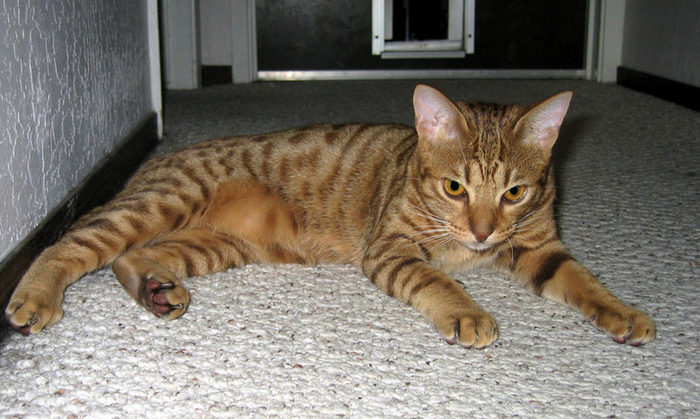
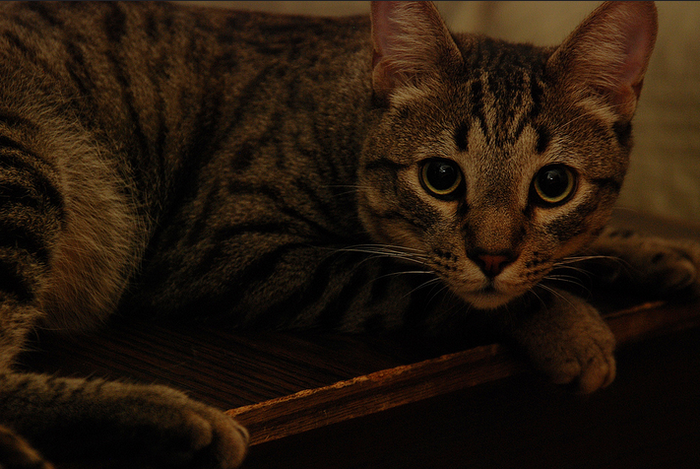
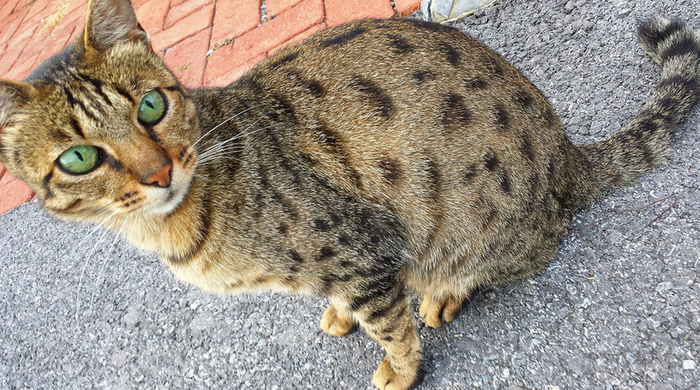
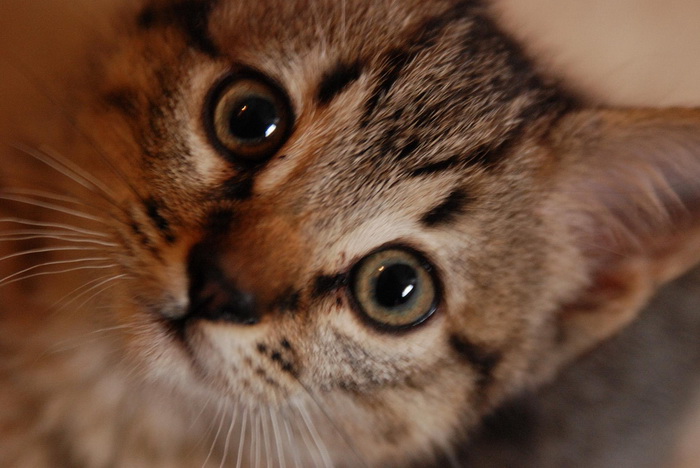
Photos of California Spangled cats:
Read also:


1 comment
Natasha
Holy shit, I got this kitten for my son a month ago. We couldn't figure out who it was for a long time, but he immediately pointed out that he wasn't a cat.
Add a comment